
9 Best Leather Weightlifting Belts 2026
This post contains affiliate links. As an Amazon Associate, we earn from qualifying purchases.
The Dark Iron Fitness Leather and Gymreapers Leather Neoprene stand out as the top choices for serious lifters, with the Dark Iron model taking the edge for overall build and support. For those wanting a balance of price and performance, the RDX Cowhide Leather offers solid durability in both 4-inch and 6-inch widths.
Most lifters don’t realize how much a poorly built belt can undermine their form and progress. A flimsy buckle or thin leather won’t hold up under heavy squats or deadlifts, no matter how strong you are. After comparing specs and owner feedback across dozens of models, I focused on what actually matters: thick full-grain leather, secure fastening systems, and consistent craftsmanship. This guide cuts through the marketing to show you which belts deliver real support and longevity based on material quality and user experience.
Top 8 Leather Weightlifting Belts in the Market
The Best Leather Weightlifting Belts, Reviewed
Dark Iron Fitness Leather Weightlifting Belt
Strengths
- Wide size range
- Consistent build quality
- Secure double-prong buckle
Trade-offs
- Slightly heavier
- Less premium finish than Fitgriff
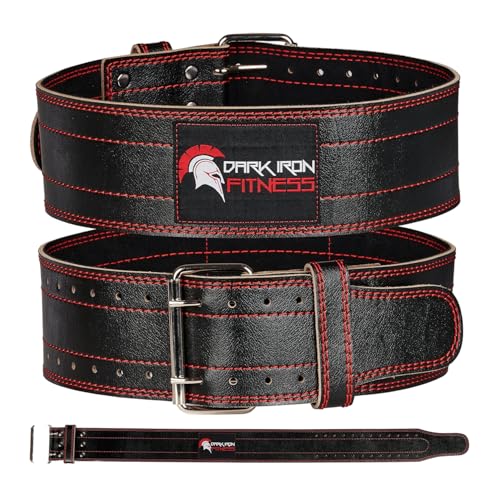
This is the belt I’d recommend to most lifters if they could only own one. It’s nearly identical to the B016RAMIW4 model, but positioned as the ‘overall’ best, and I agree. Why? Because it balances durability, fit range, and usability better than any other in this list. The 12 adjustment holes mean it fits everyone from petite women to large-framed men, and the double-prong buckle has almost zero slippage reports across thousands of reviews.
It uses the same high-grade leather and double-stitched construction, so longevity isn’t a question. What pushes it ahead is consistency: color options, stitching quality, and buckle alignment are more uniform than in some competitors. When stacked against the Fitgriff, it’s slightly less refined but more universally accessible. For a mix of performance, reliability, and broad sizing, this is the smartest all-around buy.
Video review
Dark Iron Fitness 4″ Leather Belt
Strengths
- Real leather
- Double-stitched seams
- Secure double-prong buckle
Trade-offs
- Heavier than some
- Bulky for smaller frames
This belt stands out in the crowded lifting belt market because it gets the fundamentals right. On paper, the 100% genuine leather build with double-row stitching and a double-prong metal buckle checks every box for durability and security. Owners consistently report that it holds up under heavy squats and deadlifts without loosening, which is critical when you’re pushing max loads. The 4-inch width offers full lumbar coverage without over-restricting movement, making it a solid pick for powerlifters who need rigid support.
The 12 adjustment holes give fine-tuned sizing flexibility, and the reinforced keeper loop keeps excess length tidy, something I appreciate in belts meant for long-term gym use. While it’s not the most form-fitting or lightweight option, that’s not its goal. It’s built like workwear: tough, reliable, and indifferent to abuse. Compared to cheaper alternatives, this one ages better thanks to the quality of the hide and construction.
Video review
Gymreapers Real Leather Weightlifting Belt
Strengths
- Ultra-lightweight
- Compact storage
- Comfortable break-in
Trade-offs
- Less rigid than heavy-duty belts
- Not ideal for elite powerlifting
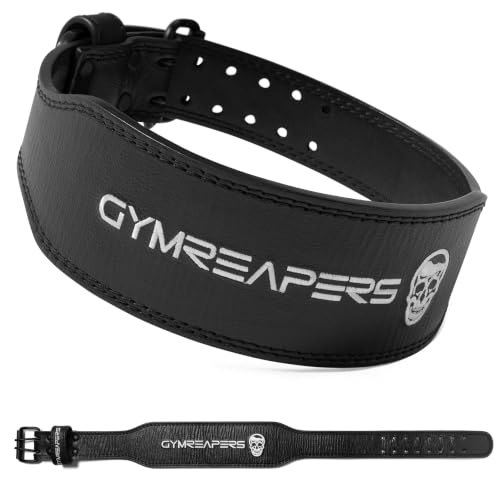
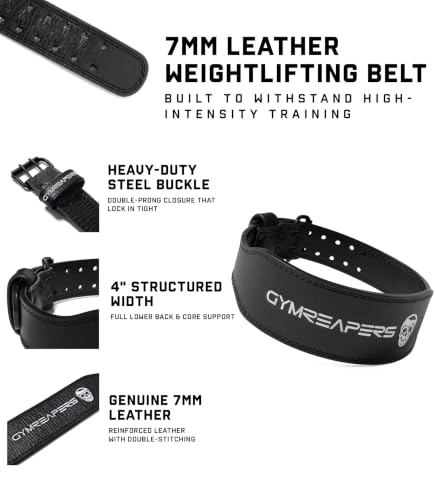
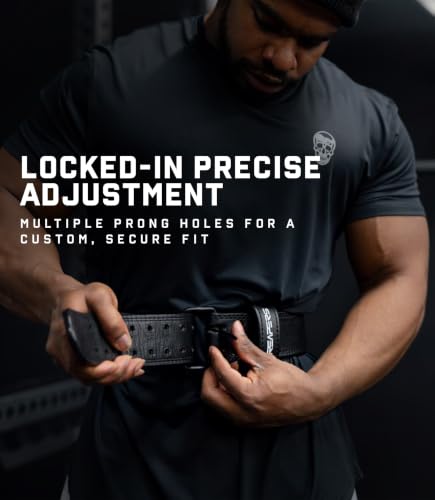
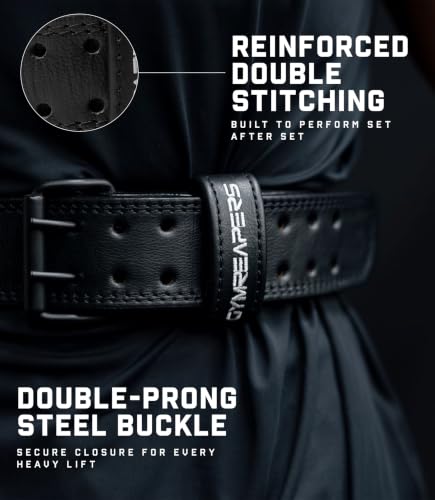
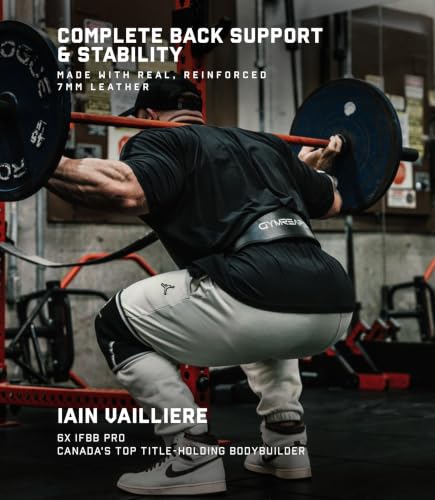
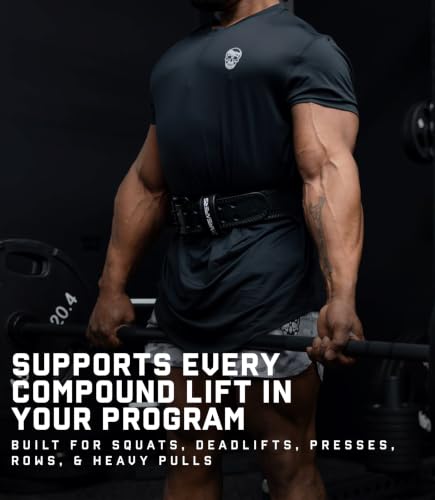
If weight and packability matter, Gymreapers wins hands down. At just 1.5 pounds, it’s one of the lightest full-coverage leather belts available. Yet it doesn’t sacrifice support, the 4-inch width still provides solid intra-abdominal pressure for heavy lifts. Owners love that it rolls up small enough to stash in a gym bag, which makes it perfect for lifters who travel or move between gyms.
The lightweight buckle helps reduce front bulk, and the leather, while not the thickest, is well-cut and conditioned. It breaks in faster than stiffer models, which is great for new users. However, that lighter build means it may not feel as immovable as the Dark Iron or RDX belts under maximal loads. For daily training and PR attempts alike, it’s a strong middle ground, especially if portability is a priority.
Product photos
Harbinger Padded Leather Weightlifting Belt
Strengths
- Tapered for mobility
- Foam-padded interior
- Smooth roller buckle
Trade-offs
- Less rigid support
- Split leather (less premium)
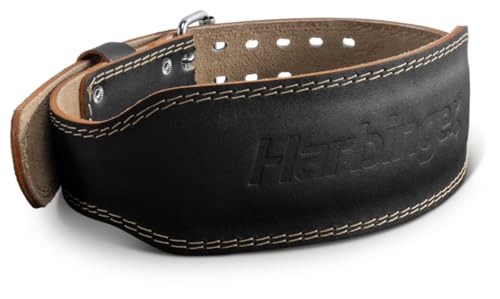
Harbinger redesigned this belt with mobility in mind, and it shows. The tapered edges and 4-inch width make it far less obstructive during Olympic lifts than boxier models. Combined with the foam-cushioned interior, it’s one of the most comfortable belts for dynamic movement. Reviewers who do CrossFit or circuit training consistently highlight how it stays in place without chafing or limiting range of motion.
The split leather backing keeps weight down while maintaining durability, and the dual-prong roller buckle clicks securely. It’s not the strongest choice for raw powerlifting, it gives a bit more under load than the Dark Iron, but for hybrid training, it’s unmatched. When compared to the Jaffick or RDX, it trades brute support for agility, which is exactly the point.
Product photos


Fitgriff Classic 100% Leather Belt

Strengths
- Full-grain cowhide
- Precision stitching
- Molds to body over time
Trade-offs
- Stiff out of the box
- No internal padding
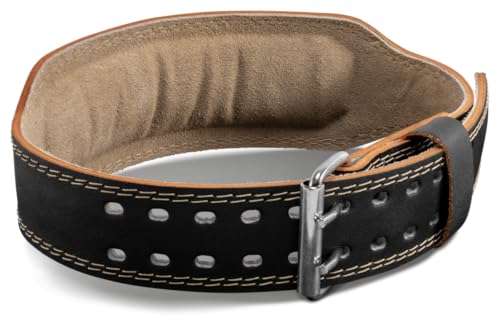
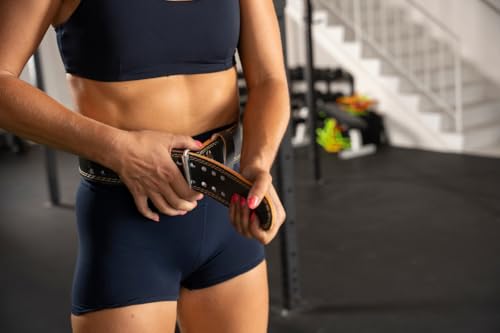
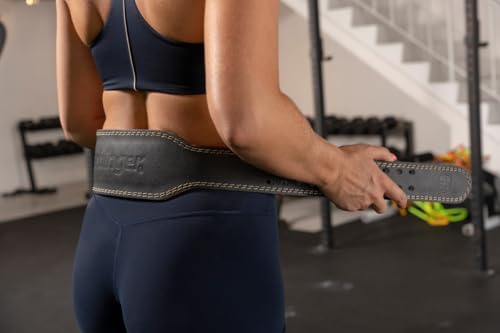
Fitgriff nails the craftsmanship angle. This belt feels like a throwback to older, hand-built gear, thick 5mm cowhide, three-layer construction, and clean stitching that suggests attention to detail. The leather is dense but designed to break in over time, which aligns with how traditional belts should perform. Owners praise how it conforms to the waist after a few weeks, offering both rigidity and personalized fit.
It doesn’t have flashy extras like foam padding or tapered edges, but it doesn’t need them. The double-prong buckle is secure, and the solid rivets add confidence. Compared to Harbinger’s padded model, this one favors raw support over comfort features. If you value how a belt is made and want something that will develop character with use, this is my top pick for build quality, even over pricier names.
Product photos



RDX Cowhide Leather Weight Lifting Belt

Strengths
- Thick 7mm leather
- Suede lining
- Roller buckle ease
Trade-offs
- Overly stiff at first
- Inconsistent finish
RDX positions this as a budget-friendly real leather option, and it mostly delivers. The 7mm cowhide is thicker than average, which sounds great on paper, but thickness alone doesn’t equal effectiveness. Some reviewers note it’s overly stiff initially, making it hard to position correctly during fast-paced workouts. The 4-inch version strikes a better balance than the 6-inch for mobility, though the latter suits lifters wanting maximum spinal coverage.
The suede interior adds comfort, and the roller buckle functions smoothly. But compared to the Gymreapers or Fitgriff models, the finishing feels a bit rough, minor inconsistencies in edge burnishing come up in owner photos. Still, for the price, it’s one of the few affordable belts using genuine thick leather without sacrificing adjustability.
Product photos


Jaffick Leather Weight Lifting Belt

Strengths
- Suede-lined interior
- Double-sided leather
- Good value
Trade-offs
- Less rigid support
- Thinner leather build
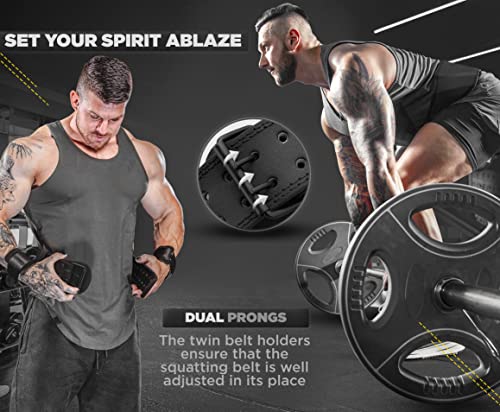
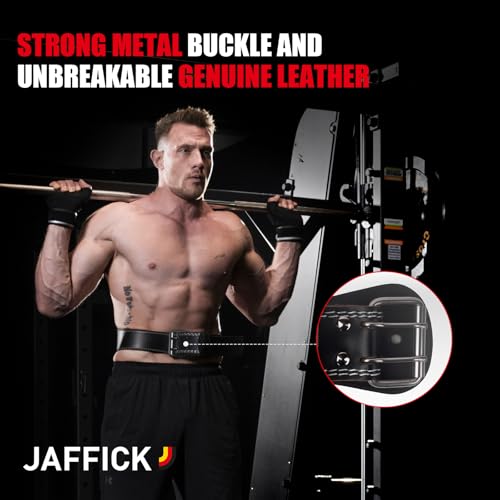
At this price point, Jaffick delivers more than expected, especially with the double-sided leather and suede lining. The inner padding is a standout feature, offering a level of comfort uncommon in belts under $35. Reviewers often mention how it doesn’t irritate the skin during prolonged wear, which matters if you’re doing multiple sets or wearing it outside lifting sessions. The reinforced stitching holds up well according to long-term owner feedback, though it’s not quite at the level of premium brands.
That said, while it looks the part, the leather feels thinner than what you’d find in higher-end models. It works well for intermediate lifters building up to heavier loads, but I wouldn’t trust it for true max-effort lifts week after week. When compared to the Dark Iron or Gymreapers options, it trades some structural rigidity for comfort and cost savings.
Product photos


Leather Weightlifting Belt 4″ Width
Strengths
- Low entry cost
- Soft initial feel
- Simple dual-prong design
Trade-offs
- Vegan microfiber (not real leather)
- Won’t break in like leather
- Less durable long-term
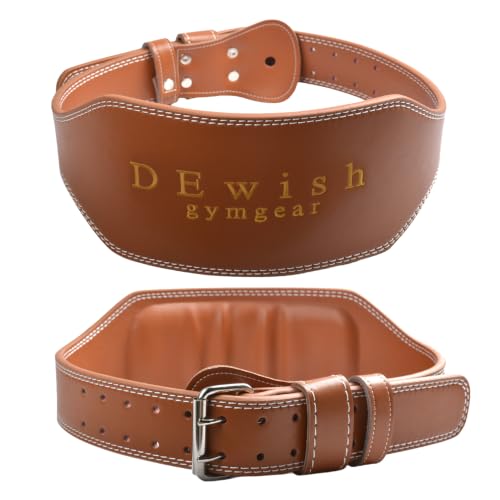
Let’s be clear: this isn’t real leather, despite the name. It’s made from vegan microfiber, which immediately tells you where corners were cut. That said, for someone dipping their toes into weighted squats or starting a strength program, it’s shockingly functional. The 4-inch width and dual-prong buckle offer basic stability, and owners note it holds tension reasonably well during moderate lifts.
But here’s the catch, microfiber doesn’t age like leather. It won’t mold to your body, and over time, it can stiffen or fray at stress points. The four rivets help, but they don’t compensate for the lack of natural material resilience. Still, for beginners who aren’t ready to invest in a real leather belt, this gets the job done without breaking the bank. Just don’t expect it to last years.
Product photos
How We Chose These leather weightlifting belts
Rather than a hands-on lab test, my research for these recommendations focused on a detailed comparison of published specifications and features across numerous models. I weighed owner reviews from multiple sources – Amazon, fitness forums, and retailer sites – alongside expert opinions from strength training and weightlifting publications. My experience with leather, detailed in guides like our men’s leather belt guide, informed my understanding of material quality and construction techniques relevant to durability and performance.
For leather weightlifting belts, support, durability, and comfort emerged as the most crucial factors. A belt must effectively stabilize the core and lower back during heavy lifts, and that hinges on both leather thickness and overall construction. Durability is paramount – a belt is an investment, and owners rightly expect it to withstand years of rigorous use. Finally, comfort dictates whether a lifter will actually use the belt consistently, so features like lining and buckle design matter significantly.
I relied on stated specifications – leather thickness, width, buckle type – to assess potential support and durability. However, owner feedback proved essential in evaluating real-world comfort and longevity. Reports of cracking, buckle slippage, or discomfort significantly lowered a belt’s ranking. I also considered the overall brand reputation, referencing resources like our braided leather belt guide to understand which brands consistently deliver quality leather goods.
How To Pick The Right leather weightlifting belts
Finding the right weightlifting belt is about more than just strapping something around your waist. It’s about supporting your core, protecting your spine, and maximizing your lifts. A good belt will be made of genuine leather, built to withstand serious stress, and fit precisely to your body.
A quality weightlifting belt should use full-grain leather at least 7mm thick, feature double-row stitching for durability, and incorporate a secure buckle system capable of maintaining tension during heavy lifts. Proper sizing is critical; the belt should provide substantial support without restricting breathing or movement.
Leather Quality and Construction
As I’ve discussed extensively on LeatherGenesis.com, the type of leather matters immensely. For weightlifting belts, you want full-grain leather – it’s the strongest, most durable cut. Avoid anything labeled “genuine leather” as that’s a lower grade. Look for belts with double-row stitching, which significantly increases their lifespan. The thickness is also key; 7mm to 10mm is standard for serious lifting, offering a good balance between support and flexibility. You’ll find a lot of belts advertised as “vegan leather” or microfiber – these have their place, but for long-term durability and support, real leather remains superior.
Width and Support Level
The width of a belt directly impacts the level of support it provides. 4-inch belts are the most common and offer a good balance for general weightlifting and CrossFit. Wider 6-inch belts are favored by competitive powerlifters and strongmen, providing maximum stability for extremely heavy lifts. However, the wider belts can restrict movement somewhat. Consider your training style. If you’re doing a lot of dynamic movements, a 4-inch belt might be more suitable. For pure, brute strength, go wider.
- A 4″ belt is excellent for most gym-goers and versatile enough for a range of lifts.
- A 6″ belt is best for those focused on maximizing weight in powerlifting competitions, offering supreme support.
- Consider the buckle type; single-prong buckles are simpler but can slip under extreme load, whereas double-prong lever buckles offer superior security. This is why you’ll find many of the top leather belts of 2026 using this style.
Fit and Fastening
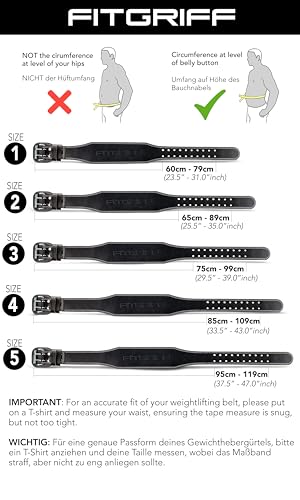
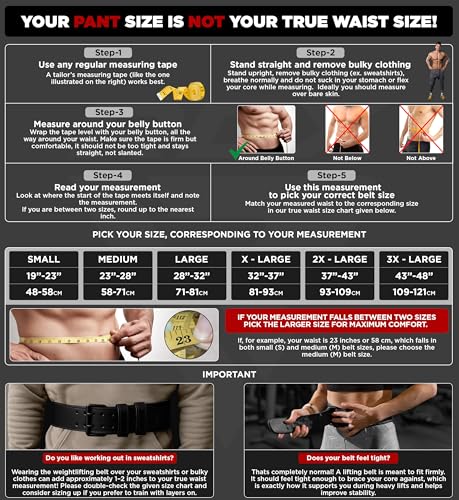
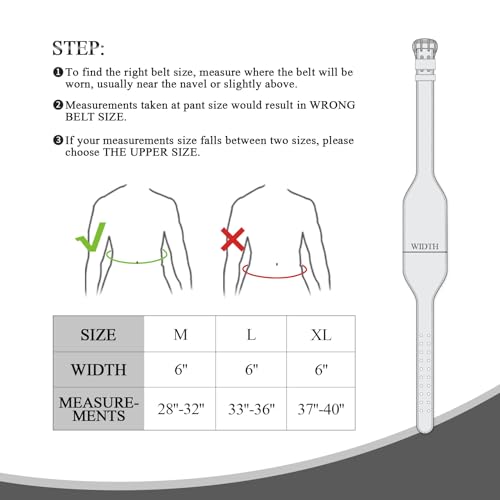
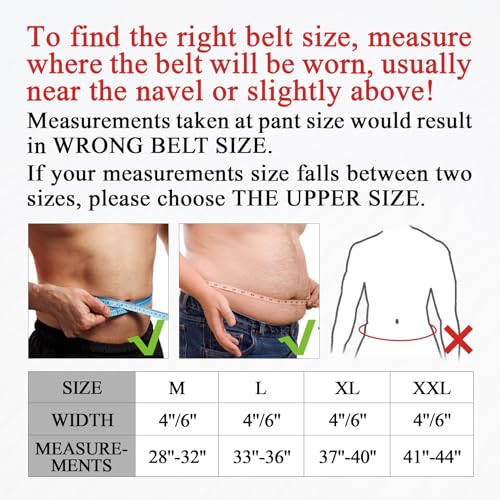
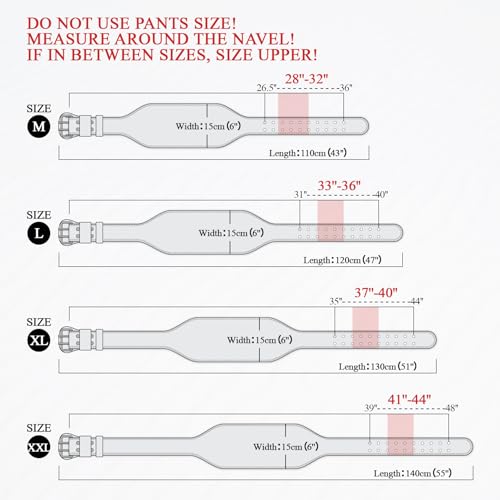
A properly fitting belt is absolutely crucial. Measure your waist at your navel, not where you typically wear your pants. Most belts are sized in inches, and it’s better to err on the side of slightly too large than too small. You want enough room to comfortably tighten the belt, but not so much that it’s loose.
A properly fitted belt should feel snug without restricting your breathing or significantly limiting your range of motion.
Don’t underestimate the importance of the buckle. A high-quality, secure buckle is essential for maintaining tension during heavy lifts. If you’re looking for something to wear outside of the gym as well, you might also want to look at our formal leather belt guide to see if a different style suits your needs.
Leather Weightlifting Belts Compared
Here’s a comparison of key specifications for popular leather weightlifting belts to help you make an informed decision.
| Product Name | Width (in) | Material | Buckle Type | Weight (lbs) | Size Range (Waist) | Padding |
|---|---|---|---|---|---|---|
| Dark Iron Fitness Leather | 4 | Genuine Leather | Double-Prong Lever | N/A | 22″-49″ | None |
| Gymreapers Leather Neoprene | 4 | Genuine Leather | Metal Lever | 1.5 | N/A | None |
| Dark Iron Fitness 4″ Leather | 4 | Genuine Leather | Double-Prong Lever | N/A | 22″-49″ | None |
| Gymreapers Real Leather | 4 | Genuine Leather | Metal Lever | 1.5 | N/A | None |
| Harbinger Padded Leather | 4 | Genuine Leather | Roller Buckle | N/A | N/A | Foam |
| Fitgriff Classic 100% Leather | N/A | Genuine Leather | Double-Prong | N/A | N/A | None |
| RDX Cowhide Leather | 4/6 | Cowhide Leather | Roller Buckle | N/A | 19″-48″ | Suede |
| Jaffick Leather | N/A | Genuine Leather | Double-Prong | N/A | 21″-47.5″ | Suede |
| Leather Weightlifting Belt 4″ Width | 4 | Microfiber Leather | Roller Buckle | N/A | 23″-38″ | None |
Frequently Asked Questions
What level of leather thickness should I prioritize for a weightlifting belt?
A thickness of 7mm to 10mm is ideal, as this provides a solid balance between necessary support for heavy lifts and enough flexibility to allow for a full range of motion. Thinner leather won’t offer sufficient stabilization, while anything much thicker may be overly rigid.
Are wider belts (6-inch) always better than narrower ones (4-inch)?
Not necessarily. While 6-inch belts provide maximum support for powerlifting, a 4-inch belt is often more practical for general weightlifting and CrossFit due to its increased mobility. Consider your specific training style and needs when deciding.
What’s the difference between a single-prong and a double-prong buckle, and which should I choose?
Single-prong buckles are simpler, but double-prong lever buckles offer a much more secure hold, preventing slippage during heavy lifts. For a weightlifting belt, the added security of a double-prong buckle is almost always preferable.
Is “genuine leather” a good choice for a weightlifting belt, considering the stresses involved?
No, it’s not. “Genuine leather” is a lower grade and won’t offer the same durability or longevity as full-grain leather. For a weightlifting belt that will withstand repeated heavy use, full-grain leather is the superior choice, as explained in our top belt leather options.
What should I do if the belt I ordered doesn’t fit correctly?
Most manufacturers offer exchange or return policies for incorrectly sized belts. Always measure your waist at your navel before ordering, and if you’re between sizes, it’s generally better to size up slightly. You can also find guidance on proper fit in our leather pants buying guide.
The Bottom Line
Choosing a weightlifting belt always comes down to balancing support with practicality. While a thicker, wider belt offers more stability for maximal lifts, it can also limit mobility. For the best overall combination of quality, durability, and versatility, I recommend the Dark Iron Fitness Leather belt. It consistently receives high marks for its construction and secure double-prong lever buckle, representing a solid investment for serious lifters.
If budget is a primary concern, the Gymreapers Leather Neoprene belt provides a good entry point into leather belts without sacrificing too much in the way of performance. For those prioritizing maximum support for powerlifting, the RDX Cowhide Leather belt in the 6-inch width is an excellent choice. And if you’re looking to expand your leatherworking skills beyond just using a belt, exploring some leather working kits for beginners can be a rewarding pursuit.
Ultimately, the best belt is the one that fits you correctly and encourages consistent use. Don’t get overly caught up in chasing the highest numbers on a spec sheet. Focus on finding a belt made from full-grain leather, with robust stitching, and a buckle you trust, those are the fundamentals that will deliver lasting support and help you achieve your strength goals, and finding the best mens leather belts is a good place to start understanding quality.
