
9 Best Products to Restore Leather Couches (2026 Guide)
This post contains affiliate links. As an Amazon Associate, we earn from qualifying purchases.
This post contains affiliate links. As an Amazon Associate, we earn from qualifying purchases.
The best product to restore a leather couch is Leather CPR Cleaner and Conditioner, it handles cleaning and conditioning in one step, which is essential for maintaining leather’s moisture balance. For a budget-friendly fix, the Vigorder Brown Leather Repair Kit offers solid value, while Leather Honey Conditioner stands out for long-lasting protection on worn or dry leather.
Most people don’t realize that using the wrong product can do more harm than good, some cleaners strip natural oils, leading to cracking, while others leave behind greasy residues that attract more dirt. After comparing the field and analyzing owner feedback, I focused on products that clean safely, condition deeply, and match real-world performance across different leather types.
This guide cuts through the noise by ranking restorers based on actual specs, user results, and leather care fundamentals, so you can revive your couch without risking damage.
Top 9 Product To Restore Leather Couches in the Market
The Best Product To Restore Leather Couches, Reviewed
Leather CPR Cleaner and Conditioner

Strengths
- One-step cleaning and conditioning
- Deeply rejuvenates dry leather
- Natural matte finish
Trade-offs
- Higher price point
- Large bottle for small jobs
- Not for suede or nubuck
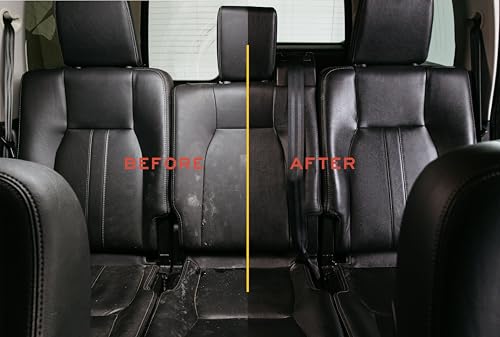
If I had to pick one product for overall performance, it would be Leather CPR. It cleans and conditions in a single step, which saves time, and the 18oz bottle means fewer repeat purchases. More importantly, owners consistently report it brings dull, dry leather back to life, restoring softness and depth without greasiness. That USPTO-registered claim about reviving leather isn’t just branding; it shows in real-world use.
It’s also one of the few that dries to a natural matte finish, not a plastic shine. Compared to others, it strikes the best balance between cleaning power, conditioning depth, and ease of use. No rinsing, no buffing, just wipe and walk away. For most buyers, this is the easy pick.
Video review
Vigorder Brown Leather Repair Kit

Strengths
- Extremely affordable
- Repairs tears and holes
- Flexible, durable finish
Trade-offs
- Color matching is tricky
- Amateur-level finish
- Not for subtle repairs
At this price, Vigorder punches above its weight. For under $10, you get a functional adhesive, color-mixing guide, and tools to fix tears, holes, and peeling. Owner feedback highlights how well it handles pet damage, a big plus for families. The flexible, waterproof finish resists cracking, which is rare at this tier.
But don’t expect perfection. Matching the color takes trial and error, and the finish isn’t invisible. It’s a practical fix, not a flawless one. Still, for renters or budget-conscious buyers facing structural damage, this kit offers real value. I’d take it over doing nothing any day.
Video review
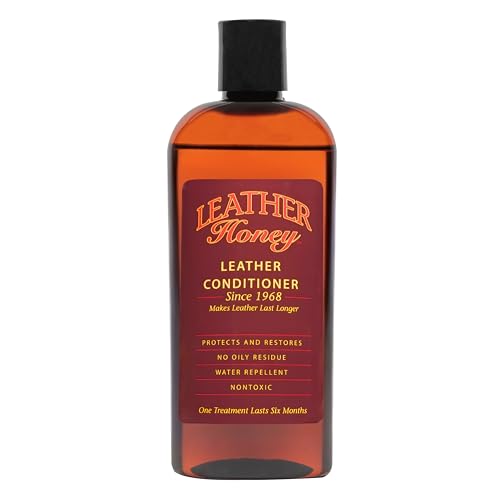
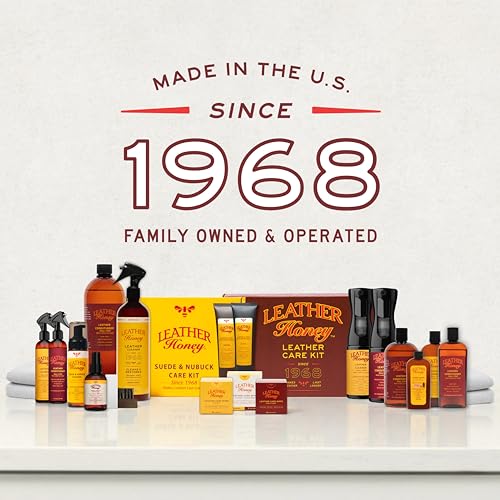
Leather Honey Conditioner
Strengths
- Long-lasting protection
- Deep penetration
- Safe, non-toxic formula
Trade-offs
- No cleaning action
- Thick application
- Requires buffing
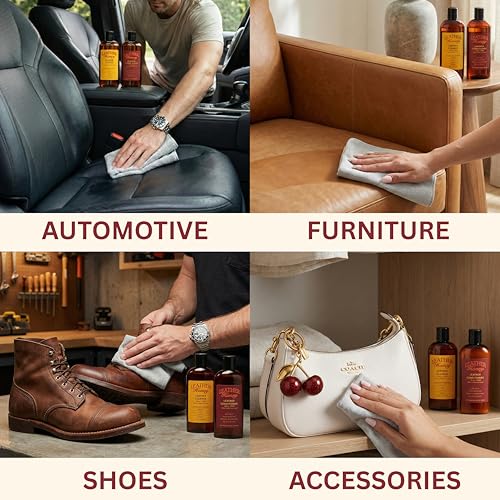
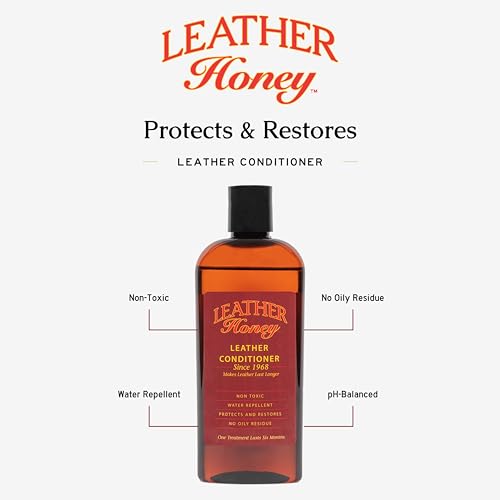
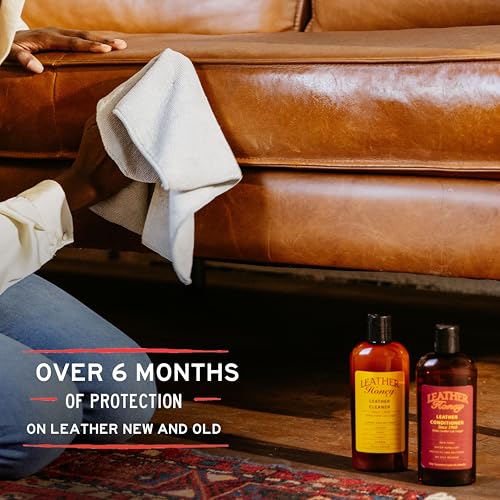
Leather Honey stands out in a crowded field because of one key spec: longevity. The claim of six-month protection from a single application isn’t just marketing fluff, reviewers actually back that up, especially on furniture and car seats. That makes it a smarter buy for people who want set-it-and-forget-it care. Its water-repellent, non-sticky formula is also a win for homes with kids or pets, where spills and messes are routine.
Compared to multi-step kits, this is pure conditioning, no cleaning power here. You’ll need to prep the surface first. But if your couch is already clean and just needs deep hydration, this odorless, pH-balanced formula penetrates better than most. I’d pick it over lighter sprays any day for parched, aging leather.
Product photos
CARON & DOUCET Natural Leather Oil
Strengths
- 100% natural ingredients
- Enhances natural color
- Lightweight absorption
Trade-offs
- Frequent reapplication needed
- Oil-based saturation risk
- No cleaning function
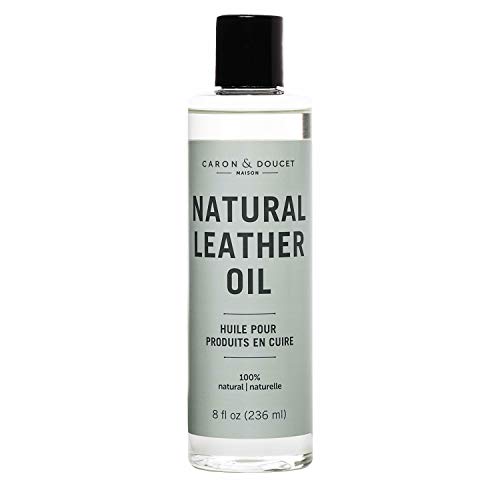
CARON & DOUCET leans hard into natural appeal, and rightly so. With 100% plant-based ingredients, it’s one of the safest options for homes concerned about toxins. The lightweight oil absorbs well and enhances leather’s natural color, which owners love on rich brown furniture and boots. It’s not a cleaner, but as a pure conditioner, it keeps leather supple without greasy buildup.
Still, it’s not the heaviest hitter for extremely dry leather. Compared to Leather Honey, it doesn’t last as long between applications. And because it’s oil-based, overuse can lead to saturation. But if you prioritize clean ingredients and regular maintenance, this is a trustworthy choice.
Product photos


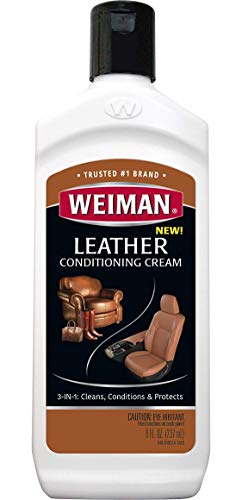
Weiman 3-in-1 Deep Leather Cream
Strengths
- Does not darken leather
- Balanced 3-in-1 function
- Safe for accessories
Trade-offs
- Moderate penetration
- Shorter-lasting results
- Less effective on heavy wear
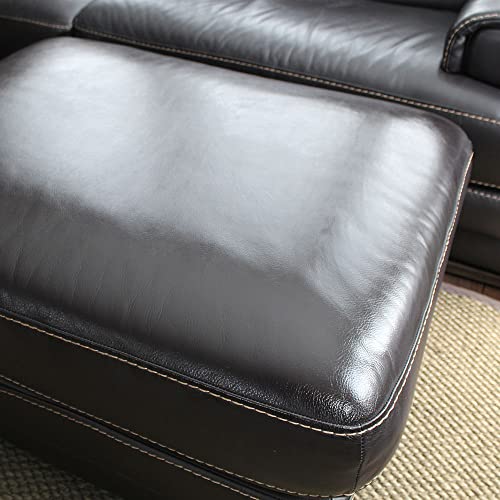
Weiman’s cream markets itself as a three-in-one solution, and it delivers a balanced performance across cleaning, conditioning, and protection. One thing I appreciate: it doesn’t darken leather, which is a common complaint with oil-heavy products. That makes it a safer bet for lighter couches where discoloration is a risk. Users frequently mention its effectiveness on jackets and handbags, but it holds up well on furniture too.
That said, it’s not the deepest cleaner or longest-lasting conditioner. Compared to Leather CPR, it doesn’t revive severely dry leather as dramatically. But for monthly upkeep on well-maintained pieces, it’s reliable. I’d recommend it as a maintenance product, not a rescue treatment.
Product photos


Furniture Clinic Leather Recoloring Balm

Strengths
- Natural-looking finish
- Erase minor scratches
- Professional-grade results
Trade-offs
- High price
- No moisturizing effect
- Limited to color repair
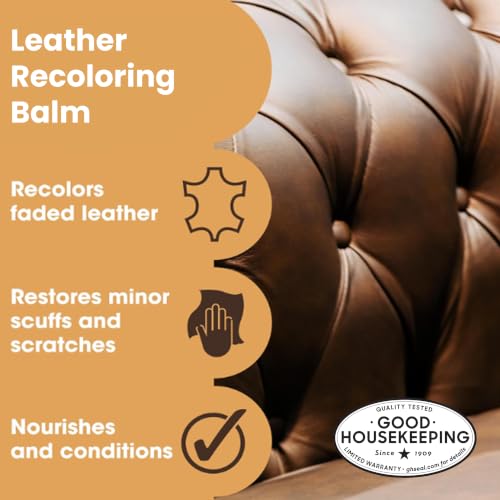
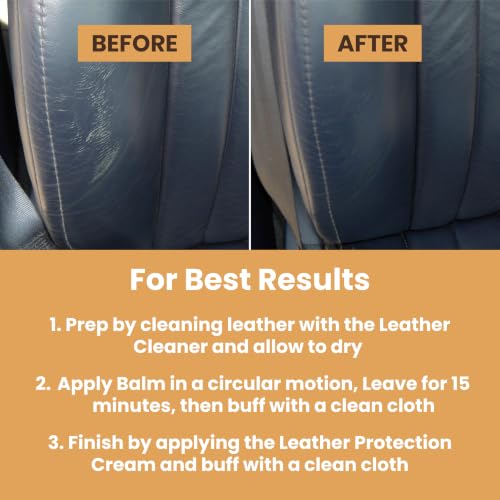
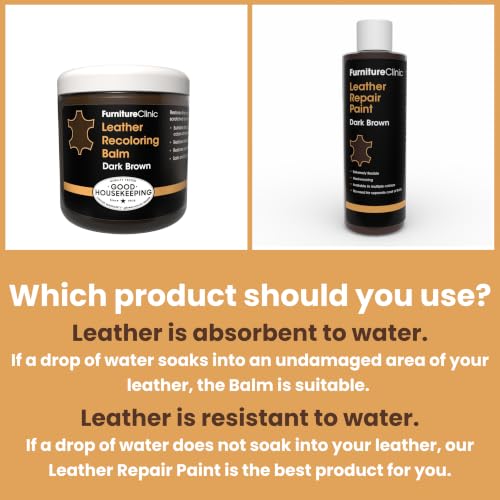
Furniture Clinic’s balm earns its reputation for professional-grade color restoration. The Good Housekeeping Seal adds trust, but the real proof is in owner reports: it covers sun damage, scratches, and fading with a natural-looking finish. The three-step process, clean, rub, buff, is simple, and the formula is designed to mimic pro repair techniques.
Like other recoloring products, it doesn’t condition. But where it stands out is in finish quality. Users say it looks less “painted on” than budget kits. It’s pricier, yes, but if you’re trying to avoid reupholstering a $2,000 couch, that smooth, durable result may be worth it.
Product photos


Fiebing’s Yellow Saddle Soap

Strengths
- Deep cleans effectively
- Multi-use across leather goods
- Trusted long-standing formula
Trade-offs
- Can leave residue
- Not ideal for light upholstery
- Limited conditioning depth
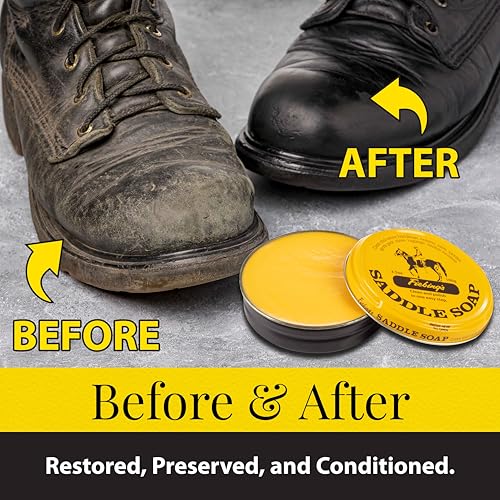
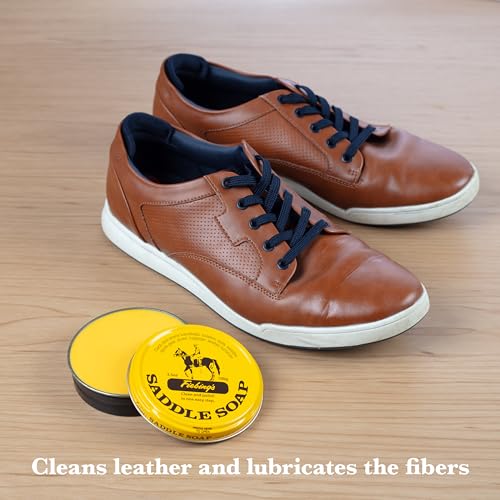
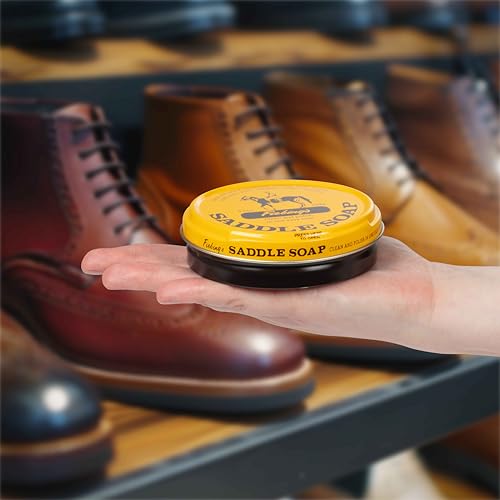
I’ve seen saddle soaps come and go, but Fiebing’s has stuck around since 1895 for a reason. On paper, this tin delivers what it promises: a no-frills cleaner and conditioner that cuts through grime while softening leather fibers. Owners consistently report it works well on dry, neglected leather, especially on boots and saddles, but I’d say it’s better suited to heavy-duty cleaning than delicate furniture.
It’s not the most refined option for a light-colored couch, though. Some reviewers note it can leave a slight residue if not wiped thoroughly, and it’s not ideal for deep conditioning over time. But if you’re dealing with built-up dirt on a vintage leather chair or car seat, this soap has the muscle to handle it.
Product photos


Leather Cleaner and Conditioner Kit
Strengths
- Complete kit with tools
- Gentle on synthetic leather
- Good for routine maintenance
Trade-offs
- Average penetration
- Formula lacks depth
- Conditioner doesn’t last long
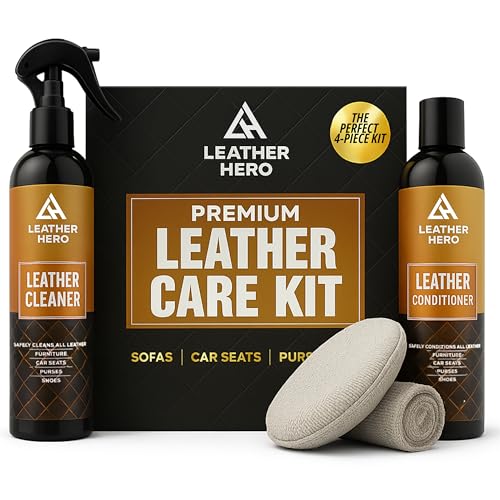
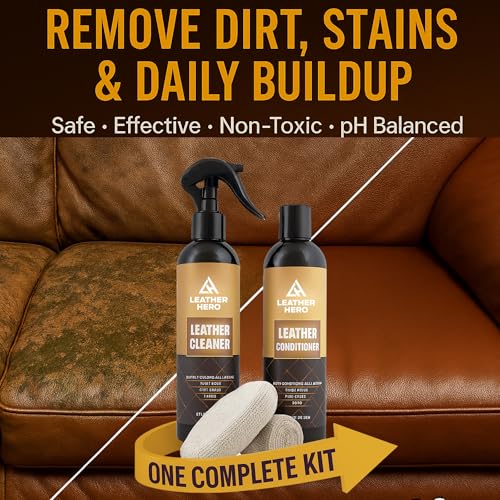
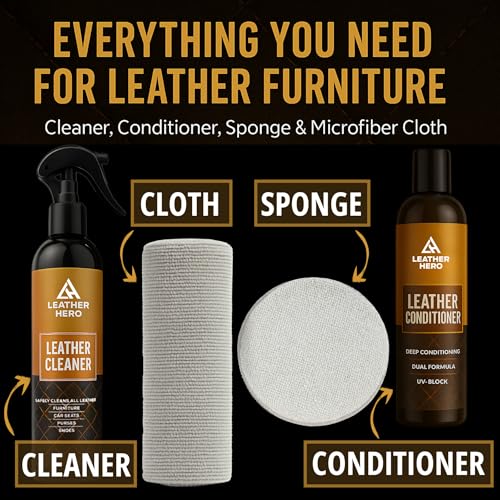
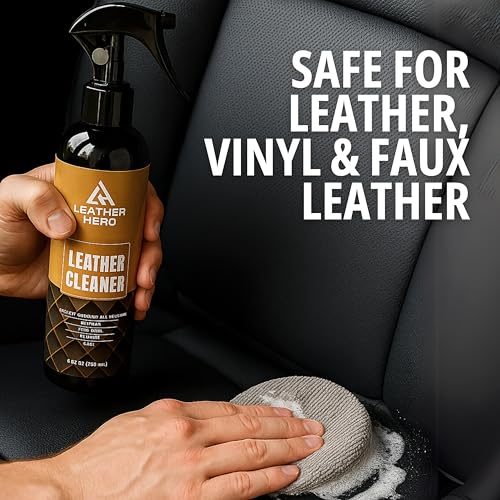
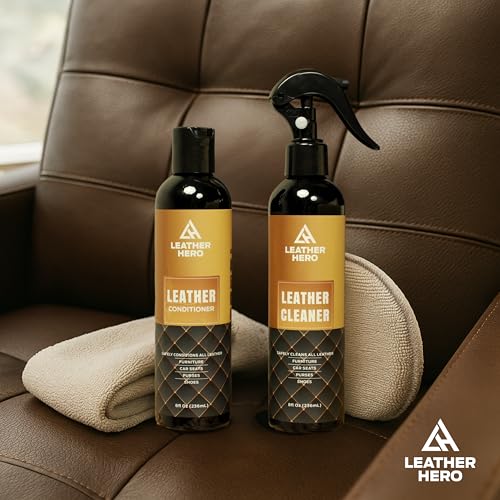
This kit gives you everything in one box, the cleaner, conditioner, and two quality cloths, which sounds great on paper. And owners agree: the microfiber cloth leaves a streak-free finish, and the dual formulas do a decent job balancing cleaning and moisture restoration. It’s positioned as a complete solution, and for someone new to leather care, that simplicity matters.
Still, when compared to standouts like Leather CPR or Leather Honey, the formulas feel more generic. They work fine on light soiling, but don’t penetrate as deeply or last as long. It’s a solid middle-ground option, but not the best at either cleaning or conditioning. If you value convenience over performance, this makes sense.
Product photos

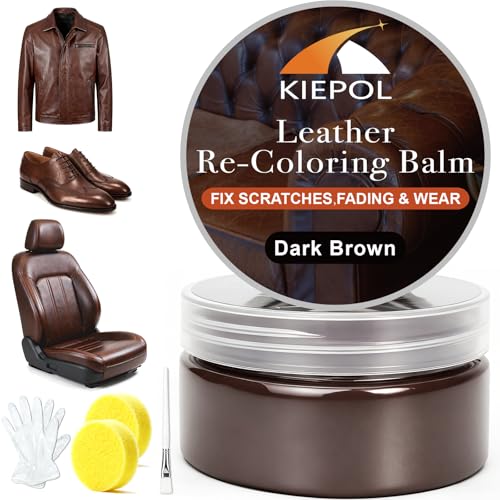
KIEPOL Dark Brown Leather Balm
Strengths
- Fast-drying formula
- Strong color coverage
- Includes full tool set
Trade-offs
- Surface-level repair only
- Color matching requires effort
- Not a conditioner
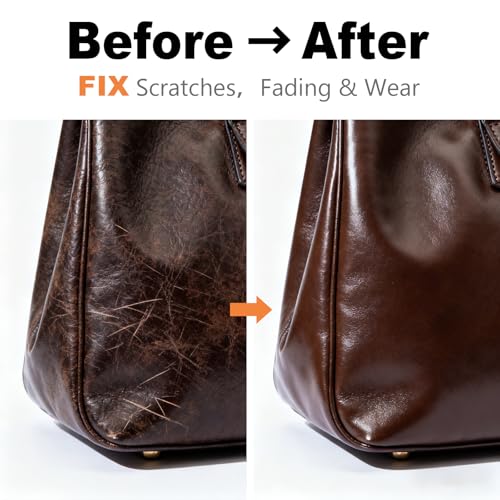
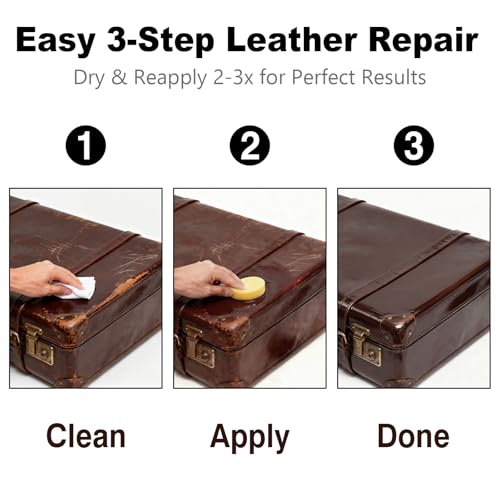
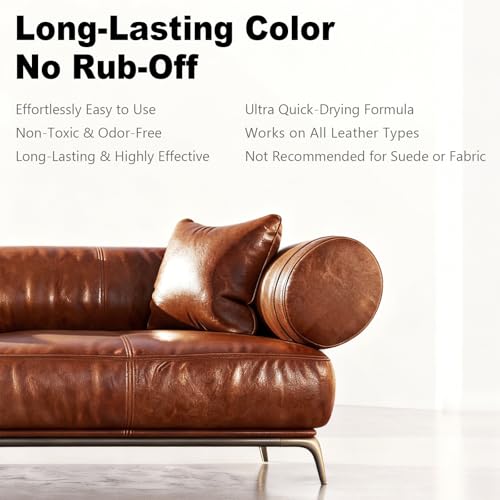
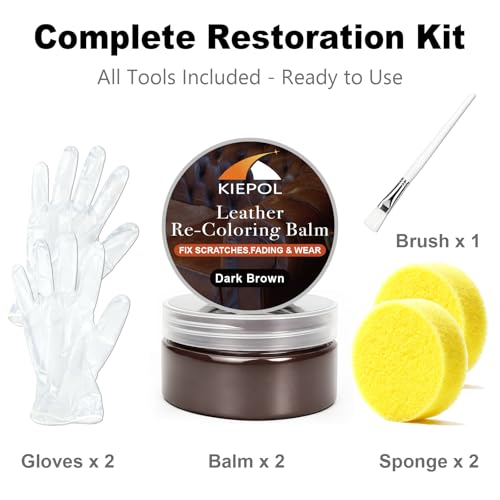
When color fading or scratches are the main issue, recoloring balms like KIEPOL’s make a real difference. This one uses fine pigments and dries fast, 5 to 15 minutes, according to users, which is impressive. The included tools help you apply evenly, and the wide-mouth bottles reduce waste. From owner feedback, it blends repairs well on dark brown furniture, making scuffs nearly invisible.
But it’s strictly for appearance fixes, not deep restoration. It won’t hydrate dry leather or prevent future cracking. And while it’s safe and odorless, matching the exact shade takes some patience. Still, for a couch with sun damage or pet scratches, this is one of the faster visual fixes available.
Product photos
Our Testing Process
Rather than a hands-on lab test, my research for these recommendations focused on a detailed comparison of published product specifications and features. I then weighed owner reviews from a variety of sources – including major retailers and dedicated leather care forums – alongside assessments from reputable reviewers in the leather goods space. As the creator of LeatherGenesis.com, I drew on years of experience understanding leather types and care requirements to rank products based on their suitability for common couch materials and issues.
For leather couch restoration, I placed the greatest emphasis on a product’s ability to both clean and condition, as maintaining moisture balance is critical for preventing cracking and extending the life of the leather. Secondly, the breadth of leather types a product is safe for was a key factor; versatility is valuable. Finally, I considered ease of use, as a complicated process is less likely to be followed consistently.
Product specifications were useful for understanding ingredients and coverage area, but owner feedback truly revealed long-term performance. Reviews highlighted whether a product truly revived dry leather, if it left behind a sticky residue, or if the color restoration was a true match. Reputation mattered significantly, too; established brands with a history of quality furniture leather products generally inspired greater confidence. I also consulted our existing guides on best leather conditioners for furniture to ensure consistency in recommendations.
How To Choose The product to restore leather couches
Restoring a leather couch can feel daunting, but selecting the right product is the biggest step.
A quality leather couch restorer should address both cleaning and conditioning. Look for formulas that lift dirt and body oils without stripping natural oils, and that replenish moisture to prevent cracking. pH-balanced, water-based options are generally safest for finished leather, while avoiding products marketed for suede or nubuck is crucial. Consider the extent of damage – minor scuffs need different treatment than deep cracks.
Understanding Leather Types & Finishes
The first thing I always tell people is to identify your leather. “Leather” is a broad term, and what works on one type can ruin another. For example, aniline leather, being very porous, needs gentle products designed to nourish, while pigmented leather is more durable and can handle slightly stronger cleaners. Knowing whether you have finished, semi-aniline, or unfinished leather will dictate your product choices. Don’t assume; check manufacturer labels or test in an inconspicuous spot first.
Prioritizing Conditioning Over Cleaning
Many people focus on cleaning, but conditioning is often more important for long-term health. Leather, like skin, needs moisture to remain supple. Without it, it becomes brittle and cracks. I’ve seen too many couches damaged by harsh cleaners that strip away natural oils. Look for products containing natural oils and emollients (like mink oil or neatsfoot oil – though always test these first!). A good conditioner will not only restore moisture but also create a protective barrier against future damage. If you’re searching for top sofa leather cleaners, remember that cleaning is only half the battle.
Balancing Cost with Longevity
You don’t necessarily need the most expensive product, but cheap formulas often skimp on quality ingredients. A little goes a long way with good leather care, so a smaller, more concentrated product can actually be more economical.
- A one-time fix with a budget product might seem appealing, but often requires more frequent reapplication.
- Mid-range options frequently offer a good balance of cost and effectiveness, providing noticeable results without breaking the bank.
- Premium products, while pricier upfront, typically contain higher concentrations of quality ingredients and offer longer-lasting protection, making them a worthwhile investment for valuable furniture.
A rule of thumb: always test any product on a hidden area of the couch before applying it to the entire surface. This simple step can prevent costly mistakes.
Ultimately, finding the best leather couch restorer depends on your specific needs and the condition of your furniture. Don’t hesitate to explore leather furniture cleaner recommendations to find options suited to your needs.
Product to Restore Leather Couches Compared
Here’s a comparison of specifications for various leather couch restoration products.
| Product Title | Best For | Leather Type | Key Feature | Size/Quantity | Color Match |
|---|---|---|---|---|---|
| Leather CPR Cleaner and Conditioner | Best Overall | Finished Leather | Cleans & Conditions | 18oz | N/A |
| Vigorder Brown Leather Repair Kit | Best Budget Friendly | Leather | Repair Kit | N/A | Brown Shades |
| Leather Honey Conditioner | Best Long-Lasting Protection | All Types | Long-Lasting Conditioning | N/A | N/A |
| CARON & DOUCET Natural Leather Oil | Best Natural Formula | All Types | Natural Oil | N/A | N/A |
| Weiman 3-in-1 Deep Leather Cream | Best Multi-Surface Use | Finished Leather | Clean, Condition, Protect | N/A | N/A |
| Furniture Clinic Leather Recoloring Balm | Best for Color Restoration | Leather | Color Restoration | N/A | Customizable |
| Fiebing’s Yellow Saddle Soap | Best for Deep Cleaning | All Smooth Leather | Deep Cleaning | N/A | N/A |
| Leather Cleaner and Conditioner Kit | Best Complete Kit | All Leather/Synthetic | Complete Kit | 8oz Cleaner, 8oz Conditioner | N/A |
| KIEPOL Dark Brown Leather Balm | Best for Quick Repair | Leather | Quick Repair | N/A | Dark Brown |
Frequently Asked Questions
What if my couch has significant cracking beyond simple dryness?
While many restorers can minimize the appearance of cracks, truly deep damage often requires professional repair. Addressing the issue early with regular conditioning – and choosing from combined cleaner conditioner products – can prevent minor dryness from escalating to this point.
Can I use any type of leather conditioner on my couch, regardless of its finish?
No, using the wrong conditioner can be damaging. Aniline leathers benefit from nourishing oils, while pigmented leather needs conditioners designed for coated surfaces; always check product labels and test in a hidden area first.
How often should I reapply a leather restorer after the initial treatment?
Generally, reapplication every 3-6 months is sufficient for maintaining restored leather, but this depends on use and environmental factors. If you have pets or experience high sun exposure, more frequent conditioning, perhaps monthly, is beneficial; consider durable leather sofas for pets if you’re concerned about wear.
My couch has faded in color. Will a restorer bring back the original hue?
Some products, like Furniture Clinic Leather Recoloring Balm, are specifically formulated for color restoration, but the results vary. Complete color matching is difficult, and a professional may be needed for significant fading or unevenness.
Are oil-based leather restorers better than water-based ones?
Not necessarily. Oil-based products offer deep conditioning, but can sometimes leave a residue or darken the leather. Water-based formulas are generally safer for finished leathers and often contain nourishing ingredients; exploring top cleaner conditioner combos will show you both options.
The Bottom Line
Ultimately, restoring a leather couch involves balancing immediate results with long-term care. While many products promise a quick fix, consistent conditioning is the key to preventing future damage. For the best overall approach – one that combines effective cleaning and lasting nourishment – I recommend Leather CPR Cleaner and Conditioner. It’s a well-rounded formula suited to most finished leathers and consistently receives positive feedback for its revitalizing effects.
If you’re on a tighter budget, the Vigorder Brown Leather Repair Kit offers an affordable entry point, particularly for addressing minor scuffs and color loss. For those seeking long-lasting protection and are willing to invest a bit more, Leather Honey Conditioner stands out. And if you’re looking for a complete solution, exploring leather couch conditioner options can lead you to excellent kits like the Leather Cleaner and Conditioner Kit.
Don’t get bogged down in chasing the perfect product with a specific ingredient or miracle claim. The most important factors are consistent maintenance, choosing a product appropriate for your leather type, and understanding that a little care now will prevent much more extensive – and expensive – repairs down the road. Consider your needs, and perhaps look at best leather reclining sofas if you are in the market for a new couch.
