
How to Clean & Condition a Leather Bible Cover Correctly
This post contains affiliate links. As an Amazon Associate, we earn from qualifying purchases.
This post contains affiliate links. As an Amazon Associate, we earn from qualifying purchases.
To care for a leather Bible cover, focus on preventive maintenance: store it away from heat and sun, dust it weekly with a dry cloth, and clean it only when soiled using a pH-balanced leather cleaner. Conditioning is optional and depends entirely on the leather type; for full-grain or top-grain covers, a light application of a product like Lexol or Pecard every 4-6 months can help, but many quality covers thrive on hand oils alone.
The real answer isn’t in a bottle of conditioner. It’s in understanding what your cover is actually made of and what it needs, or doesn’t need, to last. Most advice treats all leather the same, which is how good intentions ruin good books.
What follows is a breakdown by leather type, a cleaning method that won’t strip the hide, and the museum-grade research that flips common wisdom on its head. By the end, you’ll know exactly what to do, what to avoid, and why the standard product recommendation might be the worst thing for your Bible.
Key Takeaways
- The most important care is preventive: consistent, gentle handling and storage away from direct sunlight and heat prevents 90% of leather problems.
- Conditioning is not a universal requirement. Full-grain and top-grain leather can benefit from it, but bonded and genuine leather often degrade faster with oils and dressings.
- Skip saddle soap and most household cleaners; they can dry out leather. Use a dedicated, pH-balanced leather cleaner only when necessary.
- If a bright white bloom appears on the surface and your home humidity is stable, it’s likely “fatty acid spew” from a previous dressing, not mold or salt.
- Bonded leather has a lifespan of 2-5 years before peeling is inevitable; no amount of care can stop this material failure.
Start Here: What Is Your Bible Cover Made Of?
You can’t care for something if you don’t know what it is. The label “genuine leather” is virtually useless here, it’s a broad classification that includes the lowest grade of real hide. Your care routine hinges on one of four categories.
Full-grain leather is the top cut, untouched by sanding. It’s the most durable and develops a rich patina. Top-grain leather is sanded smooth for a uniform look, sacrificing a little strength for perfection. Both are heirloom-quality. Genuine leather comes from the lower layers of the hide after the top is split off; it’s thinner, more prone to drying, and often has a plastic coating. Bonded leather is a composite of leather fibers and polyurethane glued to a backing; it’s a ticking clock.
A bonded leather cover will peel and crack within two to five years, full stop. It’s not a question of if, but when. No conditioner on earth can re-adhere those shreds to the backing.
I see people spend hours trying to revive a peeling bonded leather cover with oils and balms. It’s a salvage operation, not preservation. The material itself is failing. If your cover is shedding like a sunburn, the conversation shifts from care to replacement. For a lasting piece, your money is better spent on a quality leather Bible cover from the start.
The 3-Step Cleaning Process (And What to Skip)
Cleaning is the most often botched step. The goal is to remove grime without removing the leather’s natural oils. This isn’t about making it look new; it’s about preserving its integrity.
Here’s the straightforward process: 1. Dry dust. Every week, or before any wet cleaning, use a dry, lint-free microfiber cloth. Wipe gently along the grain. This alone prevents abrasive dirt from being ground in during handling. 2. Spot clean with a dedicated leather cleaner. If dusting isn’t enough, apply a small amount of a pH-balanced leather cleaner (like Lexol Leather Cleaner) to a barely damp cloth. Work in small circles, don’t soak the leather, and dry immediately with a separate cloth. 3. Air dry flat. Never use heat. Let the cover dry naturally, away from direct sunlight or vents. This can take a few hours.
Where this goes sideways: Reaching for saddle soap or household sprays. Saddle soap is for removing heavy sweat and dirt from equestrian gear; it’s overly aggressive for book leather and will strip its natural moisture. Household cleaners contain solvents and alcohols that dry and crack the hide.
The principles here are the same whether you’re maintaining a treasured text or a daily planner. For a similar routine applied to another cherished item, see our guide on leather journal care.
Conditioning: Yes, No, Maybe?
This is the most debated topic in leather care. The internet is full of absolute commands: “You must condition!” or “Never use oil!” The truth is in the middle, dictated by the leather’s type and your usage.
Let’s be clear about this. For a full-grain or untreated top-grain leather cover that feels dry or stiff, a conditioner like Bickmore or Leather Honey can restore suppleness. For a coated genuine leather or bonded leather cover, conditioner can’t penetrate the plastic layer and may accelerate peeling.
| Leather Type | Condition? | Best Product Type | Frequency (if used) |
|---|---|---|---|
| Full-Grain | Optional | Light oil or balm (Lexol, Pecard) | Every 4-6 months |
| Top-Grain | Optional | Light conditioner (Lexol) | Every 6-12 months |
| Genuine (Coated) | Not Recommended | N/A | N/A |
| Bonded | No | N/A | N/A |
If you do condition, the method matters more than the brand. Use a lint-free cloth to apply a tiny amount. Rub it in with circular motions until the leather no longer feels tacky. Buff off any excess after 15 minutes. Over-application is the #1 mistake, it won’t absorb and will just sit on the surface, attracting dirt.
I won’t recommend mink oil or coconut oil for a Bible cover. They’re too heavy and can darken the leather significantly. A dedicated, light leather conditioner like Lexol is formulated to moisturize without clogging.
And here’s the thing many manufacturers quietly admit: your hands are a fantastic conditioner. The natural oils from regular handling are often sufficient for a cover that sees daily use. The U.S. Government leather conservation advice from the National Park Service leans heavily on this point, noting that decades of research show dressings often cause more long-term harm than good for preserved objects.
Storage: Your First Line of Defense
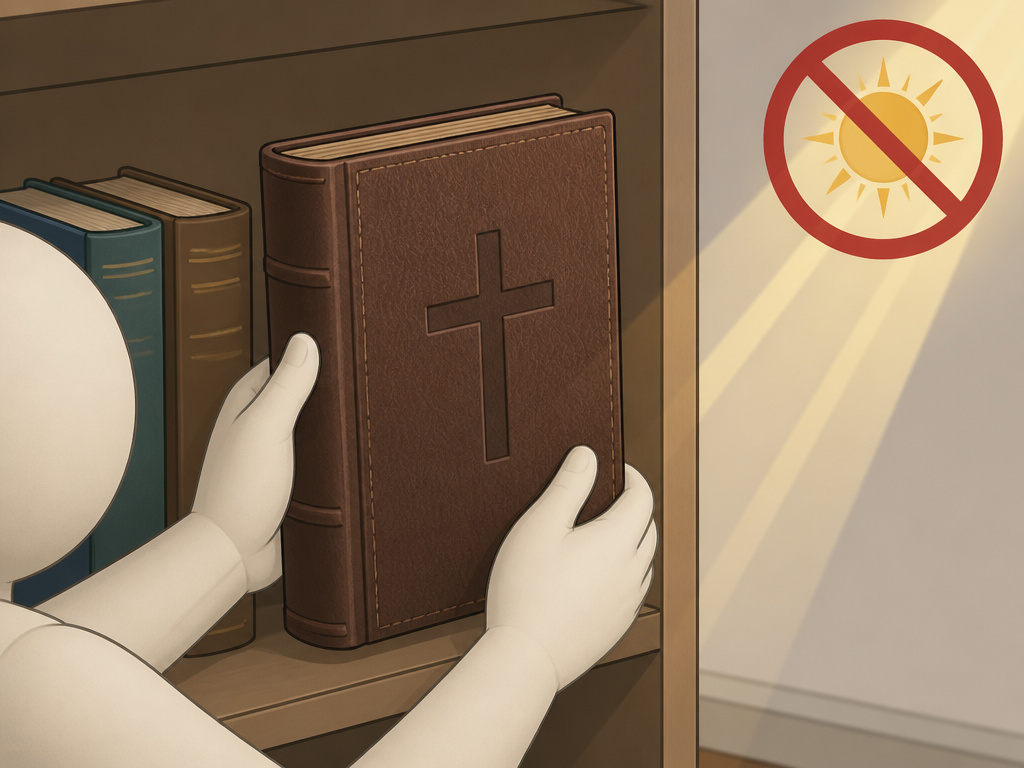 Conditioner is a treatment. Proper storage is ongoing care. Get this wrong, and everything else is a band-aid.
- Keep it out of direct sunlight. UV rays are leather’s worst enemy. They fade color and break down the fibers, leading to brittleness and cracking. A bookshelf away from a window is perfect.
- Avoid extreme heat and cold. Don’t leave it in a car. Heat bakes out moisture; cold can make leather brittle. Stable, room-temperature environments are key.
- Don’t smother it. Resist the urge to keep it in a plastic bag or a tight-fitting slipcover. Leather needs to breathe. Trapped moisture leads to mold.
- Store it flat or upright, not packed tight. Allow for some air circulation around the book. Don’t cram it into an overstuffed shelf where the spine can warp.
These rules aren’t unique to Bibles. They form the bedrock of general leather care for any item, from a wallet to a sofa. The environment is always the silent partner in longevity.
The Museum Secret: When Less is More
 The professional conservation world has a perspective that flips common hobbyist advice on its head. For decades, museums used dressings like neatsfoot oil and British Museum Leather Dressing. They stopped.
A landmark 1982 meeting of the International Institute for Conservation (IIC) reviewed the evidence and found “no outstanding successes” with dressings on historic collections. The U.S. National Park Service’s official position now strongly advises against them for museum objects, citing nearly a century of research showing no preservative effect and clear risks.
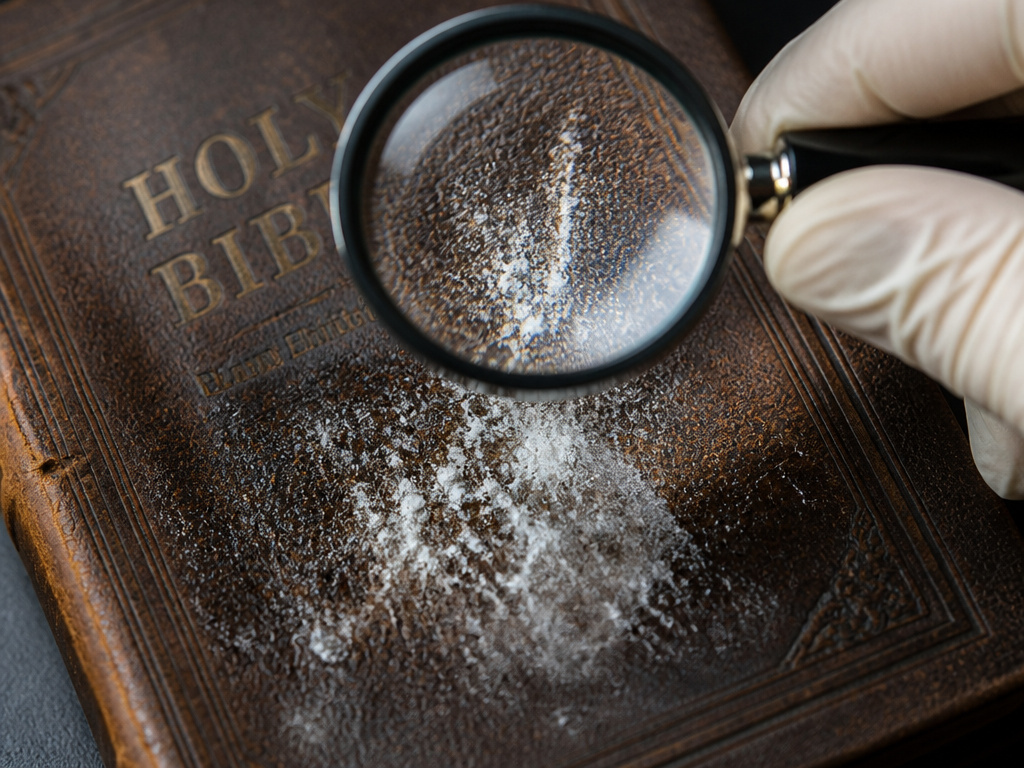
The biggest documented risk is fatty acid spew. This is a waxy, bright white bloom that rises to the surface of leather months or years after a dressing is applied. It’s the free fatty acids in the dressing separating out. It’s often mistaken for mold or salt, but it won’t brush off easily and can permanently stain.
If a white bloom develops and you haven’t had a water spill or a spike in humidity above 65%, it’s likely fatty acid spew from an old treatment. Reducing it requires careful, professional conservation.
This doesn’t mean you should never condition a working, personal item like a Bible you use daily. It means the default should be skepticism. Is the leather actually dry, or does it just look matte? Does it need intervention, or just a clean, stable home and the oil from your hands? For a museum piece, the answer is always “less.” For your Bible, it’s “maybe, but understand the trade-off.”
Troubleshooting Common Problems
Sometimes, despite your best efforts, things go wrong. Here’s how to diagnose the usual suspects.
- Stiff, Dry Leather: If it’s full/top-grain and not cracked, a light conditioner may help. If it’s bonded or coated, stiffness is a structural issue, conditioner won’t fix it.
- White Bloom: Assess humidity first. Stable environment? Likely fatty acid spew. Damp environment? Could be mold or salt. Spew feels waxy; salt is crystalline. For spew, gentle brushing with a soft, dry brush can reduce it, but removal is rarely complete.
- Cracking: Small surface cracks on quality leather can be stabilized with a conditioner to add flexibility. Deep, alligator-like cracks on bonded leather are terminal; the material has failed.
- Color Transfer: Dyes from clothing or another book can stain lighter leather. Immediately try a dedicated leather cleaner. Set-in stains may be permanent.
For stains or damage that feels beyond a simple clean, the approach is similar to caring for a fine leather handbag, sometimes professional restoration is the wisest investment.
Frequently Asked Questions
Should I use a protective cover on my leather Bible?
No. This is a common mistake. Leather needs to breathe. A plastic or vinyl slipcover traps moisture and dirt against the surface, creating a perfect environment for mold and mildew. The leather itself is the protective cover.
How often should I oil my leather Bible cover?
You likely don’t need to “oil” it at all. If you have a quality full-grain cover that sees little use and feels dry, a light conditioner like Lexol every 4-6 months is plenty. For a daily-use Bible, the oils from your hands are typically sufficient. Over-conditioning is a real problem.
Can I use olive oil or coconut oil?
I don’t recommend it. While they can moisturize, they are not formulated for leather preservation. They can go rancid, attract dust, and dramatically darken the leather. Products like Lexol or Pecard are specifically engineered to be stable and non-darkening.
What’s the difference between cleaning and conditioning?
Cleaning removes dirt and grime from the surface. Conditioning adds moisture and oils back into the leather fibers to maintain flexibility. Always clean before you condition; applying conditioner over dirt just seals the dirt in.
My bonded leather cover is peeling. Can I fix it?
You can temporarily glue down small flaps with a leather repair adhesive, but this is a cosmetic fix. Bonded leather degrades from within. The peeling will continue elsewhere. This is a material limitation, not a care failure. Consider replacing it with a zippered leather cover made from full-grain hide.
Can water ruin a leather Bible cover?
Small splash wiped off immediately is fine. Soaking or prolonged moisture is bad. It can cause water stains, warp the cover, and if not dried properly, lead to mold. If it gets wet, blot (don’t rub) with a dry cloth and let it air dry slowly, away from heat.
Before You Go
Caring for a leather Bible cover isn’t about finding a magic potion. It’s about restraint and understanding. The best thing you can do is use it regularly, store it thoughtfully, and clean it gently only when you must.
If you take away one rule, let it be this: identify your leather type before you do anything. That single step prevents more errors than any other. A full-grain cover might welcome a periodic balm; a bonded cover will be destroyed by it.
And remember the museum conservator’s mantra: sometimes, doing nothing is the most powerful preservation technique of all. For other items in your collection, the same mindful principles apply, whether it’s a leather wallet or a leather briefcase.
