
How to Properly Care For and Maintain Your Leather Journal
This post contains affiliate links. As an Amazon Associate, we earn from qualifying purchases.
This post contains affiliate links. As an Amazon Associate, we earn from qualifying purchases.
To care for a leather journal, condition it with a neutral beeswax-based balm or neatsfoot oil every 6 to 12 months. Keep it away from direct sunlight, extreme heat, and stored in breathable fabric, never sealed plastic. If it gets wet, blot it and let it air dry at room temperature; never use a heat source.
That’s the baseline. The schedule changes with your climate, and the wrong response to water creates permanent scars. A journal left on a sunny car dash at 150°F will dry out in hours, not seasons. Leather isn’t fussy, but it has clear limits.
What follows is the difference between maintenance and preservation. We’ll walk through the exact products, the climate exceptions that flip the standard advice, and the one storage mistake that invites mold within three months.
Key Takeaways
- Condition with a neutral leather balm every 6–12 months, but increase to three times a year in arid desert climates and drop to once a year in consistently humid environments.
- Never dry a wet journal with heat. Blot it, then let it air-dry at room temperature for 24–48 hours. For isolated water spots, dampen the entire surface lightly to prevent a visible line.
- Store your journal in a cloth bag or cardboard box with acid-free tissue paper. Sealing it in plastic guarantees mold growth in a humid environment within about three months.
- Blue and purple vegetable-tanned leathers fade fastest in sunlight. New covers may also transfer dye when wet, a risk, not a defect.
- This advice is for full-grain or top-grain leather. If your journal is made from bonded or “genuine” leather (a bottom-tier classification), conditioning cannot reverse its inevitable breakdown.
The Core Conditioning Schedule (and When to Break It)
For most climates, a neutral leather conditioner applied every six to twelve months maintains suppleness and prevents cracking. In desert climates, condition three times annually. In consistently humid climates, once a year is sufficient.
The 6–12 month rule is a starting point, not a decree. It assumes a moderate, indoor life. Your local weather writes the real schedule.
I learned this the hard way with a vintage bag I was rehabilitating. In my eagerness, I slathered on conditioner, assuming more was better. The leather stayed tacky for weeks, a sticky testament to impatience. Leather absorbs at its own pace. The goal is a thin, even coat that disappears in about fifteen minutes. If it’s still slick after that, you’ve used too much.
Here’s how climate changes the math:
| Climate | Conditioning Frequency | Why It Matters |
|---|---|---|
| Arid / Desert | Every 4 months (3x per year) | Low humidity and intense heat pull natural oils out rapidly. A car interior can hit 150°F, baking leather in a single afternoon. |
| Temperate / Indoor | Every 6–12 months | The standard. Protects against gradual drying from controlled indoor air. |
| Humid / Coastal | Once per year | Excess moisture in the air can prevent conditioner from absorbing properly, leading to a greasy film. Less is more. |
The product matters as much as the timing. You want a neutral, beeswax-based balm (like Renapur) or a pure oil like neatsfoot oil. Avoid anything with silicone or heavy waxes that sit on top and clog the pores. Think of it like applying a hand-rubbed oil finish to wood, thin coats, fully absorbed.
For a deeper dive on product selection and techniques that apply to all leather goods, our guide to the best leather care breaks down the options.
What to Do When It Gets Wet
Panic is the first mistake. Heat is the second. Never, ever place a wet leather journal near a radiator, fireplace, or in direct sun to dry. The leather will shrink, stiffen, and crack as it heats unevenly.
The right move is simple: blot gently with a soft, dry cloth to remove surface water. Then, let it air-dry at room temperature, which can take 24 to 48 hours. Keep it away from drafts and flip it occasionally.
Where this goes sideways: Trying to spot-dry a water splash. If you only dry the wet spot, you’ll create a permanent, darkened water line as the moisture evaporates from the center outward.
Here’s the counterintuitive fix from a professional manual: if a section gets wet, take a clean cloth, dampen it with water, and lightly dampen the entire surface of the cover. This equalizes the moisture content so the whole piece dries uniformly, leaving no visible ring. It works.
Also, be aware that new vegetable-tanned leather, especially in darker blues or purples, can transfer its dye when wet. The TRAVELER’S COMPANY explicitly notes this risk. If your journal dampens your clothes or bag, it’s the natural dye releasing, not a flaw. This characteristic is part of why a well-made leather journal cover ages with such unique personality.
Enemies of Leather: Sun, Heat, and the Wrong Storage
Leather’s adversaries are straightforward but brutal. Direct sunlight is a slow fade, especially for those beautiful blue and purple hues. Heat is a fast destroyer. A journal left on a windowsill for a summer will show a noticeable color difference. One stored near a heater will crack within a single winter season.
But the silent killer is bad storage. This is the most common, preventable error.
- Do Not Use: Sealed plastic containers, vacuum bags, or anything airtight. These trap ambient moisture.
- Do Use: A cloth bag (like cotton or flannel) or a sturdy cardboard box. Cushion the journal with acid-free tissue paper.
Why? Leather needs to breathe. In a humid environment, sealing it in plastic creates a petri dish. Mold can begin eating into the leather within about three months. The musty smell arrives long before the visible damage.
This principle of breathable storage is universal, whether you’re protecting a delicate leather Bible cover or a sturdy briefcase. The same logic applies to your other goods; the careful storage you’d use for a leather handbag is perfect for your journal.
The Patina Process: What’s Normal, What’s Not
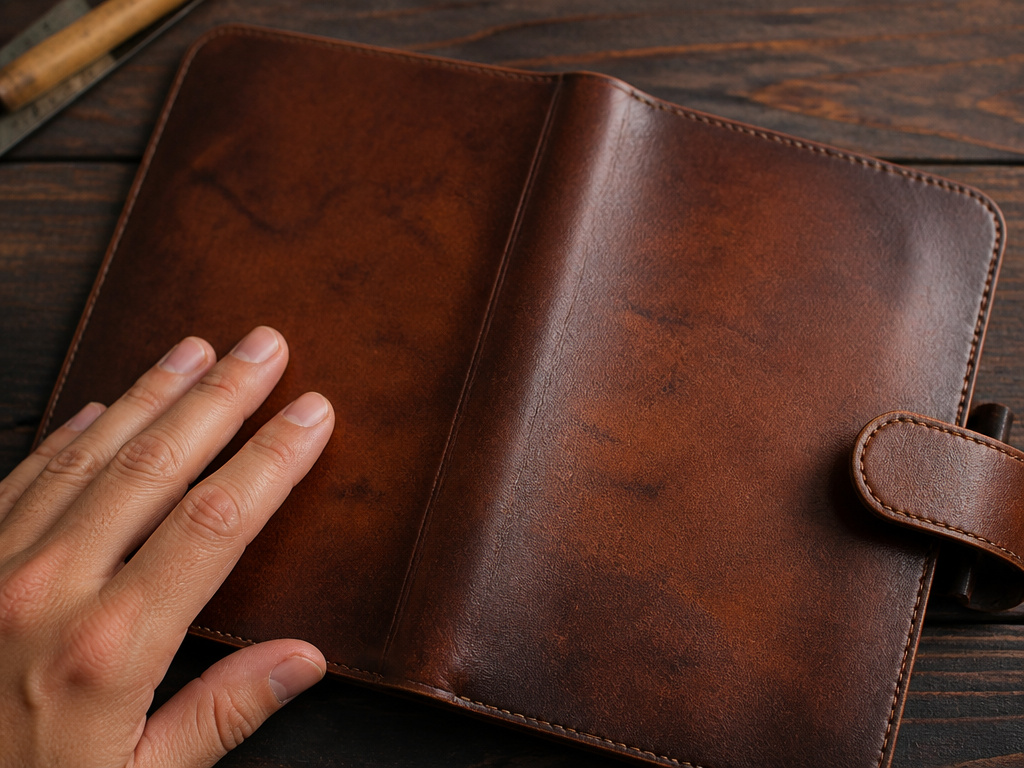
A full-grain leather journal is supposed to change. This is the patina, the story of your use written into the material. Vegetable-tanned leather will naturally darken and soften. Small scratches will blend in and become less noticeable over time. Your skin’s oils contribute to this living finish.
Sometimes, a new journal may show a “white powder” on the surface. Don’t worry. This is just excess oil from the tanning process rising to the surface due to temperature changes. You can gently wipe it off with a dry cloth, or it will absorb back in with use.
Here’s how to tell a healthy patina from a problem:
| Sign | Likely Cause | Is This Normal? |
|---|---|---|
| Gradual, even darkening | Oxidation & skin oils | Yes. This is the desired patina. |
| A stiff, dry feel | Lack of conditioning | No. Time for a light balm application. |
| A sticky, tacky feel | Too much conditioner applied | No. Wipe excess and allow weeks to absorb fully. |
| White, crystalline powder | Natural oils surfacing (bloom) | Yes. Wipe away. |
| Green/black fuzzy spots | Mold growth | No. Address storage humidity immediately. |
| Deep, brittle cracks | Chronic dryness or heat damage | No. Damage is likely permanent; condition to prevent worsening. |
Embrace the marks and color shifts. They differentiate your book from every other one. This evolving character is the same reason people cherish a broken-in leather wallet or a leather belt.
A Note on Leather Types: What You Can Actually Save
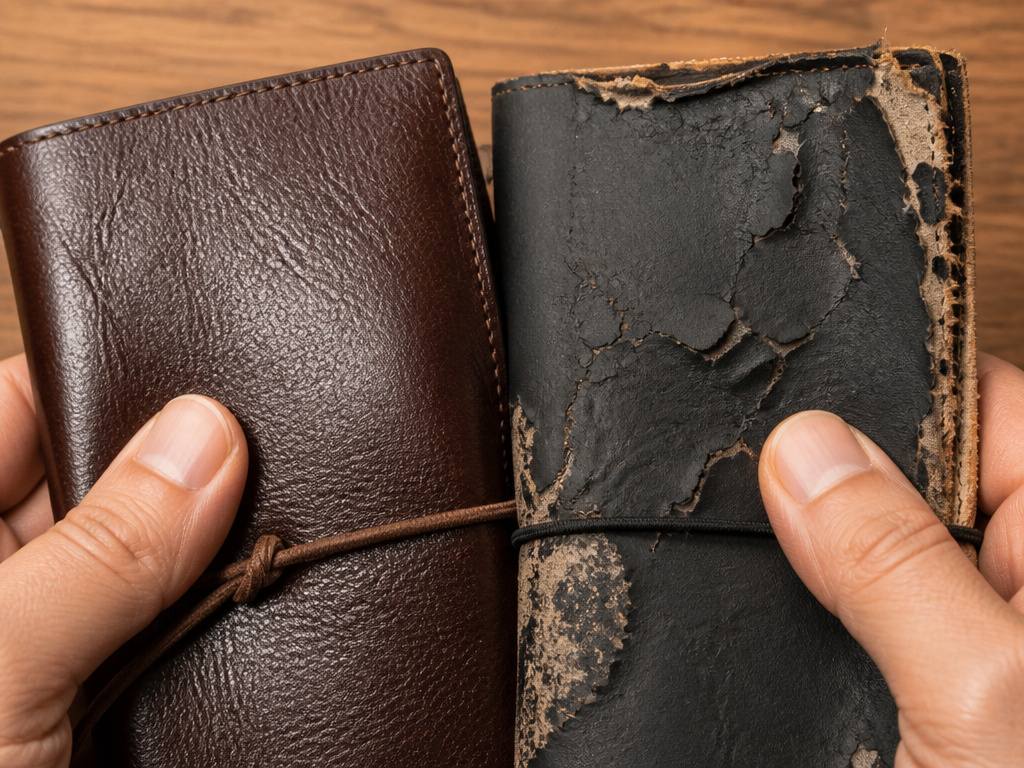
Let’s be clear about this. Everything discussed here applies to full-grain or top-grain leather. These are the quality hides that retain their natural fiber structure and can absorb conditioner.
If your journal is made from bonded leather or is marketed only as “genuine leather” (a misleading term that refers to a bottom-tier classification), conditioning will not save it. Bonded leather is essentially shredded fibers glued onto a backing. It will inevitably peel, crack, and disintegrate. No amount of balm can fix a material that lacks a continuous grain.
When you buy, know what you’re getting. Invest in a journal made from vegetable-tanned leather. Com/how-to-care-for-leather-shoes/), pays dividends for decades.
Frequently Asked Questions
How often should I condition my leather journal?
Condition it every 6 to 12 months for typical indoor use. Increase frequency to every 4 months if you live in a dry desert climate, and decrease to once a year if you live in a very humid climate. The leather should absorb a thin coat of conditioner within about fifteen minutes.
Can I use my nose oil to fix a scuff?
Some makers, like Galen Leather, suggest this folk remedy: rub your finger along the side of your nose to pick up natural oils, then rub the scuff in a circular motion. While it can temporarily darken a minor scuff, it’s not a substitute for proper cleaning and conditioning. For a guaranteed method, use a dedicated leather balm.
My journal got rained on. What now?
Blot it gently with a dry cloth. Then, let it air-dry at room temperature for 24-48 hours. Do not use a hair dryer, radiator, or sunlight. If the wet spot is isolated, lightly dampen the entire cover with a clean cloth to prevent a water line as it dries.
What is the white powder on my new journal?
This is “bloom” or surplus oil from the tanning process. It’s harmless and common on vegetable-tanned leathers. It appears due to temperature changes and will absorb back in with use. You can gently wipe it off with a soft, dry cloth if you prefer.
How should I store my journal if I’m not using it?
Store it in a breathable cloth bag or a cardboard box. Place sheets of acid-free tissue paper between the cover and pages. Never seal it in plastic, as trapped moisture encourages mold growth within months.
Will the leather color transfer?
New vegetable-tanned leather, especially in darker shades like blue or purple, can transfer dye when wet or rubbed against something light-colored. This is a known characteristic of the natural dye process, not a defect. The tendency lessens as the journal ages and the patina sets.
The Bottom Line
A leather journal is a record-keeper that itself keeps a record. Your care routine is just part of its story. Stick to a simple balm every 6-12 months, but watch your local humidity, that’s the variable that edits the schedule.
When in doubt, do less. Less conditioner, more patience. Less heat, more time. Store it so it can breathe. That’s it. The goal isn’t to keep it looking new, but to ensure it lives long enough to become old and truly yours. The techniques here are the same foundational essential leather care techniques that preserve everything from a leather watch strap to a leather briefcase. Start this week: feel your journal’s cover. If it’s stiff and dry, it’s time for a thin coat of balm.
