
How to Clean a Leather Watch Band and Preserve Its Quality
This post contains affiliate links. As an Amazon Associate, we earn from qualifying purchases.
Clean a leather watch band with a soft, dry cloth for daily care. For deeper cleaning, lightly dampen the cloth with water, never soak the strap. After exposure to sweat or moisture, wipe the band and let it air dry away from heat and sunlight. Never use soaps, disinfectants, or conditioners unless they are specifically formulated for vegetable-tanned leather.
That’s the baseline. The gap between a strap that lasts three years and one that cracks in six months isn’t about effort, it’s about the three things most cleaning guides skip. They tell you to wipe it down. They don’t tell you why water is fine but soap is a death sentence, or why the cleaning cloth you grab matters as much as the technique.
What follows is a walk through the leather itself. We’ll cover the exact three-step process endorsed by manufacturers like Suunto and Seiko, the single best tool for the job, and the specific warnings for light-colored and synthetic-backed straps. By the end, you’ll know how to clean any leather watch band and, more importantly, how to avoid the two most common mistakes that permanently damage them.
Key Takeaways
- Water is fine, soap is not. A lightly dampened cloth lifts dirt; soap residues remain inside the leather, accelerating stiffening and cracking.
- Dry slowly, away from heat. Forcing rapid drying with a hairdryer or placing the strap on a radiator causes the leather to shrink and harden.
- Leather balm, not shoe cream. For dry or stiff straps, a balm made for vegetable-tanned leather nourishes the fibers. Standard shoe creams sit on the surface and can clog pores.
- Disinfectants strip and stain. Apple explicitly warns against using disinfectant wipes (like Clorox or alcohol wipes) on leather bands, they dry out the hide and can cause permanent discoloration.
- Plan for replacement. Even with perfect care, sweat, oils, and constant flex mean a leather strap is a consumable item. Quality vegetable-tanned or shell cordovan straps offer the longest service life.
The 3-Step Cleaning Process (Do This, Not That)
Let’s be clear about this: you need a soft, lint-free cloth. A microfiber glasses-cleaning cloth is perfect. An old cotton t-shirt works. A paper towel or a rough dish towel will scratch the surface over time, those tiny abrasions are how a smooth strap turns dull.
Here’s the straightforward process, drawn directly from Suunto and Seiko’s official care guides.
**Step 1: Remove the strap from the watch.This is required. You need to clean the entire band, including the undersides and the areas near the lugs where grime builds up. If your watch isn’t water-resistant, this also prevents any accidental moisture from reaching the case. Using quick-release spring bars makes this a five-second task.
Step 2: Wipe with a dry cloth first. Go over the entire strap to remove surface dust and debris. This prevents you from grinding dirt into the grain during the next step.
Step 3: Dampen the cloth, don’t soak the strap. If there’s visible dirt or salt from sweat, lightly dampen a corner of your cloth with fresh water. Wipe the leather gently, following the grain. The goal is to lift the dirt, not saturate the leather.
Where this goes sideways: Using a soaking wet cloth or running the strap under a tap. Leather is not waterproof. Soaking it causes the fibers to swell, and as they dry they contract unevenly, leading to permanent warping and stiffness. Suunto’s guide is explicit: “Soaking them will cause discoloration or other damage.”
After wiping, immediately use a dry section of your cloth to blot away excess moisture. Then, let the strap air dry at room temperature, laid flat on a towel. This takes a few hours. Do not reattach it to the watch until it is completely dry to the touch inside and out.
What NOT to Use on Your Leather Band
The list of what to avoid is longer than the list of what to use. This is where most well-intentioned cleaning attempts fail.
| Product | Why It’s a Problem | What Happens If You Use It |
|---|---|---|
| Disinfectant Wipes | Contain alcohol or bleach. | Dries out leather oils, causes brittleness and cracks. Apple explicitly bans them. |
| Hand Soap / Dish Soap | Leaves alkaline residues. | Residues stay inside leather, attracting more dirt and accelerating fiber breakdown. |
| Saddle Soap | Formulated for filthy, oil-rich saddles. | Over-cleanses, stripping essential oils from dress watch straps, leaving them parched. |
| Compressed Air | Forces moisture and debris deeper. | Can drive grit into the stitch holes or between the leather and lining. |
| Heat (Hair Dryer, Radiator) | Forces rapid, uneven drying. | Leather shrinks, hardens, and can crack along stress points like the buckle holes. |
Apple’s support document is blunt: “Don’t use products containing bleach or hydrogen peroxide. Avoid getting moisture in any openings.” Their warning extends to soaps and cleaning products in general for the watch body, and the logic applies doubly to the strap. These chemicals don’t rinse clean from porous leather.
The same goes for conditioners during a cleaning session. Cleaning and conditioning are separate jobs. Applying a conditioner to damp, dirty leather traps that dirt beneath the treatment. Always clean first, let dry completely, then condition only if needed.
When Your Strap Needs More Than a Wipe
A damp cloth won’t fix everything. For specific issues, you need a targeted approach.
For light-colored straps: Be extra cautious. Suunto advises minimizing contact with dark clothing like denim to prevent dye transfer. If a stain occurs, address it immediately with a barely-damp cloth. Seiko notes that stains are simply more visible on light leather, so prompt cleaning is your best defense.
For dry, stiff, or flaking leather: This is a sign the leather has lost its natural oils. Here’s some straightforward advice: reach for a leather balm made for vegetable-tanned leather.
Common mistake: Using a generic leather shoe cream. Suunto states that “leather shoe cream is not ideal for this purpose.” Shoe creams often contain waxes and pigments designed to shine and color shoes. They sit on the surface and can clog the leather’s pores. A balm, like one from Colareb or a pure neatsfoot-oil blend, is designed to penetrate and nourish the fibers from within.
Apply a tiny amount to a clean cloth and work it into the leather in a circular motion. Let it absorb for an hour, then buff off any excess. The balm will darken the leather, this is normal and part of reviving the material.
For mold or mildew: This is a storage problem, often in a damp basement or gym bag. I’ve seen it more times than I care to count. Immediately wipe the strap with a 50/50 mix of white vinegar and water on a cloth. Dry it thoroughly in a well-ventilated area (not in direct sun). Mold means the strap was stored wet; fixing the storage habit is as important as the cleaning.
For synthetic-backed or “genuine leather” straps: Many bands, as Seiko points out, have a backing (or are entirely) made of synthetic leather. It’s more sweat-resistant but still requires care. Use the same damp-cloth method, but be aware that the synthetic layer won’t absorb conditioners. Conditioning will only affect the top grain layer.
The Why Behind the Rules: Sweat, Sun, and Storage

Cleaning isn’t an isolated event. It’s damage control in a constant battle against three enemies.
Sweat is acidic and contains salts. Wiping your strap after a sweaty day isn’t obsessive, it’s basic maintenance. The salts are abrasive crystals; the acid breaks down the leather’s fibers over time. This is why a leather band is a consumable. Even the best types of leather watch straps will eventually succumb to daily exposure.
Sun and Heat are dehydrators. Seiko warns against leaving a watch on a car dashboard. The heat bakes the moisture and oils right out of the leather, leaving it brittle and prone to cracking. Always dry your strap at room temperature and store it away from windows or heaters.
Poor Storage creates the perfect environment for mold and permanent deformation. Never store a damp strap in a sealed box or plastic bag. If you’re rotating straps, keep them in a breathable pouch or laid flat in a drawer. This is a core part of any essential leather watch strap care guide.
Here’s the thing. A patina, the beautiful darkening and softening of leather over time, is a sign of good care and use. Cracking, whitish salt stains, and stiffening are signs of neglect. Your cleaning routine directly determines which one you get.
Making the Right Choice for Your Next Strap
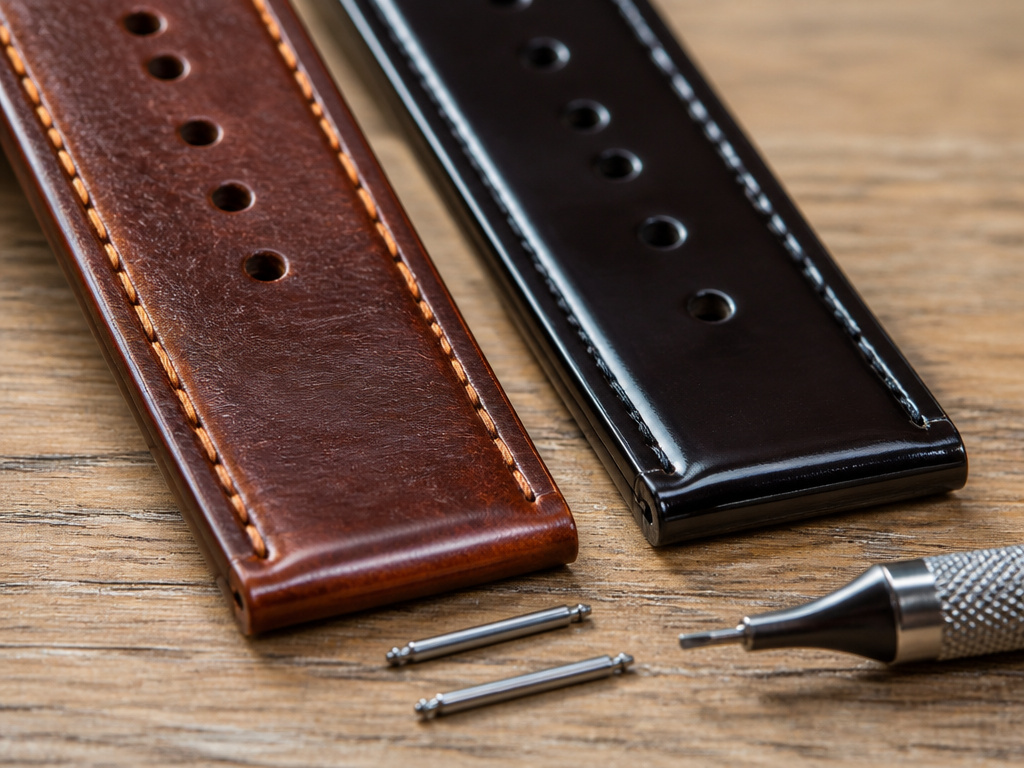
If you’re cleaning because your current strap is failing, your next choice matters. Not all leather is equal for watch band duty.
For durability and patina, vegetable-tanned leather is the benchmark. It ages beautifully and responds well to proper care. Shell cordovan is nearly impervious to water and develops a glorious gloss, but it commands a premium price.
When you choose a leather watch strap, look for quality edge painting or burnishing and a comfortable lining. A poorly finished edge will absorb sweat and fray quickly. Avoid straps thicker than 3.5mm for a dress watch; they’re uncomfortable and look clunky.
Remember, a strap that’s easy to change a leather watch strap is a strap you’re more likely to keep clean. You can rotate it with a silicone band for workouts or swimming, heeding Suunto’s advice to switch for high-output activities. This single habit extends the life of your leather more than any cleaner.
Frequently Asked Questions
Can I use alcohol wipes to sanitize my leather watch band?
No. Do not use alcohol wipes, Clorox wipes, or any disinfectant containing bleach or hydrogen peroxide on leather. Apple’s official guidance explicitly prohibits this, stating these chemicals can damage the leather. They dry out the essential oils, leading to stiffness and cracking.
How often should I clean my leather watch strap?
Wipe it with a dry cloth every few days to remove dust and oils. Perform a light cleaning with a damp cloth every two to four weeks, or immediately after exposure to sweat, saltwater, or dirt. Deep conditioning is only needed once or twice a year, if the leather feels dry.
My strap got soaked. What should I do?
Blot away excess water immediately with a dry towel. Do not apply heat. Let the strap air dry naturally at room temperature, stuffed loosely with paper towels to help absorb moisture from the inside. As it dives, gently reshape it. Be prepared for some permanent stiffening.
Can I use the same methods to clean leather boots?
The core principle is identical: use a damp cloth and avoid harsh chemicals. However, boots require more robust conditioning due to greater exposure. For a dedicated process, our guide on how to clean leather boots covers the specifics for footwear.
Before You Go
One rule most guides skip: if you get a stain on a light-colored strap, act within the hour. The longer it sits, the deeper it sets. That’s the practical reality of leather care, it rewards consistency and punishes procrastination.
The goal isn’t a sterile, factory-fresh strap. It’s a band that ages with character, not decay. That means choosing the right leather watch strap care routine and sticking to it. Start with a dry cloth. Upgrade to a damp one when needed. Never reach for the soap bottle. Store it properly.
So, the next time you take your watch off, give the strap a ten-second wipe. That single habit, more than any fancy product, is what adds years to its life.
