
How to Prevent Leather from Cracking: Expert Tips on Humidity
This post contains affiliate links. As an Amazon Associate, we earn from qualifying purchases.
To prevent leather from cracking, control its environment. You need stable humidity between 40% and 60%, temperatures below 23°C (73°F), and protection from direct sunlight and heat sources. Conditioning is secondary, it replaces lost oils, but it cannot reverse the structural damage caused by a dry, hot atmosphere. The leather’s own chemistry demands moisture in the air to stay pliable.
Most guides focus on the bottle of conditioner. They’re not wrong, but they’re starting in the middle. The real battle happens in the air around your leather. Think of a rawhide dog chew. Leave it in a sunny window and it turns into a brittle chip. Leave it in a damp basement and it grows mold. Leather is skin, tanned and treated, yes, but still skin. It responds to its climate before it ever feels your care products.
What follows is a breakdown of the three environmental levers, humidity, temperature, and light, and the simple routine that ties them together. By the end, you’ll know why your attic is a leather graveyard and your closet might be its sanctuary.
Key Takeaways
- Leather cracks when it loses moisture to a dry atmosphere (below 40% RH); conditioning replenishes oils but cannot restore lost moisture.
- Store leather in a stable environment: 40-60% relative humidity and under 23°C (73°F). Fluctuations are more damaging than a steady, slightly imperfect state.
- Never use heat to dry wet leather. Always blot and air-dry at room temperature to avoid forced oil loss and irreversible stiffening.
- Sunlight and proximity to heaters cause photo-oxidative degradation, fading color and baking the leather from the inside out.
- Most commercial cleaners and harsh treatments like saddle soap strip protective top-coats and natural oils, doing more harm than good over time.
Why Humidity Is Your Leather’s Best Friend (or Worst Enemy)
Forget the conditioner for a minute. What’s the humidity in your closet right now? If you don’t know, you’re flying blind. Leather is hygroscopic. It constantly exchanges water vapor with the air around it.
The sweet spot is a relative humidity (RH) between 40% and 60%. In this range, the leather fibers retain enough moisture to stay flexible. Drop below 40% RH, and the leather starts sacrificing its internal water to the drier air. The fibers contract. They pull against each other. That tension is what shows up as micro-cracks in the surface grain, which then widen into full splits.
A decrease in room temperature of 5°C (e.g., from 23 to 18°C) slows chemical degradation by half. High-risk items and deteriorated leathers are best kept in cold storage, but this requires careful bagging to prevent moisture swings.
This isn’t a gentle suggestion; it’s a physical requirement. Museums and archives, the folks paid to preserve things for centuries, live and die by this 40-60% rule. Their guidelines note that excessive dehydration, forcing permanent moisture loss below 22% RH, leads directly to shrinkage and deformity. Your leather jacket won’t tell you it’s thirsty until it’s too late.
The practical takeaway: Buy a cheap digital hygrometer. Toss it in your storage area. If it reads 35%, your leather is in a desert. A small room humidifier can correct this, but go slow, you want stability, not a rainforest. Dramatic swings are worse than a steady, slightly low number.
Temperature, Sunlight, and the “Slow Bake”
Heat accelerates every destructive chemical process in leather. Think of it as a slow bake. High temperatures, especially when combined with the low humidity of a heated home in winter, drive out moisture and volatilize the natural oils that keep leather supple.
The rule is simple: keep it cool. Below 23°C (73°F) is ideal. Your attic, your car’s back shelf in summer, the spot next to the radiator, these are leather execution chambers. I’ve seen motorcycle seats left in garages where afternoon sun through a window turns the leather into something that feels like stale toast.
Sunlight is a double threat. The UV radiation breaks down dyes and finishes, causing fading. But the heat it delivers is just as bad. It’s why you’ll see one side of a wallet faded and stiff, while the other side tucked in a pocket remains relatively fine.
Manufacturers know this. Indian Motorcycle’s manual states plainly that regular exposure to sun and heat can rapidly fade and dry leather, causing it to crack. They’re not being cautious; they’re reporting what happens. The fix is simple: store leather out of direct light. Use curtains. Don’t park your bag in a sunny spot.
The Conditioning Myth (And The Truth)
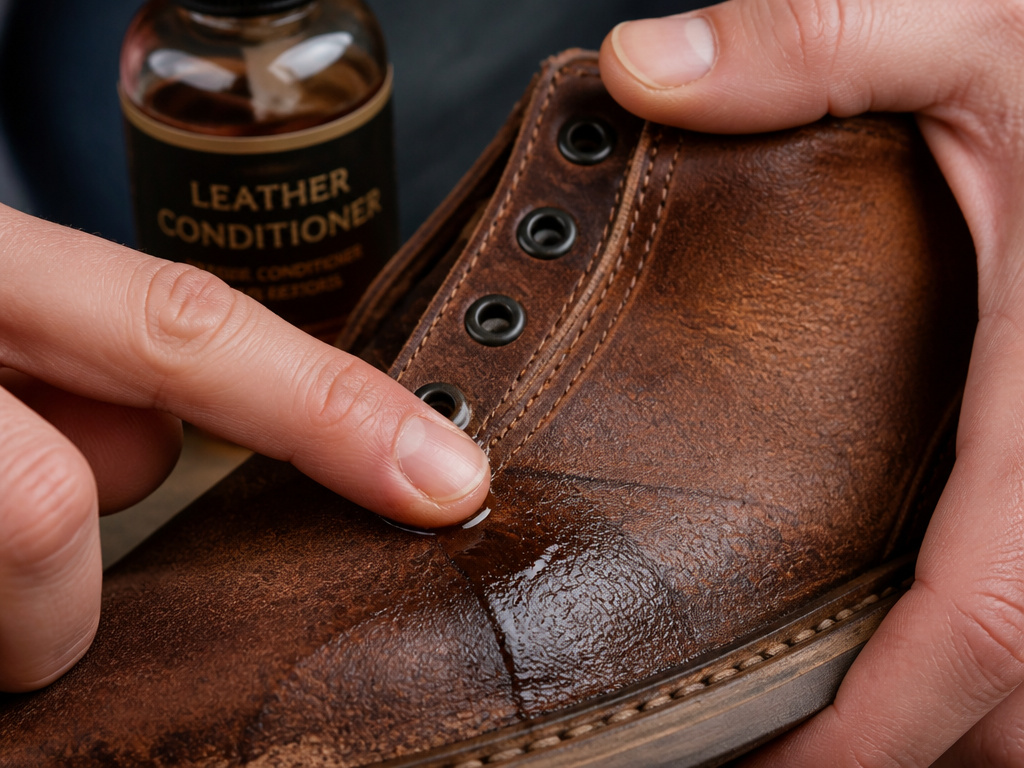
Here’s where most people start, and it’s where they often go wrong. Conditioning is not prevention. It’s rehabilitation.
Leather conditioner works by replacing the natural fats and oils that evaporate or are cleaned away over time. It’s like moisturizer for your skin. If your skin is cracking from desert air, lotion helps, but moving out of the desert is the real cure. The same is true for leather. A good leather conditioner hydrates and nourishes the fibers, slowing moisture loss. But it cannot single-handedly combat a hostile environment.
Which conditioner? That’s a deep dive, but the short answer is to match the product to the leather type. A heavy, wax-based conditioner like Huberd’s Shoe Grease is perfect for oil-tanned work boots but will ruin a delicate lambskin jacket. For most general-purpose items, bags, jackets, belts, a light, absorbent oil like leather oil (think Bick 4 or Lexol) does the job without oversaturating.
The key is frequency. Condition only when the leather feels dry to the touch, not on a calendar schedule. For a jacket worn seasonally, that might be once a year. For daily-use boots, maybe every few months. Over-conditioning is real. It clogs the pores, attracts dirt, and can leave a sticky residue.
I won’t recommend saddle soap for anything other than a saddle or heavy work boot. On a dress shoe or bag, it strips far too much natural oil, leaving the leather parched and begging for help, which often leads to over-conditioning and a gummy feel.
How to Handle Moisture (Rain, Spills, Life)
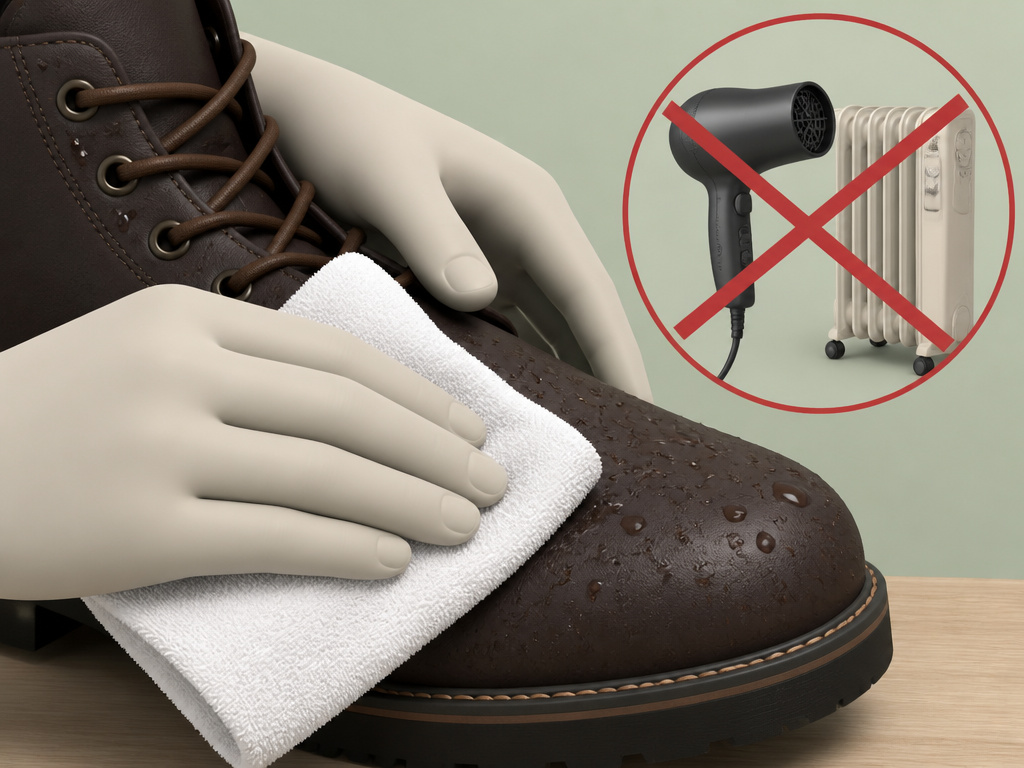
Leather will get wet. That’s fine. Panicking and doing the wrong thing is what causes damage. The cardinal sin is applying heat.
If your leather gets soaked, blot off excess water with a clean, absorbent towel. Then let it air-dry naturally at room temperature, away from direct heat. Do not use a hair dryer, place it on a radiator, or put it in front of a fan heater. Heat forces the moisture out too quickly, taking the leather’s natural oils with it and causing the fibers to contract violently and stiffen.
Indian Motorcycle’s manual is explicit: “If leather is exposed to moisture, wipe it down and allow it to dry naturally at room temperature. Do not accelerate drying with heat, as this removes natural oils and causes cracking.” This is a physical fact, not a preference.
Once completely dry, the leather will likely feel stiff. This is when you apply a light conditioner to restore flexibility. The stiffness is just the fibers waiting for some lubrication. A proper conditioning guide will walk you through testing and application.
Common Mistakes That Guarantee Cracks
We’ve touched on the big ones, but a few specific errors are so common they deserve their own spotlight. These aren’t just bad ideas; they’re fast tracks to a leather cracking problem you’ll need to repair.
| Mistake | Why It’s Damaging | The Better Move |
|---|---|---|
| Using saddle soap on dress leather | It’s an alkaline cleaner designed to lift heavy grime and sweat; it strips an excessive amount of natural oil, leaving the leather desiccated. | For general cleaning, use a pH-balanced leather cleaner like Lexol Leather Cleaner. |
| Storing leather in plastic bags | Traps any residual moisture, promoting mold, and prevents the leather from “breathing” and maintaining equilibrium with room humidity. | Store in a breathable cotton pillowcase or a dedicated garment bag with ventilation. |
| Applying conditioner directly from the bottle | Leads to over-application, saturation in spots, and a greasy finish that attracts dirt. | Apply conditioner to a clean, lint-free cloth first, then work it into the leather. |
| Ignoring the “feel” test | Conditioning on a schedule rather than need can oversaturate the leather, clogging its pores and affecting breathability. | Before conditioning, press your thumb into the leather. If it doesn’t give slightly and feel cool, it’s likely dry. If it’s already supple, skip it. |
The mistake with the most surprising consequence is using silica gel desiccant packs in storage. In an effort to prevent mold, people toss them in with leather. In a sealed container, these packs can pull too much moisture from the leather itself, creating the very dry environment we’re trying to avoid. A stable room environment beats a battlefield of chemical packets.
The Routine That Actually Works
Let’s tie this all together into a simple, actionable routine. This is the process that sidesteps the commodity advice and focuses on the system.
After Wear:
- Let the item air out for an hour on a wide, padded hanger (for jackets) or shoe trees (for footwear). This allows sweat and ambient moisture to evaporate.
- Use a soft horsehair brush to gently remove surface dust and dirt. This prevents abrasion during storage.
Cleaning & Conditioning (As Needed):
- Clean only when visibly soiled. Use a damp cloth for dust; for deeper grime, use a dedicated leather cleaner applied via cloth.
- Condition only when the leather passes the “thumb test” described above.
- Apply conditioner sparingly, in thin layers, allowing full absorption (usually 24 hours) between applications.
Storage:
- Choose a dark, cool place with stable humidity. An interior closet is usually perfect.
- Ensure the item is fully supported. Jackets on wide, padded hangers; bags stuffed with acid-free tissue paper; shoes with cedar shoe trees (which also absorb moisture).
- Use breathable fabric covers, never plastic.
This routine isn’t glamorous. It doesn’t require a cabinet full of care products. It requires a hygrometer and some patience. The goal is consistency. A stable environment does more heavy lifting than any miracle product.
Special Cases: Car Interiors, Heirlooms, and Wet Climates
Not all leather lives in a closet. Some environments demand extra steps.
Automotive Leather: Car interiors are torture chambers, freezing in winter, oven-hot in summer, and blasted by UV rays. Cracking is a common fate. The NHTSA leather care best practices bulletin from Lexus is revealing: it warns against applying cleaners directly to the leather and stresses hand-cleaning with water and mild detergent only. The protective coating on automotive leather is fragile. Use a sunshade religiously, and condition with a product designed for car seat leather like 303 Automotive Protectant a few times a year.
Heirloms & Antiques: Old, dry leather is incredibly fragile. Its shrinkage temperature may be critically low. The National Park Service leather conservation guide advises extreme caution, noting that handling in dry environments (below 30% RH) risks physical damage from moisture loss. Don’t try to aggressively condition or bend these pieces. Consultation with a conservator is wise.
Humid Climates: High humidity (above 65% RH) brings risk of mold and swelling. The fix is airflow and occasional use of a dehumidifier in the storage space, not sealing the leather away. Leather needs to breathe.
Frequently Asked Questions
Can you fix leather that has already cracked?
You can improve its appearance and prevent further damage, but you cannot truly “heal” a deep crack. Fillers and dyes can mask the damage, and a thorough step-by-step guide for repairing cracked leather can walk you through the process. For structural integrity, the leather is permanently compromised.
How often should I condition my leather?
There is no universal schedule. Condition based on feel and use. A leather jacket stored for a season may need conditioning once before winter. Daily-wear boots might need it every 2-3 months. The thumb test, pressing your thumb into the leather; if it doesn’t give slightly and feel cool, it’s dry, is your best guide.
Is vegetable-tanned leather less prone to cracking?
It’s different, not necessarily less prone. Vegetable-tanned leather is more porous and absorbent, so it reacts more dramatically to humidity swings. However, it also generally contains more natural oils and ages by developing a patina rather than just cracking. With proper care, it can be more forgiving and durable over the long term.
Will a leather conditioner make my leather waterproof?
No. Conditioners nourish and soften. They may slightly improve water resistance by plumping the fibers, but they are not waterproofing agents. For that, you’d need a dedicated waterproofing wax or silicone spray, which often trade breathability for protection.
Is it okay to store leather in the basement?
It depends entirely on your basement’s climate. If it’s damp and musty, absolutely not, mold will be your primary concern. If it’s dry and cool with stable humidity, it could be fine. Always monitor with a hygrometer. Attics, however, are almost always too hot and dry for safe leather storage.
Before You Go
The single most damaging place you can store a leather good is a hot, dry attic. The single most protective thing you can do is monitor and manage the humidity where you keep it. Everything else, the brushing, the careful oiling leather, the selection of a conditioner for longevity, supports that stable environment.
This week, do one thing: check the humidity where your favorite leather item lives. If it’s consistently below 40%, you’ve found the root cause of any stiffness or early cracking. The fix might be as simple as moving it to a different closet or using a small humidifier in the dry months. Leather isn’t fragile, but it is specific. It tells you what it needs through its feel and flexibility. Your job is just to listen.
