
How to Protect a Leather Couch from Pets: A Complete Guide
This post contains affiliate links. As an Amazon Associate, we earn from qualifying purchases.
To protect a leather couch from pets, match the leather type to the threat and act fast. Use a conditioner like Leather Honey every 3-6 months to create a moisture barrier against spills. Trim your pet’s nails weekly and cover high-traffic spots with a tightly woven slipcover. For immediate accidents, blot, never rub, and use a cleaner matched to your couch’s material code. The leather’s finish dictates your entire strategy; aniline leather needs different care than coated split-grain.
Leather can be surprisingly resilient to a busy household, but only if you understand its language. It’s not about buying a magic spray or hiding the couch forever. It’s about knowing which threats dry it out, which ones stain, and which physical barriers actually stop claws. A generic approach fails within weeks. I’ve seen a dog’s single accident turn a beautiful, unprotected aniline sofa seat stiff and discolored because the owner used a general-purpose cleaner that stripped the finish.
What follows is a breakdown of the four-part system that works: choosing defensible leather, reading its care labels correctly, setting up physical and chemical barriers, and executing a zero-delay response plan for messes. By the end, you’ll know exactly where your couch is vulnerable and how to shore it up.
Key Takeaways
- Leather type is everything. Pigmented or semi-aniline finishes with a protective topcoat handle pets far better than delicate, unfinished aniline leather.
- Conditioning is your first line of chemical defense. A well-conditioned leather couch repels liquids better, making urine or drool less likely to stain. The Bissell cleaning code on your couch’s tag is a required rule. An ‘X’ means no liquids at all, not even water.
- Slipcovers are the most effective physical barrier against claws and fur, but they must be non-slip and snug to work.
- Speed beats any cleaner. Blotting a spill within 60 seconds prevents more damage than the most expensive specialty product applied after ten minutes.
Your Leather Type Dictates the Battle Plan
Start by identifying your leather. This isn’t a marketing term; it’s the single biggest factor in how well your couch will stand up to paws and claws. Think of it like armor grade.
Pigmented leather is your best friend in a pet-filled home. It has a thick, painted-on polyurethane topcoat that sits over a split-hide base. This coating makes it highly resistant to stains, scratches, and moisture. Spills bead up on the surface, giving you crucial time to grab a cloth. Scratches from untrimmed nails tend to scuff the coating rather than gouge the hide beneath. Most mid-range family sofas from brands like La-Z-Boy or Bassett use a pigmented finish for this exact reason.
Semi-aniline leather offers a middle ground. It’s dyed all the way through for rich color, then receives a light protective topcoat. This preserves more of the leather’s natural feel and character while adding a shield against everyday accidents. It’s more vulnerable than pigmented leather but far more durable than its pure counterpart. If you want a balance of beauty and pet-resistance, this is the category to explore.
Aniline leather is the luxury option, and it’s a terrible choice for pets. Dyed but unfinished, it has no protective coating. Every drop of water, every oily paw print, and every claw nick soaks directly into the hide. It develops a beautiful patina over years of gentle human use, but a single dog with long nails can etch a permanent history into the seat cushion in one afternoon. I treat aniline leather like a museum piece, beautiful to look at, but you keep the velveteen rope between it and the world.
The part nobody mentions: That “buttery soft” aniline leather couch you loved in the showroom is absorbing the oils from your hands during the test sit. Those same oils, magnified by a dog’s fur and skin, will create dark, greasy patches on the arms and seat within a year of regular pet use. The leather will tell you what it needs, and what it’s saying is that it wasn’t made for this job.
| Leather Type | Best For Pet Homes? | Why It Works (Or Doesn’t) | The Realistic Timeline for Damage |
|---|---|---|---|
| Pigmented (Coated) | Yes, highly recommended. | Thick plastic coating resists liquid absorption and surface scratches. | Deep scratches may appear after 2+ years of untrimmed claws. |
| Semi-Aniline | Yes, with caution and maintenance. | Light topcoat provides a stain barrier; hide underneath is still somewhat vulnerable. | Visible wear spots on high-traffic areas (arms, seat front) within 12-18 months. |
| Aniline (Pure) | No. Avoid if pets have couch access. | No protective layer; every spill and scratch is permanent. | Significant staining or scratching possible within weeks of unsupervised pet access. |
Check Your Cleaning Codes Before You Buy Anything
Every reputable leather couch has a care tag sewn into a seam, usually under the cushions or along the side rail. On it, you’ll find a series of letters: W, S, W-S, or X. These are the Bissell cleaning codes, and they are the manufacturer’s direct instructions for what your specific leather can tolerate. Ignoring them voids any hope of a warranty claim and can ruin the finish.
Here’s what each code means for pet-related messes: – W (Water-based cleaning safe): You can use a mild, pH-balanced leather soap like Lexol Leather Cleaner diluted in water. This is common for many pigmented and semi-aniline leathers. It’s safe for cleaning up muddy paw prints or drool. – S (Solvent-based cleaners only): Water is the enemy. You must use a solvent-based cleaner like those in the Chemical Guys leather care line. These are typical for some older aniline or specialty finishes. Using a water-based cleaner on an ‘S’ code leather can cause permanent discoloration or stiffening. – W-S (Either water or solvent is acceptable): The most flexible and forgiving code. You can use whichever cleaner you have on hand that matches the type of spill (water-based for general grime, solvent for oily stains). – X (Vacuum only. No liquids): This is the critical one. It means your leather is so delicate, think suede, nubuck, or some ultra-matte aniline finishes, that any liquid will stain it immediately. Your only cleaning tool is the soft brush attachment on your vacuum.
I developed a rule through trial and error: always let leather conditioners soak in for at least an hour before buffing. Buffing too soon once left a waxy residue that attracted every speck of dust and pet hair in the room, creating a grimy, tacky patch on the headrest. That residue also clogged the leather’s pores, preventing future conditioning treatments from penetrating. Now I apply conditioner, set a timer, and walk away.
W – S – or X: The Bissell cleaning code printed on your furniture’s tag is the final authority on what you can safely use to clean a pet accident. Using the wrong type, water on an ‘S’ code or any liquid on an ‘X’, creates a permanent ring or darkened spot.
Choose the Right Barrier: Slipcovers Beat Training
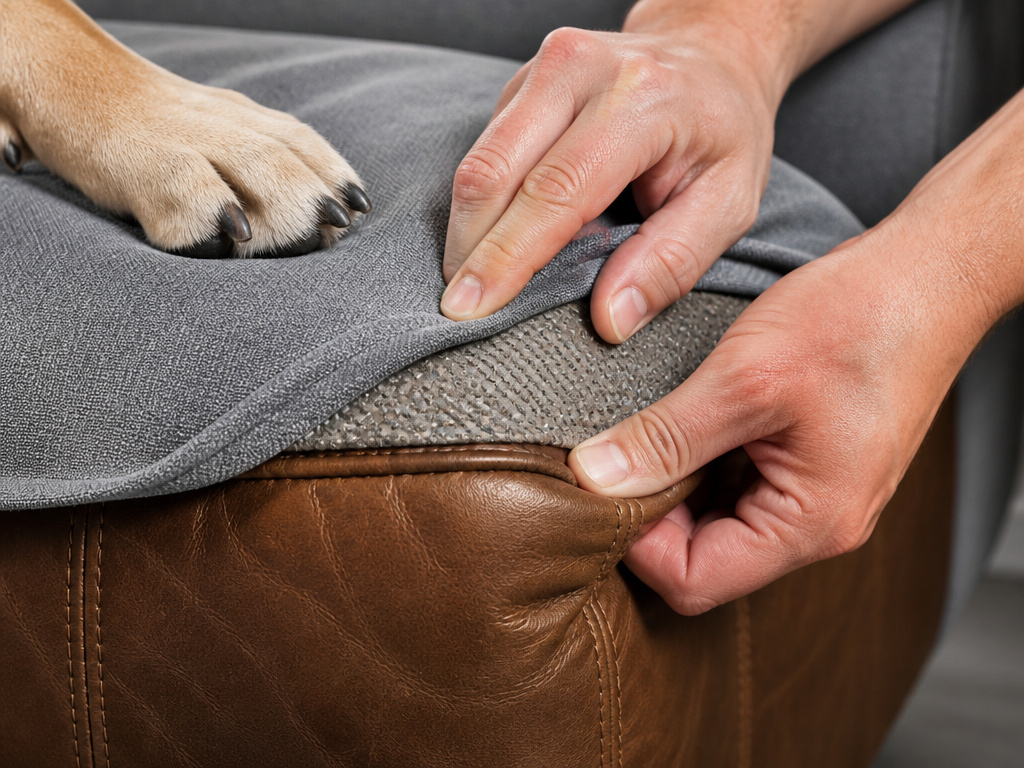
You have two paths to physically protect the couch: modify the pet’s behavior or modify the couch’s surface. In my experience, covering the couch is faster, more reliable, and less frustrating for everyone involved.
A high-quality slipcover is your strongest physical defense. Look for these three features: 1. A non-slip backing. This is non-negotiable. Pets jump, dig, and spin before lying down. A standard slipcover will bunch up underneath them, exposing the leather. A backing with silicone dots or a rubberized grid keeps the cover in place. Our guide to the best non-slip covers for leather sofas details which materials actually grip. 2. A tight, tailored fit. Loose fabric is a chew-toy invitation and does nothing to stop claws from finding the leather beneath. Measure your couch precisely and buy accordingly. 3. Machine-washable material. You will be washing this cover often. Pet hair, dander, and the occasional muddy print need to come out in a regular cycle without shrinking or fading.
Blankets and throws are a temporary fix. They slide off, get bunched up, and don’t protect the sides or back of the couch. They’re fine for an occasional guest, but for a pet that claims the sofa as its throne, they’re ineffective. For a more permanent and stylish solution, investing in dedicated couch covers for dogs is a smarter move.
Training has a high failure rate with determined pets. You can teach a dog to stay off the furniture, but it only takes one moment of distraction, one thunderstorm where they seek comfort, to undo months of work. It also doesn’t protect against the indirect threats: dried mud that falls from their fur, or oil from their skin transferring onto the arms as they walk by. A cover provides constant, passive protection.
Conditioner is Your Secret Weapon
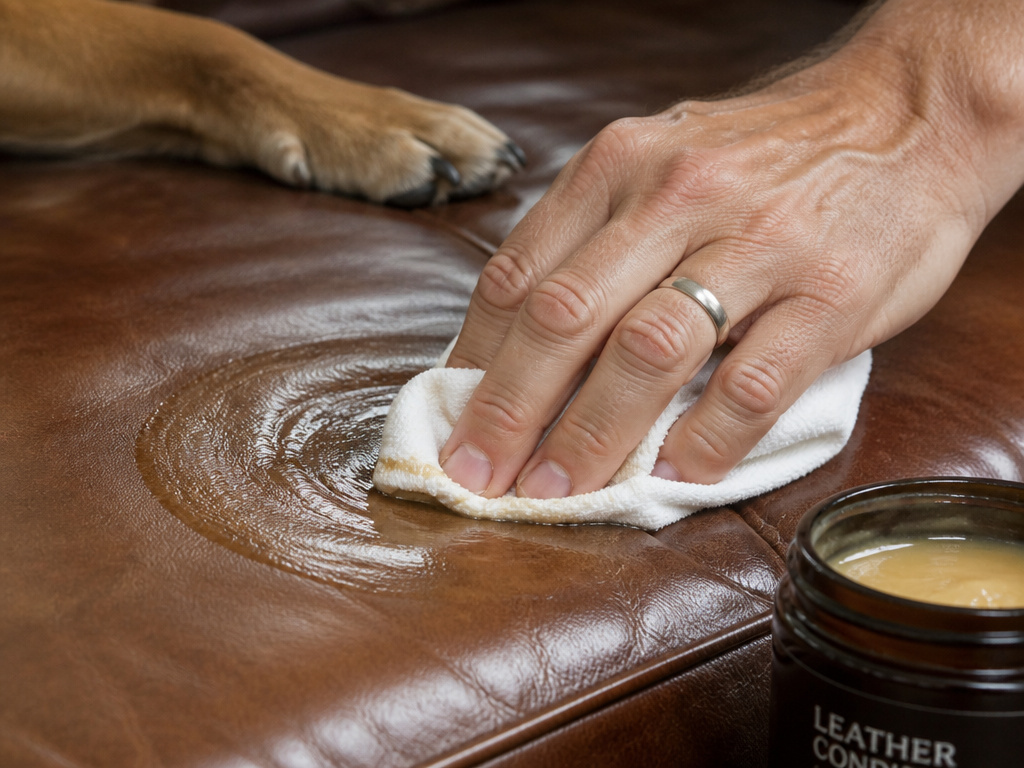
Leather conditioner does more than just keep the material supple. In a home with pets, it acts as a repellent barrier. A well-conditioned hide has its pores filled with nourishing oils, which leaves less room for other liquids, like urine or spilled water, to soak in quickly. This gives you the crucial extra minutes to blot a mess.
The timeline matters. For a couch in a sunny room or a dry climate, condition every three to six months. In a more stable environment, every six to twelve months is fine. How do you know it’s time? The leather will look dull and feel stiff to the touch, not cool and pliable. In arid conditions, you might even see fine surface lines starting to form, like wrinkles on skin.
The process is straightforward but slow: 1. Clean the leather first with a product matched to its code. Dirt acts like sandpaper, grinding into the finish when you buff. 2. Apply a thin, even coat of conditioner. Leather Honey Conditioner is a popular, effective choice. Use a clean, soft cloth. 3. Walk away. Let it soak in for a minimum of one hour. Overnight is better. 4. Buff off any excess with a fresh, dry cloth. If the surface feels tacky, you either used too much or didn’t wait long enough.
This routine is the cornerstone of any long-term plan to protect leather furniture. It’s the “keep the engine oiled” step that makes all other repairs and cleaning easier.
The Immediate Response Protocol for Spills and Accidents
When an accident happens, your speed and technique matter more than the brand of cleaner you own. The goal is to prevent liquid from crossing the finish and reaching the raw hide underneath. Here is the step-by-step drill for the most common pet-related messes.
For Liquid Urine or Vomit:
- Blot, do not wipe. Place a stack of clean, absorbent cloths or paper towels over the mess and press down firmly. Wiping spreads the liquid and grinds any solids into the grain.
- Absorb from the edges in. Replace the soaked towels with dry ones until no more moisture transfers.
- Only then, clean. Apply a small amount of leather-appropriate cleaner (per your code) to a clean cloth and gently dab the area. Rinse the cloth with clean water (if code allows), wring it out completely, and dab again to remove cleaner residue.
- Air dry fully. Let the spot dry completely, away from direct heat, before allowing pets or people back on the couch.
- Follow with conditioner. Once dry, apply conditioner to that area to restore the protective barrier.
For Mud or Dirt:
- Let it dry completely. Trying to clean wet mud makes a bigger, wetter stain.
- Vacuum thoroughly with a soft brush attachment to remove all loose debris.
- Use a barely damp cloth (if code is W or W-S) to gently remove any remaining residue. For ‘S’ code leather, use a dry, soft brush.
For Oily Stains from Fur or Skin:
Oily stains appear as dark patches. They often require a solvent-based cleaner (‘S’ or ‘W-S’ code). Apply the cleaner to a cloth first, not directly to the leather, and work in small circles. These stains can be stubborn and may require multiple treatments. This is a specific scenario where knowing how to condition a leather couch properly afterwards is critical to prevent drying.
Common mistake: Using a commercial pet-odor cleaner or a vinegar solution on leather. These are often far too acidic or alkaline for leather’s pH balance and will dry out the hide, leaving it brittle and cracked around the treated area. Stick to products formulated specifically for leather.
What to Do About Scratches and Claws
Even with trimmed nails, scratches happen. The severity depends entirely on your leather type and the depth of the mark.
For Surface Scuffs on Pigmented Leather:
A white or light-colored mark is often just the topcoat being scraped. Try rubbing the mark gently with your finger. The natural oils in your skin can sometimes re-melt the coating enough to minimize the appearance. For a more formal fix, a product like Feibing’s Leather Refinish in a matching color can be carefully dabbed on.
For Actual Gouges in Any Leather:
If you can catch your fingernail in the scratch, it has penetrated the finish. For small nicks, a leather filler and color-matched dye kit can make it nearly invisible. For larger damaged areas, especially on an expensive sofa, consult a professional leather repair technician. They can re-weave tears or replace entire panels.
Prevention is cheaper than repair. A dedicated regimen of scratch protection is essential. This goes beyond just nail trimming; it includes providing attractive alternatives like a nearby pet bed covered in a cozy blanket, and using deterrents like a pet-safe, citrus-based spray on the couch skirts if your pet is a persistent digger.
The Two Environmental Threats Everyone Forgets
Pets add to two silent killers of leather: humidity and sunlight. You can manage both.
Low Humidity sucks moisture straight out of leather, accelerating the drying and cracking process. If you live in a dry climate or run heating constantly in winter, consider a room humidifier to keep relative humidity between 40% and 50%. This isn’t just for the leather; it’s healthier for your pets and you.
Direct Sunlight fades dyes and dries the hide. Use blinds or curtains during the brightest parts of the day. If your couch is already in a sunny spot, conditioning every three months becomes non-negotiable. The leather will tell you what it needs, if the side facing the window is noticeably lighter and drier, you’re already behind.
Frequently Asked Questions
Can I use a waterproofing spray on my leather couch?
You can, but you often shouldn’t. Most waterproofing sprays for leather are silicone-based. They will change the hand-feel of the leather, often making it slightly tacky or plastic-like, and can prevent future conditioners from penetrating. They are best reserved for outdoor leather furniture or work boots. For an indoor sofa, a regular conditioning regimen provides ample water resistance for the occasional spill.
How do I stop my cat from scratching the couch corners?
Cats scratch to mark territory and stretch. A blanket or slipcover alone won’t stop them. You need to provide a superior alternative directly next to the favored corner. Place a sturdy, tall scratching post or a horizontal scratcher right against the couch. Use a synthetic pheromone spray on the new post and double-sided tape or a plastic corner guard on the couch corner temporarily. Consistently redirect them. It’s a battle of convenience.
Are some leather couches naturally better for dogs?
Yes. If you’re buying new and know pets will be involved, actively look for pet-friendly couches. Focus on pigmented leathers from brands that market “performance” or “family” lines. These are designed with durability and cleanability as priorities. Avoid anything described as “unfinished,” “full-aniline,” or “naked leather.”
What’s the best way to remove pet hair from leather?
Slightly damp rubber glove is the simplest tool. Run your gloved hand over the couch; the rubber creates static that lifts hair. For a more thorough job, a vacuum with a soft brush attachment or a dedicated pet-hair remover roller works well. Never use a sticky lint roller directly on unfinished or aniline leather, as the adhesive can pull at the delicate surface.
How often should I wash a slipcover with pets?
Wash it weekly if your pet is a heavy shedder or spends hours on the couch. For lighter use, every two weeks is sufficient. The more hair and dander you remove from the cover, the less ends up ground into the leather seams beneath. Always follow the cover’s wash instructions to prevent shrinking.
The Bottom Line
Protecting a leather couch from pets isn’t about finding one perfect product. It’s about building a system. That system starts with honest assessment: do you have the right leather for the job? If not, your first investment should be a high-quality, non-slip slipcover.
Then, you commit to the schedule. Condition every season. Vacuum weekly. Trim nails every ten days. This routine maintenance creates a baseline of defense that makes accidents less catastrophic.
Finally, you drill the response. Blot first, clean second, condition third. Keep the right cleaner for your couch’s code under the sink, not in the garage.
The leather will last for years if you listen to it. It stiffens when it’s thirsty. It darkens where oils touch it. It scratches when met with force. Your job is to interpret those signals and act before the damage becomes permanent. Start with the cleaning tag tonight. That’s your map. Everything else follows from there.
