
How to Remove Mold from Leather Correctly & Prevent Damage
This post contains affiliate links. As an Amazon Associate, we earn from qualifying purchases.
To remove mold from leather, first freeze actively growing mold in a chest freezer (-18 to -28°C), then vacuum thoroughly with a HEPA-filter vacuum, and finally treat with isopropyl alcohol (≥40%) to kill internal spores. This three-step protocol, sourced from the Canadian Conservation Institute, addresses the root system commodity methods miss.
That protocol hinges on one number: relative humidity above 65%. Mold grows after two days at 90% humidity, ten days at 80%, or one hundred days at 70%. Your climate decides the timeline.
What follows is a breakdown of those government specs, the PPE you actually need, and the three leather types where this guide stops and you call a specialist.
Key Takeaways
- Mold on leather is a health hazard; wear an N95 mask, gloves, and goggles, and work in a well-ventilated area.
- The Canadian Conservation Institute (CCI) protocol is freeze, HEPA-vacuum, then treat with isopropyl alcohol (≥40%), this targets the root structure, not just surface spots.
- Suede, nubuck, and aniline leather are porous exceptions; attempting home treatment on these can smear stains and drive mold deeper.
- If the moldy, musty smell persists after a full cleaning, the inner core of the upholstery is likely infested, and replacement is the only real fix.
- Prevention is strict climate control: store leather under 65% relative humidity and above freezing, with consistent air circulation.
Why Surface Cleaning Fails
Wipe it with vinegar, spray some soap, call it a day. That’s the standard advice, and it’s how you end up with a recurring mold problem that weakens the leather fibers each time. The issue is the root structure, the mycelium, that burrows into the leather’s pores. Surface cleaners can’t reach it.
Think of it like weeds. You can clip the tops, but if you don’t get the roots, they grow back stronger. Mold works the same way. The enzymes and acids it produces break down collagen, the protein that gives leather its strength. You might clean a spot today, only to find the area has turned brittle and cracked six months from now. A study cited by industry professionals references the IICRC S300 standard for upholstery cleaning, which mandates specific containment and safety procedures for a reason, this isn’t a simple stain.
The leather will tell you when a case is beyond a surface fix. If a musty odor lingers after a thorough clean, the mold has likely penetrated into the inner padding or core. At that point, spraying air fresheners just creates a cocktail of perfume and mildew. For upholstery, especially in cars or furniture, this often means the only solution is a full replacement by a re-upholsterer.
The 3-Step CCI Protocol (Freeze, Vacuum, Treat)
For pigmented, finished leather, the kind on most jackets, bags, and furniture, the museum-grade approach from the Canadian Conservation Institute is your most reliable path. It’s methodical, it’s proven, and it targets the organism’s entire lifecycle.
Step 1: Isolate and Freeze (For Active Growth)
If the leather is damp or you see fuzzy, active growth, your first move is freezing. > Before you start: Wear nitrile gloves and an N95 respirator.Actively disturbed mold releases spores you do not want to inhale. Seal the object in a polyethylene bag before moving it to contain spores.
Seal the item in a plastic bag, tape it shut, and label it as mold-contaminated. Place it in a household chest freezer that runs between -18 and -28°C. This temperature range kills the vegetative part of the mold within a day or two. It doesn’t kill the spores, they’re remarkably durable, but it stops the spread and buys you time. This is particularly useful if you have multiple items or can’t tackle the cleaning immediately. Thaw the leather in the sealed bag to avoid condensation, but open it and begin drying as soon as it reaches room temperature.
Step 2: The HEPA Vacuum Pass
Once the leather is dry and any active growth is halted, you remove the spore load. This is where a vacuum with a True HEPA filter is essential. A regular vacuum will blow the microscopic spores right through the bag and back into your air.
Attach a soft brush attachment. Hold the nozzle about a quarter-inch from the surface and make slow, deliberate passes. Go over the entire item twice, with the second pass perpendicular to the first. If you see the mold smear, stop. The leather isn’t dry enough yet. The goal is to suck the dried spores away without grinding them into the grain.
Step 3: Alcohol Treatment for Residual Spores
The vacuum gets what’s on the surface. To address spores within the top layers of the leather, you need a disinfectant that evaporates quickly without soaking the hide. Isopropyl alcohol (rubbing alcohol) at a concentration of at least 40% volume/volume is the CCI’s recommendation.
Common mistake: Using straight distilled white vinegar. On older leather, vinegar’s acidity can help re-balance pH, but its water content can drive residual spores deeper and over-wet the leather, leading to water stains.
Dampen a white cotton cloth with the alcohol and wipe the entire surface lightly. Don’t soak it. The alcohol will kill a portion of the internal spores as it flashes off. Let the piece air-dry completely in a well-ventilated, low-humidity area before even thinking about conditioning.
Gear Up: The Non-Negotiable Safety Kit
Mold isn’t just dirt. Exposure can trigger allergic reactions and respiratory issues. Treating it requires a containment mindset.
| Item | Spec / Purpose | Risk If Skipped |
|---|---|---|
| N95 Respirator | Filters 95% of airborne particles, including mold spores. | Inhalation of spores can cause coughing, wheezing, or allergic sensitization. |
| Nitrile Gloves | Create a barrier against direct contact and cleaning chemicals. | Mold or chemicals can irritate skin; spores can lodge under fingernails. |
| Safety Goggles | Prevents spores or liquid cleaners from splashing into eyes. | Direct contact can cause irritation or conjunctivitis (“pink eye”). |
| HEPA Vacuum | True HEPA filter traps 99.97% of particles at 0.3 microns. | Spores are recirculated into the room air, settling elsewhere and re-infecting. |
| Disposable Bag | Heavy-duty polyethylene for sealing contaminated items pre-freezing or disposal. | Cross-contamination of other items in your freezer or workspace. |
Work in a space you can ventilate to the outside, like a garage with the door open. When you’re done, disinfect all work surfaces and tools with a dilute bleach solution (1 part bleach to 10 parts water, with a 10-minute contact time).
Spotting the Exceptions: When to Call a Pro
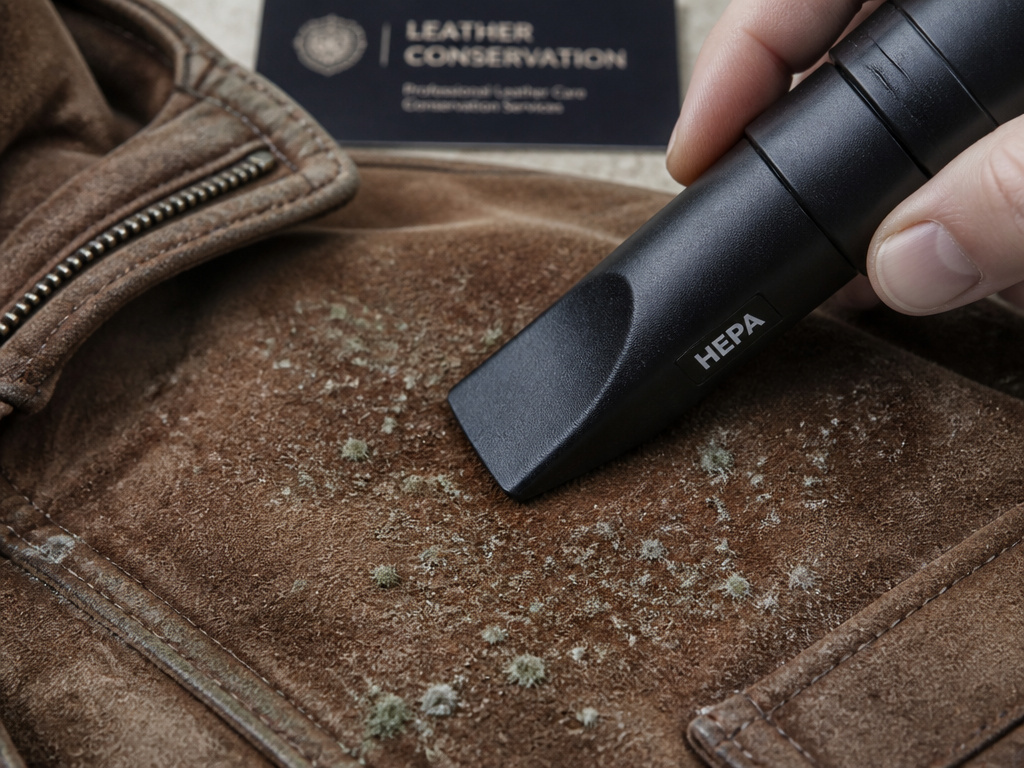
The protocol above assumes you’re dealing with finished, pigmented leather. Its protective topcoat acts as a partial barrier. The rules change completely for porous leathers.
Suede, nubuck, and aniline leather have open pores and no protective topcoat. Applying liquid, even isopropyl alcohol, can cause stains to wick and spread in a way that is impossible to reverse. The CCI notes specifically advise extreme caution here. If you see mold on these materials, your only safe step is to gently vacuum with a HEPA vacuum (holding the nozzle near the surface, not touching it) and then immediately contact a professional leather conservator. The risk of ruining the item’s texture and color is too high.
The other hard exception is timeline. A little mold on a jacket that was in a damp closet for a season is one thing. Mold that’s been growing in a car’s upholstery for years is another. In those cases, the mycelium network has woven itself into the fabric backing and foam core. You can clean the leather surface until the cows come home, but the smell will persist because the source is underneath. This is the point where leather restoration shifts from a cleaning job to a replacement discussion.
Diagnosing Your Mold Problem
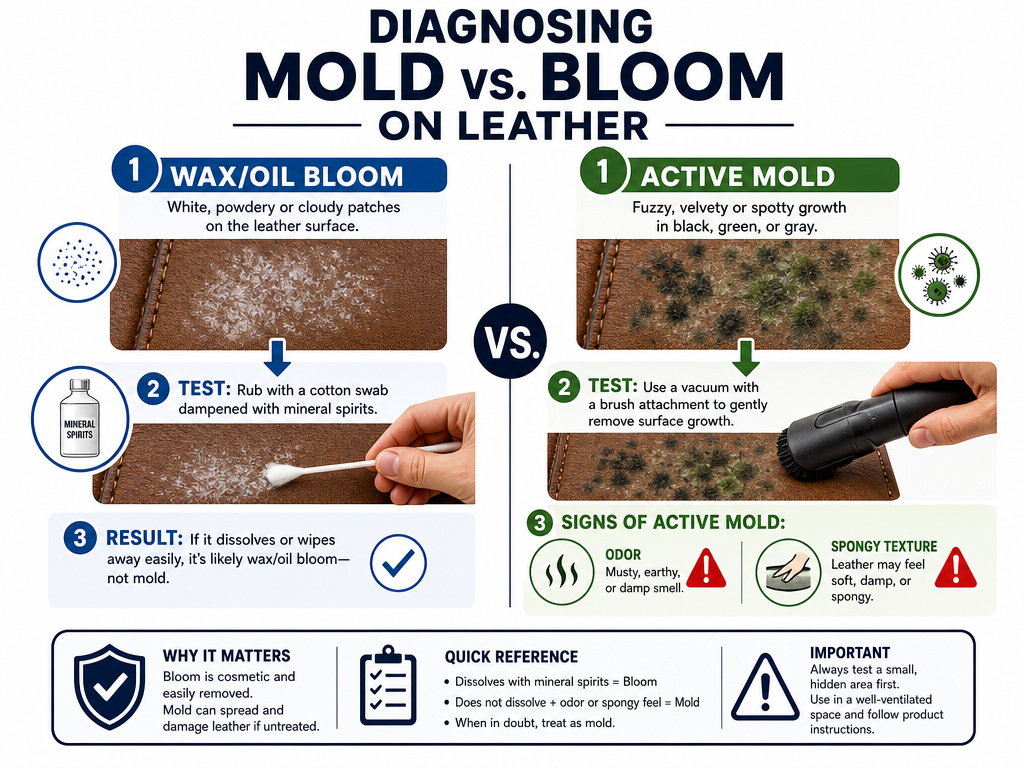
Not every white patch is mold. Leather, especially older pieces, can develop a harmless whitish bloom from oils and waxes migrating to the surface. Here’s a quick diagnostic table:
| Symptom | Likely Cause | Test | Next Step |
|---|---|---|---|
| White, powdery patches | Wax/oil bloom (harmless) or surface mold. | Dab with a cotton swab dipped in mineral spirits. If it disappears, it’s bloom. | For bloom, simply buff lightly with a dry cloth. If it remains, treat as mold. |
| Black/green spots | Active mold growth. | Visual inspection; often fuzzy and in damp areas. | Follow full CCI protocol (Freeze → Vacuum → Treat). |
| Musty odor only | Hidden mold, potentially in lining or padding. | No safe home test. Odor persists after airing out. | Professional assessment likely needed. Consider deodorizing leather as a temporary measure. |
| Spongy, softened leather | Advanced mold damage; enzymes have degraded fibers. | Press lightly. Healthy leather should resist and rebound. Damaged areas feel weak. | Cleaning may cause further damage. Consult a professional immediately. |
In my early days, I confused a heavy wax bloom on a vintage bag for a mold disaster. I started aggressive cleaning before testing. The mineral spirits test cleared it up in seconds, saving me from an unnecessary deep clean that could have stripped the bag’s patina. The leather will tell you what it needs, you just have to listen with the right test.
Post-Cleaning: Conditioning and The Long Game
After you’ve removed the mold, the leather will be stressed. The cleaning, and the mold’s own acids, may have dried it out. Conditioning is the next step, but timing is everything.
Wait until the leather is completely, bone-dry at room temperature. This can take 24-48 hours. Then, apply a thin coat of a high-quality leather conditioner like Bickmore Bick 4 or Leather Honey. Avoid conditioners loaded with silicone or waxes at this stage; you need the nourishing oils to penetrate and reinforce the fibers. Rub it in thoroughly, let it absorb for an hour, then buff off any excess.
The part nobody mentions: Conditioning too soon traps residual moisture inside the leather. That moisture, however slight, can reactivate any surviving spores. Patience here is a physical barrier against recurrence.
This is also the stage where understanding leather cleaner vs conditioner matters. A cleaner is designed to lift dirt and biologics (like mold) from the surface. A conditioner is designed to replenish oils and flexibility. Using one without the other after a trauma like mold is an incomplete repair.
The Only Reliable Prevention Plan
Cleaning mold is a battle. Preventing it is a simple, boring vigil over two environmental factors: humidity and air.
- Keep Relative Humidity (RH) below 65%. This is the magic number from the CCI. At 70% RH, mold can grow in 100 days. At 80%, it takes only 10 days. Use a cheap hygrometer to monitor closets, basements, or storage units. A $10 device saves a $1,000 bag.
- Ensure air circulation. Stagnant air creates microclimates of higher humidity next to the leather. Don’t store leather goods in sealed plastic tubs or tight garment bags without a desiccant. Use a breathable cotton pillowcase instead.
- Address wet leather immediately. If your leather jacket gets soaked in a storm, don’t let it air dry slowly over days. Follow a rapid drying leather protocol with fans and space from direct heat. Speed defeats spore germination.
- Store correctly. A cool, dark place with 40-60% RH is ideal. Keep items off concrete basement floors (which wick moisture) and away from exterior walls that can condense water.
Think of it this way: mold needs an invitation. High humidity and still air are that invitation. Deny them, and your leather stays clean.
Frequently Asked Questions
Can I use vinegar to kill mold on leather?
You can, but it’s a trade-off. Distilled white vinegar is acidic, which can kill some surface mold and, on very old leather, can help re-acidify the hide. However, it’s mostly water. Applying it risks driving moisture, and any surviving spores, deeper into the leather, potentially causing water stains or spreading the problem. The CCI-recommended isopropyl alcohol (≥40%) is a more targeted disinfectant that evaporates quickly.
Will mold come back after cleaning?
It can if the root cause isn’t fixed. If you meticulously clean a leather couch but it’s sitting in a basement at 75% humidity, the mold will return. Successful removal must be paired with environmental control, keeping the storage or living space under 65% relative humidity with good airflow.
Can I save a moldy suede jacket?
It’s extremely difficult and risky to attempt at home. Suede’s porous nap absorbs liquids instantly, causing stains to spread and become permanent. The safest action is to gently HEPA-vacuum the surface (without touching it) to remove loose spores and then take it to a professional leather cleaner who specializes in suede. They have dry cleaning and powder-based methods that minimize moisture.
Is mold on leather dangerous?
Yes, it can be. Mold releases spores and mycotoxins that, when inhaled or touched, can cause allergic reactions, respiratory issues like coughing and wheezing, and skin irritation. People with asthma, allergies, or compromised immune systems should avoid handling moldy leather altogether. Always wear proper PPE (mask, gloves, goggles).
Before You Go
The real takeaway is the 65% rule. If you remember one thing, let it be that number.Leather can last centuries, but it needs a dry, still partner. A $15 hygrometer and a fan do more to protect your investment than any miracle cleaner.
For pigmented leather, the CCI’s freeze-vacuum-alcohol sequence is the museum standard because it works on the biology, not just the appearance. For suede or aniline, put down the bottle and call a specialist, that’s not a compromise, it’s the correct first step. And if a musty smell survives a full clean, accept that the mold has won the interior battle. No amount of stain removal artistry fixes a rotted core. In those cases, the most confident choice is to replace the item and apply the 65% rule to everything that comes after.
