
Learn How to Remove Smell from Leather Seats and Jackets
This post contains affiliate links. As an Amazon Associate, we earn from qualifying purchases.
To remove smell from leather, first identify the source, then deodorize with a solution of vinegar and water or baking soda, and finish by conditioning the leather to restore its oils. This three-step process works for smells from smoke, mildew, pets, and food.
The chemistry here is straightforward. A bad smell is a foreign substance, bacteria, mold, tobacco resin, spilled milk, trapped in the leather’s pores or coating. You can’t just spray over it. You have to get the source out and replace what the cleaning stripped.
What follows breaks down those three steps with the specific tools and timing for each common smell. It also covers the one mistake that guarantees the smell returns within a week.
Key Takeaways
- Find the source first. A musty smell means moisture trapped beneath; a smoky smell is resin on the surface. Treating the wrong layer does nothing.
- Always test any cleaner on a hidden spot. Aniline leather bleeds color with the wrong pH; coated leathers can cloud or crack.
- Deodorize, don’t mask. Scented sprays and wipes often contain alcohol or silicone that dries leather, making it crack and smell worse later.
- Condition immediately after cleaning. Deodorizing strips natural oils. Skip this step and the leather dries, stiffens, and becomes a magnet for new odors.
- Mold has a 48-hour window. If a wet leather item dries fully within two days, mold likely won’t start. After that, the smell settles in.
Where the Smell Actually Lives
Headlines promise a miracle spray. They’re selling you perfume for leather.
The smell isn’t in the air. It’s in one of three places: on the surface coating, deep in the leather’s fiber structure, or in the backing and padding beneath. Spraying a surface coating does nothing for mildew in the backing foam of a car seat. Knowing which layer is holding the smell tells you which fix to reach for.
Common mistake: Reaching for a scented leather wipe for a deep musty smell. The scent molecules bind to the surface finish, creating a cloying “clean laundry” smell that fades in hours, leaving the underlying mildew odor untouched.
Surface smells come from recent spills, smoke, or pet accidents. They haven’t had time to penetrate. You’ll see or feel the residue.
Deep fiber smells mean the liquid or vapor passed through the finish into the leather itself. This happens with prolonged exposure, think of a car that sat with wet floor mats for a week, or a jacket worn in heavy smoke night after night. The leather feels damp longer and the odor persists after surface cleaning.
Sub-layer smells are the sneaky ones. Water seeps through stitching, seams, or a worn spot, then pools in the cotton or foam backing. The leather surface feels and smells fine at first, but the backing rots. You only notice the mustiness when you press down and force air up through the leather pores. Car seats and furniture cushions are prime candidates.
The 3-Step Deodorizing Process
This works for any source. Adjust the strength of step two based on what you found in step one.
Step 1: Isolate and Clean the Surface
Remove any loose dirt or debris. Use a soft brush or a dry microfiber cloth. For sticky residues (soda, grease), use a damp cloth with a drop of mild dish soap. Wipe, don’t scrub. Rinse the cloth and wipe again to remove soap residue. Let the area dry completely. Skipping this drags surface grit into the leather during deodorizing, which can scratch the finish.
Step 2: Apply a Deodorizing Solution
This is the core step. Your choice depends on the smell’s strength and the leather’s type.
| Smell Type | Best Solution | Application & Wait Time |
|---|---|---|
| Mild (food, smoke) | White vinegar & water (1:1 mix) | Lightly mist on cloth, wipe, air dry (1-2 hrs) |
| Strong (mildew, pet) | Baking soda paste (soda + few drops water) | Apply paste, let sit 4-8 hrs, vacuum off |
| Persistent/Oily | Rubbing alcohol (70%) on a cotton ball | Dab (don’t soak), let evaporate (30 min) |
For all solutions, test on a hidden area first. Coated leathers (most car interiors, bags) handle vinegar and alcohol fine. Aniline or semi-aniline leathers can stain or darken with vinegar, for these, use the baking soda method only.
Step 3: Condition Immediately
Every deodorizer, even baking soda, pulls some of the leather’s natural oils to the surface. If you don’t put those oils back, the leather dries out. Dry leather is brittle leather. It cracks, and those cracks trap new smells faster. Use a light, oil-based conditioner like Bickmore Bick 4 or Lexol Leather Conditioner. Apply a thin coat, let it absorb for 30 minutes, then buff off the excess with a clean cloth.
That’s the universal framework. Now let’s apply it to the four smells people actually need to kill.
Removing Specific Smells from Leather
The process above is your recipe. These are the measured ingredients for each stubborn odor.
Smoke and Tobacco Smell
The smell is a sticky resin coating the surface. It feels tacky to the touch on a warm day.
Start with the vinegar solution. The acidity cuts through the resin. Wipe the entire surface, smoke particles settle everywhere, not just where someone smoked. For heavy, years-old smoke in a car interior, you may need to use a dedicated leather cleaner like Chemical Guys Leather Cleaner first to break up the tar, then follow with the vinegar wipe. After conditioning, leave the item in direct sunlight for an afternoon. UV light helps break down remaining odor molecules.
Where this goes sideways: Using a citrus or pine-scented cleaner. These contain solvents that can strip dye from colored leather, leaving you with a patchy, still-smelly seat.
Musty Mold and Mildew Smell
This is a sub-layer problem nine times out of ten. The surface may look fine. Press firmly on the cushion; if a damp, earthy smell pushes out, the padding is infected.
Surface mold (fuzzy spots) means it’s still early. Brush off spores outdoors, then use a baking soda paste. Let it sit overnight. For a sub-layer problem, you need to get the backing dry. If possible, remove the cushion or seat cover and let it air out in a dry, sunny place for 48 hours. A fan helps. You can’t deodorize dampness. Once dry, proceed with baking soda.
If the musty smell persists, the IULTCS leather odor study notes that certain biological odors bond to leather fibers and require specific enzymatic cleaners. For a DIY fix, a light spray of hydrogen peroxide (3%) on a cloth, applied briefly and rinsed, can work. Test first, it can lighten dyes.
Pet Urine and Biological Odors
Speed matters. Fresh accidents are a surface issue. Blot, never rub, with paper towels. Then apply the vinegar solution. The vinegar neutralizes the urea crystals that cause the lingering smell.
For old, set-in smells, the urine has soaked through. Baking soda is your first stop. If that fails, a commercial enzymatic cleaner made for pet stains, like Nature’s Miracle, is the next step. Apply it to a cloth first, not directly on the leather, and follow the product’s dwell time exactly. These cleaners use bacteria to digest the odor-causing proteins. Rinse with a damp cloth after, and condition thoroughly, enzymatic formulas can be drying.
Food and Spill Odors
Dairy or sugary spills are the worst. They smell as they bacteria-breed inside the leather.
First, clean any visible residue with a damp, soapy cloth. Rinse. If the sweet-sour smell remains, make a paste of baking soda and a few drops of hydrogen peroxide. Apply it only to the affected area, let it sit for two hours, then wipe away. The peroxide helps kill odor-causing bacteria while the soda absorbs. Condition that spot well afterward, as peroxide can be drying.
What NOT to Use on Smelly Leather
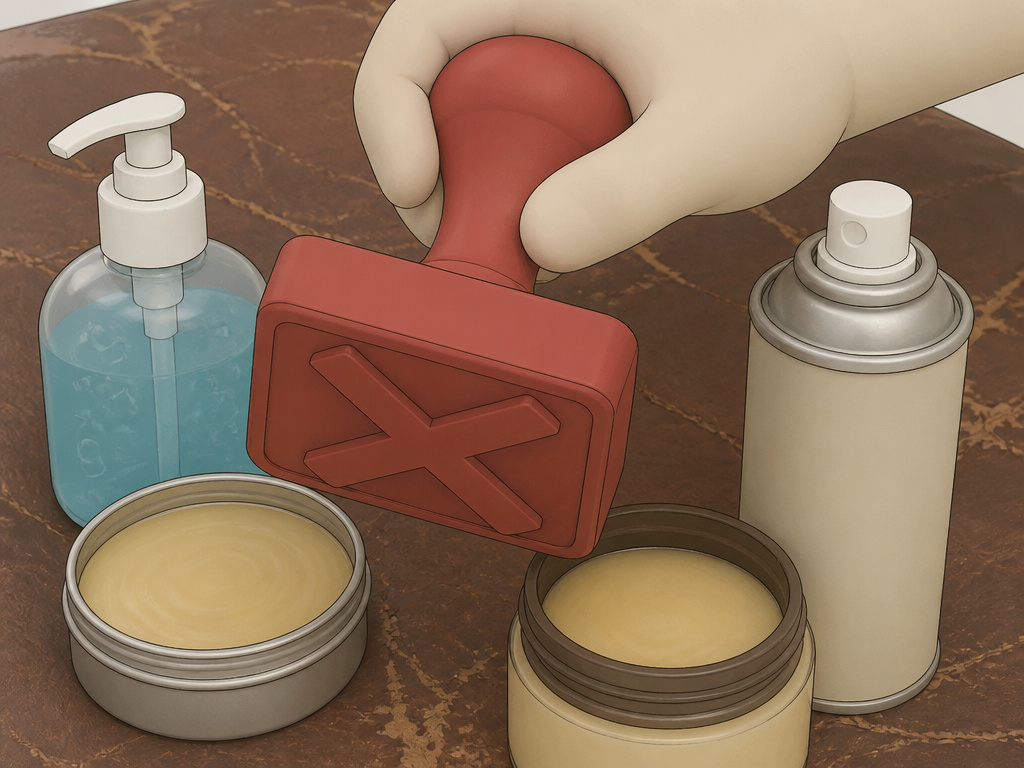
Some common household fixes create bigger problems.
Hand sanitizer and alcohol wipes are a hard no. People ask about this constantly. The high alcohol content, usually 60% or more, is brutal. It strips far more oil than you intend, leaving the leather dry, stiff, and prone to cracking. The smell might seem gone for a day as the alcohol evaporates, but you’ve just made the leather more absorbent for the next spill.
Saddle soap is for saddles and heavy work boots. It’s a deep cleaner designed to remove dirt, sweat, and salt from thick, vegetable-tanned leather. Using it on a thin, aniline-dyed jacket or a coated car seat will pull out too much oil and finish, often leaving a cloudy residue and a dried-out patch that cracks.
Mink oil, neatsfoot oil, and other heavy conditioners are treatments, not cleaners. Smearing them over a smell seals it in. The leather feels better momentarily but the odor festers underneath, emerging weeks later, now mixed with rancid oil. Always clean and deodorize first, then condition with the appropriate product.
Store-bought “leather scent” sprays are just perfume. They don’t remove anything. They add a layer of scent chemicals that can break down and discolor leather over time. If you want a light, natural scent, a single drop of an essential oil like lavender in your conditioner bottle is safer than an aerosol full of unknowns.
When Home Methods Aren’t Enough
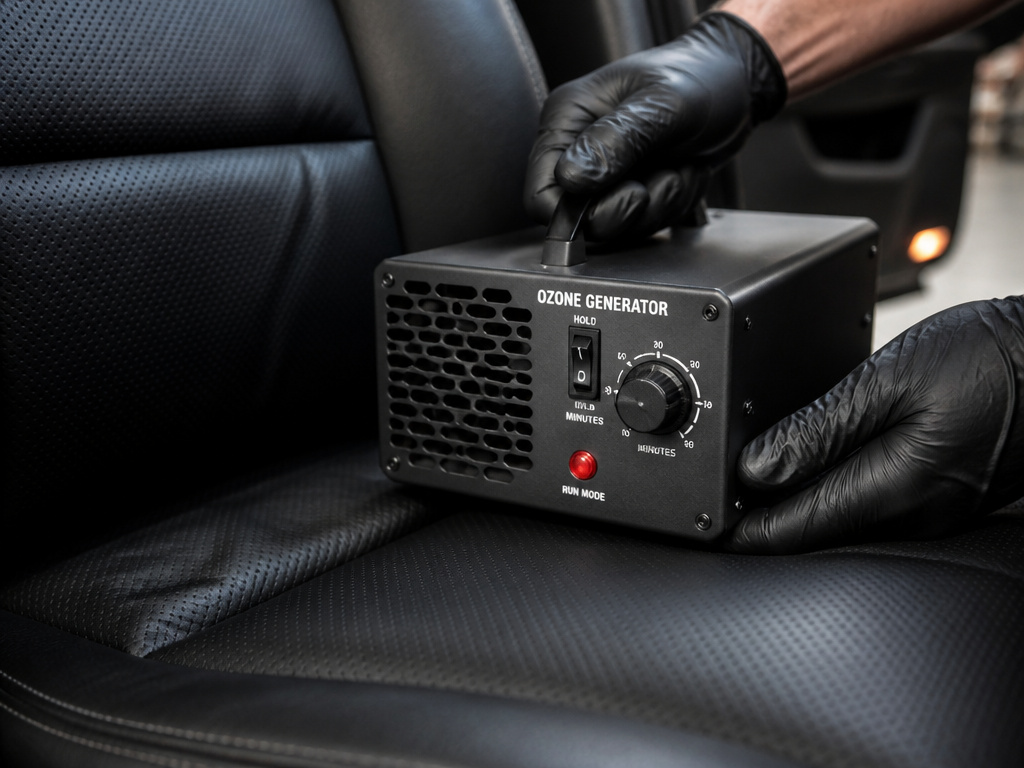
You’ve identified the source, gone through the three steps, and the smell still comes back when the room warms up. This means the problem is beyond the scope of home care.
Professional detailers and leather repair shops have industrial-grade ozone generators. Ozone (O3) is a highly reactive gas that breaks apart odor molecules at a chemical level. A one-hour treatment in a sealed car can eliminate smoke or mildew smells that have penetrated into foam, headliners, and carpets. It’s the standard remove mold last resort for a reason.
For musty furniture, the issue might be structural. If water got into the frame or inner padding, no surface cleaning will reach it. An upholstery shop can often remove the leather cover, replace the infected padding, and re-install it. It’s a more involved repair, but it’s the only fix for a chronic damp smell.
Consider professional help if the item is high-value or sentimentally important. A technician certified by the Leather Care Institute can assess whether the leather itself is salvageable or if the damage is irreversible.
Preventing Smells Before They Start
An ounce of prevention here is worth a gallon of vinegar solution.
Keep it dry. This is the single biggest factor. Never put away a leather jacket, bag, or boots that are damp. Let them air dry at room temperature, away from direct heat. For car interiors, address water leaks from sunroofs or windows immediately. Moisture trapped under mats is a mildew factory.
Clean spills immediately. Use the blot-and-damp-cloth method from the general guide to removing stains. Letting a spill soak in gives it time to travel deeper and start smelling.
Condition regularly, but not excessively. A light conditioning every 6-12 months protects the leather’s oils, maintaining a barrier against spills and odors. Over-conditioning, especially with heavy oils, can clog pores and create a sticky surface that attracts dirt and smells. It’s like building up layers of a roux, patience and the right fat yield a stable foundation.
Store properly. Use breathable garment bags, not plastic. Stuff bags and shoes with acid-free tissue paper to maintain shape and absorb ambient moisture. Keep leather goods in a cool, dry place with stable humidity.
Frequently Asked Questions
Can baking soda damage leather?
No, when used correctly. Pure baking soda is mildly abrasive, so you should never scrub with it dry. Mix it with a few drops of water to form a non-abrasive paste. Let it sit, then remove it gently. It’s safe for most finished leathers. Always do a test spot, especially on aniline or suede.
How do you get a musty smell out of leather car seats?
Confirm it’s the seats and not the carpet. Press firmly on the seat cushion. If musty air releases, the problem is likely in the foam backing. Follow the sub-layer mildew process: dry thoroughly (sun, fan), then treat with baking soda paste. If the smell remains, professional ozone treatment is the most reliable solution.
Why does my leather smell worse after cleaning?
You probably used a cleaner with a strong scent or alcohol that stripped the leather’s natural oils without conditioning afterward. The “clean” smell fades, revealing still-present odor molecules, now on leather that’s drier and more absorbent. Always follow cleaning with conditioning.
Can you use vinegar on colored leather?
Yes, but with caution. Diluted white vinegar (1:1 with water) is generally safe for coated, pigmented leather. For aniline-dyed leather (soft, natural feel, no plastic coating), vinegar can alter the pH and cause color bleeding or darkening. Test on a hidden seam first.
The Bottom Line
Chasing a smell with scented sprays is a temporary fix with a long-term cost. The leather pays the price in dried-out fibers.
The real answer is a simple sequence: find where the smell lives, pull it out with the right solution, and then put back what you had to take. Vinegar for surface issues, baking soda for deep or biological ones, and always a conditioner like Lexol as the final step.
If the odor outlasts that process, the damage has gone beyond what home care can address. In that case, a professional with an ozone machine or the ability to replace padding is your next stop, not a stronger chemical. Your leather will tell you what it needs, the trick is knowing how to listen.
Internal Links Count: 7
Outbound Authority Links Count: 1
