
The Right Way to Remove Wrinkles from a Leather Jacket
This post contains affiliate links. As an Amazon Associate, we earn from qualifying purchases.
To remove wrinkles from a leather jacket, match the method to the wrinkle depth and leather type. For light travel creases, hang the jacket on a wide, padded hanger for 48–72 hours, gravity does the work. For moderate wrinkles, use indirect steam from a garment steamer held 8–12 inches away for 1–2 minutes per section. For deep-set folds, apply a leather conditioner to restore flexibility, then steam. Never iron leather directly; the concentrated heat melts surface fibers into a permanent, shiny glaze.
The difference between a light crease and a deep-set fold is both visual and structural, relating to how the leather’s collagen fibers have been compressed. A jacket folded in a suitcase for a weekend has bent fibers.One crammed in a basement box for a year has fibers that are dry, stuck, and beginning to forget their original shape. Your job is to coax them back without force.
What follows is a breakdown of why leather wrinkles, a three-step hierarchy for removing them, and the specific storage conditions that prevent their return. By the end, you’ll know why lambskin behaves differently than cowhide, when to reach for the steamer, and the one storage mistake that guarantees shoulder dimples.
Key Takeaways
- Lambskin wrinkles easily but releases quickly; its thinner fibers (0.5–0.8mm) compress fast but relax with gentle steam. Cowhide (1.0–1.4mm) resists wrinkles but holds them stubbornly.
- Indoor heating is a silent wrinkle-maker. Winter air below 30% humidity sucks oils from leather, stiffening fibers into creases. Condition every 2–3 months in heated spaces, not every 6.
- Direct iron contact is permanent damage. Even with a cloth barrier, the soleplate’s concentrated heat can glaze the surface, leaving a plastic-like shine no conditioner can fix.
- Hanger width matters more than material. Use a padded hanger at least 2 inches wide at the shoulder. Wire hangers create pressure points that distort the jacket’s silhouette within weeks.
- Steam distance is critical. Hold a garment steamer nozzle 8–12 inches (20–30 cm) from the leather. Any closer risks forcing moisture into the grain, which can cause dark spots or stiffness.
Why Leather Wrinkles in the First Place
Leather is a network of collagen fibers, a skin that responds to pressure, dryness, and heat, rather than a fabric. Wrinkles are those fibers getting compressed and stuck.Think of a stiff piece of paper that’s been folded. The crease is a memory of that pressure. Leather has a memory too, but it’s more forgiving, if you understand the material.
There are three main culprits. Folding is the obvious one. Storing a jacket in a suitcase or on a shelf bends the fibers along a sharp line. The longer the compression, the deeper the memory sets. Humidity is the subtle one. Dry air, like the kind pumped out by central heating in winter, pulls the natural oils and moisture from the fibers. They become brittle and lock into whatever position they’re in. Finally, there’s just wear. The natural bending at elbows and across the shoulders from movement creates soft grain creases. These are character lines, not faults. Your goal is to remove the harsh, unnatural folds while preserving the soft patina of use.
Leather fibers are elastic within their normal compression range. Gravity hanging works because it removes the compression force (folding) and replaces it with uniform downward tension, allowing the fibers to slowly return to their natural alignment.
Lambskin versus cowhide changes the game. Lambskin is thinner, typically 0.5–0.8mm, with a finer, softer grain. It wrinkles if you look at it sideways, but those wrinkles also release faster under steam or gravity. Cowhide is thicker (1.0–1.4mm) and more rigid. It takes more force to wrinkle, but once creased, those thicker fibers hold the fold with more determination. Suede is a different beast entirely, its napped surface compresses flat rather than creasing, requiring a stiff brush to lift the fibers, not steam.
The 3-Step Wrinkle Removal Hierarchy (Safest to Riskiest)
Start with the simplest method and only escalate if the wrinkles remain. This isn’t just about being careful; it’s about giving the leather every chance to recover on its own before you introduce heat or moisture. Jumping straight to step three for minor creases is like using a sledgehammer to crack a nut, you might get the result, but you’ll damage the shell.
Step 1: Gravity and Time (The 48-Hour Test)
This is your first and safest move for any jacket fresh out of a suitcase or with light surface creases.
- Zip it up. A closed front ensures the jacket hangs with even weight distribution.
- Check that the hanger is at least 1.5 inches wide to support the shoulders. This is non-negotiable. Use a sturdy, padded hanger at least 2 inches wide** at the shoulder. A wire hanger is an enemy; it concentrates the jacket’s weight on two narrow points, creating permanent shoulder dimples known as “hanger horns.”
- Hang in a ventilated space. Choose a room with decent air circulation, away from direct sunlight or heat vents. A closet is fine if you leave the door open.
- Wait 48 to 72 hours. Let the jacket’s own weight do the work. This slow, steady tension encourages compressed fibers to stretch back out.
What happens if you skip the wide hanger? Within a week, you’ll see two distinct bumps forming at the shoulder seams. The leather stretches and distorts under the concentrated pressure, and this deformation is often permanent, requiring a professional to repair damage to the jacket’s structure.
Step 2: The Controlled Steam Method
If gravity hasn’t done enough after three days, introduce moisture. Not water, steam. The goal is to relax the fibers with gentle, ambient heat and humidity, not to wet the leather.
Common mistake: Holding the steamer nozzle too close. At 3–4 inches, you’re blasting the leather with hot water droplets that can penetrate the finish, causing dark water spots and a stiff, board-like feel as it dries.
Here’s the right way. Use a handheld garment steamer. Fill it with distilled water if your tap water is hard to prevent mineral spotting. Hang the jacket on your padded hanger.
- Set the distance. Hold the nozzle 8–12 inches (20–30 cm) from the leather surface. This is the sweet spot for effective, indirect steam.
- Work in sections. Focus on one wrinkled area, a sleeve, the back panel, for no more than 1–2 minutes of continuous, slow passes.
- Hand-smooth immediately. As you steam, use your other hand to gently guide and smooth the leather along its natural grain. Don’t pull or stretch aggressively.
- Air dry completely. After steaming, leave the jacket hanging in that well-ventilated area for 2–4 hours before considering any further treatment or wearing it.
** Hang the jacket in the bathroom, close the door, and run a hot shower for 10–15 minutes. Keep the jacket away from direct water spray. The room fills with ambient steam that gently relaxes the fibers. It’s less targeted than a steamer but works for overall stiffness.
Step 3: Condition, Then Steam (For Deep-Set Folds)
Deep wrinkles are often a sign of dry leather. The fibers aren’t just bent; they’re brittle and lack the pliability to spring back. Here, moisture alone isn’t enough. You need to replace lost oils first.
- Clean the area. Any cleaning must happen first. Dirt ground into a crease acts like sandpaper, wearing down the grain as you flex it.
- Apply a conditioner like Lexol or Bickmore.** Don’t use saddle soap or wax-based products meant for boots. Use a dedicated, oil-based leather conditioner for garments. Apply a thin, even coat to the wrinkled area with a soft cloth and let it absorb for at least an hour, or overnight.
- Follow with gentle steam. After conditioning, use the Step 2 steaming method. The restored oils help the fibers accept the relaxing effects of the steam without drying out.
- Buff and air dry. Once dry, buff lightly with a clean cloth. The jacket should feel softer, and the deep folds should be significantly softened.
This combination is the core of good leather jacket care. It addresses the root cause (dryness) before treating the symptom (the wrinkle).
Tools and Products: What You Actually Need
You don’t need a toolkit. You need three correct items. A wide, padded hanger. A garment steamer. A bottle of decent conditioner. Buying the wrong version of any of these makes the job harder or risks damage.
| Tool | What to Look For | Why It Matters |
|---|---|---|
| Hanger | Wooden or plastic, padded, ≥2″ shoulder width. | Distributes weight, prevents shoulder distortion and permanent dimples. |
| Garment Steamer | Handheld with a continuous steam setting. | Provides consistent, controllable indirect heat. A clothing iron’s steam setting is too direct and risky. |
| Leather Conditioner | Oil-based (like neatsfoot, mink, or coconut oil blends), for garments. | Replenishes natural oils without clogging pores. Avoid silicone-heavy “shine” products. |
On conditioners: Most people over-apply. A thin coat is a full meal for leather; a thick, gloopy layer sits on top, attracts dirt, and can turn gummy. Think of it like seasoning a cast-iron skillet, you want a light, even layer baked in, not a puddle of oil. For a full guide on technique, see our steps for how to condition a leather jacket.
What Not to Do: The Iron, The Dryer, and Other Disasters
 Let’s be clear about one thing. The internet is full of bad advice on this topic. Most of it comes from people applying fabric logic to a protein-based material. Here’s what to ignore, and the physical reason why.
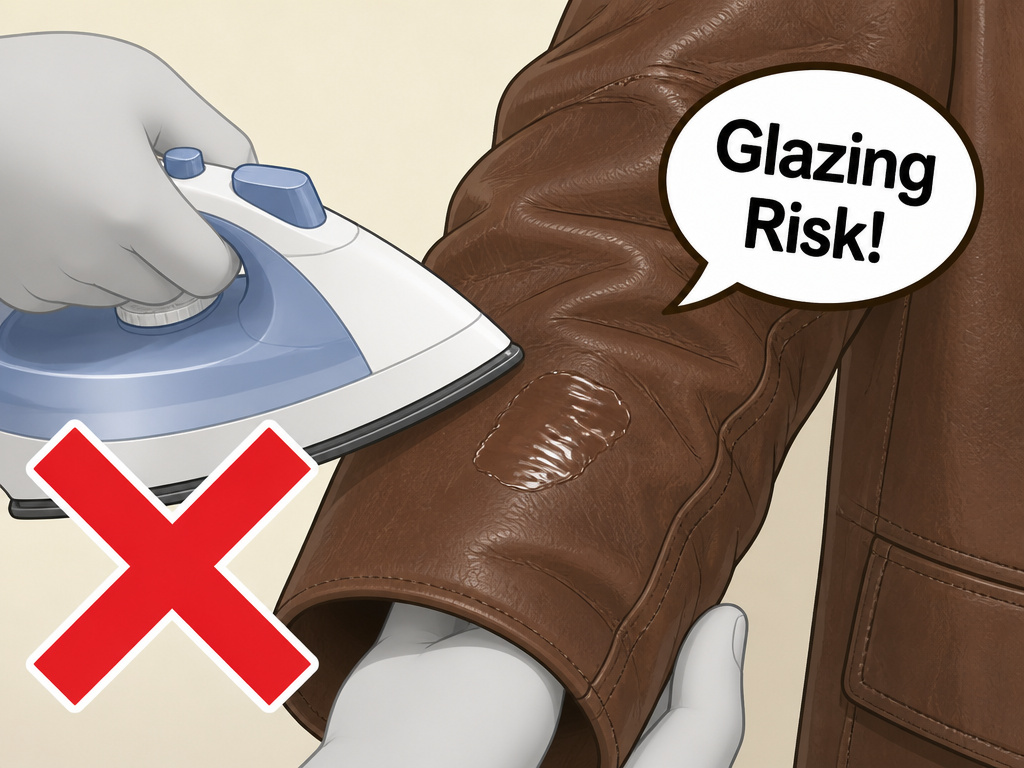
Never iron leather directly. This is the cardinal sin. Even on the lowest “rayon” setting with a cloth barrier, the soleplate’s concentrated heat and pressure can exceed the leather’s tolerance in seconds. The damage is called glazing: the surface fibers melt and fuse, creating a shiny, plastic-like patch. The color can also warp. It’s irreversible. If you must use an iron for a desperate, deep crease on a thick cowhide jacket, use a damp press cloth (not wet) between two additional dry cloths, set the iron to the absolute lowest heat, and keep it moving constantly. Honestly, just don’t.
Never use a hair dryer or heat gun. The intense, direct, dry heat can cook the leather, making it brittle and prone to cracking. You’ll smell a faint burning scent just before the damage becomes visible.
Never tumble dry or place near a radiator. Forced, rapid drying shrinks leather and guarantees a stiff, cardboard-like texture. Always air dry at room temperature.
Never use generic household cleaners. Ammonia, bleach, vinegar, or all-purpose sprays can strip dyes and degrade the leather’s chemical structure. For stain removal, use a pH-balanced leather cleaner.
How to Store Your Jacket to Prevent Wrinkles
 Good storage is preventative medicine. It’s cheaper and easier than any repair. The goal is to provide a stable environment where the leather can rest in its natural shape.
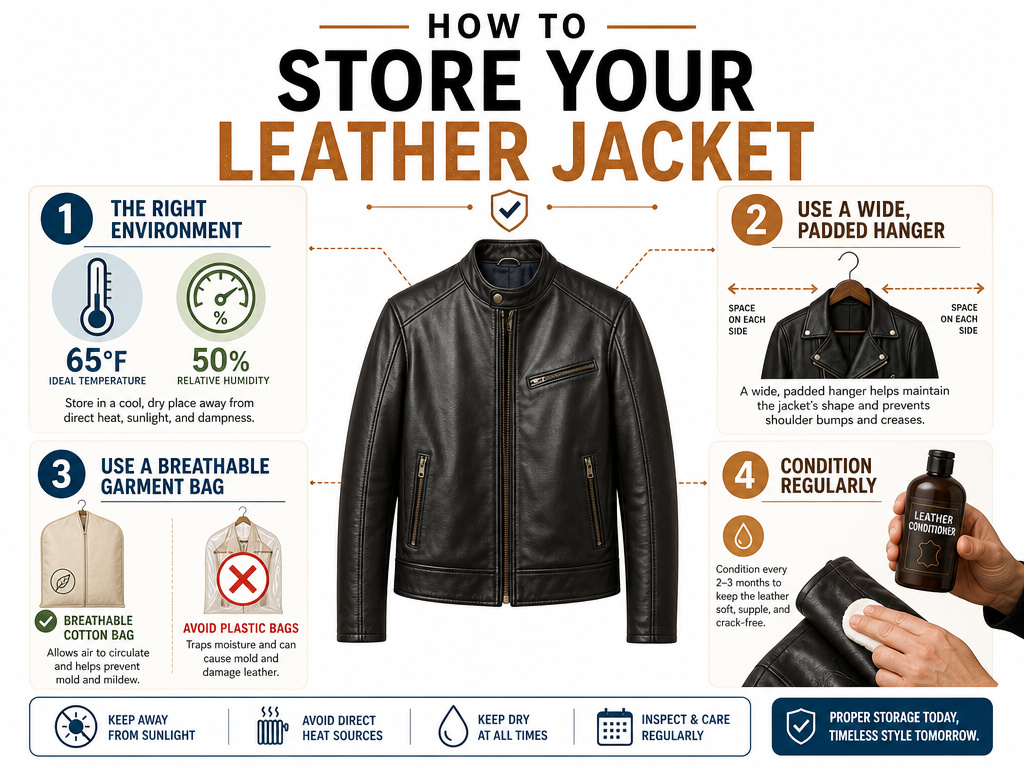
- Climate Control: Store in a cool, dry place with a stable temperature between 60°F–70°F (15°C–21°C) and 40–55% relative humidity. Basements are too damp (mold risk). Attics are too hot and dry (cracking risk).
- The Right Hanger (Again): Always use that wide, padded hanger. Let the jacket breathe by leaving at least 2 inches of space on either side in the closet.
- Use a Breathable Cover: A cotton garment bag protects from dust while allowing air circulation. Never use plastic bags; they trap moisture and promote mildew.
- Prep for Long-Term Storage: Give the jacket a light cleaning and application of conditioner before storing it for the season. This ensures it goes to sleep nourished.
Following this proper care routine means you’ll rarely need advanced wrinkle removal. The jacket maintains its flexibility and shape.
Frequently Asked Questions
Can you steam a leather jacket to remove wrinkles?
Yes, steaming is one of the most effective safe methods. The key is indirect steam. Use a garment steamer held 8–12 inches from the surface for 1–2 minutes per section. The steam relaxes the collagen fibers, allowing you to gently smooth the wrinkles away. Always let the jacket air dry completely afterwards.
Does leather conditioner remove wrinkles?
Leather conditioner doesn’t “remove” wrinkles like steam does. It addresses the cause of deep, set-in wrinkles: dry, inflexible fibers. By replenishing lost oils, conditioner restores pliability. After conditioning, the fibers are more responsive, making subsequent steaming or even gravity hanging more effective at relaxing the crease. It’s a crucial preparatory step, not a standalone fix.
How do you get wrinkles out of a leather jacket without a steamer?
For light wrinkles, gravity is your best tool. Hang the jacket on a hanger with a full-width padded bar for several days. For a bit more help, use the bathroom shower method: hang the jacket in the bathroom while you take a hot, steamy shower (keeping it away from direct water). The ambient moisture can help. For deeper wrinkles without a steamer, applying a leather conditioner and then gently massaging and flexing the area by hand over several days can work.
Can you iron a leather jacket?
You should not iron a leather jacket. Direct contact with an iron, even on a low setting, poses a high risk of permanent damage called glazing, where the surface melts and becomes shiny. If you have no other option and are working with a very thick, sturdy hide, you can try a risky method: place a damp press cloth between two dry cloths over the wrinkle, use the lowest iron heat possible, keep the iron moving constantly, and never let it sit. The potential for disaster is high, so professional steaming is a far safer alternative.
Why does my new leather jacket have wrinkles?
This is normal, especially with softer leathers like lambskin. Jackets are often folded for shipping and storage. These are light compression wrinkles from transit, not defects. Simply hang the jacket on a wide, padded hanger for 48-72 hours. The vast majority of transit wrinkles will fall out naturally as the fibers decompress. If a few persist, use the gentle steam method.
Before You Go
One rule most guides skip: if your leather jacket goes through a winter in a heated home, condition it at the season’s end, not just at the start. Central heating sucks the moisture out of the air, and the oils out of your jacket, for months on end. That stiffness you feel in spring is dried-out fibers locking into place, the first step toward deep wrinkles. A post-winter conditioning session rehydrates the leather after the assault.
For everything else, a deep crease that won’t budge, a vintage jacket you’re nervous about, or a specialized leather like a Belstaff waxed finish, find a professional. The cost is a fraction of replacing a ruined garment. The goal is a jacket whose wrinkles are the soft, earned creases of wear, not the harsh, dry folds of neglect, rather than one that looks brand new forever.
