
How to Soften Leather | The One Product I Won’t Use
This post contains affiliate links. As an Amazon Associate, we earn from qualifying purchases.
You can soften leather by introducing the right type of fat or oil, matching it to the leather’s tannage and finish, and then working it in gently with hand pressure and warmth. The goal is to replenish lost lubricants within the fibers without clogging the pores or creating a greasy surface barrier.
That process sounds simple, but the specifics are everything. An oil that works on one type of leather can ruin another. Using too much or too little changes the outcome entirely. Understanding how the leather was tanned and finished tells you which path to take, and skipping that step is how a softening project turns into a replacement project. This guide walks you through that decision tree.
What follows is the sequence I use: identify the leather, pick the matching conditioner, apply it in thin layers, and use hand-kneading to distribute it. We’ll also cover the methods to avoid and why they fail, with the physical evidence that proves they’re wrong.
Key Takeaways
- Leather type decides everything. Applying an oil meant for vegetable-tanned leather onto a chrome-tanned garment will likely over-darken it and create a greasy feel that attracts dirt.
- More conditioner is not better. Over-applying clogs the leather’s pores, prevents it from breathing, and can weaken the fibers over time, leading to tears.
- Gentle, consistent pressure beats aggressive bending. Kneading the leather by hand warms the conditioner and helps it wick into the fibers; forcing sharp folds can create permanent stress cracks.
- Test every new product on a hidden spot and wait at least 48 hours. This reveals unwanted darkening or texture changes before you commit the whole piece.
- If the leather is already cracked through the grain layer, it’s too late. Softening can only help leather that is dry but intact.
The Leather Type Dictates the Strategy
Open any bottle of leather conditioner without knowing what you’re treating, and you’re gambling. Let me share what I’ve learned: the tannage, the chemical process that turns skin into stable leather, determines how it will accept oils. Treat them wrong, and you get a sticky mess or a darkened, lifeless shell.
Vegetable-tanned leather is the classic. Tanned using natural tree bark extracts like quebracho or chestnut, it’s porous, breathable, and thirsty. It absorbs conditioner deeply and evenly, which is why it develops that famous patina over years. For stiff, dry vegetable-tanned items like a heavy belt or a work bag, a pure, penetrating oil like Obenauf’s Leather Oil is the right call. It soaks in, lubricates the fibers from within, and doesn’t sit on top.
ISO 17235:2011, the international standard for measuring leather softness, uses different testing apertures based on the leather type. For firmer leathers like some shoe uppers, they use a 35mm opening; for softer apparel leathers, they drop to 20mm. This isn’t just academic, it confirms that softness is a measurable property that changes with the material’s density and fiber structure, which are direct results of the tanning method.
Chrome-tanned leather is the modern workhorse. A chromium salt bath tans it quickly, resulting in a more water-resistant, supple leather that often has a surface finish or pigment layer. Because it’s less porous, it doesn’t drink up oils the same way. Here, you want a lighter, cream-based conditioner like Bickmore Bick 4 that hydrates the surface and the top layers of fiber without over-penetrating and causing blotchy darkening. Applying a heavy oil to a chrome-tanned jacket is how you end up with permanent dark spots and a tacky feel.
Aniline and semi-aniline leathers are the premium finishes, where the dye penetrates fully and the surface is minimally coated. They are incredibly sensitive. Using mink oil on a delicate aniline leather is like using a firehose to water a bonsai tree, it’s too much, too heavy, and it will darken the leather dramatically. A specialized product like Chamberlain’s Leather Milk, designed for fine leathers, is the safer choice. It nourishes without altering the color or creating a glossy plastic film.
The table below matches common leather types with the conditioner strategy that works.
| Leather Type & Common Uses | Primary Tannage Trait | Recommended Conditioner Type | What Happens If You Mismatch |
|---|---|---|---|
| Vegetable-Tanned (Belts, Saddles, Tooling Leather) | Highly porous, absorbs deeply | Pure, penetrating oils (e.g., Obenauf’s Leather Oil) | Using a heavy wax or cream may not penetrate, leaving a surface film. |
| Chrome-Tanned (Jackets, Handbags, Upholstery) | Less porous, often pigmented or finished | Light, non-darkening creams (e.g., Bickmore Bick 4) | Heavy oils cause blotchy darkening and a greasy residue. |
| Aniline/Semi-Aniline (High-end Furniture, Fine Garments) | Unprotected, dye-deep, very sensitive | Specialized milks or serums (e.g., Chamberlain’s Leather Milk) | Standard conditioners can cause irreversible darkening and stain. |
The One Product I Won’t Use
You’ll see mink oil recommended everywhere for softening. I won’t use it on anything but the roughest work boots. Here’s why: mink oil is a heavy, animal-based fat that oxidizes over time. It can turn rancid, which you’ll smell on the leather. More critically, it darkens leather significantly and creates a surface that attracts and holds dust and dirt. For a fine jacket or bag, that’s a one-way trip to a grimy, stiffened mess.
The practical takeaway? Mink oil has its place, on oil-tanned work boots meant for harsh conditions where waterproofing is the priority. For almost every other leather good, a modern conditioner formulated for that specific leather type will do a better, cleaner job. Ignore the marketing copy that promises a single miracle product. Leather isn’t one material.
Conditioner Application: Less Is More
The most common mistake I see is the “more is better” philosophy. People slather on conditioner, thinking a thick coat will work faster. It does the opposite. Leather can only absorb so much at a time. Excess product sits on the surface, clogging the pores. A clogged pore can’t breathe. Trapped moisture from the air or your skin can’t escape, and that’s how you get rot from the inside out or mold growth in the long term.
Here’s a straightforward guide for applying any conditioner:
- Clean the surface first. Use a soft, dry brush or a barely damp cloth to remove dust. Dirt + conditioner = an abrasive paste that grinds into the grain.
- Apply a thin, even layer. Use a soft cloth or your fingertips. Think of it as making a roux, you start with a little fat and build slowly. Cover the entire area evenly.
- Let it absorb fully. Walk away for 15-30 minutes. The leather will drink it in. You’ll see the surface go from glossy to matte as it absorbs.
- Buff off any excess. Take a clean, dry cloth and gently buff the surface. If the cloth comes away clean, you used the right amount. If it’s greasy, you used too much.
- Repeat only if necessary. Wait at least 24 hours before deciding if a second coat is needed. Leather needs time to equalize.
Where this goes sideways: Applying a second coat before the first is fully absorbed. The conditioner sits on top, turns gummy, and attracts every piece of lint in the room. The leather feels tacky for weeks.
This method works whether you’re trying to soften a leather jacket, restore a dry leather belt, or bring life back to stiff leather boots.
The Hand-Kneading Method (And What Not To Do)
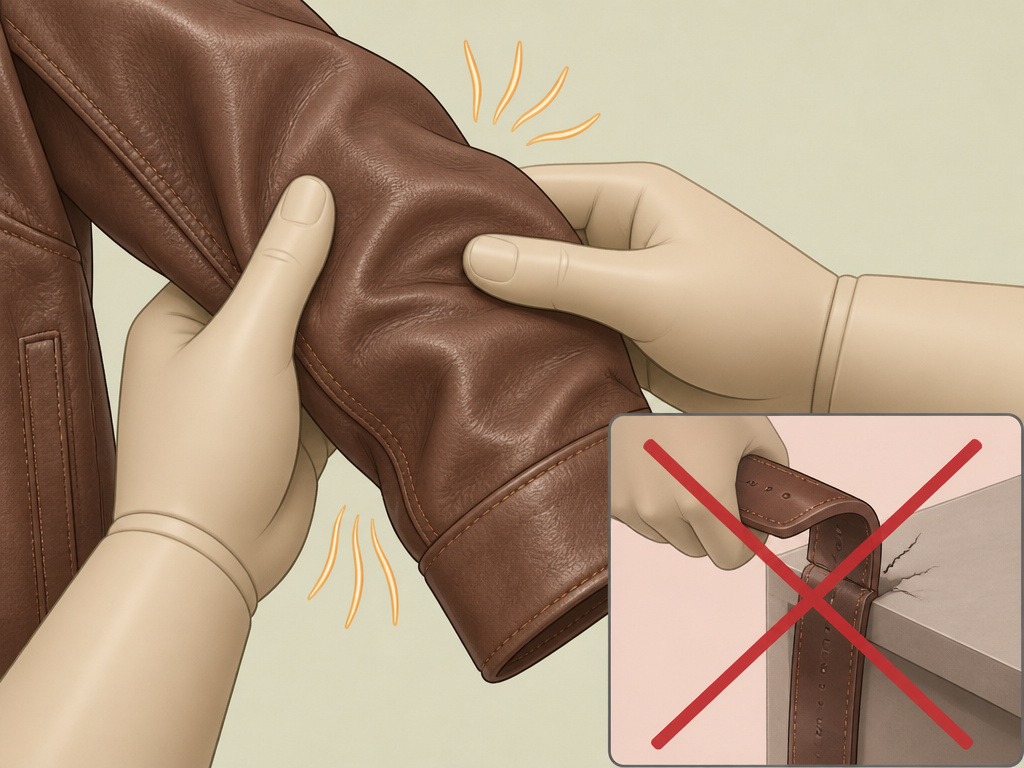
Conditioner re-lubricates the fibers, but you need mechanical action to work it in and flex the material. This is where most people get impatient and break things.
Do this: After applying conditioner and letting it soak for the time above, take the item in your hands. For a jacket, gently knead the arms and back panel. For a leather watch band, roll it between your fingers. For leather gloves, put them on and slowly flex your hands. The goal is to generate gentle, consistent warmth and pressure. This helps the conditioner wick deeper and encourages the fibers to relax and separate. Do this for a few minutes, then let the piece rest. Repeat the next day if needed.
Don’t do this: Aggressively bend, twist, or try to forcibly stretch the leather. Bending a stiff belt backward over the edge of a table to “break it in” creates a sharp stress point. The fibers on the outside of that bend are stretched beyond their limit, while the inner fibers are compressed. That’s how you create a permanent crease or, worse, a crack that starts in the grain and goes all the way through. Making leather shoes comfortable is a gradual process of walking in them, not a single session of brutal force.
This patient approach is also key when you need to stretch leather gloves or a tight collar. Slow, gentle pressure over time allows the fibers to relax and move. Force simply risks tearing them.
Why Heat and Water Are Not Your Friends
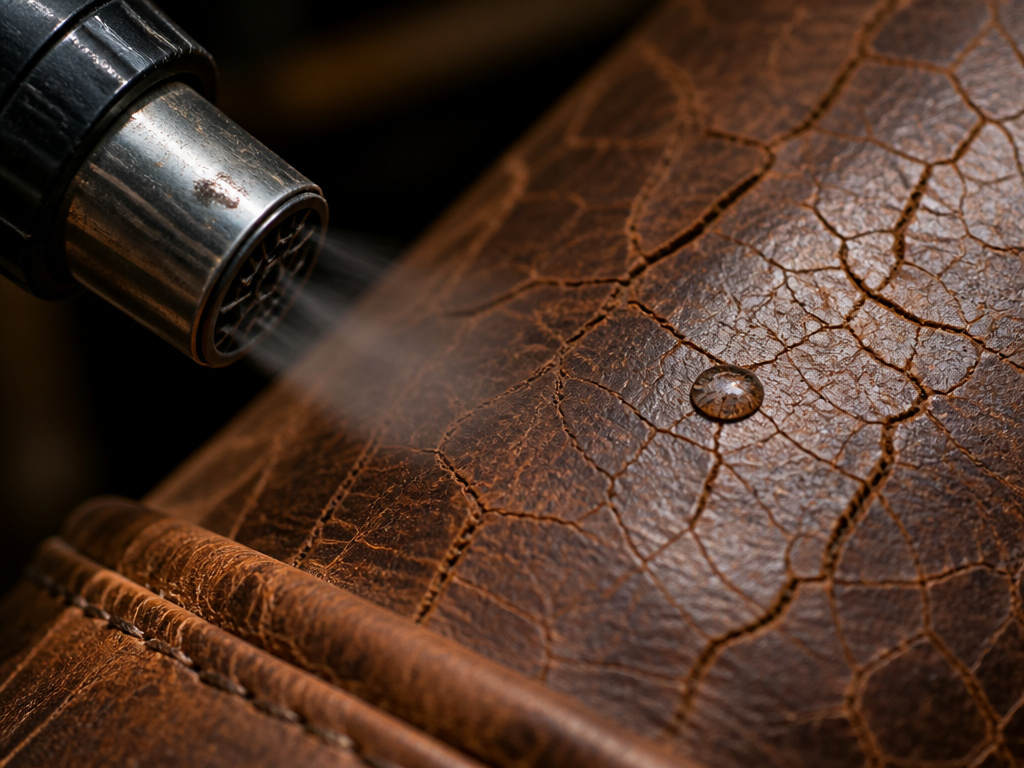
Two “quick fix” methods pop up constantly: using a hairdryer or soaking the leather. Both are excellent ways to cause irreversible damage. Let’s look at the chemistry of that.
Heat, from a hairdryer, radiator, or direct sunlight, drives moisture out of the leather at an accelerated rate. Leather needs a small amount of internal moisture to stay supple. Rapid drying makes the fibers brittle and prone to cracking. You might get temporary pliability as the heat softens the oils, but as soon as it cools, the leather will be stiffer and drier than before. I’ve seen wallets left on a car dashboard develop cracks in a single afternoon.
Water, especially soaking, is even riskier. When leather gets wet and dries, the collagen fibers can tighten and bond together. This creates a permanent rigidity, a process called “case hardening.” The National Park Service’s curatorial care of leather objects manual explicitly warns that high-moisture treatments present a hazard, particularly for aged or light-colored vegetable-tanned leathers. A soaked and rapidly dried belt will never be the same.
The environment matters, too. Storing leather in a damp basement encourages mold. Storing it in an arid, heated closet can desiccate it. The Society of Leather Trades’ Chemists advises conditioning leather in a controlled atmosphere (around 20°C and 65% humidity) before testing because humidity directly affects softness.
When Softening Won’t Work (And How To Know)
It’s important to be honest about limits. Softening is a restorative process for leather that is dry but fundamentally intact. If the leather has crossed a line, no amount of conditioner will bring it back.
Cracking through the grain layer is the death knell. The grain is the tight, top layer of the skin. Once a crack goes through it, the underlying fibrous structure is exposed and compromised. You can fill the crack with wax, but the leather around it will never regain uniform strength or flexibility. This is common in old jackets that have been left in attics or cars for years.
Complete fiber breakdown from rot or chemical damage is the other terminal state. If the leather feels powdery, crumbles to the touch, or has a foul, acidic smell, the collagen fibers have degraded. This leather is gone. The best you can do is preserve it as-is for display, not for use.
How do you test? Before you start any process on an old, stiff piece, gently flex it in an inconspicuous area. Look closely at the grain. Do you see any tiny, white stress lines? Do you hear a dry, crackling sound? If the answer is yes, proceed with extreme caution and very mild conditioning. Your goal shifts from restoration to preservation, stop further damage rather than reclaim lost flexibility.
Frequently Asked Questions
Can I use coconut oil to soften leather?
I do not recommend it. Coconut oil is semi-solid at room temperature and can become rancid over time. It also tends to sit on the surface of many leathers rather than absorbing properly, leading to a greasy feel and potential staining. For a natural alternative on vegetable-tanned leather, a dedicated product like Obenauf’s Leather Oil is formulated to penetrate and remain stable.
How long does it take to soften stiff leather?
It depends on the dryness and thickness. A thin, dry leather watch band might become pliable after one or two conditioning and kneading sessions over two days. A thick, stiff leather dog collar could take three or four sessions over a week. Rushing it risks damage. The leather will tell you what it needs, stop when it feels supple, not when you think it should be done.
Will softening darken my leather?
It can, and the degree depends on the conditioner and leather. Pure oils (like Obenauf’s) will darken vegetable-tanned leather, which is part of the patina process. Light creams (like Bickmore Bick 4) are formulated to minimize darkening on chrome-tanned leathers. This is why the 48-hour patch test on a hidden area is essential.
Can I use saddle soap to soften leather?
Only if the item is a saddle or a filthy work boot. Saddle soap is a cleaning agent that contains mild soap and often some conditioner, but its primary job is to lift dirt and sweat. Using it regularly on a jacket or bag strips away natural oils over time, leading to dryness. It’s a cleaner, not a dedicated softener.
What’s the difference between softening and stretching leather?
Softening increases pliability by lubricating the internal fibers. Stretching physically increases the item’s dimensions by temporarily forcing the fiber network to expand. You often need to soften leather first before you can safely stretch leather gloves by a small amount. Attempting to stretch stiff, dry leather is a direct path to tears.
The Bottom Line
Here’s the practical takeaway. To soften leather effectively, match a conditioner with a pH between 5.5 and 7.0 to your leather’s tannage, apply it in thin layers, and use patient hand-kneading to work it in. Avoid heat, soaking, and heavy oils like mink oil for anything but rugged gear.
One rule most guides skip: if your leather item has been bone-dry for years and shows deep, white creases, manage your expectations. You might restore some suppleness, but you won’t erase that history. In that case, focus on halting further decay, condition it lightly and use it gently. That’s often the more honest and rewarding result than chasing a like-new feel that’s no longer possible.
For most everyday items, a stiff jacket, a new belt, or tight gloves, the process is straightforward. Identify the leather, pick a conditioner like Bickmore Bick 4 for general use or Obenauf’s for heavy-duty vegetable-tanned gear, and apply it with a light touch. The results build over days, not minutes. That patience is what turns a stiff purchase into a worn-in companion.
