
Learn How to Stretch Leather Pants Without Causing Damage
This post contains affiliate links. As an Amazon Associate, we earn from qualifying purchases.
To stretch leather pants, you need to soften the leather fibers and then gently encourage them into a new shape, but you must respect a hard limit: leather can only stretch about ¼ to ½ inch beyond its original size. Going further risks permanent, baggy distortion.
That limit is the whole game. It separates a successful, subtle adjustment from a pair of pants you can’t wear anymore. Leather stretches; the seams holding it together do not. Force the issue and you’ll hear a faint pop or see the stitching pull tight and white, that’s the sound of a repair bill.
What follows is a walk-through of the only methods that work within that boundary, why each one operates on the leather’s structure, and the exact moment you should stop. This guide explains the wet wear-in, the cautious heat application, and the one product that actually helps instead of harms. You’ll also learn what never to do, drawn from the single most common repair call I get.
Key Takeaways
- Leather has a physical stretch limit of ¼ to ½ inch; exceeding it causes permanent, baggy distortion.
- Seams do not stretch. Applying force to them can rip stitching or deform the garment’s panels.
- Faux (pleather) stretches but does not snap back, making overstretching a one-way trip to a poor fit.
- The safest method is the warm water wear-in, using body heat and movement to gently ease tight spots.
- Never machine wash or tumble dry leather pants; the agitation and heat will stretch them unevenly and likely ruin the finish.
The ¼-Inch Rule & Why Seams Don’t Stretch
Let’s be clear about this. When people talk about stretching leather, they’re talking about the hide itself. The thread stitching your panels together, usually a heavy-duty polyester or nylon, has almost no give. The panels can move a little; the seams act as anchors.
Leather can typically stretch within ¼ – ½ of its original size. The material of the leather will stretch, but the seams will not. Attempting to stretch seams can ruin the item.
I learned the importance of this boundary the hard way, not on pants, but on a bag. A client brought in a molded leather briefcase that had been forced over a too-full laptop. The side seam had pulled so tight the thread sawed into the leather edge, leaving a permanent, white-stressed groove. The repair involved removing the entire panel. For pants, that stress usually shows first at the crotch seam or the side hips when you sit, a sudden tightness, then a slight puckering along the stitch line.
So your first step is always a visual and feel inspection. Where is it tight? Is the tension in the middle of a smooth panel (good candidate for stretching) or along a stitched seam (bad candidate)? This decides your approach.
Why Faux Leather Is a Different (Riskier) Game
This is a straightforward warning. Genuine leather is a natural, fibrous material. When you stretch it, the fibers reorganize and can, to a degree, recover some memory. Faux leather pants, unlike genuine leather, tend to stretch without reverting back to their original shape. That vinyl or PU layer has no fibrous structure, it just yields. Stretch it an inch and it stays an inch longer, often with a creased, plastic-y look. If your pants are faux, assume any stretch is permanent and be extremely conservative.
What You’ll Need (And What to Avoid)
You don’t need much. This isn’t a complex craft project. You need a way to soften leather, a way to encourage it, and patience.
The Safe Toolkit:
- A spray bottle with lukewarm water
- A clean, absorbent towel (microfiber is ideal)
- A hair dryer with a low/medium heat setting (optional, for targeted use)
- A leather conditioner, a simple, non-silicone product like Bickmore Bick 4 or Leather Honey Conditioner
- Time. Rushing this is how you overdo it.
The “Do Not Touch” List:
- Washing machines and clothes dryers. The research is blunt: “washing machines and clothes dryers are too aggressive for leather and can stretch the material.” It also beats the finish right off.
- Boiling water or steamers. Excessive heat weakens fibers fast.
- Any “stretching spray” not specifically designed for leather. Isopropyl alcohol mixtures, often suggested online, can strip dyes and dry out the hide.
- Hangers. “Forcing leather pants onto a clothes hanger can stretch them,” specifically at the shoulders, creating weird, permanent dimples.
Method 1: The Wear-In (The Safest Path)
This is the baseline. It works for minor tightness, especially in the thighs and seat. It uses your body heat and natural movement.
Step 1: Wear Them at Home.
Put on the pants and wear them for a few hours while doing normal things. Sit on the couch. Walk around. Squat down to pick something up. The warmth and motion encourage the fibers to relax. Do this for 2-3 days, an hour or two at a time.
Step 2: Condition After.
After each wear-in session, apply a thin coat of leather conditioner to the areas that felt tight. This replenishes the flexibility you just worked into the fibers. Skipping conditioning leaves the leather dry and more prone to cracking at the stress points.
When This Works Best: For new leather pants that are just a bit snug, not painfully tight. The goal is a break-in, not a major stretch.
Common mistake: Wearing them for one long, sweaty day and expecting a miracle. Leather responds to repeated, gentle persuasion. One marathon session just makes you uncomfortable and the leather damp.
Method253: The Warm Water & Wear-In (For Targeted Tightness)
 This is the most effective controlled method. You dampen the leather to make the fibers pliable, then wear the pants to set the new shape. The YouTube transcript of the fellow in the bathtub, while extreme, underscores the core idea: heat and moisture work.
Step 1: Dampen, Don’t Soak.
Fill a spray bottle with lukewarm water. Mist the inside of the pants in the tight areas, the thighs, the knees, the waistband. You want the leather damp to the touch, not dripping wet. Avoid soaking the seams.
Step 2: Wear and Move.
Put the pants on. They will feel cold and clammy. Move. Do lunges, sit in a chair, bend over. Wear them for 45-60 minutes, until they are mostly dry. The dampness allows the fibers to stretch; your movement guides where they go.
Step 3: Air Dry Flat, Then Condition.
Take the pants off and lay them flat on a towel, shaping them as you want them to dry. Never hang them wet, that’s how you get stretched-out knees and a misshapen waist. Once completely dry, condition the area thoroughly.
Why-Layer: Lukewarm water temporarily breaks the hydrogen bonds in the leather’s collagen fibers, letting them slide past each other. As the leather dries around your body’s shape, new bonds form, “setting” the stretch. Conditioner re-oils the fibers so they stay flexible and don’t become brittle.
Method 3: Cautious Heat Application (A Focused Tool)
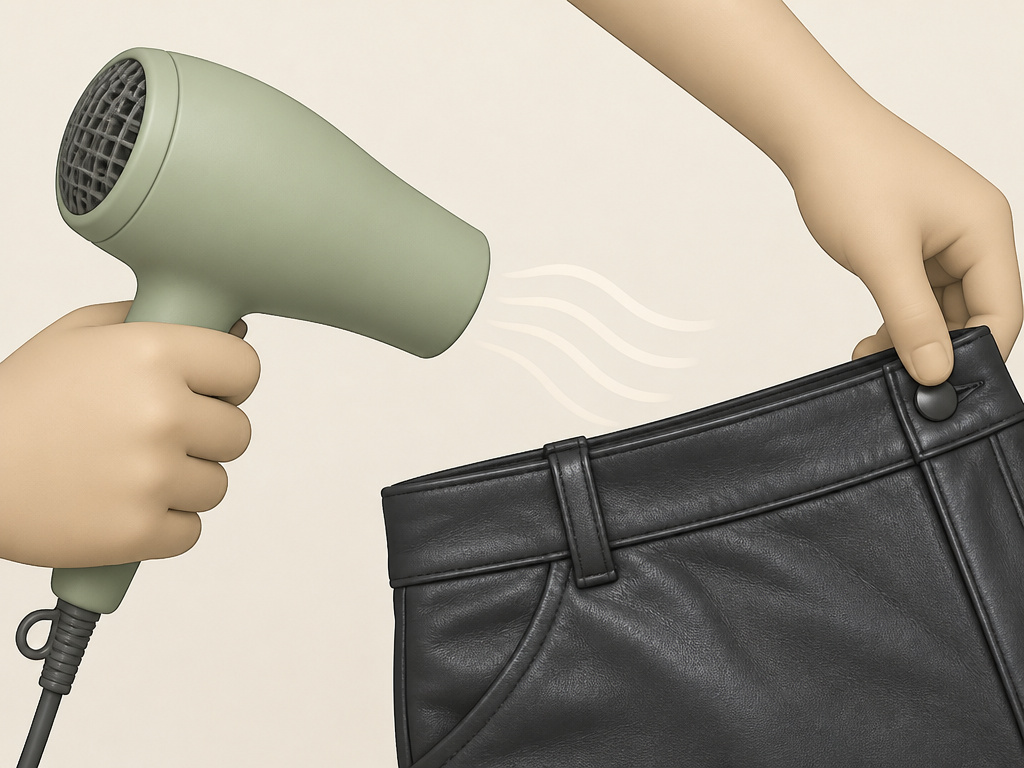 Heat opens leather’s pores and makes it more pliable. The key word is cautious. A hair dryer on high held too close can cook the leather, making it stiff and brittle.
Step 1: Test and Set.
Set your hair dryer to the lowest heat setting that still produces warmth. Hold it at least 10 inches away from the leather. Keep it moving constantly. Test on an inside seam first. You’re aiming for warm, not hot.
Step 2: Warm and Wear.
Warm the tight area for 30-45 seconds, then immediately put the pants on and move. The heat effect is temporary, you have a window of maybe two minutes to set the shape before the leather cools and stiffens.
Step 3: Cool and Condition.
Keep the pants on until the leather feels room temperature again. Then remove and condition. This method is best for small, stubborn spots like a tight waistband or calf.
| Method | Best For | Risk If Skipped |
|---|---|---|
| Wear-In | General break-in, overall snugness | Leather stays stiff, doesn’t conform |
| Warm Water | Targeted tightness in thighs/seat | Can dry unevenly, causing stiff spots |
| Cautious Heat | Small, stubborn areas (waistband) | Overheating scorches and hardens leather |
The One Product That Can Help (And How to Use It)
Most commercial “leather stretch sprays” are alcohol-based and dry out the hide. The product category that actually helps is a simple, quality leather conditioner.
Conditioner doesn’t actively stretch leather. It softens it, increasing its flexibility so that when you apply the wear-in or warm water methods, the fibers move more easily and are less likely to crack. Think of it like a hand-rubbed oil finish on wood, you don’t slather it on; you work in thin, even coats, letting each one be fully absorbed before even thinking about the next.
How to Apply for Stretching:
- Apply a thin coat to the tight area, inside and out.
- Let it absorb for 15-20 minutes. The leather will darken slightly.
- Proceed with your chosen stretching method (wear-in or warm water).
- After the stretching session and once the leather is dry, apply another light coat to lock in suppleness.
Brands like AllSaints and Falcon Garments often recommend specific conditioners for their garments, check their care guides. Using a conditioner like Bick 4, which is designed for a wide range of leather types, is a safe default.
What Never to Do: Lessons from the Repair Bench
This is the part nobody mentions until they’re holding a ruined pair of pants. Through practical guides and detailed research, I’ve seen the same errors repeatedly.
Never Force a Stretch Beyond the Initial Resistance.
Leather will tell you when it’s done. You’ll feel a firm, elastic resistance. Push past that and the stretch becomes plastic deformation, it won’t spring back. For thighs and seats, this means baggy knees and a droopy rear.
Never Stretch Leather When It’s Soaking Wet or Freezing.
Extreme water saturation weakens fibers long-term. The “freezer method” is internet nonsense, water expands when it freezes, which can rupture the microscopic fiber structure, leading to weak spots that tear later.
Never Use a Washing Machine.
Let’s untangle that. One YouTube transcript shows someone washing a leather jacket with fabric softener in a machine. Here’s the reality: a washing machine’s agitation stretches leather unevenly, thrashes the seams, and strips finishes. What comes out is a stiff, misshapen version of your garment. Spot clean only.
Where this goes sideways: Storing leather pants in a damp basement or plastic bag. This doesn’t relate to stretching, but it’s the other half of the disaster call I get. A recurring issue I see is mold on leather stored in damp basements. The mold stains the leather and weakens it, making any subsequent stretching attempt likely to tear the compromised area. Always store leather in a cool, dry place with breathable fabric bags.
How to Prevent Your Leather Pants from Stretching Too Much
Sometimes the best stretching technique is not needing to stretch at all.
Buy the Right Size.
“Wearing leather pants that are too small will naturally cause them to stretch.” Buy for the fit you want now, not the fit you hope to achieve. For a sleek look without restriction, consider pants with strategic stretch panels, like many from Diesel.
Break Them In Gently.
Follow the wear-in method from day one with new pants. This controlled relaxation prevents sudden, uneven stretching.
Condition Regularly.
“Conditioning will also protect your leather pants from stretching. When leather loses its moisture content and dries out, it’s more susceptible to stretching.” A conditioned pair is a supple pair, less likely to give way under stress.
Store Them Properly.
Fold them neatly or hang them on a padded hanger. Keep them away from heat sources and direct sunlight, which dry and stiffen leather, making it both prone to cracking and resistant to gentle shaping.
Frequently Asked Questions
Can you permanently stretch leather pants?
Yes, but within the ¼ to ½ inch limit. Stretching is a physical rearrangement of fibers. If done gently and followed by conditioning, this new shape can be permanent. Overstretching is also permanent, but results in a baggy, ill-fitting garment.
Do leather pants stretch over time?
They do. With regular wear, leather pants will conform to your body, often relaxing by a quarter inch or so in high-movement areas like the knees and seat. This is the natural break-in process. You can guide this with the wear-in method for a more even result.
What’s the difference between stretching leather pants and leather leggings?
Leather leggings are designed to hug tightly and often contain a stretch material like spandex. The leather panels in them are thinner and more prone to stretching out permanently if overloaded. The stretching techniques for full-grain leather pants are too aggressive for most leggings.
Can a tailor stretch leather pants?
Skilled tailor can sometimes let out a seam by a tiny margin (if there’s spare material in the seam allowance), but they cannot magically stretch the leather panels themselves. Their main role is in the initial construction or alterations for a better fit, which is why checking our guide on the types of leather pants before you buy is so useful.
How long does it take to stretch leather pants?
The warm water wear-in method shows results in one session. A full, gentle break-in via regular wear can take 5-10 wears. Rushing the process is the surest way to overstretch them. Patience is the real tool here.
Before You Go
One rule most guides skip: if your leather pants are more than an inch too small, stretching is not the solution. You will damage them. The techniques here are for fine-tuning, not total resizing.
The goal is a pair of pants that move with you. Whether you’re breaking in a new pair of AllSaints moto pants or easing the calves on a vintage find, the principle is the same: soften, encourage, condition. It’s the difference between forcing a material and working with it.
So, if you remember nothing else, remember the feel of that initial resistance. That’s your stop sign. Everything after that is a compromise in fit, comfort, and the long-term life of a garment that, with the right leather care basics, should only get better with age.
