
Compare Different Types of Leather Furniture & Their Uses
This post contains affiliate links. As an Amazon Associate, we earn from qualifying purchases.
The core types of leather furniture are defined by the hide’s layer (grain vs. Split) and its surface finish (aniline, semi-aniline, pigmented, or nubuck). Full-grain and top-grain leathers are the durable, premium grain layers, while split leathers are weaker inner layers, often disguised as “genuine leather.” The ISO 18270:2026 standard classifies leather upholstered products into four classes based on intended use and skin contact, linking each to specific performance guidelines.
Let’s be clear about this. The labels on a sofa tag are often marketing poetry, not technical specification. They’re designed to evoke quality, not to inform you that the “100% genuine leather” cushion is a fragile split layer that will crack in a few years of heavy use.
This guide untangles the terms. We’ll walk through the hide’s anatomy, the real definitions behind aniline and pigmented finishes, and the specific standards, like the upcoming ISO 18270:2026, that manufacturers use to grade durability. By the end, you’ll be able to read a product description and know exactly what you’re getting, and for how long.
Key Takeaways
- “Genuine leather” is a bottom-tier classification, often meaning split leather with a polyurethane coating, it tells you it’s not faux, but nothing about quality.
- The strongest part of a hide is the “butt,” a densely fibred area; the softer, less durable “belly” or flank sections are used for more supple, less resilient pieces.
- Aniline leather has no protective topcoat and is best for low-traffic, adult-only spaces; for a family sofa, a semi-aniline or pigmented finish is the practical, durable choice.
- Upcoming international standards like ISO 18270:2026 will classify leather furniture by use (e.g., Class II for direct skin contact) with recommended performance tests, making comparisons objective.
- Nubuck and suede are high-maintenance, absorbent finishes that lighten and scuff with heavy use; they are not suitable for high-traffic family furniture.
The Leather Terminology Maze
You walk into a store or scroll through a website. The tags read: “Top-Grain,” “Full-Grain,” “Genuine,” “Bonded,” “Aniline.” Here’s the thing. These aren’t just different products; they’re a hierarchy of quality, cost, and lifespan, often deliberately obscured. Let’s untangle that.
The single most misleading term is “genuine leather.” In the industry, and as clarified by authorities like the Competition Bureau of Canada, this is a general term usually describing leather that is not top grain or full grain. In many cases, it denotes split leather, the lower, weaker layer of the hide, that’s been finished with a coating and embossed to look like the premium grain layer. It’s not fake, but it’s the lowest grade of real leather. Buying a sofa labelled only “genuine leather” is like buying a car labelled only “has an engine”, technically true, but useless for making a decision.
Where this goes sideways: Assuming “genuine leather” means high quality. It’s the opposite, a bottom-tier classification that often masks a split leather construction, which the Furniture Industry Research Association (FIRA) notes should only be used in low-stress applications due to its weaker structure.
The clear definitions from primary sources are your best defense. For a durable, long-lasting piece, your search should start with terms that specify the hide’s layer: full-grain or top-grain. Everything else requires a closer look.
Hide Anatomy: Where Durability Starts
All leather comes from an animal hide, which isn’t a uniform sheet. Think of it like a cross-section of a tree. The outermost layer, just under the hair, is the grain layer. This is the toughest, most densely woven part of the hide, marked by the animal’s unique pore pattern. It’s where the best leather comes from.
Beneath that is the corium, a thick, fibrous middle layer. Below the corium is the flesh, a loose, spongy inner layer. When a hide is processed, it can be split horizontally. The top split, containing the precious grain, becomes grain leather. The lower splits, from the corium and flesh, become split leather.
| Hide Layer | Resulting Leather Type | Key Characteristic | Best Use in Furniture |
|---|---|---|---|
| Grain Layer | Full-Grain, Top-Grain | Densely fibred, strongest, shows natural markings. | Primary seating surfaces, high-wear areas. |
| Corium (Upper Split) | Split Leather (often suede) | Fibrous, strong but lacks the grain’s tight weave. | Low-stress applications, non-seating panels. |
| Flesh (Lower Split) | Split Leather (for bonding) | Soft, weak, not durable on its own. | Used to make bonded leather fibers. |
The industry knows this. IKEA’s own material guide, for instance, requires that grain leather on seating surfaces withstand a minimum of 20,000 flex cycles, while split leather is only tested to 10,000. That’s a tangible, numeric expression of the durability gap that starts with the hide’s anatomy.
The Real Difference: Grain vs. Split
This is the foundational fork in the road. Your leather is either grain leather or split leather. That choice dictates everything about its feel, appearance, and how many years of service it will give you.
Grain Leather has the grain layer substantially intact. It’s finished on the grain side. This category includes the two heavyweights: full-grain and top-grain. * Full-Grain Leather: This is the grain layer in its most natural state. It hasn’t been sanded or buffed to remove imperfections like scars, insect bites, or wrinkle marks. These “flaws” are its biography, and they create a rich, non-repeating texture. Full-grain is the most breathable and develops the most beautiful patina over time. It’s also the most expensive. * Top-Grain Leather: This is the grain layer that has been sanded or buffed to remove those surface imperfections. A new surface is then built up using finishes, and it’s often embossed with a consistent grain pattern. This makes it more uniform in appearance and provides a built-in protective layer. It’s highly durable and the most common leather used in quality, mass-produced furniture.
Split Leather is the inner layer(s) separated from the grain. It lacks the natural grain pattern and is inherently weaker. * When the flesh side of a split is sanded to create a soft, napped finish, you get suede. * When a polyurethane layer is melted onto a split and a grain pattern is embossed on top, you get bi-cast leather (also called bycast). FIRA notes this type tends to be variable in quality, lightens when stretched, and scuffs easily. * When leather fibers from splits are shredded, bonded with latex or polyurethane, and pressed into sheets, you get bonded leather. It has a short lifespan and will eventually peel and crack.
A finished split refers to a flesh split that has been finished by the application of a polymer surface coating to simulate the appearance of grain leather. This leather should only be used in low-stress applications because they are weaker than grain leather. FIRA Technical Information
The Surface Finish: Aniline, Pigmented, and Nubuck
Once you have your leather layer (grain or split), it receives a finish. This determines its color, feel, and stain resistance.
| Finish Type | Process | Feel & Look | Durability & Care | Best For |
|---|---|---|---|---|
| Aniline | Dyed through with transparent dyes; no protective pigment topcoat. | Supremely soft, natural, shows hide’s unique character. Color varies across the hide. | Absorbent, susceptible to stains, fading, and scratches. Requires vigilant care. | Low-traffic, adult-only living rooms; purists who value natural patina. |
| Semi-Aniline | Aniline-dyed with a light, protective surface coating of pigments. | Retains much of aniline’s softness and natural look with more color consistency. | Good stain and fade resistance; significantly more durable than pure aniline. | The sweet spot for most households: natural beauty with family-proof practicality. |
| Pigmented | A opaque polymer coating containing pigments is applied over the surface. | Uniform color and texture; can feel slightly firmer or coated. | The most durable and stain-resistant finish. Easy to clean. | High-traffic family rooms, homes with kids/pets, commercial settings. |
| Nubuck | The grain side of an aniline leather is lightly abraded to create a velvety nap. | Luxurious, soft, suede-like feel on the grain side. | Highly absorbent, scuffs easily, lightens in areas of heavy use. Demands high preventative maintenance. | Accent chairs, adult bedrooms; not for primary seating. |
My stance is straightforward. For a family sofa, the purist obsession with full-aniline is misguided. The [aniline vs pigmented](https://leathergenesis.The debate about aniline versus pigmented leather sofas centers on choosing the right tool for the job. A pigmented or semi-aniline finish on a top-grain leather provides the durability you need without sacrificing the comfort you want.
The Standards That Define Quality
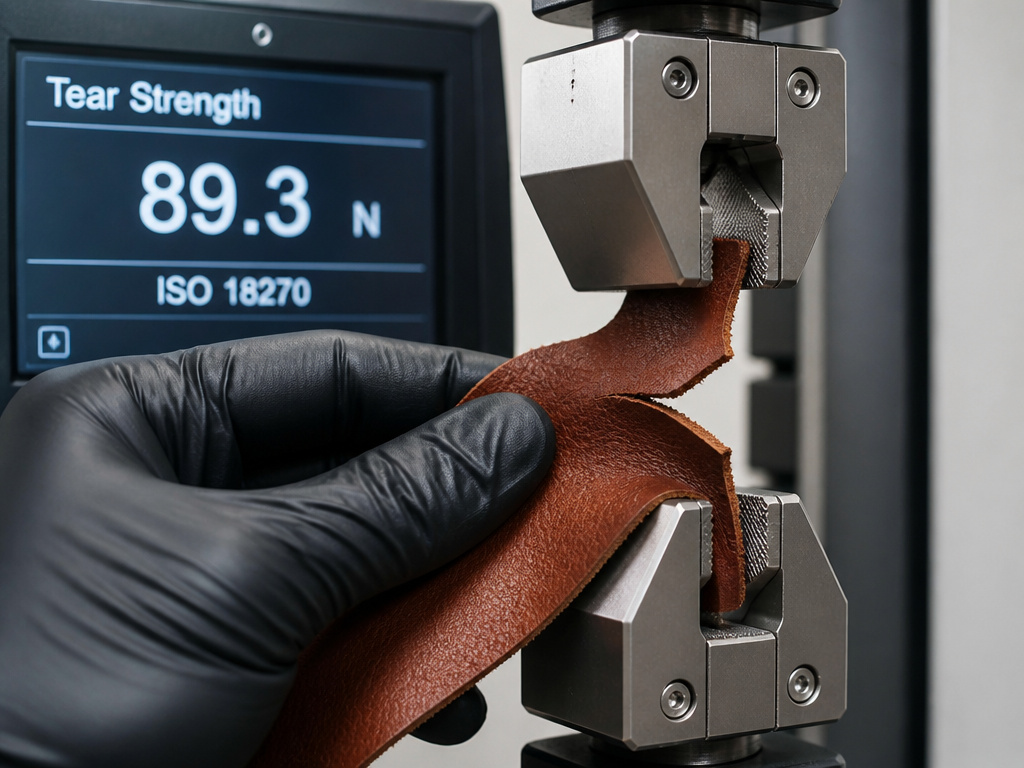
This is where we move from marketing to mechanics. How do you know if a leather is “fit for purpose”? You look to the standards. Organizations like the International Organization for Standardization (ISO) create test methods and performance guidelines that manufacturers can use, and that you can ask about.
The most relevant upcoming benchmark is ISO 18270:2026, the “Leather Upholstered Products Classification Guide.This standard, published in January 2026, provides detailed classification and performance guidelines. It categorizes products into four classes based on intended use and skin contact: * Class I: Products for babies and small children (up to 36 months). * Class II: Products with direct skin contact (e.g., sofas, chairs, beds). * Class III: Products with minimal, occasional skin contact. * Class IV: Decorative products with no regular skin contact.
For each class, it recommends performance characteristics like tear strength, flex resistance, color fastness to rubbing and light, and cold crack resistance. When this standard is widely adopted, comparing two Class II sofas will involve comparing objective test results, not just persuasive prose.
Another key document is BS EN 13336:2022, which provides a guide for selecting leather for furniture, outlining test methods and values for different leather types. While it doesn’t set mandatory end-use criteria, it gives manufacturers and specifiers a common language for durability.
This shift towards standardization is crucial. As noted in the Leather in Furniture Upholstery study, the international market is flooded with leather of varying specifications and quality. Testing the planned leather is always recommended. These standards are the blueprint for that testing.
Making Your Choice: The Practical Guide
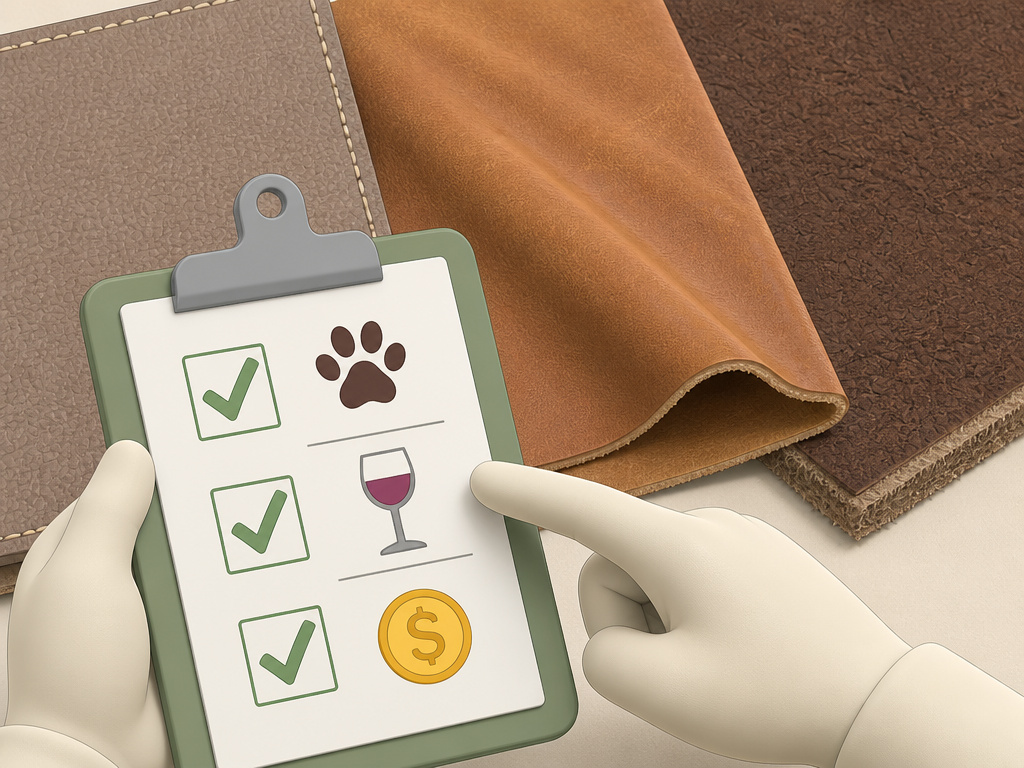
So, you’re facing a sea of leather sofas. How do you translate this into a decision? Let’s break it down by the life you actually live.
For the Family Household (Kids, Pets, Everyday Life):
Your priority is durability and cleanability. Here, the guide to choosing leather furniture is simple: look for top-grain leather with a pigmented or semi-aniline finish. This combination offers maximum resistance to spills, scratches, and fading. The protective topcoat is your friend. Avoid aniline and nubuck, they are absorbent and will show wear quickly.
For the Low-Traffic, Adult-Only Space:
If you want the most natural look and feel and are prepared for careful maintenance, full-grain aniline leather is the pinnacle. It will develop a personal patina and feel incredibly soft. Understand that it will mark easily and requires specific, gentle cleaners. A semi-aniline finish is a sensible compromise, offering much of the natural character with added protection.
For the Budget-Conscious Buyer Seeking Real Leather:
If your budget is tight but you want real leather, a top-grain pigmented leather is often the best value. It provides excellent durability. Be extremely wary of anything labelled only “genuine leather” or described as “bonded.” The cost savings upfront will be erased by a much shorter lifespan. Sometimes, a high-quality faux leather or fabric is a better financial and functional choice than a low-grade real leather; our comparison of leather vs fabric explores this trade-off.
The Italian Leather Question:
Terms like “Italian leather sofas” or “premium Italian leather” signal a focus on quality tannage and finishing. Italy has a renowned leatherworking tradition. However, “Italian” describes origin, not type. You still need to ask: is it full-grain or top-grain? Aniline or pigmented? A pigmented Italian leather is still a pigmented leather. The provenance suggests better craftsmanship in dyeing and finishing, but the fundamental rules of leather selection still apply.
Care & Maintenance: Expectations by Type
Your cleaning routine is dictated by the finish. Getting this wrong can do more harm than good.
- Pigmented & Semi-Aniline: These are the easiest. Regular dusting or vacuuming with a soft brush attachment is key. Clean spills immediately with a damp cloth. Use a cleaner specifically formulated for protected leathers only when needed. Do not use furniture polish, saddle soap, or silicone-based conditioners, they will create a sticky film that attracts dirt.
- Aniline & Nubuck: These require specialized care. Use only cleaners designed for absorbent, unfinished leathers. For nubuck, a suede brush may be needed to maintain the nap. Both are highly susceptible to water rings and oil stains, so preventative protection (like fabric guard sprays formulated for leather) is worth considering, though it may slightly alter the feel.
- Bonded/Bi-Cast: Clean gently with a damp cloth. Avoid saturating the material, as water can seep into the bonded layers and cause delamination. These materials are not receptive to conditioning.
Common mistake: Conditioning pigmented leather furniture every few months. The polymer topcoat prevents the conditioner from penetrating the leather; it simply sits on the surface, attracting dust and potentially softening the supportive substrate underneath over many years. For protected leathers, cleaning is care. Conditioning is rarely needed.
One underrated tip: clean the undersides of cushions and arms. This is where skin oils and dirt transfer directly, and it’s a primary spot for premature soiling that many people miss until it’s set.
Frequently Asked Questions
What is the most durable type of leather for a sofa?
The most durable type for a family sofa is top-grain leather with a pigmented finish. The top-grain layer provides strength, and the pigmented polymer coating offers superior resistance to stains, abrasions, and fading. This combination is tested to withstand high flex cycles, as seen in standards like those referenced by IKEA.
Is “genuine leather” good quality for furniture?
“Genuine leather” is a broad, bottom-tier term for furniture that often refers to split leather, the weaker inner layer of the hide, which has been coated and embossed. For a durable, long-lasting piece, look for specifications of “full-grain” or “top-grain” leather.
What’s the difference between aniline and semi-aniline leather?
Aniline leather is dyed with transparent dyes and has no protective topcoat, making it soft, natural, and absorbent. Semi-aniline leather is also aniline-dyed but receives a light, protective surface coating of pigments. This gives it much better stain and fade resistance while retaining a soft, natural look. Semi-aniline is the more practical choice for most homes.
Can you repair scratches on leather furniture?
It depends on the finish. Scratches on pigmented leather are often only in the topcoat and can sometimes be buffed out or minimized with a specialized leather cream. Scratches on aniline leather penetrate the dyed layer and are more permanent, becoming part of the leather’s patina. Deep scratches on any leather are best assessed by a professional leather repair technician.
What does “full-grain” leather mean?
Full-grain leather is the top layer of the hide with its natural grain surface intact. It has not been sanded to remove natural imperfections like scars or insect bites. This makes it the strongest, most breathable type of leather, and it develops a unique patina over time. It represents the highest grade of leather.
Before You Go
The goal is to give you the few, load-bearing facts that cut through the sales talk. Remember the hierarchy: the layer (grain over split) and the finish (protected over unfinished) dictate your sofa’s future.
When evaluating a potential purchase, move past the single phrase on the tag. Ask the retailer: “Is this a grain leather or a split leather?” and “Is the finish aniline, semi-aniline, or pigmented?” The way they answer, or if they can answer, tells you almost everything. If they can provide information referencing a standard like ISO 18270:2026 or BS EN 13336:2022, you’re dealing with a specifier, not just a salesperson.
Finally, match the leather to your reality, not an ideal. The most exquisite aniline hide is a poor choice for a family room couch. That’s not a compromise; it’s the correct application of a material. Choose the leather that fits the life you actually live, and it will serve you well for decades.
