
What Is a Brogue Shoe | From Bog Drainage to Boardroom
This post contains affiliate links. As an Amazon Associate, we earn from qualifying purchases.
This post contains affiliate links. As an Amazon Associate, we earn from qualifying purchases.
A brogue shoe is any shoe. Oxford, Derby, boot, or loafer, featuring decorative perforations and serrated edges along its leather panels. This decoration is called broguing. It originated as a functional feature for drainage in wet terrain but is now purely ornamental, with the amount of broguing directly determining the shoe’s formality.
Let’s untangle a common mix-up right away. People often use “brogue” and “Oxford” interchangeably. They’re not the same thing. An Oxford refers to a shoe’s construction, specifically its closed lacing system. A brogue refers to a shoe’s decoration, the patterns of holes punched into the leather. You can have a brogued Oxford, a plain Oxford, a brogued Derby, or a plain Derby. The broguing is the suit’s pinstripe, not the suit itself.
What follows is a breakdown of what actually defines a brogue, the four main types you’ll see, and the straightforward style rules that stem from its working-class origins. By the end, you’ll be able to spot the difference between a quarter and a semi-brogue from across the room and know exactly where each one belongs in your wardrobe.
Key Takeaways
- Brogue = Decoration, Not Construction: The term “brogue” specifically refers to the decorative perforations (broguing) on a shoe’s upper. It is not a style of lacing.
- More Holes = More Casual: The formality of a brogue shoe is inversely proportional to the amount of broguing. A quarter brogue (minimal holes) is business-appropriate; a full wingtip (maximum holes) is strictly smart-casual or country wear.
- Wingtip is a Style, Not a Synonym: A “wingtip” is a specific style of toe cap on a full brogue, shaped like a ‘W’ or bird’s wings. Not all brogues are wingtips.
- Forget the Bog Water Story: The popular tale that broguing holes originally drained water from Irish bogs is likely a later invention. Historical sources from the 18th century don’t mention this function.
- Construction is Independent: A brogue can be built using any method. Goodyear welt, Blake stitch, or cemented. The broguing is a surface detail applied to the leather before assembly.
The Core Definition: It’s All About the Holes
Here’s the thing. If a dress shoe has patterns of little holes punched along its seams and edges, it’s a brogue. That decorative technique is called broguing, and it’s the only mandatory feature. Everything else, the type of toe cap, the lacing system, even whether it’s a shoe or a boot, is variable.
Broguing is an ornamentation employing heavy perforations and pinking (serrated edges) on a shoe’s upper leather. It is a decorative overlay, independent of the shoe’s underlying construction method.
This matters because it shifts how you judge the shoe. You evaluate a brogue’s quality the same way you evaluate any other leather shoe: look at the leather grade, the stitching, the sole attachment, and the overall craftsmanship. The broguing should be clean, sharp, and symmetrical, not ragged or uneven. A poorly made shoe with pretty holes is still a poorly made shoe.
The confusion often starts with lacing systems. Let’s be clear about this. The two most common formal types of leather shoes, Derby shoes (open lacing) and Oxford shoes (closed lacing), can both be brogues. So can a monk strap shoe or a loafer. The broguing is applied to the leather panels before they are stitched together into any of these forms.
A History Lesson: From Scottish Bogs to Jazz Clubs
The story usually goes like this: 18th-century Scottish and Irish farmers, trudging through wet, boggy land, punched holes in their rough hide shoes so water could drain out. It’s a great story. It’s also probably not true, at least not as the origin of the decorative holes we see today.
Industry research from the SATRA Technology Centre notes that while rudimentary hide shoes existed in the 1700s, “contemporaneous descriptions of the original brogues do not mention such holes.” The term “brogue” itself likely comes from the Gaelic bróg or Scottish bròg, meaning a rough, stout shoe. The decorative perforations we associate with brogues appear in fashion literature in the 1740s, but as a style detail, not a documented drainage system.
The functional origin story is likely a charming bit of retroactive marketing. The real shift happened in the 1920s. What was once considered crude, working-class footwear was adopted by fashion icons. The Prince of Wales wore them on the golf course. Jazz stars sported two-tone “Spectator” brogues. Fred Astaire danced in them. By the 1980s, the brogue had completed its journey from field to city, becoming a staple of the gentleman’s wardrobe. The holes had long since stopped going all the way through the leather.
A Visual Guide to Brogue Types (From Most to Least Formal)
Not all brogues are created equal. The amount and placement of broguing create a clear hierarchy, moving from boardroom-ready to countryside-casual. This isn’t just tradition; it’s visual grammar. More ornamentation means more visual noise, which breaks up the sleek, serious line a formal outfit requires.
| Brogue Type | Defining Feature | Broguing Placement | Best For |
|---|---|---|---|
| Quarter Brogue | A plain toe cap with a single line of perforations along its seam. | Only along the toe cap’s edge. No medallion. | Business suits, business-casual offices. The most formal brogue. |
| Semi-Brogue (Half Brogue) | A straight-edged toe cap with broguing along the edge AND a decorative medallion on the cap. | Toe cap edge + medallion. May have light broguing on other seams. | Smart-casual, creative offices, dressy weekend wear. |
| Full Brogue (Wingtip) | A pointed, ‘W’-shaped toe cap (the wing) that extends along the shoe’s sides. | Heavy broguing on all seams, wing edges, and a large medallion. | Country wear, tweed, denim, chinos. Too casual for traditional business dress. |
| Longwing Brogue | A full brogue where the wing extends all the way to the heel seam. | Same as full brogue, but the wing runs the shoe’s full length. | A bold, vintage-American casual look. Pairs with jeans or rugged chinos. |
Quarter Brogue: This is your entry point. The broguing is so subtle it’s almost a texture. A cap-toe Oxford with quarter broguing is a brilliant shoe, it has the formality of a plain Oxford but with a hint of personality that says you pay attention to details. It’s the only brogue some conservative fields will tolerate with a suit.
Semi-Brogue: Reportedly first designed by John Lobb in 1937 as a stylish middle ground, the semi-brogue adds the medallion. This central pattern is the shoemaker’s signature. The semi-brogue is the versatile workhorse. It’s at home with wool trousers and a sport coat, but it won’t look out of place with dark denim.
Where this goes sideways: Wearing a full wingtip brogue with a charcoal pinstripe suit. The clash is immediate, the suit demands austerity, the shoe shouts personality. You’ll look like you dressed in the dark.
Full Brogue (Wingtip): This is what most people picture. The winged toe cap is flamboyant and historic. The name “wingtip” is purely American; in the UK, it’s just a full brogue. This shoe has country DNA. Pair it with textures that match: tweed, corduroy, heavy cotton. It’s a statement.
The Edge Cases: Austerity and Blind Brogues
Sometimes you’ll see oddities that break the pattern. An “austerity brogue” has a wingtip-shaped toe cap but no perforations at all, it’s a plain shoe in a brogue silhouette. A “blind brogue” is the opposite: a plain toe shoe with wingtip-style perforations stitched onto it. These are niche styles, but they prove the rule: the holes are the thing.
Brogue Styling: The One Rule That Never Changes
The styling rule for brogues is simple and stems directly from their history: the more broguing, the more casual the shoe. This isn’t a fuzzy guideline. It’s the direct visual logic of formality.
- Quarter & Semi-Brogues: These belong in business and smart-casual environments. A dark brown quarter-brogue Oxford with a navy or grey suit is a classic combination. A tan semi-brogue Derby with odd trousers and a blazer is perfect for a dinner out.
- Full & Longwing Brogues: Keep these in the casual realm. They are partners for chinos, denim, corduroy, and tweed. A walnut full brogue with jeans and an OCBD shirt is a timeless weekend look. The longwing, with its bold, continuous line, has a particularly rugged, American vibe that works with heavier fabrics.
Color intensifies this rule. A black quarter brogue is more formal than a walnut one. A brightly burnished burgundy wingtip is more casual than a subdued brown. Let the shoe’s ornamentation and color tell you where it wants to go.
Construction & Care: Looking Beyond the Holes
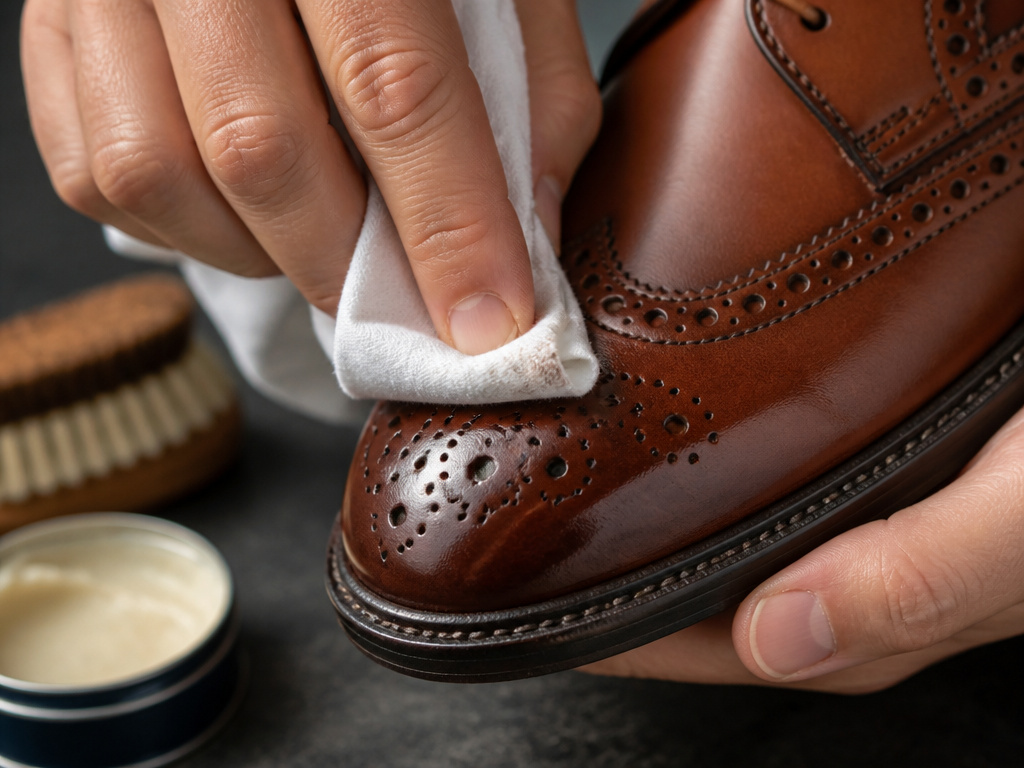
Because broguing is just decoration, a brogue shoe can be built using any construction method. You’ll find Goodyear-welted brogues (durable, resoleable), Blake-stitched brogues (sleeker, slightly less weather-resistant), and cemented brogues (common in fast-fashion). The construction determines longevity and cost, not the brogue style.
Caring for a brogue is like caring for any leather shoes, with one extra consideration: the holes. Dirt and polish can build up in the perforations.
- Brush First: Always use a horsehair brush to remove loose dirt, paying attention to the broguing.
- Condition Sparingly: Apply a lightweight leather conditioner with a cloth. Avoid wax-based products that will clog the perforations. I’ve relied on the same brand of beeswax-based conditioner for a decade because it protects without sealing the leather’s pores shut.
- Polish with Care: Use a wax polish for color and protection. Apply it around the broguing, not heavily into it. To shine leather shoes to a high gloss, you’ll buff the smooth surfaces, but the brogued areas will retain a matte, textured finish, that’s the intended contrast.
- Mind the Sole: Whether it’s a sleek leather sole or a sturdy rubber one, keep it clean. The sole type affects the shoe’s formality and function, but not its identity as a brogue.
Frequently Asked Questions
Are brogues formal shoes?
They can be, but it’s a spectrum. A quarter brogue in black or dark brown calfskin is a formal dress shoe. A full wingtip brogue in tan suede is a casual shoe. The amount of broguing is the dial that adjusts formality. As the Wikipedia entry on brogue shoes notes, while once considered purely country wear, brogues are now accepted in most contexts, except for the most formal events like black tie.
What is the difference between an Oxford and a brogue?
An Oxford is a type of shoe construction defined by its closed lacing system (the eyelet tabs are stitched under the vamp). A brogue is a type of decoration defined by perforations. You can have a brogued Oxford (an Oxford shoe with holes) or a plain Oxford (an Oxford shoe with no holes). They describe different attributes.
Can you wear brogues with a suit?
Yes, but match the brogue to the suit’s formality. A quarter or semi-brogue works well with most business and business-casual suits. A full wingtip brogue is generally too casual for a classic business suit but can work brilliantly with a more casual tweed or flannel suit.
What’s the difference between a brogue and a wingtip?
“Brogue” is the overarching category for shoes with decorative perforations. “Wingtip” describes the specific winged shape of the toe cap on a full brogue. All wingtips are brogues, but not all brogues (like quarter or semi-brogues) are wingtips.
What are those two-tone brogues called?
Those are called Spectator shoes (or “co-respondent” shoes in the UK). They are typically full brogue Oxfords made from two contrasting colors of leather, like white with a black or tan toe cap. They are a highly stylized, casual option.
The Bottom Line
A brogue is defined by its jewelry, the patterns of holes punched into the leather. That decoration has a built-in style manual: less is more formal, more is more casual. Don’t get hung up on the romanticized bog-water origin story. Instead, focus on what you see. A clean quarter brogue is a sharp, confident choice for the office. A beat-up pair of longwings has a story to tell on the weekend.
So, forget trying to classify it solely as an Oxford or a Derby first. Look at the holes. Then look at the leather, the stitching, the sole. Judge it like any other shoe. The broguing is just the signature it wears on the outside.
