
Comparing Leather Soles and Rubber Soles: A Practical Guide
This post contains affiliate links. As an Amazon Associate, we earn from qualifying purchases.
Choosing between a leather sole and a rubber sole comes down to three things: where you’ll walk, how often you’ll wear them, and what you need them to do. Leather delivers formality, breathability, and a break-in that molds to your foot. Rubber provides grip, weather resistance, and durability for daily use. The right answer is a match for your specific situation.
Let’s untangle the practical trade-offs. The difference isn’t just about looks or tradition; it’s about material science and intended use. A leather sole is a natural product that behaves one way on dry office carpet and another on wet pavement. A rubber sole is a formulated compound engineered for specific hazards.
What follows is a breakdown of how each sole performs under pressure, where each one fails, and the specific scenarios where the choice is already made for you.
Key Takeaways
- Leather soles excel in dry, formal, or indoor settings and are the standard for equestrian footwear, but they wear faster on abrasive surfaces and offer poor wet traction.
- Rubber soles are the default for safety, wet conditions, and long-term durability on concrete, with compounds rated for heat, oil, and slip resistance.
- The construction method (like a Goodyear welt) often matters more for resoleability and longevity than the sole material itself.
- Hybrid options, like thin rubber topy soles or studded designs (e.g., Dainite), can bridge the gap for leather soles needing better grip.
- Ignoring your primary environment is the fastest way to ruin a good pair of shoes, regardless of the sole material.
The Core Differences: A Side-by-Side Look
Forget vague adjectives. The real differences are measurable and affect your day. A leather sole is typically 4-6mm of dense, vegetable-tanned hide. A rubber sole is a vulcanized blend of polymers, often 6-10mm thick with molded treads.
This table puts the key performance factors head-to-head.
| Factor | Leather Sole | Rubber Sole |
|---|---|---|
| Traction on Wet Surfaces | Poor. Becomes slick on rain-slicked pavement or polished floors. | Excellent. Tread patterns channel water; compounds are designed for slip resistance. |
| Durability on Concrete | Wears relatively quickly. Toe area can thin within a season of daily city walking. | High. Abrasion-resistant compounds like those in the Carhartt Mudrunner boot are made for hard surfaces. |
| Break-in & Comfort | Molds to your foot’s pressure points over time, creating a personalized fit. | Provides immediate cushioning and shock absorption; comfort relies on the midsole, not the outsole molding. |
| Weather Resistance | Absorbs water, which can weaken the leather and lead to damage if not dried properly. | Acts as a waterproof barrier; many are oil and chemical resistant. |
| Formality & Aesthetics | Sleek, low-profile, and traditional. The hallmark of classic dress shoes. | Bulkier profile; reads as casual or utilitarian, though some designs are more discreet. |
| Resoleability | Excellent. A core advantage of quality welted construction is easy sole replacement. | Variable. Can be more complex if bonded, but many stitched work boots are designed for resoling. |
The choice often comes down to prioritizing one column over the other. You can’t have the sleek formality of leather and the tank-like durability of a heavy rubber lug sole in the same shoe. They are different tools.
Why the Tanning Process Dictates Durability
Not all leather soles are equal. The tanning method, how the raw hide is stabilized, creates the sole’s fundamental character. The two main types are vegetable tanning and chrome tanning, and a government study from the National Institute of Standards and Technology (NIST) laid out their performance decades ago.
A NIST sole leather durability report found that chrome-tanned sole leather can wear approximately twice as long as vegetable-tanned leather of the same thickness. However, the same study noted chrome leather’s disadvantages: lack of firmness, poor water resistance, and a tendency to slip.
Here’s what that means for your shoes. Vegetable-tanned leather is firm, dense, and ages with a rich patina. It’s the traditional choice for high-end dress shoes because it holds a shape, finishes beautifully, and develops character. That density also means it can feel stiff initially and wears down steadily on abrasive sidewalks.
Chrome-tanned leather is processed faster and results in a more pliable, “empty-feeling” leather. While it might wear longer in a lab abrasion test, that softness is a practical problem. It absorbs water rapidly, loses shape, and its edges fray. You’ll rarely find a pure chrome leather outsole on a dress shoe for these reasons; its performance trade-offs cancel out the wear advantage.
This is a classic case where a spec sheet number doesn’t tell the whole story. Double the wear life sounds great, but not if the sole is curling and soaked through on your third wet commute.
When Leather is the Only Correct Answer
Some roles require a specific uniform, and the sole is included. For horseback riding, a smooth leather sole is a safety feature. The leather slides cleanly in and out of a stirrup.A rubber sole can grip the edge, creating a dangerous drag where a rider could get caught.
The same principle applies to certain leather boots designed for dance. The smooth surface allows for controlled glide and spin. In formal settings, the visual language is strict. A black-tie event or a conservative boardroom expects the refined silhouette of a leather sole. A rubber sole, no matter how thin, signals something else.
Where this goes sideways: Wearing leather-soled dress shoes on a wet marble lobby floor. The step from a rainy street into a polished building entrance is where most slips happen. The transition from textured concrete to slick stone eliminates the last bit of friction.
Outside of these specific scenarios, choosing leather is a conscious trade for aesthetics over all-weather function. It’s a valid choice, but an informed one.
Where Rubber Soles Are Non-Negotiable
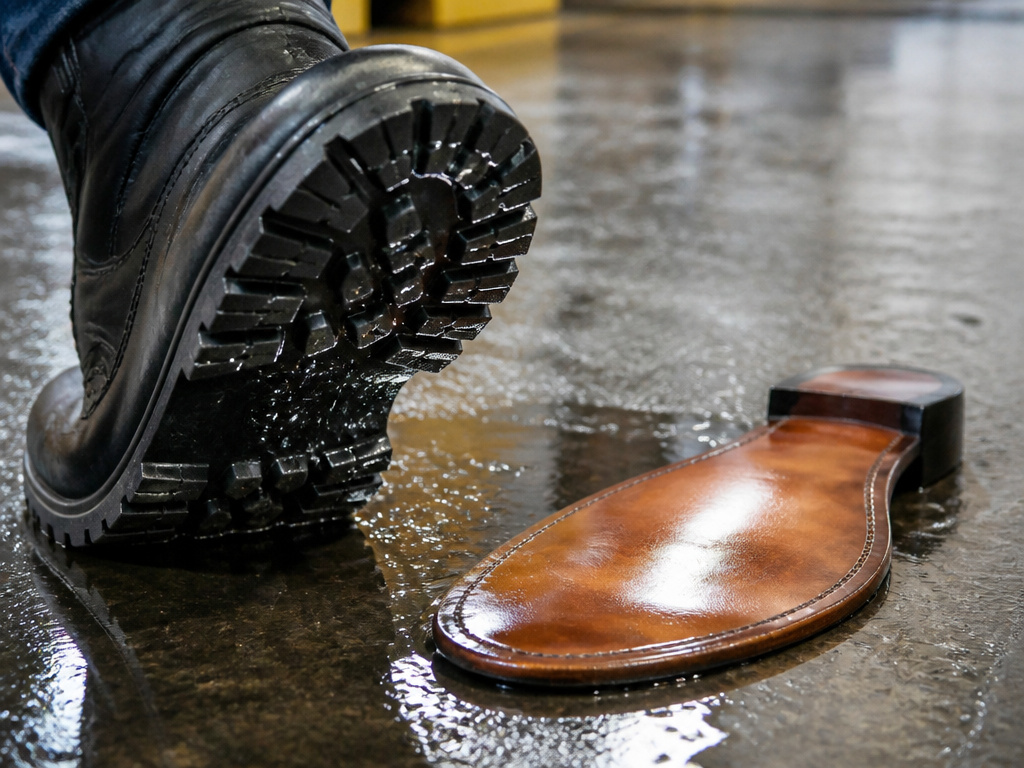 If your environment has a hazard, the sole is your first line of defense. This isn’t about preference. Industrial standards like ASTM F3445 for slip-resistant footwear and EN 13287 for grip measurement exist because the wrong sole causes injuries.
Workplaces with oil, chemicals, or constant moisture demand rubber. The Carhartt Mudrunner boot’s sole is heat-resistant to 300°C and oil-resistant for a reason. A peer-reviewed study in ACS Applied Materials & Interfaces analyzed rubber outsole compounds, showing how silica-filled blends provide superior wet-traction performance that meets these rigorous benchmarks.
The gap in performance here is vast. A leather sole on a factory floor isn’t just impractical; it’s a liability. The same goes for anyone who walks on polished concrete, tile, or wet pavement as part of their day. The tread on a rubber sole isn’t for show, it channels water away from the contact patch to maintain grip.
This performance comes with trade-offs. Rubber is heavier and less breathable. But in demanding conditions, those are compromises you make for safety and longevity.
The Hybrid Path: Getting the Best of Both
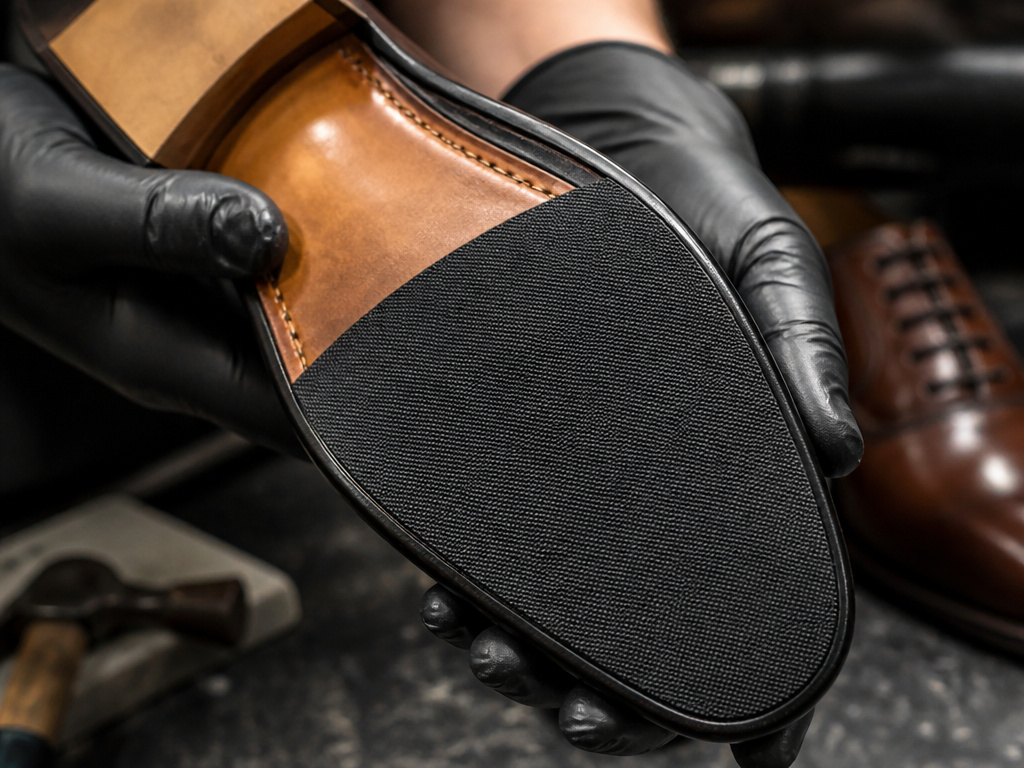 You don’t always have to pick a side. Cobblers have bridged this divide for decades with aftermarket modifications. The most common is a thin rubber half-sole (often called a “topy”) glued to the forepart of a leather sole. It adds crucial traction at the ball of the foot without altering the shoe’s profile or formal look.
Manufacturers offer built-in hybrids, too. The Dainite sole is a classic: a hard rubber sole with small, recessed studs. It provides much better wet-weather grip than smooth leather, retains a relatively low profile, and is extremely hard-wearing. It’s a popular choice for country boots and casual-derby shoes that need to handle varied conditions.
Another approach is the combination sole, featuring a leather midsole for structure and a rubber outsole for grip. This is common in many boot styles built for rugged use. The leather provides a stable base for the footwear’s architecture, while the rubber takes the abrasion.
These solutions acknowledge a simple truth: most of us live in mixed environments. We need a shoe that can walk from an office to a rainy parking lot without a second thought.
Construction: The Foundation That Lets You Choose
The sole material is important, but how it’s attached is what gives you long-term options. A cemented sole is glued directly to the upper. When it wears out, the repair is complex and often not cost-effective. The shoe is frequently discarded.
A welted construction, like a Goodyear welt, stitches the sole to a leather rib that is itself stitched to the upper. This creates a channel for the stitch that is protected from moisture. The key advantage? The sole can be cut off and a new one stitched on, repeatedly. This makes resoling leather shoes or boots a standard, affordable service that extends the life of the footwear for decades.
The part nobody mentions: That stitched channel is what keeps the welt dry. If water soaks the stitches on a cement construction, the bond fails. On a welt, the water has to travel a much longer, waxed-thread path before it reaches your foot.
This is why construction matters more than the initial sole material. A well-made, welted shoe with a rubber sole can be resoled with leather later, or vice-versa. You’re investing in a platform, not just a disposable product. When assessing leather quality in a shoe, always check the construction method on the inside. It’s the true predictor of lifespan.
Care and Maintenance for Maximum Life
Each sole type has its own upkeep ritual. Neglect it, and you’ll shorten the shoe’s life regardless of material.
For leather soles, the enemy is prolonged moisture. If they get soaked, let them dry naturally, away from direct heat. Stuff them with newspaper to absorb internal moisture and maintain shape. Once dry, a light application of a dedicated sole edge dressing (not general leather conditioner) protects the edges from drying and cracking. For the bottom, a light scuff on rough concrete can improve initial traction.
Rubber soles need less fussy care. The priority is cleaning debris from the treads to maintain grip. A stiff brush and soapy water work fine. Avoid harsh petroleum-based cleaners that can degrade some rubber compounds over time. Inspect for deep cuts or excessive smoothing in high-wear areas, these are signs the slip resistance is diminishing.
The uppers demand more consistent attention, of course. Using the correct leather glue for any separation or the right conditioner for the top-grain leather vamp is crucial. But the sole care is what prevents premature failure of the entire foundation.
Frequently Asked Questions
Can you add traction to a leather sole?
Yes, and it’s a smart move. A cobbler can glue a thin, flexible rubber half-sole (a “topy”) to the forefoot. It drastically improves wet-weather grip with minimal visual change. For a more permanent factory solution, look for styles with embedded rubber studs like a Dainite sole.
Do leather soles last longer than rubber soles?
Generally, no. In real-world conditions, especially on abrasive urban pavement, a quality rubber sole will almost always outlast a leather one. Leather’s advantage is not in raw durability, but in its resoleability, breathability, and formal aesthetic.
Are rubber-soled shoes less formal?
Typically, yes. The traditional standard for formal dress shoes (like Oxfords for black tie) is a leather sole. Its slim profile is part of the formal silhouette. However, very thin, discreet rubber soles on derby shoes or boots are now widely accepted in business-casual and many business-formal settings.
Which is better for walking long distances?
For pure walking comfort over miles, a rubber sole (or a hybrid) usually wins. It provides better cushioning and shock absorption from the first step. A leather sole needs significant break-in to mold to your foot, and even then, it offers less inherent cushioning against hard surfaces.
Can any shoe be resoled?
No. Only shoes with stitched construction, like a Goodyear welt, Blake stitch, or similar, are designed for straightforward resoling. Cemented construction bonds the sole directly to the upper, making replacement difficult, messy, and often uneconomical. Always check the construction before buying if you plan on long-term ownership.
The Bottom Line
Stop thinking about leather versus rubber as a question of quality. It’s a question of application. Match the tool to the task.
If your priority is formality, tradition, or a specific function like riding, leather soles are your answer. Plan for more care and more frequent resoling. If your day involves moisture, slick surfaces, or hard pavement, rubber soles are the only sensible choice for safety and durability.
The best investment you can make is in versatile, well-constructed footwear that allows for future resoles. That way, you’re not locked into one material forever. You can start with a rubber sole for daily grind and switch to leather for a dressier future incarnation. That’s the real secret, buying a system you can maintain.
