
How to Clean a Leather Purse & Crucial Brand-Specific Tips
This post contains affiliate links. As an Amazon Associate, we earn from qualifying purchases.
To clean a leather purse, first identify the specific leather type and finish, then follow the manufacturer’s instructions if they exist. For general full-grain or vegetable-tanned leather, use a soft, dry cloth for dust. For light soil, a cloth dampened with distilled water and a drop of mild, pH-neutral soap works. Never use saddle soap, oils, furniture polish, or ammonia unless the maker explicitly says it’s safe.
That identification step is the whole game. A Gucci GG Supreme bag, a Dooney & Bourke All Weather Leather tote, and a vintage vegetable-tanned satchel demand three completely different approaches. Using the wrong method, treating a coated Saffiano leather with a heavy conditioner, for instance, doesn’t just fail to clean. It can permanently cloud the finish or cause dyes to bleed between materials.
What follows is a material-first guide. We’ll break down common leather types, translate brand-specific care language, and walk through cleaning the inside, which most tutorials treat as an afterthought.
Key Takeaways
- Check the brand’s care guide first. Gucci says to avoid all cleaning products; Tiffany bans saddle soap and ammonia. Their advice overrides any general rule.
- Match your cleaner to the leather’s topcoat. Coated leathers (Saffiano, patent) only need water; uncoated, absorbent leathers (vegetable-tanned, nubuck) require specific, gentle cleaners.
- Clean the inside separately. Fabric linings need a soft brush and damp cloth; unlined leather interiors require extreme care to avoid water stains. Distilled water is essential for wet cleaning.** Tap water minerals leave white residue spots as they dry, especially on dark leather.
- Conditioning is not always the next step. Many modern leathers, including Dooney & Bourke’s treated collections, specifically warn against using conditioners or creams.
The First Rule: Identify Your Leather
You wouldn’t use dish soap on a silk blouse. The same principle applies here. The label “leather” tells you almost nothing about how to clean it. The finish, topcoat, and treatment dictate everything.
Start with the manufacturer. Brands like Gucci, Coach, and Dooney & Bourke publish care guides. These are your highest authority. Gucci’s guide explicitly warns against using any cleaning or protective products on their bags, stating they could alter appearance or cause stains. Tiffany & Co.’s FAQ is even more direct, listing saddle soap, oils, and ammonia as things to never use. If this information exists, your search is over. Follow it.
When no guide exists, which is common, as care labels aren’t legally required for bags, you become a detective. Look for these tells:
Coated Leathers: Saffiano, patent, and most modern designer bag leathers have a protective polyurethane or vinyl topcoat. They feel smooth, slightly plastic-like, and water beads on them. Cleaning is surface-level; conditioners cannot penetrate and will just sit on top, attracting dirt.
Uncoated/Aniline Leathers: Full-grain, vegetable-tanned, and some nubucks have no plastic barrier. They feel warm, absorb water quickly, and darken where touched. These are more vulnerable and require careful, minimal moisture.
Treated “Weatherproof” Leathers: Dooney & Bourke’s All Weather Leather is a prime example. It’s pebble grain leather treated for water repellency. The brand specifies cleaning with distilled water and mild bar soap, a method that would harm a delicate aniline leather.
| Leather Type | Visual/Feel Tell | Safe Cleaning Base |
|---|---|---|
| Coated (Saffiano, Patent) | Smooth, shiny, water beads | Distilled water on a soft cloth |
| Treated Pebble Grain | Textured, matte, slightly waxy | Distilled water & mild bar soap |
| Uncoated Full-Grain | Warm, develops a patina, absorbs moisture | Dry brush, barely damp cloth |
| Suede/Nubuck | Velvety, nap brushes easily | Suede brush & eraser only |
The wrong guess costs you. Using a conditioner on a coated bag creates a greasy film. Using plain water on an uncoated, dyed leather can cause water spotting.
What You Actually Need (The Short List)
Forget the twenty-piece kits. Here’s what to gather before you start.
- Soft, Natural-Fiber Cloths: Microfiber is the default for a reason, it’s lint-free and gentle. For very delicate finishes, a clean, soft cotton cloth (like an old t-shirt) works. Have two: one for cleaning, one for drying.
- Distilled Water: This is not optional for any step involving moisture. The minerals in tap water, especially if you have hard water, leave faint white spots as they evaporate. A gallon costs very little and lasts for years of cleaning.
- Mild, pH-Neutral Soap: If your leather type calls for soap, use one designed for leather or a pure castile soap. Dawn dish soap, often recommended, is a degreaser. It’s too harsh for most leathers and will strip natural oils.
- Soft-Bristled Brush: A horsehair detailing brush or a very soft toothbrush is for dry brushing to remove dust from seams and textured leather. Do not use it with water unless you’re following a specific brand’s instruction for a treated leather.
- Cleaner & Conditioner (Maybe): Only for uncoated, absorbent leathers. Pick a product matched to the leather type. For a general-purpose option that won’t darken leather dramatically, Leather CPR or Bick 4 are reliable. Many modern bags, however, need neither.
The most common mistake is reaching for the conditioner first. Conditioning is a maintenance step for dry leather, not a cleaning step for dirt. Clean first, then assess if conditioning is even needed.
The Step-By-Step Cleaning Process
With your materials identified and gathered, the process is straightforward. The goal is to lift dirt without driving it deeper or altering the leather’s chemistry.
1. Empty and Prep the Bag. Remove everything. Turn it inside out if the lining allows, or at least open all pockets. Give it a gentle shake over a trash can to dislodge crumbs and dust.
2. Dry Brush Everywhere. Use your soft brush on the exterior, paying attention to stitching lines and corners where grit collects. Brush the interior fabric lining too. This removes abrasive particles that would turn into mud if you added water.
3. Spot Test. Dampen a corner of your cloth with distilled water. Wipe a small, inconspicuous area, like the bottom corner or inside a strap loop. Check for any color transfer to the cloth or adverse change to the leather’s finish. Wait for it to dry completely. If nothing changes, proceed.
4. Clean with Minimal Moisture. Dampen your cloth with distilled water and wring it out until it’s just barely damp, not wet. Wipe the leather in smooth, overlapping strokes. For light soil, this is often enough. For slightly grimy spots, add a tiny drop of pH-neutral soap to the damp cloth and work in a circular motion.
Where this goes sideways: Soaking the leather. Your cloth should never leave a visible wet trail. Over-wetting, especially on uncoated leather, causes water stains and can weaken the fibers behind the finish.
5. Wipe with a Clean, Damp Cloth. If you used soap, go over the area again with a cloth dampened only with distilled water to remove soap residue. Soap left on the leather attracts dirt.
6. Dry Thoroughly. Let the bag air-dry at room temperature, away from direct heat or sunlight. Stuff the bag loosely with clean, white paper (like newsprint or acid-free tissue) to help it hold its shape as it dries. This can take 24 hours.
7. Condition (If Needed). Once completely dry, assess. Does the leather look dry or feel stiff? If yes, and only if your leather type is uncoated, apply a thin coat of conditioner with a clean cloth. Let it absorb fully. If the bag is coated or the maker says not to condition, skip this forever.
Cleaning the Inside (It’s Different)
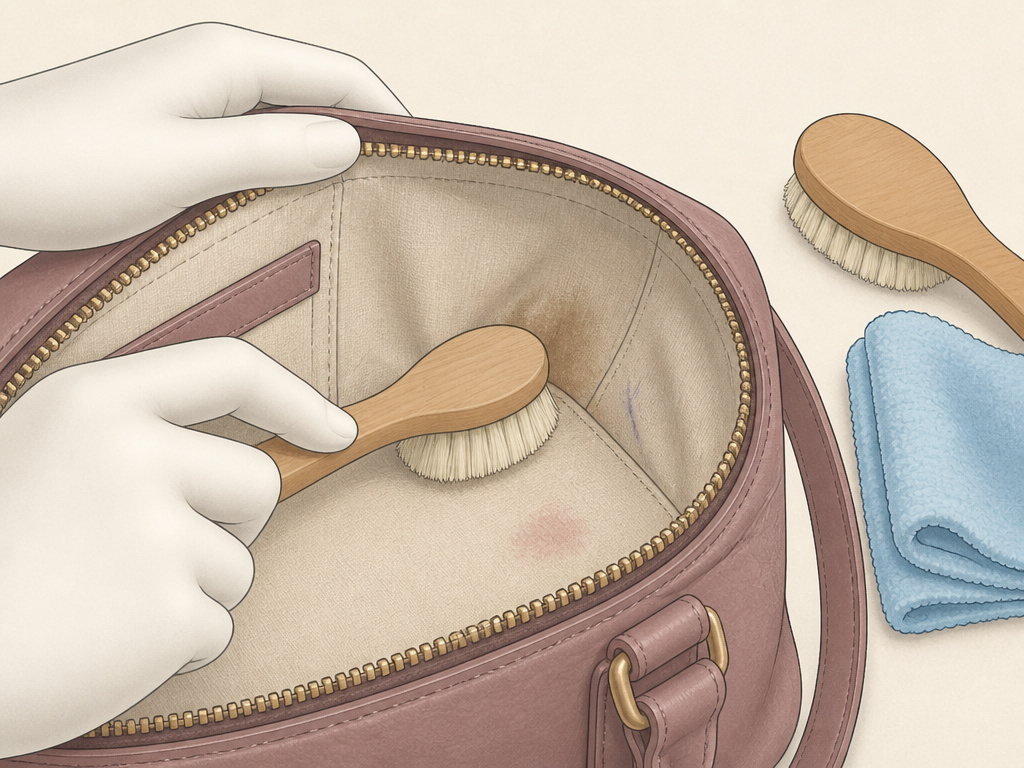 The interior faces different threats: pen marks, makeup, and general grime. Your approach depends entirely on the lining material.
For Fabric Linings (Cotton, Polyester, Nylon):
- Dry brush thoroughly to loosen debris.
- Use a barely damp microfiber cloth, possibly with a dot of mild soap, to gently dab at stains. Do not scrub, as you might fray the fabric.
- Use a soft-bristled brush on tougher spots, like dried ink or makeup.
- Wipe with a clean damp cloth to remove soap.
- Air-dry completely with the bag open.
For Leather or Unlined Interiors:
This is high-risk. Any moisture can stain the unfinished interior leather. 1. Dry brush only. 2. For stains, use a dry cleaning sponge (like a Mr. Clean Magic Eraser used dry) to gently abrade the spot. Test first. 3. Condition sparingly if the interior feels dry, but remember it will darken.
The process for a fabric-lined bag is similar to cleaning other fabric items, which is why techniques for a leather sofa or leather furniture often translate. The core move is a gentle, dry-first approach.
What Not to Use: The Banned List
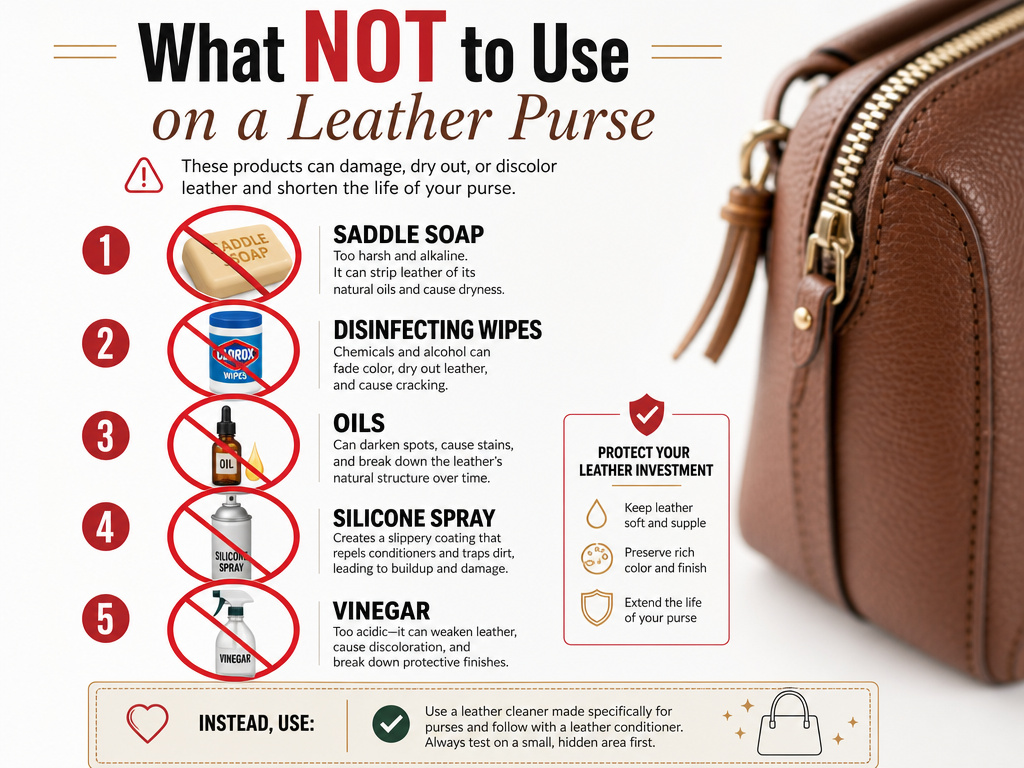 Here’s some straightforward advice. Some products are marketed for leather but are disastrous for purses. This list comes straight from manufacturer warnings and professional horror stories.
- Saddle Soap: Designed for thick, filthy, oil-rich saddles. On a thin, finished purse leather, it strips far too much oil and leaves a residue that cracks. Tiffany & Co. Explicitly bans it.
- Household Cleaners & Wipes: Anything with ammonia, bleach, or solvents (like Windex or Clorox wipes) will strip dye and finish. They can also cause irreversible drying.
- Oils (Neatsfoot, Mink, Olive): These are for re-plumping very dry, thick, unfinished leather. On a purse, they over-soften, darken the leather unevenly, and can rot stitching over time.
- Silicone-Based “Conditioners”: They create a shiny, synthetic layer on top that clogs pores and eventually cracks and peels. As one dry cleaner quoted in the Wirecutter purse cleaning guide noted, they’re a temporary gloss at a long-term cost.
- Vinegar & Water Solutions: The acidity can damage dyes and finishes. It’s a risky home remedy with no upside over distilled water.
I learned the hard way with oils. On a modern, thin garment leather, neat’s-foot oil over-softened and darkened the material beyond recognition in a single application. The bag was never the same. That’s why you’ll never see me recommend a one-size-fits-all oil treatment.
When to Call a Professional
You can handle most routine cleaning. But some problems require an expert with the right solvents and tools. Know when to stop.
- Ink Stains: Ballpoint pen ink is a dye. Home remedies often spread it.
- Mold or Mildew: This needs professional-grade fungicides. Spores can linger and regrow.
- Major Color Transfer: If a dark pair of jeans dyes a light bag, a pro might save it.
- Structural Damage: Loose stitching, torn lining, or broken hardware needs repair, not just cleaning.
- Unknown Leather: If you truly cannot identify the material, experimenting is too risky.
For context, the careful spot-testing and gentle materials used here are the same principles you’d apply to sensitive items like a white leather accessory or a leather steering wheel. When in doubt, the gentlest possible action is the right one.
Frequently Asked Questions
Can I use baby wipes to clean my leather purse?
No. Most baby wipes contain alcohols, mild solvents, or moisturizers that can damage leather finishes over time. They might seem to work in the moment but can leave a residue that attracts dirt or dries out the leather. Use a cloth dampened with distilled water instead.
How often should I condition my leather purse?
Only when it feels dry or stiff, which for most bags used regularly might be once or twice a year. Many contemporary purses, especially with coated leathers, never need conditioning. Over-conditioning is a more common problem than under-conditioning; it leads to a greasy feel and attracts dust.
The inside of my bag smells musty. How do I fix it?
First, ensure it’s completely dry. Then, place an open box of baking soda or several unused charcoal odor absorbers inside the bag, seal it in a plastic bag, and leave it for 48 hours. For persistent smells, the lining may need professional cleaning. Never use fabric freshener sprays inside a leather bag.
Will cleaning devalue my vintage leather purse?
Proper, gentle cleaning that preserves the patina will not devalue it. In fact, removing damaging dirt or mold can increase its value. However, aggressive cleaning that alters the color, texture, or finish (like over-oiling or using harsh soaps) can significantly reduce value. When in doubt, consult a restoration specialist before cleaning a valuable vintage piece.
What’s the best product for general leather purse cleaning?
For a general-purpose, safe cleaner for uncoated leathers, a dedicated leather cleaner like Leather Honey Cleaner or Bickmore Bick 1 is a DeWalt start. However, the “best” product is the one specified by your bag’s manufacturer. Always check for a brand guide first, as with Gucci or Dooney & Bourke.
The Bottom Line
Cleaning a leather purse isn’t about finding a magic product. It’s about matching your method to the material in your hands. Start with the maker’s word, then let the leather’s finish, coated, treated, or absorbent, guide your hand.
The one threshold that changes everything is moisture. If your cloth leaves the leather looking wet, you’re using too much. Dry brushing and barely damp wiping solve ninety percent of problems. Save the conditioners and special potions for the rare uncoated bag that truly feels parched.
And if you walk away with one thing, let it be this: that bottle of saddle soap in your garage belongs on actual saddles. On your purse, it’s a one-way ticket to a dried-out, cracked finish. Some mistakes are cheaper to learn from second-hand.
