
How to Clean White Leather & Stop Yellowing: The 4-Step Method
This post contains affiliate links. As an Amazon Associate, we earn from qualifying purchases.
This post contains affiliate links. As an Amazon Associate, we earn from qualifying purchases.
Clean white leather by escalating gently: start with a dry brush for dust, move to a damp microfiber cloth for smudges, then use a pH-neutral leather-specific cleaner for stains, and finally target specific marks with products like isopropyl alcohol for ink or a pure gum rubber eraser for scuffs. Never use household cleaners, silicone-based conditioners, or soak the leather.
The word “clean” is the problem. It makes you reach for soap and water first. On white leather, that’s how you get watermarks, how you drive dirt deeper into the grain, and how you start the yellowing clock. White leather isn’t just colored leather; it’s a high-maintenance finish that shows every mistake.
What follows is not a list of home recipes. It’s a field-tested protocol, grounded in what manufacturers like Ford actually endorse and what the chemistry of dyes and topcoats allows. We’ll walk through why white yellows, the four steps you should always follow in order, and how to handle ink, scuffs, and the dreaded mold spot without making things worse.
Key Takeaways
- White leather yellows primarily from oxidation and pollutant absorption, not dirt. “Cleaning” often accelerates this if you use the wrong chemicals.
- Always start dry. A horsehair or soft-bristled brush removes surface dust without risking moisture penetration, which is critical for perforated or aniline leathers.
- Ford’s manual explicitly warns against using household cleaners, alcohol solutions, or silicone-based conditioners on automotive leather; that advice extends to all fine white leather goods.
- Conditioning is a separate, post-cleaning step. Applying conditioner over dirt or residual cleaner seals in the grime and guarantees a cloudy, discolored finish.
- For ink, use 90%+ isopropyl alcohol on a cotton swab—dab, don’t rub. For scuffs, a pure gum rubber eraser works better than abrasive melamine sponges on delicate finishes.
The Layers & Why They Matter
White leather isn’t a slab of bleached hide. It’s a constructed system. At its core is the leather itself—usually a high-quality split that’s been heavily refined. On top of that sits a base dye, then a white pigment layer, and finally a clear protective topcoat. This topcoat is your first and best defense. It’s also the layer most home cleaning attempts destroy.
Abrasion is the quiet killer. Scrubbing with a stiff brush or a melamine eraser (like a Magic Eraser) doesn’t just clean; it micro-sands this topcoat away. Once it’s thin, the white pigment underneath stains easily and the leather loses its resistance to dye transfer from jeans or colored fabrics. The result isn’t a stain you can clean; it’s a permanent dull patch where the white has been compromised.
Common mistake: Soaking white leather to “lift” a stain. The leather absorbs water, the pigments can shift, and the backing can swell. When it dries, you get a stiff, discolored patch with a watermark halo. This is especially damaging on a leather sofa or leather couch where the panels may dry unevenly.
Perforated leather, common in car seats, adds another risk. Liquid pools in those holes, soaking into the padding underneath. It never fully evaporates, leading to mildew and a musty smell. The rule here is simple: damp, never wet.
What “White Leather” Actually Means
When you buy a white bag, shoe, or jacket, you’re rarely buying the same material. The cleaning protocol changes based on which of the three main categories you have.
Finished (Protected) Leather: This is most white leather furniture and automotive interiors. It has that slick, uniform feel and a visible plastic-feeling topcoat. Stains sit on top; you have a fighting chance. Most leather furniture and automotive leather falls here. It’s the most forgiving for cleaning.
Semi-Aniline Leather: Some dye penetrates, but a light protective topcoat remains. It has more natural character but less stain resistance than a full finished leather. You must be gentler. Many mid-range leather sofa covers are semi-aniline.
Full Aniline Leather: No protective topcoat. The dye soaks all the way through, and the surface feels like pure, supple skin. It’s breathtaking and extremely high-maintenance. Water will spot it instantly, and oils from your hands can darken it over time. Most white aniline leather is found in high-end designer bags and jackets.
| Leather Type | Topcoat | Stain Resistance | Risk from Over-Wetting | Best Cleaning Approach |
|---|---|---|---|---|
| Finished | Heavy | High | Low (but can watermark) | pH-neutral cleaner, damp cloth |
| Semi-Aniline | Light | Moderate | High | Very mild cleaner, quick blotting |
| Full Aniline | None | Very Low | Very High | Dry brush only, professional for stains |
If you don’t know which you have, test in a hidden seam. Dab a tiny bit of water. If it beads and sits on top for a minute, you have a topcoat. If it darkens the leather immediately, you’re dealing with aniline or nubuck and need to proceed with extreme caution.
The 4-Step Escalation Protocol (Dry to Wet)
Throwing a cleaner at every problem is how you end up with a cracked, yellowed mess. This protocol is sequential. You stop as soon as the issue is resolved.
Step 1: Dry Mechanical Removal
Before any liquid touches the surface, use a soft-bristled brush. A horsehair detailing brush or a clean, soft makeup brush is perfect. Brush in one direction to lift dust and dry particulate from the grain.
Why this works first: It removes abrasive grit that would grind into the leather during wet cleaning, causing micro-scratches. It’s the single most effective method for maintaining a leather jacket or leather purse between deep cleans. If the piece is just dusty, you’re done.
Step 2: Damp Microfiber Reset
If brushing leaves behind smudges or light skin oils, take a white microfiber cloth, run it under lukewarm water, and wring it until it’s just damp. Wipe the surface firmly in one direction. Follow immediately with a dry microfiber cloth to buff away any moisture.
This isn’t cleaning with soap; it’s redistributing oils and lifting surface grime. It’s the maximum moisture you should use on aniline leather and the standard weekly wipe-down for a white leather sofa.
Where this goes sideways: Using a colored or previously laundered cloth with fabric softener. The dyes or softeners can transfer to your white leather. Use only white, clean cloths.
Step 3: pH-Neutral Leather Cleaner
For actual stains—dirt, dye transfer, food spots—you need chemistry. The goal is a cleaner that lifts the stain without stripping the leather’s natural oils or the protective topcoat.
I keep two cleaners in my kit. For general use on finished leathers, Lexol pH Leather Cleaner is a reliable, mild option. For tougher jobs or more delicate anilines, Saphir Omni’Nettoyant is a premium French product that cleans without leaving a residue. Ford’s official manual specifically endorses products like Motorcraft Premium Leather and Vinyl Cleaner or a “commercially available leather cleaning product for automotive interiors.”
The technique is everything: spray the cleaner onto the microfiber cloth, not onto the leather. This controls saturation. Work in small sections with a gentle circular motion, then immediately buff dry with a clean cloth. Never let the cleaner air-dry on the surface.
Step 4: Targeted Stain Attack
Some stains resist general cleaners. Here’s your targeted playbook:
- Ink (Ballpoint): Use a cotton swab dipped in 90% or higher isopropyl alcohol. Dab, don’t rub. The ink will transfer to the swab. Stop the moment the ink stops lifting.
- Scuff Marks: A pure gum rubber eraser (the kind artists use) is underrated. Its gentle abrasion lifts the scuff without damaging the topcoat like a melamine sponge can. Use light, short strokes.
- Mold/Mildew: For small spots, mix equal parts cool water and isopropyl alcohol. Dab with a cloth. For anything larger, seek professional anti-fungal treatment. Mold spores embed in the leather fibers; surface cleaning often isn’t enough.
After any stain treatment, go back to Step 3 with your pH-neutral cleaner to remove any residual alcohol or eraser debris from the area.
What Absolutely Will Ruin White Leather
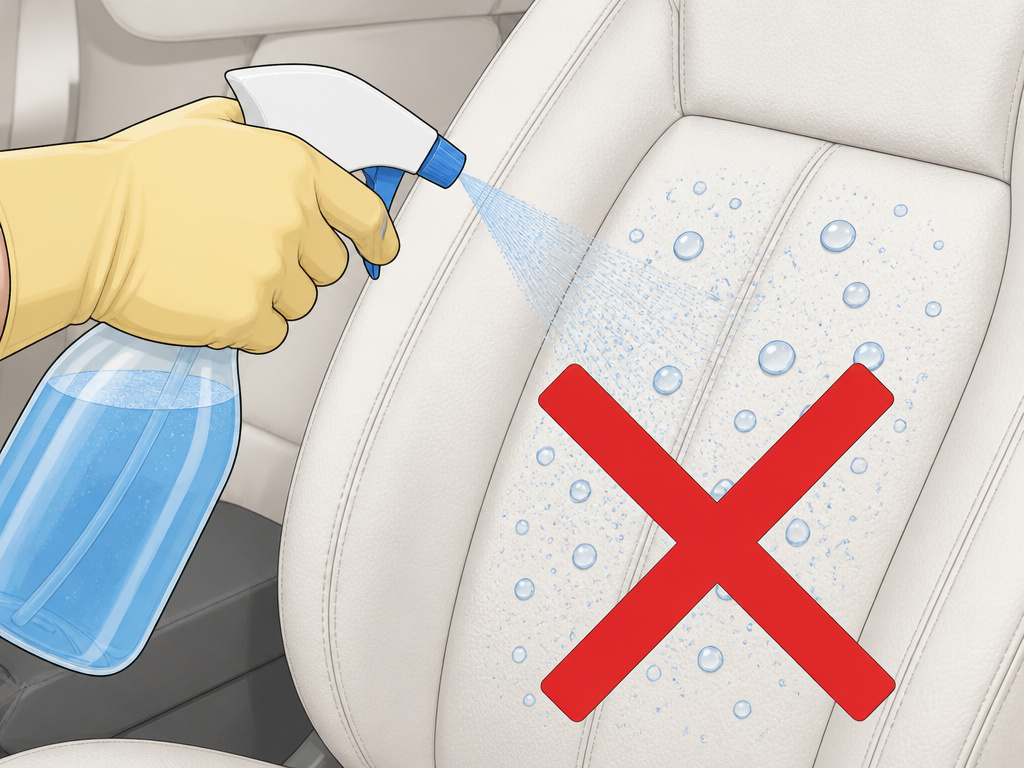 Manufacturer bulletins are full of warnings that void warranties. Here’s the short list of banned substances, drawn directly from sources like the Ford owner’s manual.
- Household Cleaners: Glass cleaner, multipurpose sprays, dish soap. Their alkalinity or additives break down the leather’s dyes and topcoat.
- Silicone or Petroleum-Based Conditioners: These create a gummy, non-breathable layer on top. Dirt sticks to it permanently, and they often contain dyes that yellow white leather.
- Vinegar & Baking Soda “Solutions”: Vinegar is acidic and can etch the topcoat. Baking soda is abrasive. Together, they’re a great way to create a dull, chalky residue that’s impossible to fully remove.
- Alcohol Solutions (except for targeted ink removal): Rubbing alcohol is a solvent. Used broadly, it dries out the leather and can strip the topcoat, leading to chalkiness and cracking.
- Excessive Water & Heat: Never steam clean white leather. Never use a hair dryer or place it in direct sunlight to dry. Heat sets stains and causes the leather fibers to contract and crack.
The practical takeaway? If the product isn’t made specifically for leather, and preferably for light-colored leather, don’t put it on there.
Conditioning: The Separate, Final Step
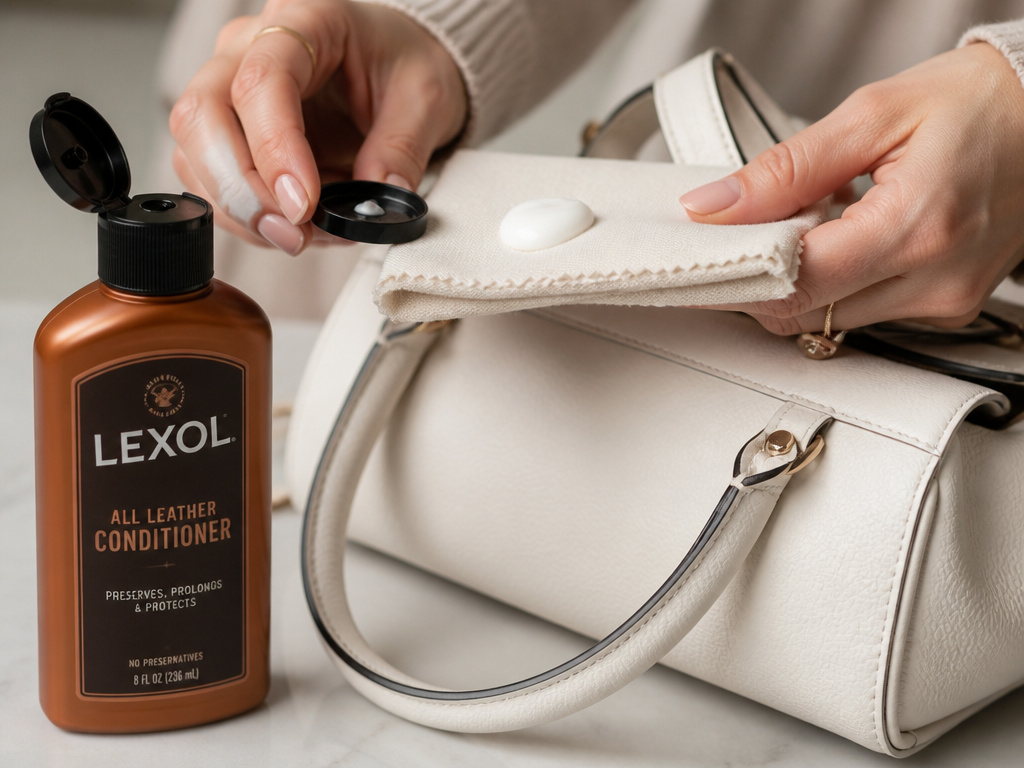 Cleaning removes. Conditioning replenishes. They are different jobs, and doing them out of order is a classic error. Conditioning white leather before it’s perfectly clean seals in dirt. Conditioning it with a dark, oil-based conditioner (like mink oil) will tint it yellow.
After a full clean, let the piece dry for 24 hours at room temperature. Then, apply a tiny amount of a conditioner made for light leathers. Saphir Crème Universelle or Lexol Leather Conditioner are good options. Apply with a cloth, let it absorb for 15 minutes, then buff thoroughly to a dry finish. Any residual greasiness attracts dust.
How often? For a frequently used white leather purse or jacket, every 4-6 months. For a living room leather sofa, once a year is usually sufficient unless it’s in direct sunlight.
Handling Specific White Leather Items
The protocol is the spine, but the application changes with the item’s construction.
White Leather Sneakers & Shoes: Brushing is key for the midsole. For the upper, follow the 4-step protocol. Be extra careful around glued seams, as excess moisture can weaken the adhesive. Check our focused guide on white leather sneakers for laces and sole details.
White Leather Boots: The protocol holds, but pay attention to the welt and stitching. Deep creases may need a soft-bristled brush to work cleaner into them. Always air dry boots away from heat. More on leather boots here.
White Leather Car Interior: This is finished leather. Use an automotive-specific, pH-balanced cleaner like the Motorcraft product Ford recommends. A soft brush is essential for perforations. Never let a cleaner dry on the surface; it leaves a sticky residue that attracts more dirt.
White Leather Bags & Purses: Turn out pockets and empty the bag first. Brush the exterior thoroughly. For stains, use the minimal liquid possible, especially on lined bags where water can seep into the lining and cause mold.
| Item | Critical Focus Area | Biggest Risk |
|---|---|---|
| Sneakers/Shoes | Glued seams, textured soles | Separation, discoloration of soles |
| Boots | Deep creases, welt stitching | Trapped moisture, stiffening |
| Car Seats | Perforations, side bolsters | Mold, cleaner residue in holes |
| Bags/Purses | Lining, strap attachments | Water damage to lining, dye transfer from straps |
Frequently Asked Questions
Can you use magic eraser on white leather?
You can, but you probably shouldn’t. A melamine magic eraser works via micro-abrasion. On a delicate topcoat, it acts like ultra-fine sandpaper, dulling the finish. On unprotected aniline leather, it’s destructive. A pure gum rubber eraser is a safer, more controlled option for scuffs.
Why did my white leather turn yellow after cleaning?
This is usually one of three things: you used a cleaner with optical brighteners or dyes that degraded in UV light, you sealed in dirt with a conditioner before the leather was clean, or the “cleaner” was actually a silicone-based product that oxidized and yellowed over time. True yellowing from pollution is a slower process.
How do you remove old stains from white leather?
Old stains often mean the contaminant has penetrated past the topcoat. You escalate through the protocol. If a pH-neutral leather cleaner doesn’t work, you may need a specialized product like a leather stain eraser. Test it in a hidden area first. For oil-based stains, a cornstarch or talc poultice left overnight can sometimes draw the oil out.
Can you use baby wipes on white leather?
No. Most baby wipes contain alcohols, moisturizers, and fragrances that can leave a residue or degrade the leather’s finish. They are not formulated for leather preservation.
Before You Go
White leather demands a shift in thinking. It’s not about finding a stronger cleaner; it’s about using the gentlest effective method in the right order. Start dry, escalate cautiously, and treat conditioning as a separate, final act.
One rule I enforce: if your white leather item is expensive or sentimental, spend the $20 on a leather cleaner like Lexol or Saphir. The cost of a bottle is trivial next to the cost of replacing a yellowed bag or sofa cushion. The all-purpose cleaner under your sink has a dozen uses—this shouldn’t be one of them.
And when in doubt, stop. A little dust is better than a permanent watermark. The leather will tell you what it needs if you learn to look past the smudge and see the material underneath.
