
Expert Tips on How to Care for a Leather Wallet Properly
This post contains affiliate links. As an Amazon Associate, we earn from qualifying purchases.
This post contains affiliate links. As an Amazon Associate, we earn from qualifying purchases.
To care for a leather wallet, wipe it with a soft cloth regularly, clean it with a pH-neutral solution every one to three months, and condition it immediately after to restore oils. Keep it away from water, direct heat, and sunlight, and store it in a cool, dry place when not in use. This routine prevents the leather from drying out and cracking.
This schedule isn’t random. Leather is a porous, natural material that loses its natural oils through daily handling and exposure. Conditioning every one to three months directly replaces what your hands and the environment take away. Skip it, and the fibers dry, stiffen, and eventually split along the wallet’s natural flex points.
What follows is a breakdown of that simple rhythm: a daily habit, a monthly cleaning and conditioning ritual, and the storage rules that prevent most problems before they start. This guide explains what products to use, what to avoid, and how to handle spills and cracks when they happen.
Key Takeaways
- Clean and condition your leather wallet every one to three months for everyday use. More frequent care is needed if exposed to sweat, rain, or heat.
- Use only a pH-neutral leather cleaner and a mild leather conditioner. Avoid alcohol, vinegar, bleach, and household furniture polish.
- Always blot water stains and air-dry the wallet away from heat. Using a hairdryer or heater causes rapid drying and guaranteed cracking.
- For long-term storage, lightly stuff the wallet with acid-free tissue and keep it in a breathable cloth bag, never plastic.
- Seek professional repair for deep cracks, torn stitching, or damage to exotic leathers. Home fixes can make these issues worse.
The Daily Habits That Prevent Damage
Good leather care is mostly about small, consistent habits. These prevent the kind of deep-seated grime and structural stress that’s difficult to reverse.
Wipe your wallet with a soft, dry microfiber cloth every few days. This lifts dust and skin oils off the surface before they settle into the grain. The goal is prevention, not deep cleaning. An overstuffed wallet is another silent killer. Cards and cash permanently stretch the leather and stitching. That bulge in your back pocket? Every time you sit, you’re bending the wallet against its natural shape and accelerating wear at the seams. Front pocket, jacket pocket, or bag carry is always better for longevity.
Heat and sunlight are your wallet’s sworn enemies. Direct sun fades color, and heat, like a car dashboard in summer, actively draws out the leather’s natural oils. The surface goes dull, then stiff, then brittle. Keep it out of hot cars and away from radiators.
Common mistake: Carrying a leather wallet in a back pocket. The constant pressure when sitting forces unnatural bends, weakens stitching over months, and can permanently crease or crack the leather.
How to Clean and Condition a Leather Wallet
This is your core maintenance ritual. Cleaning removes dirt and oils. Conditioning replaces the lost natural oils that keep the leather supple. You need both, in that order, and not too often.
For everyday carry, a light cleaning and conditioning every one to three months is the right rhythm. If your wallet sees a lot of sweat, rain, or heat, lean toward the monthly end of that range. Don’t overdo it. Conditioning too often can leave the leather greasy or darken it unevenly. When the leather starts to look a little dull or feels dry to the touch, that’s your cue.
Before you start: Empty every pocket, cards, cash, receipts. You need to reach every nook. Work in a well-ventilated area away from direct sunlight.
- Remove surface dust. Use a soft-bristled brush or dry microfiber cloth to gently brush off any loose dirt. Rubbing dirt in during cleaning creates micro-scratches.
- Apply a pH-neutral leather cleaner. Dampen a corner of a clean white cloth with the cleaner. Never pour it directly onto the leather. Gently wipe the entire surface in small circles. For stubborn stains, like ink, you can dip a cotton swab in isopropyl alcohol, use it sparingly and test on a hidden spot first, as alcohol can dry the leather.
- Let it air dry completely. Walk away. Let the wallet sit for 30-60 minutes, away from heat, until no dampness remains. Patience prevents the leather from becoming brittle.
- Apply a mild leather conditioner. Put a pea-sized amount on another clean cloth. Massage it into the leather using circular motions, covering the entire surface evenly. A thin, even coat is key.
- Let the conditioner absorb. Wait at least 15-20 minutes, or as directed on the product label. The leather should drink it in and feel supple, not tacky.
- Buff off any excess. Use a dry, clean section of your cloth to gently buff the surface to a soft sheen.
| Step | Purpose | What Happens If You Skip It |
|---|---|---|
| Remove Dust | Prevents grinding dirt into grain | Cleaning rubs in abrasives, creating a permanently dull, scratched surface. |
| Use pH-Neutral Cleaner | Safely dissolves oils & grime | Harsh cleaners (alcohol, ammonia) strip natural oils, accelerating dryness. |
| Air Dry | Allows gentle moisture evaporation | Heat drying (hairdryer, radiator) causes rapid shrinkage and cracking. |
| Condition | Replenishes lost oils | Leather loses flexibility, becomes stiff, and cracks within 6-12 months. |
| Buff | Removes residue & evens sheen | Leftover conditioner attracts dust and can feel sticky in your pocket. |
Even after years of experience, I once rushed through conditioning a vintage bag and applied too much product. It was tacky for weeks until it fully absorbed. The lesson is simple: thin coats win. Let me share what I’ve learned, applying conditioner is like applying a hand-rubbed oil finish to wood. You don’t slather it on; you work in thin, even coats, letting each one be fully absorbed before even thinking about the next.
Safe and Unsafe Household Products
Stick to tools and products made for leather. When in doubt, test any product on a small hidden spot first, inside a card slot flap, for example, and wait 24 hours to see how the leather reacts.
Here’s a straightforward breakdown of what works and what wrecks.
Generally Safe:
- A soft microfiber or cotton cloth
- A pH-neutral leather cleaner (like Leather Honey Cleaner or Bickmore Bick1)
- A mild leather conditioner (like Saphir Médaille d’Or Renovateur or Chamberlain’s Leather Milk)
- A soft-bristled brush (like a horsehair detailing brush)
Best to Avoid:
- Alcohol wipes and hand sanitizer
- Vinegar, bleach, and ammonia
- Household furniture polish
- Generic all-purpose cleaning sprays (like Windex or Formula 409)
- Silicone-based “conditioners” or “protectors”
These harsh products strip the leather’s finish, dry out the fibers, or leave stains that are tough to fix. The only thing a silicone-based leather “conditioner” conditions is the profit margin of the company selling it. It sits on top, clogging the pores, and does nothing to nourish the hide underneath.
Storing Your Leather Wallet Properly
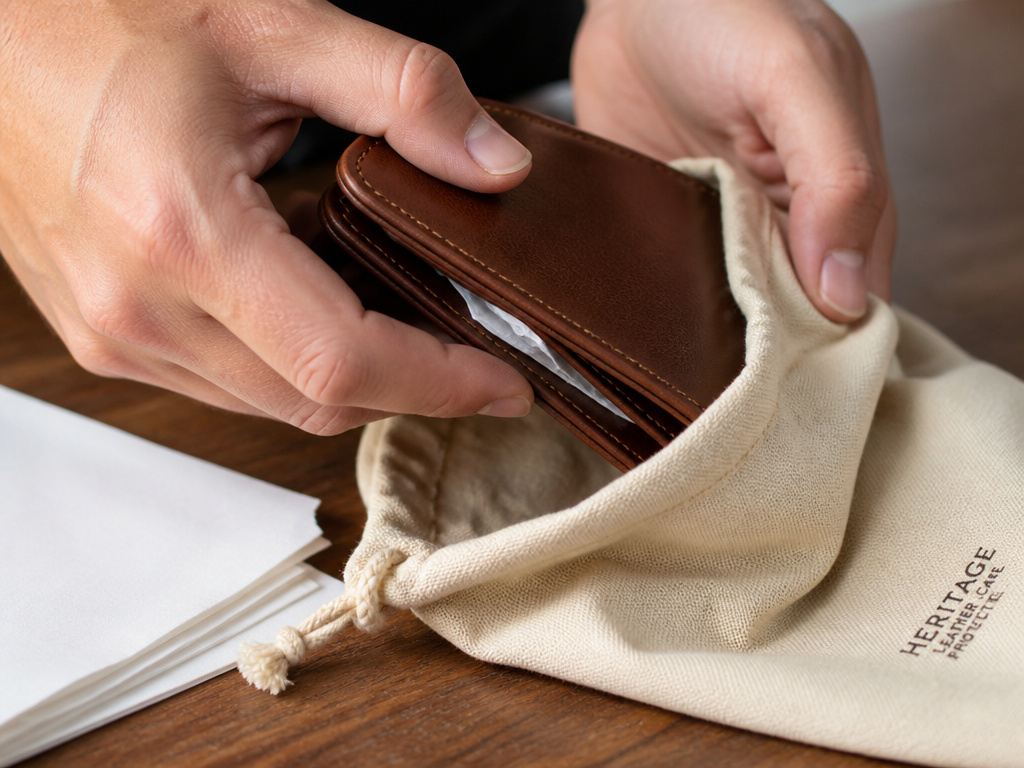 How you store a wallet matters just as much as how you clean it, whether you’re putting it away for the night or for a season.
For daily use, simply set your wallet in a cool, dry spot when you’re not carrying it. Avoid cramming it into a tight drawer or under a pile of heavy objects that could press it out of shape.
If you’re storing a wallet for a while, switching to a seasonal piece, for example, take these two extra steps. First, lightly stuff the wallet with acid-free tissue paper. This helps it hold its form and prevents deep, permanent creases. Second, place it inside a breathable cloth bag, like cotton or canvas. Never use a plastic bag. Plastic traps moisture and can encourage mildew, which leads to spotting and a musty odor that’s difficult to remove.
Travel and passport wallets need extra consideration. They take abuse from bags, weather, and constant handling. Keep them out of the humid bottom of your luggage and avoid packing them under heavy items that force sharp creases.
Where this goes sideways: Storing a leather wallet in a sealed plastic bag. Trapped humidity promotes mildew growth within weeks, leaving permanent spots and a sour smell.
Troubleshooting Common Leather Wallet Problems
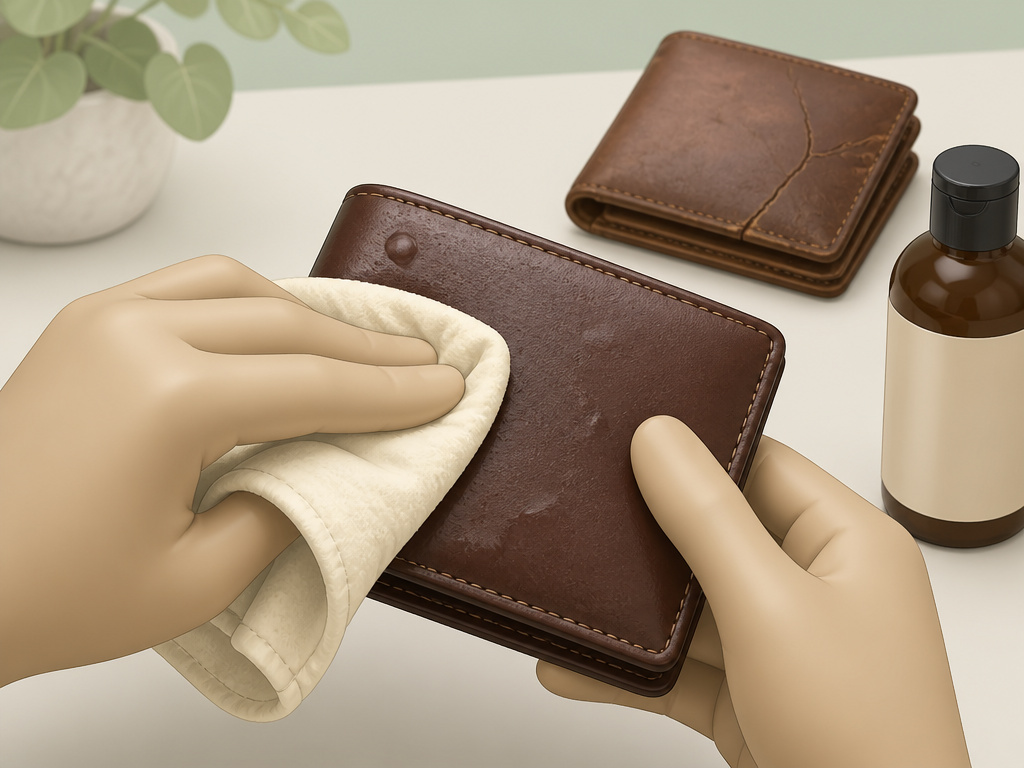 Even with perfect care, accidents happen. Here’s how to handle the most common issues without making them worse.
Water Stains: If your wallet gets wet, blot it gently with a dry cloth, don’t rub. Then let it air dry naturally, away from any heat source. Do not use a hairdryer or place it near a heater. Fast, forced drying is the surest way to cause cracking. Once it’s fully dry, a light conditioning can help even out the surface.
Cracking: Cracking usually comes from long-term dryness, heat exposure, or years of flexing without conditioning. Light surface cracks can sometimes be softened with careful, repeated conditioning. Deeper cracks that go through the grain layer likely need professional attention. Trying to fix a deep crack at home with glue or filler usually makes it more obvious.
Odor: For smells from sweat or mildew, start by airing the wallet out in a dry, ventilated spot for a couple of days. A gentle cleaning with a pH-neutral solution often helps. Avoid dousing the leather in scented sprays or powders; they mask the problem and can cause residue buildup.
When to Call a Professional: Light scuffs, minor stains, and dryness are DIY territory. Seek a professional leather repair service when you see deep structural cracks, torn stitching, a broken gusset, or damage to exotic leathers like alligator or crocodile. A mistake on these materials is costly to undo.
Choosing the Right Products for Your Wallet
Your wallet’s leather type should guide your product choice. Using the wrong cleaner on a delicate finish can strip color or create blotches.
| Leather Type | Cleaning Approach | Conditioning Approach | Brands to Consider |
|---|---|---|---|
| Smooth/Aniline Cowhide (Most common) | Gentle wipe with pH-neutral cleaner. Shows marks easily. | Light, regular conditioning with a non-darkening product. | Popov Leather, Ashland Leather |
| Pueblo / Roughout (Textured) | Use a soft brush to lift dirt from the nap. Avoid soaking. | Careful, sparing conditioning to avoid matting the texture. | Guarded Goods |
| Exotic (Alligator, Crocodile) | Dust with a soft cloth only. Avoid liquid cleaners unless specified. | Minimal, light conditioner applied with a cloth—never heavy oils. | Specialized exotic leather care kits |
| Epsom / Grained (Embossed finish) | Wipes clean easily. Durable finish handles gentle cleaners well. | Occasional light conditioning is sufficient. | Most designer brands use this type |
The thinnest leather possible for the structure is ideal for a wallet that lives in your pocket. Thick, rigid “tank” wallets are uncomfortable and impractical. Brands like Popov Leather and Ashland Leather excel at this elegant, functional design, using soft, supple leathers that break in quickly. For more on picking the right hide, our guide on how to choose wallet leather dives into durability and tannage.
Frequently Asked Questions
Can I use saddle soap on my leather wallet?
I don’t recommend it for modern wallets. Saddle soap is designed for cleaning heavy, oil-tanned leathers like those on actual saddles that get caked in mud and sweat. It can be overly drying for the finer, vegetable-tanned or chrome-tanned leathers used in most wallets, prematurely stripping their natural oils.
How do I get ink stains off my leather wallet?
For ballpoint ink, act quickly. Dab a cotton swab in a small amount of isopropyl alcohol (rubbing alcohol) and gently blot the stain, do not rub. Test on a hidden area first, as alcohol can dry the leather. For other inks, a specialized leather ink remover is safer. After any stain treatment, condition the area.
Does conditioning darken my leather wallet?
Some conditioners can slightly darken leather, especially lighter-colored or natural vegetable-tanned pieces. This is usually a sign the leather was dry and absorbed the oils deeply. To minimize darkening, use a conditioner labeled “non-darkening,” like Bickmore Bick 4, and always apply a thin coat.
Can I machine wash my leather wallet?
Never. Immersing a leather wallet in water is a one-way ticket to ruin. It can cause the leather to stiffen, the stitching to weaken, the lining to separate, and the entire piece to lose its shape. Always opt for spot cleaning.
How long should a good leather wallet last?
With proper care, a high-quality full-grain leather wallet should last 10 years or more. The leather will develop a rich patina, softening and darkening with age, which is part of its character. Poor care or low-quality “genuine leather” can lead to failure in 2-3 years.
Before You Go
The best leather care is quiet and consistent. A quick wipe here, a light conditioning every couple of months, and smart storage will do more for your wallet than any occasional deep clean. Remember the rhythm: assess your wallet monthly, and plan to clean a leather wallet and condition a leather wallet at least four times a year.
Keep it dry, keep it out of the heat and sun, and don’t overstuff it. If you’re ever unsure, the principles of general leather maintenance apply broadly, whether you’re caring for a leather handbag or a leather belt. Handle small problems before they turn into big ones, and your wallet will age with character instead of wearing out.
