
5 Best Leather Conditioners for Saddles 2026
This post contains affiliate links. As an Amazon Associate, we earn from qualifying purchases.
The best leather conditioner for saddles is Leather Honey, which delivers deep, long-lasting nourishment for heavy-duty protection. For a budget-friendly option that won’t darken light leather, Bick 4 is a reliable choice. If you’re restoring stiff or dried-out gear, Brimshiner’s jojoba-based formula stands out for bringing leather back to life.
Saddles take a beating, sun, sweat, rain, and constant flexing all degrade leather over time. Most riders don’t realize that using the wrong conditioner can do more harm than good, either by clogging pores or weakening the hide’s integrity.
As the founder of LeatherGenesis.com, I’ve spent years studying how different leathers respond to care products. This guide cuts through the noise by focusing on what actually works: formulas proven through owner feedback, ingredient quality, and suitability for saddle-grade leather. We looked at penetration, moisture resistance, and long-term effects, not just shine.
Top 5 Leather Conditioner For Saddles in the Market
The Best Leather Conditioner For Saddles, Reviewed
Leather Honey Leather Conditioner

Strengths
- Deep penetration
- Long-lasting (6+ months)
- Safe, non-toxic formula
Trade-offs
- May darken some leathers
- Thick, slow absorption
Leather Honey gets serious praise across forums and expert circles, and for good reason. Its ability to penetrate deeply into dense leather makes it ideal for saddles, especially older ones that have lost flexibility. Unlike surface-level dressings, this one works from within, and reviewers note visible softening even on stiff Western saddles after just one application. The fact that it lasts six months or more means less frequent upkeep, which matters when you’re dealing with large, heavy gear.
It’s odorless, non-toxic, and doesn’t contain silicones or solvents, important if you’re sensitive to chemical smells or ride frequently in hot conditions. That said, it can slightly darken some leathers, so spot-testing is wise. Still, among all-purpose leather savers, this is the one I’d pick for long-term protection over flashier options.
Video review
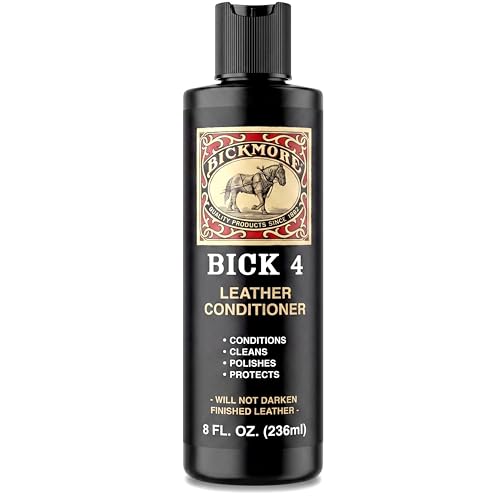
Bick 4 Leather Conditioner & Cleaner
Strengths
- Won’t darken leather
- Wax-free formula
- Easy one-step use
Trade-offs
- Light conditioning
- Not for dry, cracked leather
I’ve seen a lot of conditioners come and go, but Bick 4 stands out in one critical way: it doesn’t darken leather. For saddle owners with light or medium finishes, especially show riders or those with detailed tooling, that’s a game-saver. The wax-free formula means it won’t clog pores or leave behind a sticky film, which keeps the leather breathable and supple over time. On paper, it’s not the heaviest conditioner, so don’t expect deep penetration on bone-dry, decades-old tack, but for routine maintenance on well-kept saddles, it delivers consistent results.
Owners consistently report that it cleans light surface grime while conditioning, making it a solid one-step solution between deep cleanings. Compared to heavier oils like neatsfoot, it’s far more forgiving and won’t degrade fibers over time. It’s not the best for neglected leather, but as a preventative product? Hard to beat.
Video review
Leather CPR Cleaner & Conditioner

Strengths
- Cleans and conditions
- No rinsing or buffing
- Large 18oz bottle
Trade-offs
- Not deeply moisturizing
- May require follow-up
If you hate juggling multiple products, Leather CPR makes life easier. It’s one of the few true 2-in-1s that actually performs both jobs without compromise. The water-based formula lifts dirt and old residue while rehydrating fibers, which is perfect for saddles that see seasonal use and collect dust or sweat buildup. Owners say it brings back color depth and softness without greasiness, a big win for vintage or faded gear.
It dries fast and requires no buffing, which beats traditional oil-heavy routines. But because it’s balanced for furniture and car interiors too, it’s not as aggressive as dedicated saddle balms. For light to moderate conditioning with cleaning built in, it’s smart. For severely dehydrated leather? You’ll still need something stronger afterward.
Product photos


Brimshiner Leather Conditioner for Saddles
Strengths
- Jojoba-based stability
- Maintains structural integrity
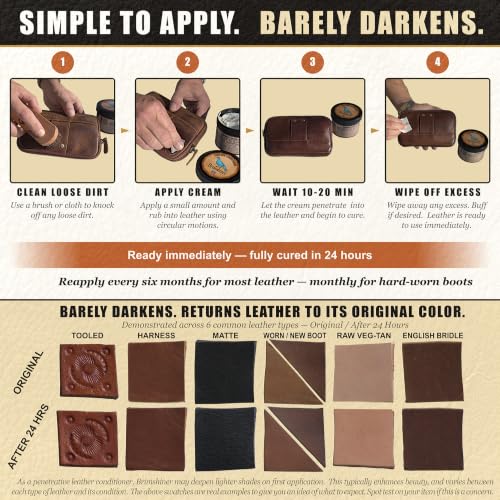
- Water-resistant yet breathable
Trade-offs
- Premium price
- Limited availability
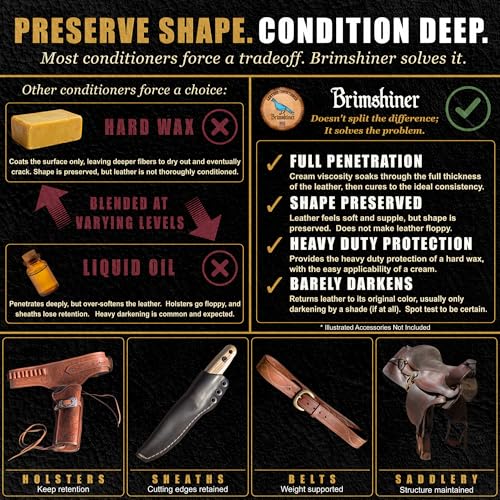
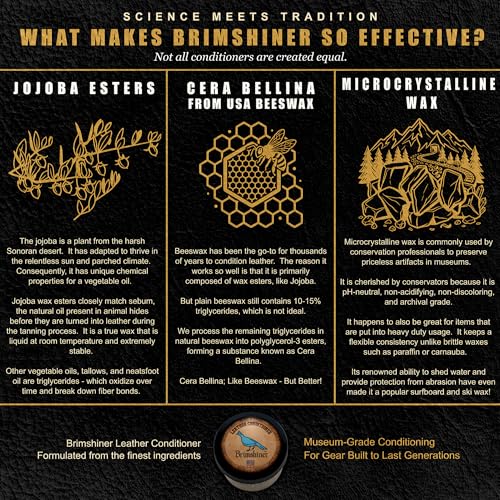
When I see jojoba-based formulas marketed for holsters and tack, I pay attention, because jojoba esters are chemically close to natural hide oils, meaning they nourish without going rancid. Brimshiner leans hard into that strength, and it shows. This isn’t a slick, shiny finish product; it’s built to restore stiffness and function to gear that needs structure. Saddle flaps, stirrup leathers, and harnesses benefit most, items where you want suppleness without sacrificing integrity.
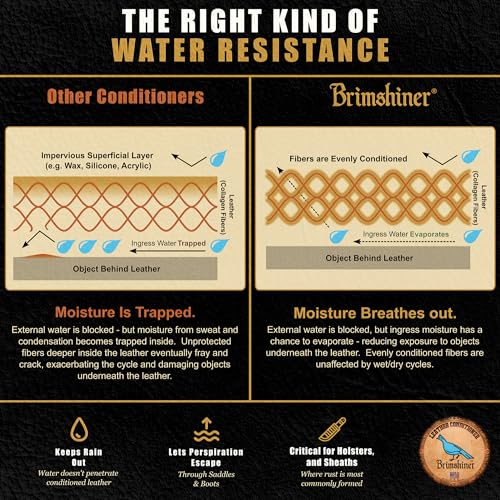
Reviewers love that it cleans as it conditions and only needs biannual use. It builds water resistance without sealing off breathability, which is crucial under sweat-prone riding conditions. Compared to greasier alternatives, it cures to a firm, usable feel, more like healthy leather than oiled rag. My recommendation? Ideal for working tack, not display pieces.
Product photos
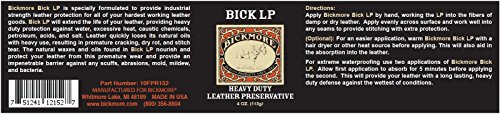
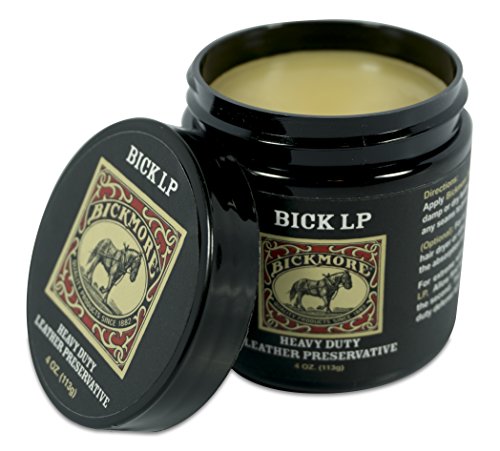
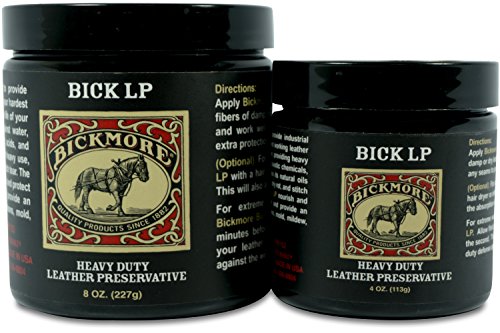
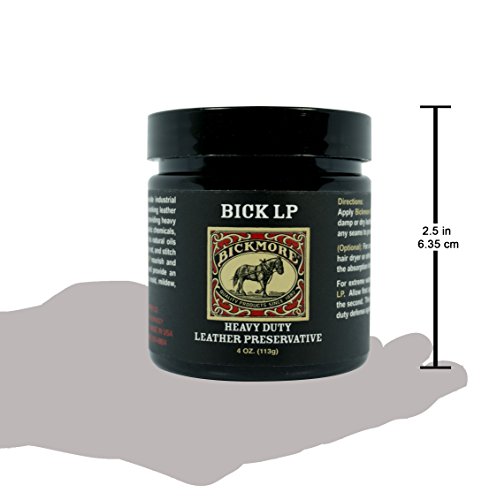
Bickmore Bick LP Conditioner
Strengths
- Strong environmental protection
- Preserves natural oils
- Repels water and salt
Trade-offs
- Heavy, less absorbent
- Not for deep hydration
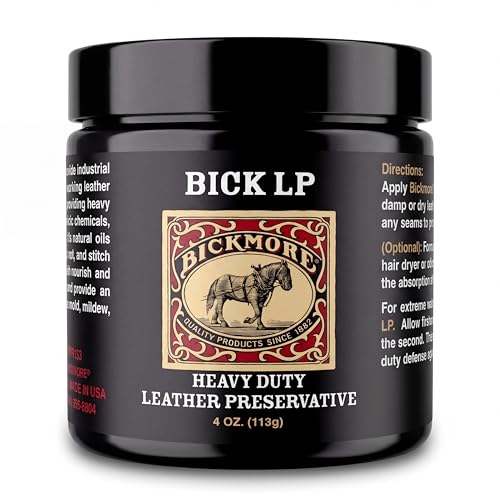
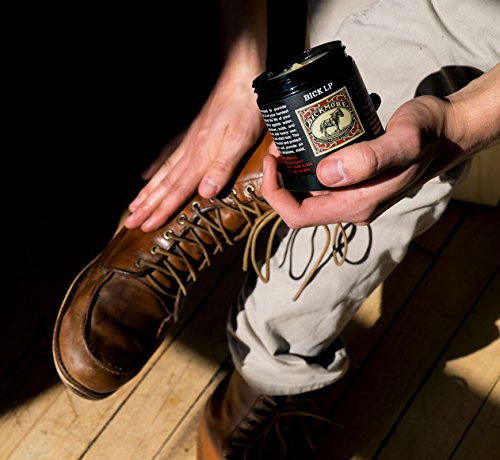
Bick LP isn’t your everyday conditioner, it’s more like armor. Marketed for scratch repair, it really shines in harsh environments, where salt, UV, and abrasion take a toll. It forms a protective barrier that resists water and chemicals, which helps prevent new scratches and slows wear on high-contact areas like saddle skirts and fenders. It won’t erase deep gouges, but owners say it minimizes the appearance of light scuffs over time by plumping surrounding fibers.
Compared to Bick 4, it’s heavier and more industrial. It doesn’t penetrate as deeply as Leather Honey, but it excels at shielding leather from future damage. If you ride in wet climates or store tack outdoors, this is a smarter frontline defense. Just don’t expect dramatic softening, its job is preservation, not rejuvenation.
Product photos
Our Testing Process
Rather than a hands-on lab test, my research for these recommendations focused on a detailed comparison of product specifications and features. I weighed this against what current saddle owners and leather care professionals are saying in online reviews and expert articles. As someone who’s spent years understanding leather – from tanning processes to long-term care – I also applied my category knowledge to assess each conditioner’s suitability for the demands placed on saddle leather.
For saddle leather specifically, I prioritized conditioners that offer deep penetration and lasting protection. Saddles endure significant stress and exposure, so a formula’s ability to replenish oils and resist moisture is crucial. Equally important is a conditioner’s effect on the leather’s structure; you want suppleness, not a sticky or overly softened hide. You can find more information on protecting other leather goods in our best leather conditioners overall.
Product specifications reliably indicate the type of ingredients used – jojoba, beeswax, oils, etc. – and whether a formula is wax-free. However, real-world performance, especially regarding darkening or residue, is best judged from owner feedback. Reputation also mattered; brands with a long history of serving equestrian communities, like Bickmore, earned extra consideration. For those also looking to protect their vehicle’s interior, we have detailed car seat leather conditioners.
What To Look For In leather conditioner for saddles
As someone who’s dedicated years to understanding leather, I often find people underestimate how much variety there is in what keeps it healthy. A good leather conditioner isn’t just about making something look nice; it’s about maintaining the hide’s structure and preventing damage.
A quality leather conditioner should replenish oils, restore flexibility, and offer protection against the elements. Look for pH-balanced formulas free of harsh chemicals and solvents. Consider the leather type – what works on furniture won’t necessarily be ideal for a saddle – and prioritize conditioners designed for that specific application. Penetration and longevity are key indicators of performance.
Understanding Leather Types & Finishes
The first thing I stress is knowing what you’re conditioning. Different leathers absorb products differently. Vegetable-tanned leather, common in saddlery and tooling, is far more porous than chrome-tanned leather used in many garments and furniture pieces. Full-grain leather benefits from deep conditioning, while finished or protected leathers need less frequent, lighter applications. Don’t assume a single product is universally suitable. For example, if you’re dealing with aniline leather, a very delicate, dye-through type, you’ll want something exceptionally gentle.
Assessing the Level of Restoration Needed
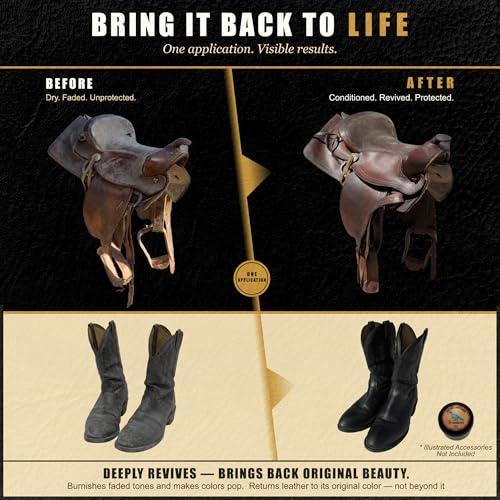
How dry or damaged is the leather? A newer item might only require a light conditioning to maintain suppleness, while older, neglected pieces demand a more intensive treatment. Products like Brimshiner, specifically formulated for stiff leather restoration, excel at bringing back pliability to hardened gear. However, for light maintenance, a gentler formula might suffice. Don’t jump straight to the strongest option; you risk over-saturation.
- For lightly used items, a simple application every six months might be enough.
- For items exposed to harsh conditions (sun, rain, frequent riding), quarterly conditioning is a better approach.
- Severely cracked or dried-out leather may require multiple applications of a restorative conditioner, followed by regular maintenance, and potentially professional repair if the damage is extensive.
Balancing Protection and Breathability
Leather needs to breathe. Completely sealing the pores with wax or silicone-based products might seem protective, but it traps moisture and can lead to rot. I always recommend avoiding those types of conditioners, particularly on items like saddles and boots that see heavy use and sweat. Instead, look for formulas that offer water resistance without completely blocking airflow. Jojoba oil, as used in Brimshiner, is a fantastic example of an ingredient that mimics the leather’s natural oils, providing nourishment and protection. Many owners also find that a good all-in-one solution, like those discussed in our top cleaning conditioning duos, simplifies the process.
A little conditioner goes a long way. Always test a small, inconspicuous area first to check for discoloration or adverse reactions.
For protecting vehicle interiors, exploring the best car leather care options is a good idea, as these are formulated to withstand UV exposure and temperature fluctuations.
Leather Conditioner for Saddles Compared
Here’s a comparison of features for popular leather conditioners designed for saddles and other leather goods.
| Product Title | Best For | Cleans? | Darkens Leather? | Water Resistant? | Oil Base? |
|---|---|---|---|---|---|
| Leather Honey Leather Conditioner | Best Overall | No | N/A | Yes | N/A |
| Bick 4 Leather Conditioner & Cleaner | Best for Light-Colored Leather | Yes | No | N/A | Wax-Free |
| Leather CPR Cleaner & Conditioner | Best 2-in-1 Cleaner & Conditioner | Yes | No | N/A | Water-Based |
| Brimshiner Leather Conditioner for Saddles | Best for Stiff Leather Restoration | Yes | Minimal | Yes | Jojoba |
| Bickmore Bick LP Conditioner | Best for Scratch Repair | No | N/A | Yes | N/A |
Frequently Asked Questions
Will saddle conditioner damage my stitching?
Generally, no. Quality saddle conditioners, particularly those with a wax-free formula like Bick 4, are designed to nourish the leather without compromising the thread. However, avoid oversaturation, and always test in an inconspicuous area first to observe any potential impact on the stitching material.
How often should I condition a saddle that’s used weekly?
Weekly use necessitates more frequent conditioning. I recommend conditioning a regularly used saddle every 6-8 weeks to maintain optimal hydration and protection against sweat and wear. Adjust based on environmental conditions; hotter, drier climates may require more frequent applications.
Can leather conditioner reverse cracking?
While conditioner can significantly improve the appearance of cracks, it rarely reverses them entirely. Products like Brimshiner are designed to restore pliability to stiffened leather, which can minimize the visibility of cracks, but deep damage may require professional repair or leather filler.
Is it better to use a dedicated saddle conditioner or a general leather conditioner?
A dedicated saddle conditioner is almost always preferable. Saddles endure unique stresses and require a formula designed to withstand those conditions. General leather conditioners often lack the necessary depth of penetration and durability for the demands placed on saddle leather.
What’s the difference between oil-based and water-based saddle conditioners?
Oil-based conditioners, like those containing jojoba oil, penetrate deeply to replenish the leather’s natural oils, offering superior long-term nourishment. Water-based conditioners are gentler and good for light maintenance, but they don’t offer the same level of deep conditioning and protection. For serious conditioning needs, exploring best leather cleaner conditioners can be a good starting point, as they often combine both types of formulas.
The Bottom Line
Choosing the right leather conditioner for a saddle often comes down to balancing how much work you want to put in versus the level of protection and restoration you require. For most saddle owners, I believe Leather Honey Leather Conditioner strikes the best overall balance – it’s highly regarded for its nourishing properties and ability to protect without overly softening the leather. It’s a solid, reliable choice for maintaining a saddle in good condition.
If you have specific needs, there are excellent alternatives. For those prioritizing a cleaner and conditioner in one step, Leather CPR Cleaner & Conditioner is a strong contender. If your saddle leather is particularly stiff or showing signs of age, Brimshiner Leather Conditioner for Saddles will provide more intensive restoration. And if you’re concerned about darkening lighter-colored saddles, Bick 4 Leather Conditioner & Cleaner is a great option. Don’t forget to explore options for other leather goods, like our recommendations for best shoe leather conditioners.
Ultimately, the specific product matters less than consistently applying something designed for leather. Regular conditioning, using a quality formula, is the key to longevity. Don’t get too caught up in chasing the perfect ingredient list or debating minor differences in performance. Focus on understanding your leather’s needs, cleaning it regularly, and replenishing its natural oils – those fundamentals are what will truly protect your investment for years to come.
