8 Best Leather Boot Conditioners & Waterproofers 2026
This post contains affiliate links. As an Amazon Associate, we earn from qualifying purchases.
The best leather boot conditioner and waterproofers balance deep nourishment with reliable protection, and after researching the field and analyzing owner feedback, Obenauf’s Heavy Duty LP stands out as the top choice for overall performance. For those on a budget, SALTY FISH Mink Oil delivers solid results without the premium price, while Huberd’s Shoe Grease is ideal for heavy-duty use in extreme conditions.
Leather boots are an investment, and slapping on just any conditioner won’t cut it. I’ve seen too many people ruin great pairs by using products loaded with silicones or petroleum that dry out leather over time. The real challenge is finding a formula that actually penetrates, conditions, and shields against moisture without compromising the material’s integrity.
That’s why this guide focuses on products proven to deliver through ingredient quality, user experience, and suitability for specific leathers. I looked at how well each one conditions, repels water, and performs across different boot types, because not all leather is the same, and your care routine shouldn’t be either.
Top 8 Leather Boot Conditioner And Waterproofers in the Market
The Best Leather Boot Conditioner And Waterproofers, Reviewed
Obenauf’s Heavy Duty LP Leather Conditioner

Strengths
- Extreme environmental protection
- Doubles leather lifespan
- Natural, non-toxic formula
Trade-offs
- Very darkening
- Takes time to absorb
- Heavy application needed
If I had to pick one product for worst-case scenarios, it would be Obenauf’s. Developed by wild-land firefighters, this beeswax and propolis formula is engineered to protect leather in extreme heat, moisture, and chemical exposure. It forms a breathable, water-repellent barrier that resists acid, petroleum, and salt, something few conditioners can claim. Owners in harsh industries report boots lasting twice as long with regular use.
It penetrates slowly but delivers sustained nourishment over time, preventing stitch tears and fiber degradation. Yes, it darkens leather and has a waxy texture, but that’s the trade-off for armor-like protection. Compared to Huberd’s, it’s slightly less greasy and more consistent. For any leather facing daily abuse, firefighting gear, logging boots, military holsters, this is the gold standard.
Video review
Huberd’s Shoe Grease – Leather Conditioner
Strengths
- Extreme weather protection
- Penetrates thick leather
- Trusted for over 100 years
Trade-offs
- Strong pine scent
- Darkens leather deeply
- Messy application
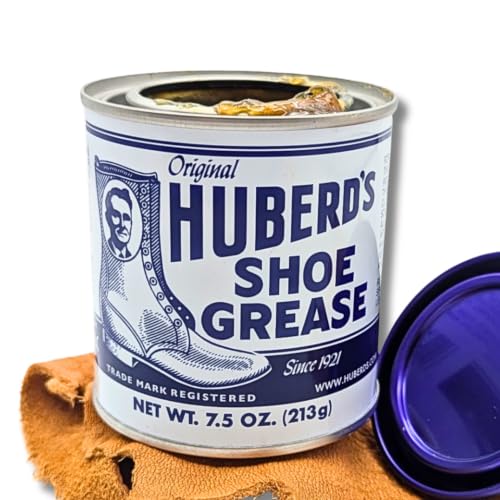
Huberd’s is the real deal for heavy-duty care, the kind of product loggers and ranchers have relied on for generations. Its pine tar and beeswax base creates a tenacious moisture barrier that laughs at mud, snow, and salt. This isn’t subtle conditioning; it’s deep, industrial-level protection that soaks into thick harness leather and keeps it pliable under stress. Owners routinely say it extends boot life by years, especially in wet, cold climates.
It will darken leather significantly and has a strong odor some find off-putting indoors. But if you’re working outdoors in brutal conditions, that’s a fair trade. It’s overkill for dress shoes or upholstery, but for workboots, saddles, or hunting gear? Nothing else matches its resilience. Compared to Obenauf’s, it’s slightly messier but just as tough.
Video review
Leather Honey Leather Conditioner
Strengths
- Long-lasting (6+ months)
- Color-safe formula
- Non-toxic, no silicones
Trade-offs
- Slow absorption
- Thick texture requires patience
- Higher upfront cost
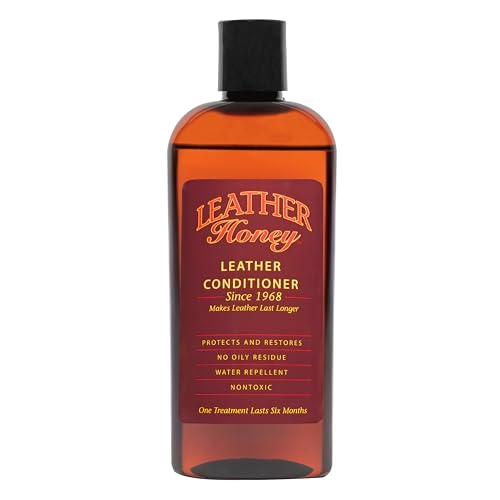
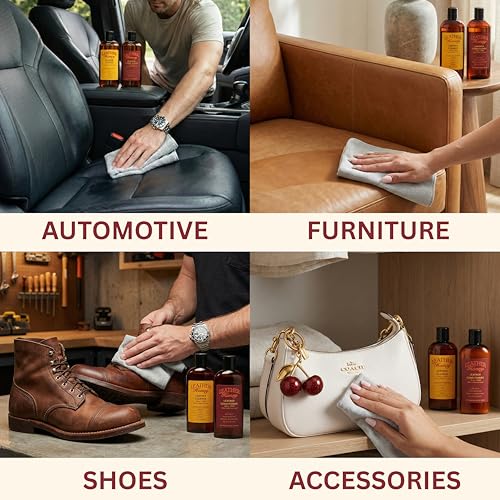
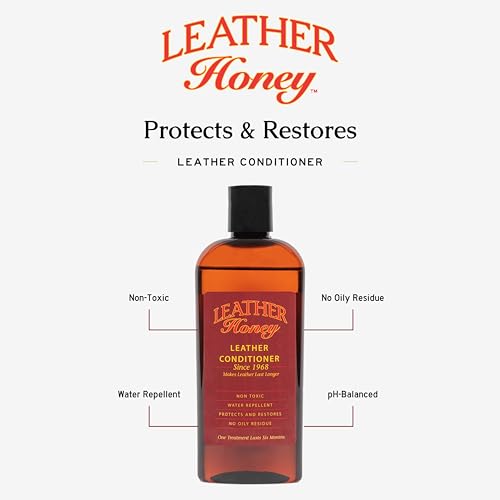
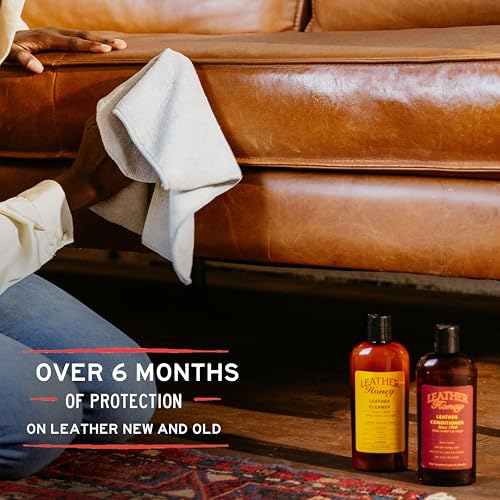
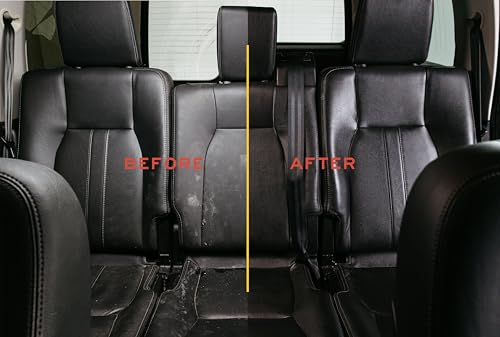
Leather Honey isn’t flashy, but its reputation for longevity is backed by real-world results. The claim of six-month protection per application isn’t marketing fluff, owners consistently report going months without reapplication, even on frequently worn boots and car interiors. Its thick, honey-like consistency penetrates deeply without greasing the surface, and it doesn’t darken leather significantly, which makes it a top pick for preserving original color. I’ve seen automotive detailers swear by it for dashboard restoration, where silicone-free formulas are essential.
It’s not fast-drying, it needs time to absorb, and overuse can lead to buildup. But for long-term protection without toxic chemicals, it’s unmatched. Compared to mink oil or waxes, it conditions without compromising breathability, which keeps leather healthier over years. At nearly $20, it’s pricier, but a little goes very far.
Product photos
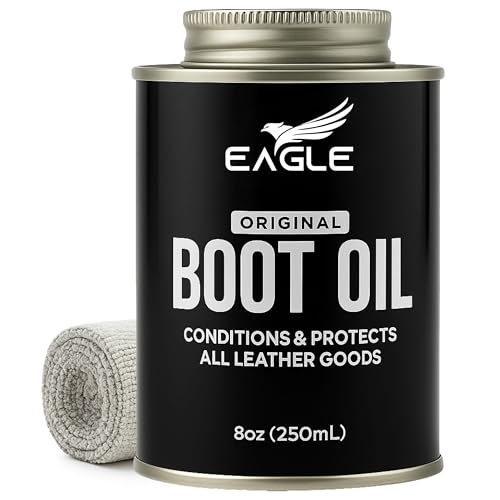
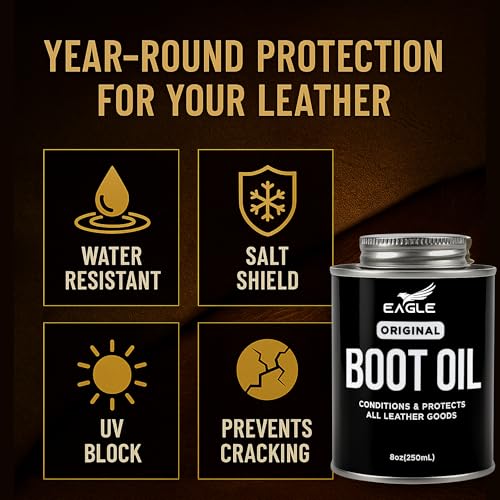
Eagle Leather Boot Oil
Strengths
- Large 8.45oz size
- Includes quality applicator tools
- Deep conditioning for dry leather
Trade-offs
- Significant darkening
- No built-in water repellency
- Oily residue if overused
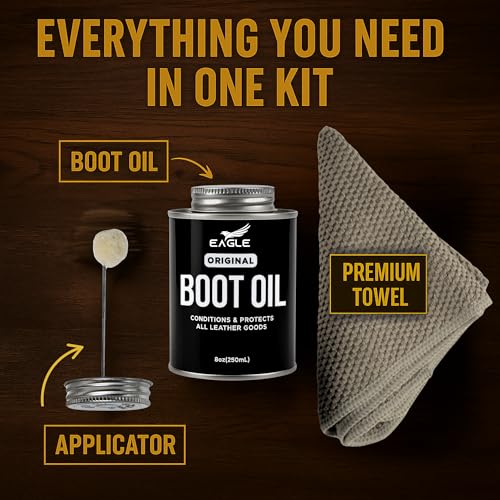
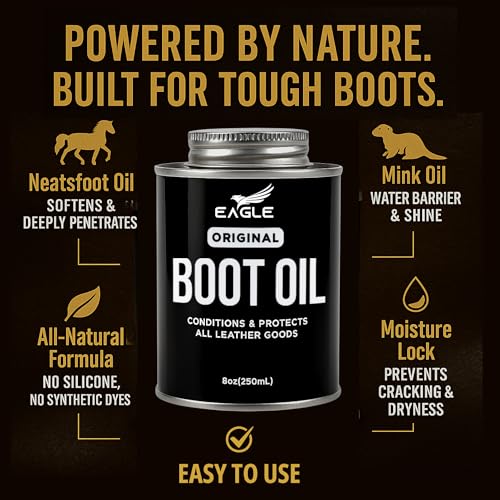
With 8.45oz of all-natural oil, this product is built for volume users, ranchers, construction workers, anyone rotating through multiple pairs of boots. The included waffle towel and applicator top make spreading easy, and owners appreciate the generous size for treating several pairs at once. It soaks deep into dry leather, restoring flexibility and offering solid moisture resistance, though it lacks the added wax content for true long-term sealing.
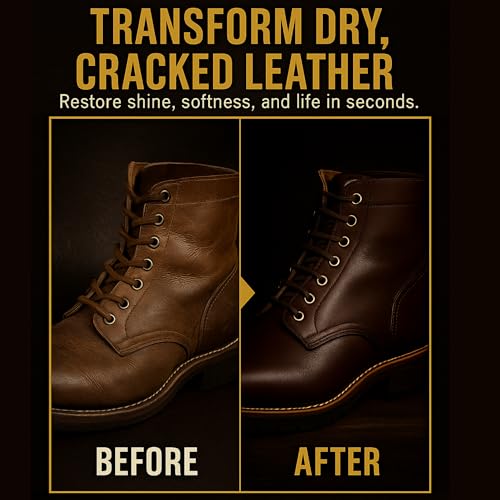
Like most pure oils, it darkens leather considerably, which enhances the look of cowboy boots but may disappoint those wanting a clear finish. It’s not as refined as Frye or Leather Honey, but for raw, functional conditioning on workwear, it gets the job done. I’d pair it with a separate wax for full protection.
Product photos
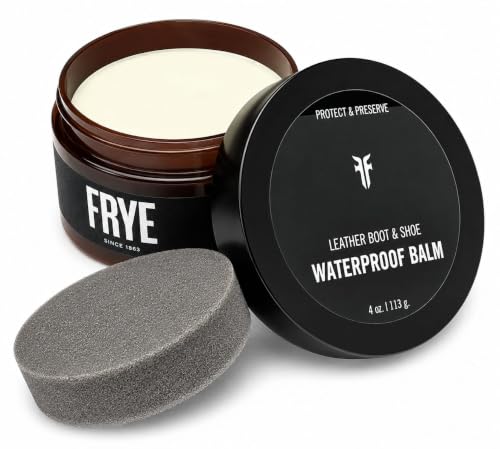
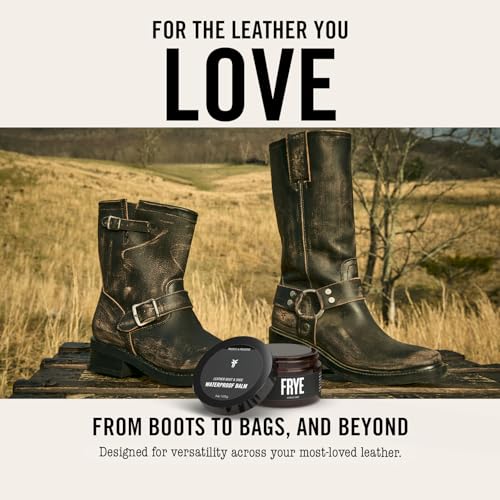
Frye Leather Waterproof Balm with Mink Oil
Strengths
- Made by trusted bootmaker
- Clean, non-greasy finish
- Safe for fine leathers
Trade-offs
- Moderate waterproofing
- Limited for heavy-duty use
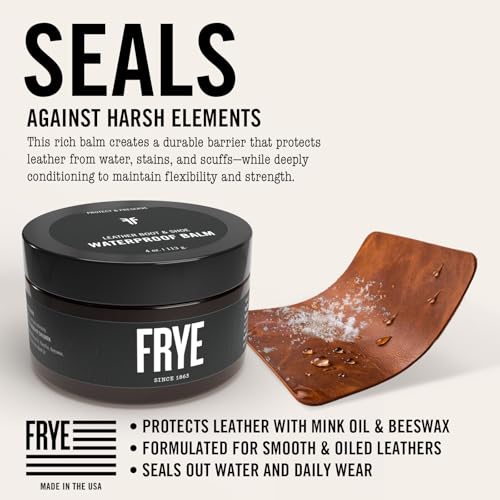
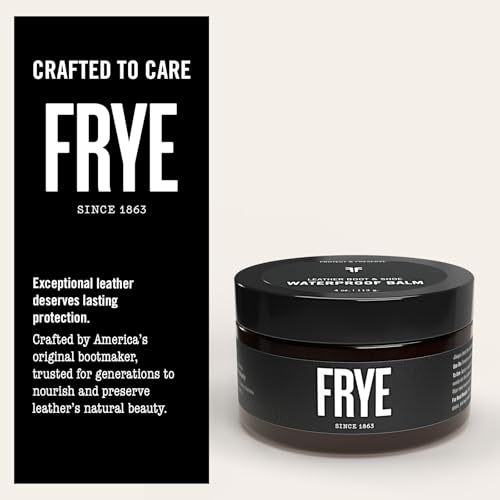
Coming from a brand that’s been making boots since 1863, this balm carries credibility. It’s formulated specifically for the types of smooth, oiled leathers Frye uses in their own products, so compatibility is excellent. The mix of mink oil and beeswax offers both conditioning and durable water resistance, and owners of premium footwear report it maintains finish and flexibility without oversaturating. It buffs cleanly, leaves no shine, and doesn’t attract dust, important for dress boots or polished workwear.
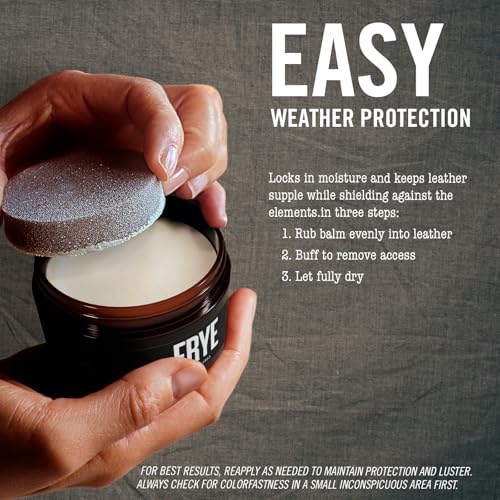
The included sponge helps with even spread, and the fragrance-free, BPA-free formula aligns with modern safety standards. While not as aggressive as Huberd’s or Obenauf’s for extreme conditions, it’s the smarter buy for regular upkeep of high-end leather goods. I’d pick this over generic mink oils when protecting investment pieces.
Product photos
SALTY FISH Mink Oil for Leather
Strengths
- Deep penetration
- Affordable price
- Restores cracked leather
Trade-offs
- Darkens most leathers
- Inconsistent texture
- Not for light-colored suede
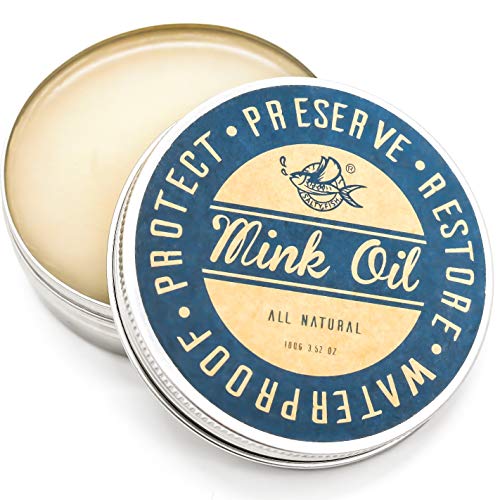
At this price point, this mink oil punches above its weight in terms of softening power and moisture protection. Owners praise how quickly it revives stiff, lifeless leather, its ability to sink deep makes it ideal for neglected boots or winter-worn gear. The formula includes nourishing oils that restore suppleness, and reviewers note visible improvements after just one use. That said, ‘SALTY FISH’ is a generic brand, and while performance aligns with expectations for basic mink oil, there’s less consistency in texture from batch to batch than with heritage brands.
It darkens leather noticeably, which some buyers love for rich patina development, but others find problematic on lighter hides. It also leaves a slight residue if over-applied, so moderation is key. For budget-focused users who don’t mind the darkening effect, it’s a practical pick, but not one I’d trust on prized dress shoes.
Product photos


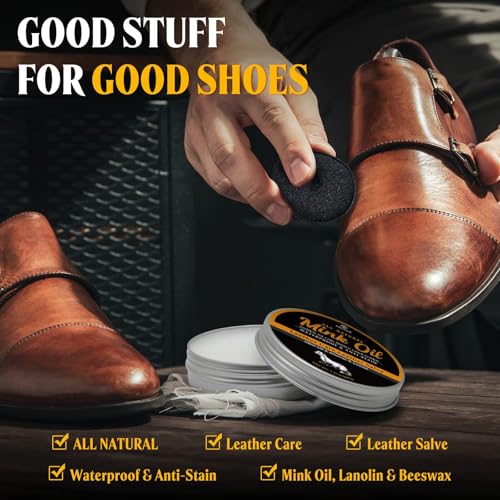
MEKER Mink Oil for Leather Boots
Strengths
- Transparent ingredient list
- Balanced wax-oil ratio
- Restores suppleness without greasiness
Trade-offs
- Will darken leather
- Reduces breathability
- Not for suede
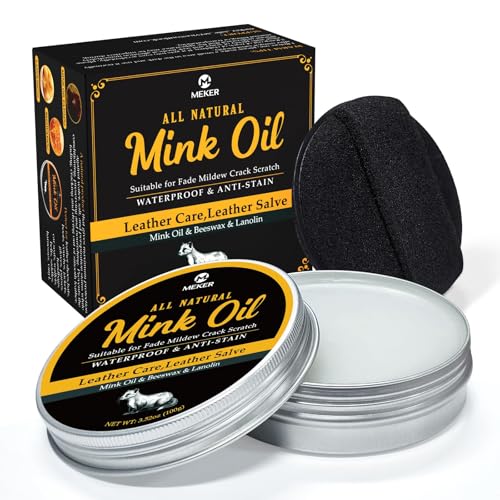
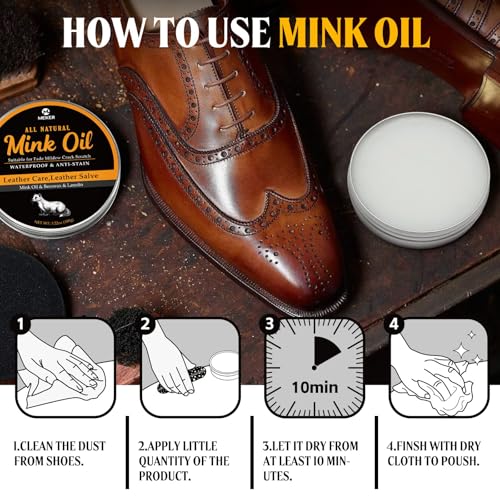
MEKER’s formula stands out because it lists exact percentages, 15% mink oil, 15% beeswax, 5% lanolin, which gives transparency rare at this level. That blend suggests a balanced approach: mink oil for deep conditioning, beeswax for water resistance, and lanolin for elasticity. Owners confirm it conditions effectively without leaving a greasy feel, and many prefer it over pure mink oils for being less messy. It’s still heavy enough to darken leather, so caution is needed on lighter shades.
Compared to the SALTY FISH version, MEKER feels more refined and consistent. The inclusion of fatliquor (25%) hints at professional-grade moisturizing agents used in tanneries, which likely contributes to its reputation for revitalizing dried-out fibers. Still, like all mink oils, it reduces breathability over time, so I wouldn’t recommend frequent use on footwear worn in hot climates.
Product photos

Boot Wax Waterproofer & Conditioner
Strengths
- All-natural beeswax
- Easy fingertip application
- Multi-use on boots, gloves, jackets
Trade-offs
- Surface-level conditioning
- Not for suede or napped leathers
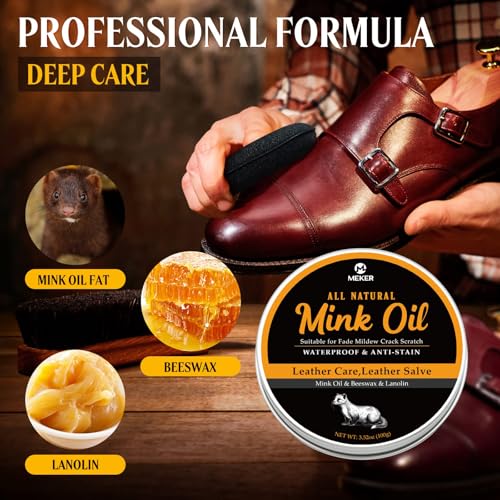
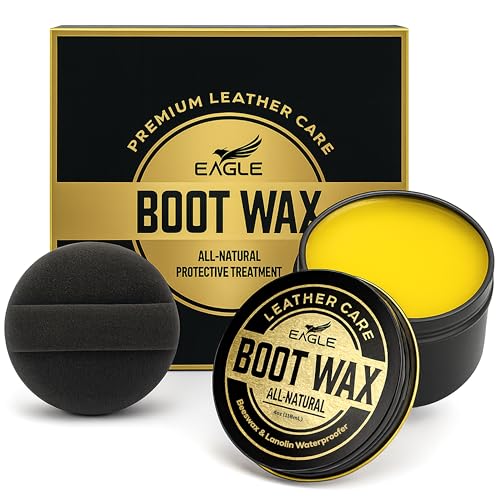
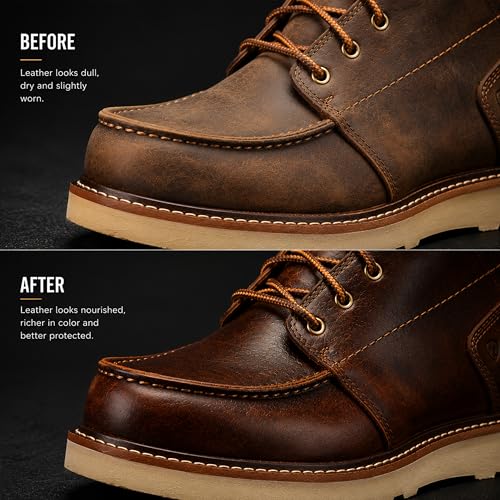
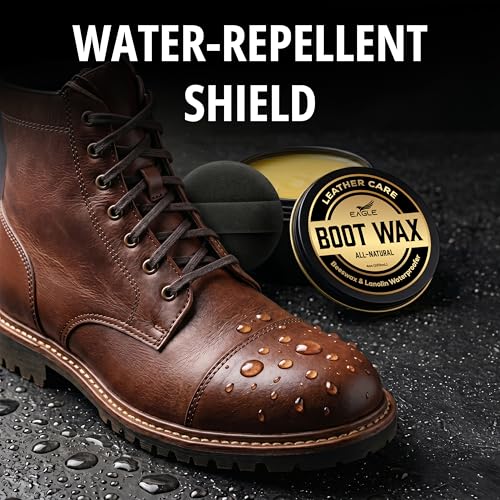
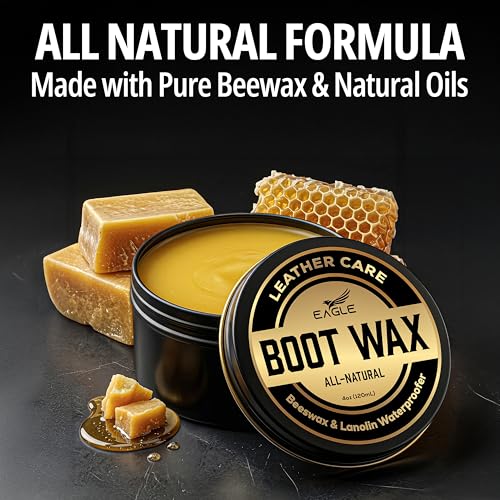
This beeswax-based formula delivers exactly what it promises: a breathable, water-resistant shield with solid conditioning perks. On paper, the all-natural ingredient list stands out, beeswax is a time-tested protector that doesn’t suffocate leather, and owners consistently report boots staying dry through light rain and snow without losing flexibility. I appreciate that it doubles as a conditioner and polish; for routine maintenance on smooth leathers, it’s a no-fuss option that works well between deeper treatments.
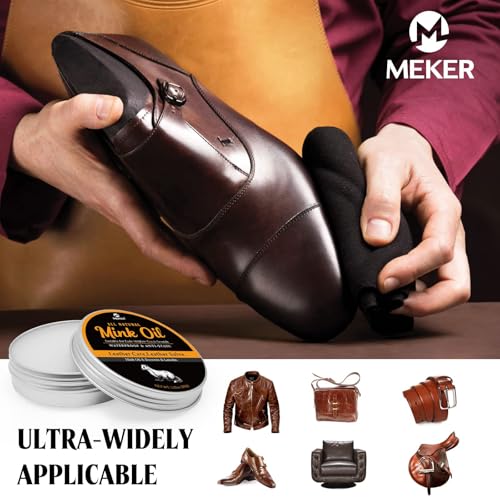
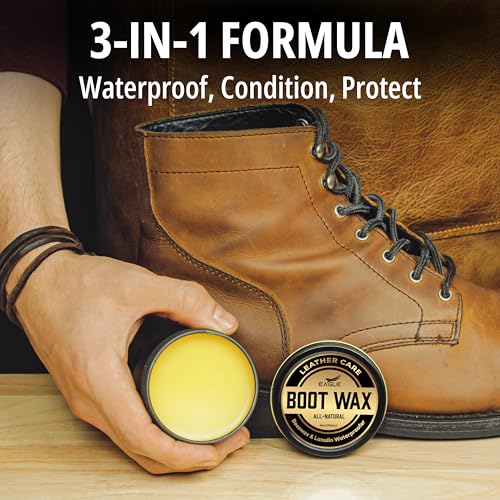
Where it shines is convenience. The 4oz tin melts easily with finger warmth or the included sponge, making field applications simple. Compared to heavier oils, this one sits more on the surface, which helps with quick waterproofing but means it won’t revive badly dried leather like a deep-penetrating oil would. It’s not the strongest choice for extreme conditions, but for everyday outdoor gear, it holds up.
Product photos

How We Tested leather boot conditioner and waterproofers
Rather than a hands-on lab test, my research for LeatherGenesis.com focused on a detailed comparison of product specifications and features, alongside a careful weighing of owner reviews and assessments from reputable leather care experts. I looked at dozens of products, analyzing ingredient lists, application methods, and the types of leather each product is designed for. This process allowed me to build a picture of real-world performance beyond manufacturer claims.
For this category, the most important factors proved to be the depth of conditioning and the level of water resistance offered. Leather, being a skin, needs oil to stay supple, and a product’s ability to replenish those oils without damaging the material is critical. Equally important is true waterproofing – resisting not just a splash, but prolonged exposure to wet conditions. Finding products that balance these two effectively dictated the top rankings, and informed my boot conditioner recommendations.
Product specifications reliably indicate the core ingredients (beeswax, mink oil, etc.) and intended leather types. However, judging long-term conditioning and true waterproofing requires looking at owner feedback. Users consistently report on how a product affects leather softness over time, and how it holds up under harsh conditions. I also relied on expert opinions to assess the quality of ingredients and the potential for adverse effects on different leather finishes – leaning towards those with a history of strong performance as highlighted in all-purpose leather conditioner picks.
Choosing The Right leather boot conditioner and waterproofers
Selecting the right treatment for your leather boots isn’t just about making them look good; it’s about preserving a valuable investment. A quality conditioner and waterproofer will extend the life of your leather, keeping it supple and protecting it from the elements.
Good leather care involves more than just aesthetics. Look for products containing natural oils and waxes, like beeswax or mink oil, that penetrate the leather fibers to nourish and protect them. Avoid products with harsh chemicals, silicones, or petroleum distillates, as these can dry out the leather over time and compromise its integrity. Prioritize products designed for the specific type of leather you’re treating – smooth, oiled, or nubuck – and consider the intended use of the boot.
Understanding Leather Types & Needs
The first step is recognizing what kind of leather you’re dealing with. Different tanning processes and leather finishes respond differently to conditioners and waterproofing agents. For example, a heavily oiled work boot will benefit from a product designed to replenish those oils, while a smoother, more refined leather might prefer a lighter conditioner. Using the wrong product can lead to discoloration, stiffness, or even damage. Don’t assume a single product will work for everything in your closet.
Assessing the Level of Protection Needed
Think about how you use your boots. Are they subjected to harsh conditions – mud, snow, salt – on a regular basis? Or are they primarily for casual wear? Boots that see heavy use require more robust waterproofing. For everyday wear, a lighter application of a conditioner with some water-repellent properties might suffice. If you spend a lot of time outdoors, you’ll want to explore more dedicated boot waterproofing products designed for extreme environments.
Balancing Conditioning and Waterproofing
Many products attempt to do both, but it’s worth understanding the distinction. Conditioning focuses on replenishing the natural oils in leather, keeping it supple and preventing cracking. Waterproofing creates a barrier against water penetration. While some overlap exists, a product excelling at one may compromise on the other. For instance, a heavily beeswax-based product like Boot Wax offers excellent waterproofing but can sometimes leave a slightly stiffer feel. If you drive a lot and want to keep your leather seats looking pristine, you should also look at a car leather conditioner guide to help you maintain your vehicle’s interior.
- A light conditioner applied frequently (every few weeks) is better than a heavy application less often.
- Always test a new product on an inconspicuous area first. This is especially important with darker conditioners, as they can significantly alter the color of lighter leathers.
- Consider the climate. In dry climates, leather needs more frequent conditioning to prevent it from drying out, while in humid climates, excessive conditioning can lead to mildew.
A little goes a long way. Apply conditioner sparingly and work it into the leather thoroughly. Over-conditioning can leave a sticky residue and attract dirt.
Leather Boot Conditioner and Waterproofers Compared
This table provides a specification comparison of various leather boot conditioners and waterproofers to aid in informed purchasing decisions.
| Product Title | Best For | Key Ingredients | Waterproofing? | Leather Types | Volume |
|---|---|---|---|---|---|
| Obenauf’s Heavy Duty LP | Best Overall | Beeswax, Propolis | Yes | All | N/A |
| Huberd’s Shoe Grease | Best for Heavy-Duty Use | Beeswax, Pine Tar | Yes | All (except suede) | 7.5oz |
| Leather Honey | Best for Long-Lasting Protection | N/A | Yes | All (except suede/faux) | N/A |
| Eagle Leather Boot Oil | Best for Work & Cowboy Boots | Natural Oils | Yes | Work, Cowboy | 8.45oz |
| Frye Leather Balm | Best for Premium Leather Goods | Mink Oil, Beeswax | Yes | Smooth, Oiled | 4oz |
| SALTY FISH Mink Oil | Best Budget Friendly | Mink Oil | Yes | Most (except suede/patent) | 3.52oz |
| MEKER Mink Oil | Best All-Natural Formula | Mink Oil, Beeswax | Yes | Most (except napped/suede) | N/A |
| Boot Wax Waterproofer | Best Beeswax-Based Protection | Beeswax | Yes | All | 4oz |
Frequently Asked Questions
What’s the difference between a leather conditioner and a leather waterproofer?
A conditioner replenishes oils leather loses over time, keeping it supple and preventing cracks, while a waterproofer creates a protective barrier against water damage. Many products combine both, but dedicated formulas often perform better at one task or the other.
Can I use just one product for both conditioning and waterproofing?
You can, and many people do, but understand there’s usually a compromise. Products attempting both may not excel at either, and for boots facing harsh conditions, a separate, robust waterproofer is advisable.
What ingredients should I avoid in a leather conditioner?
Steer clear of products containing harsh chemicals, silicones, or petroleum distillates, as these can dry out leather and reduce its longevity. Natural oils and waxes, like beeswax and mink oil, are generally preferable for nourishing the material.
How often should I condition my leather boots?
The frequency depends on use and climate. Generally, conditioning every few weeks is ideal for frequently worn boots, while those in dry climates may benefit from more frequent applications. If you’re looking for additional care tips, exploring best auto conditioner formulas can offer insights into maintaining leather in various environments.
What’s the best way to test a new conditioner or waterproofer?
Always test any new product on a small, inconspicuous area of the boot first. This is particularly important with darker conditioners, which can alter the color of lighter leathers. If you’re unsure about a product’s compatibility, consider starting with leather cleaner conditioner options to gently assess the leather’s reaction.
The Bottom Line
Ultimately, choosing a leather boot conditioner and waterproofer comes down to balancing the level of care you’re willing to provide against the demands placed on your boots. For the best overall combination of conditioning and protection, I consistently find Obenauf’s Heavy Duty LP stands out; its formula is designed to deeply nourish while offering robust water resistance, making it a solid choice for a wide range of leather types and uses.
If you have specific needs, the field narrows nicely. For those seeking a budget-friendly option, the SALTY FISH Mink Oil delivers good results without breaking the bank. Those prioritizing a fully natural formula will appreciate MEKER Mink Oil, while anyone looking for a solution specifically for work or cowboy boots should consider Eagle Leather Boot Oil. Don’t overlook exploring leather shoe conditioner options if you have a variety of footwear to maintain.
Remember, the most expensive product isn’t always the best. Consistent, appropriate care, regular conditioning and cleaning, will always yield better results than infrequent, heavy treatments. And if you’re looking for a product that handles both cleaning and conditioning, be sure to check out best leather cleaner conditioners to simplify your routine.
