
What Is Horsehide Leather | The Surprising Variability
This post contains affiliate links. As an Amazon Associate, we earn from qualifying purchases.
Horsehide leather is tanned hide from a horse, not a single material with guaranteed properties. The final leather’s feel, thickness, durability, and even water resistance depend on which section of the hide is used, the specific tanning method (vegetable vs. Chrome), and the surface finish applied by the tannery. This variability means a thin, glossy horsehide for a glove behaves nothing like a thick, oil-finished horsehide for a motorcycle jacket.
Let’s be clear about one thing. The term “horsehide” tells you the animal source, not the final product’s performance grade. The marketing often leans on its tough reputation, but that reputation is built on a specific kind of leather, the kind used in heritage workwear. A lightweight, heavily finished horsehide and a thick, minimally coated one can look and feel completely different.
What follows: a breakdown of the three distinct hide sections, how tannery choices create everything from baseballs to wallets, and the practical realities of breaking in and caring for a horsehide piece. By the end, you’ll be able to read a product description and know exactly what kind of leather you’re getting.
Key Takeaways
- Horsehide is separated into three primary sections: the horsefront (common for jackets/bags), the strip (a thick, dense band), and the shells (used exclusively for Shell Cordovan).
- The leather’s final character is dictated more by the tannery’s process (tanning, milling, finishing) than by the species alone. A well-made cowhide can outperform a poorly processed horsehide.
- Horsehide is not automatically waterproof. Its water response depends entirely on the specific tannage and finish; treat it based on the maker’s care label, not assumptions.
- Shell Cordovan is a specific product, not a synonym for all horsehide. It comes from the small “shell” area of the hindquarters and undergoes a months-long, multi-step finishing process.
- The famous stiffness and break-in period are features of thick, full-grain horsefronts used in structured jackets. Thinner or differently finished horsehide can be supple right away.
The Physical Makeup: Hide Sections and Parts
A horsehide isn’t used as one big sheet. Tanneries like Horween break it down into three separate products, each with its own location, thickness range, and common uses. This is the first layer of variability that gets lost in the broad “horsehide” label.
The horsefront comes from the animal’s chest and shoulder area. This is the workhorse of the category, commonly used for leather jackets, bags, and some footwear. Its thickness can be adjusted through splitting, so you might find a horsefront jacket that’s surprisingly pliable. The Cambridge Dictionary horsehide definition rightly focuses on the animal source, but the real story is in these divisions.
The strip, also called the horsebutt or shell strip, is a dense, fibrous band that runs across the back. Horween notes its thickness typically ranges from 4 to 10 ounces (1.6 to 4 mm). It’s incredibly tough and often used for belts, watch straps, and reinforcements in high-wear areas of shoes and bags. This is the section that gives horsehide its legendary abrasion resistance.
A standard like ASTM D1517-23 defines “baseball leather” specifically as alum-tanned horsehide front leather, acknowledging this front section’s use for a high-impact application.
Finally, the shells are two small, oval muscle areas from the hindquarters. These are not used for general “horsehide” products. They are reserved exclusively for making Shell Cordovan, a distinct leather prized for its smooth, non-porous surface and glossy finish. Confusing shell cordovan with general horsehide is a common mistake, they are related but fundamentally different end products.
From Raw Hide to Finished Leather: The Tannery’s Role
The hide section is just the starting point. The tanning process and subsequent finishing steps determine whether you get a stiff, oily pull-up leather or a soft, matte garment leather. This is where the tannery’s skill overshadows the animal’s name.
Horsehide can undergo either vegetable tanning or chrome tanning. Vegetable tanning, using natural tannins from tree bark, is traditional and often used for the strip and shells destined for Shell Cordovan. It produces a firm, rich leather that ages and patinates beautifully. Chrome tanning is faster and results in a more water-resistant and immediately softer leather, which might be used for a horsefront jacket that needs less break-in.
After tanning, the surface finish seals the deal. A heavy oil or wax application creates a “pull-up” leather, where stretching the surface lightens its color, a hallmark of many heritage jackets. A high-gloss finish, sometimes achieved through a process called “glanzstoßen” (pressing with glass or agate rollers), gives horsehide its characteristic smooth, shiny appearance.
| Hide Section | Typical Thickness | Common Tanning Method | Typical Uses |
|---|---|---|---|
| Horsefront | Variable (split) | Chrome or Vegetable | Jackets, Bags |
| Strip | 4–10 oz (1.6–4 mm) | Primarily Vegetable | Belts, Watch Straps, Reinforcements |
| Shells | Very Dense | Pure Vegetable | Shell Cordovan footwear & small goods |
The leather manufacturing process is a cascade of these decisions. A maker chooses a hide section for its physical properties, a tanning method for its performance, and a finish for its look and feel. That’s why comparing tanning methods is more revealing than comparing species.
Horsehide vs. Cowhide: It’s Not a Simple Contest
You’ll see endless forum debates. The practical truth is that a well-specified cowhide can outperform a poorly made horsehide, and vice versa. The comparison only makes sense with all the variables on the table.
Horween’s own experts point out key structural differences. Horsehide has a coarser grain and displays more natural markings, healed scratches, insect bites, which many find desirable for character. Its fiber structure is dense, which contributes to high tensile strength and abrasion resistance. However, the weight and thickness can vary dramatically even across the same hide, making yields lower and the leather less consistent than cowhide.
Cowhide (particularly steerhide) is more uniform in thickness and has a wider usable area. This consistency makes it more versatile for large-scale production and allows it to be produced in a broader range of weights and finishes. For a project requiring large, even panels, high-quality cowhide is often the more pragmatic choice.
Bottom line: Horsehide is often chosen for its firm character, distinctive aging, and heritage appeal in items like structured jackets. Cowhide is selected for its consistency, versatility, and availability. The “better” material is the one whose verified construction, thickness, tannage, finish, matches the product’s intended purpose.
How Horsehide Behaves and Breaks In
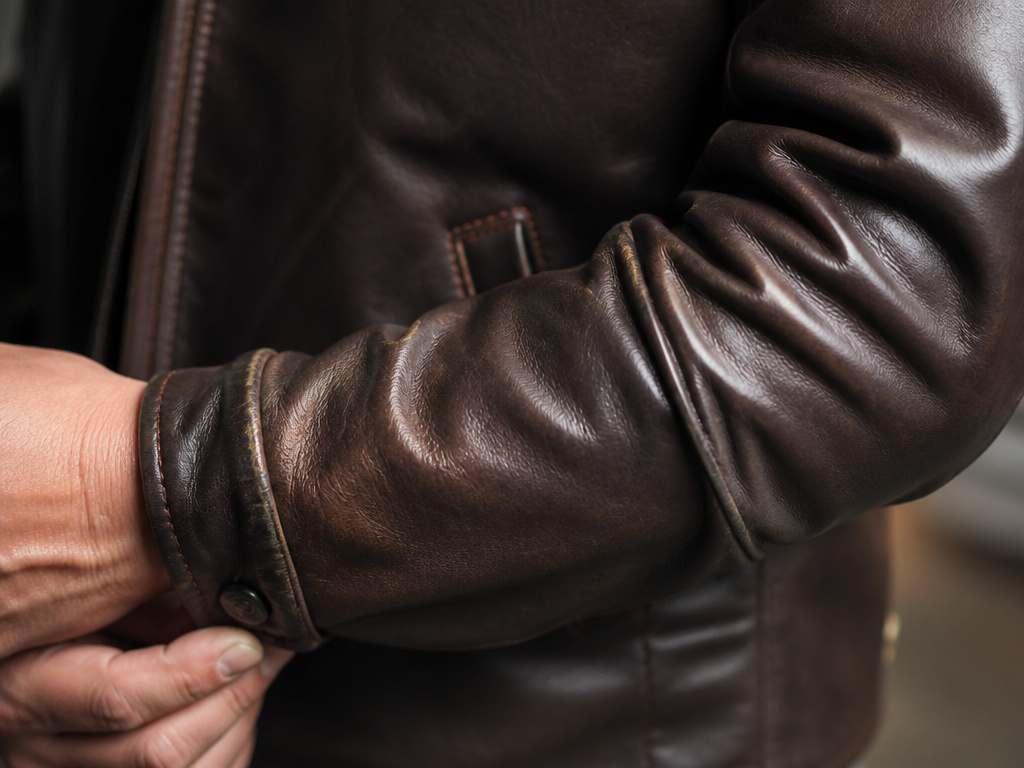
The break-in stories are legendary, and they’re usually true, for a specific type of horsehide. A thick, full-grain horsefront jacket, especially one with a heavy oil finish, will feel stiff initially. That stiffness is a feature, not a bug; it’s what gives those classic motorcycle jackets their iconic silhouette.
The leather conforms through normal movement. Creases form at the elbows and waist, and lighter wear areas begin to shine, creating a patina that’s unique to the wearer. This doesn’t mean every horsehide piece requires a brutal break-in. A thinner horsefront, or one that’s been milled (tumbled in a drum) extensively after tanning, can be surprisingly supple from day one.
Never soak or use excessive heat to soften horsehide. You risk distorting the shape, affecting dyes, and damaging the finish. The leather will tell you what it needs, usually just time and wear.
Here’s a straightforward guide. If your new horsehide jacket feels like a suit of armor, just wear it. Flex your arms, sit down, move naturally. Avoid crushing, twisting, or forcefully stretching it. The change is gradual, and that’s good. Rushing the process is how you end up with a stretched-out, misshapen piece.
A point of confusion is Shell Cordovan. Because it’s made from the dense shell section and heavily stuffed with oils and waxes, it has almost no break-in the traditional sense. It’s firm but pliable, and it develops a deep gloss with use, not creases.
Caring for Horsehide Leather: Myths and Must-Dos
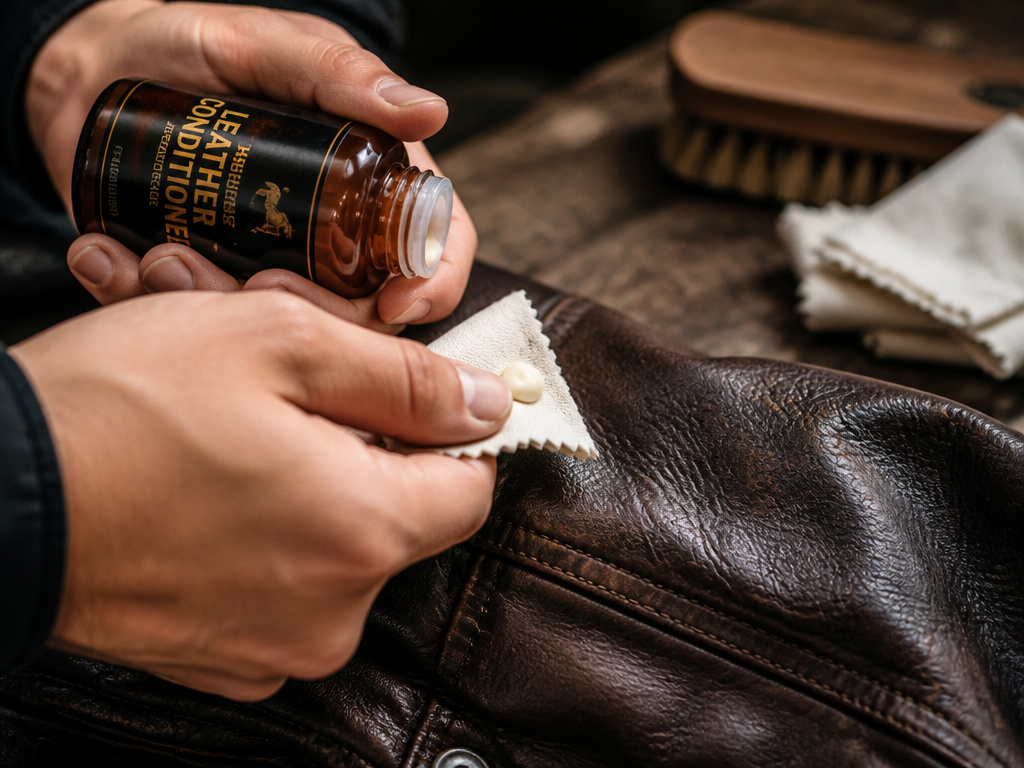
Care should always start with the product’s own label. The Leather Working Group advises contacting the retailer or brand for guidance specific to the leather when instructions are unavailable. This is crucial because finishes vary so widely.
Myth: Horsehide is waterproof. Its water response depends entirely on tannage and finish. Some oil-finished pull-up leathers will resist light moisture beautifully. Others, especially aniline-dyed horsehide with a light topcoat, will spot instantly. Prolonged wetting can mark, stiffen, or damage any leather. Follow the product-specific care instructions.
Myth: It needs aggressive conditioning. Horsehide is naturally fatty, and many finishes add more oils and waxes. Over-conditioning, especially with heavy products like mink oil, can saturate the leather, clog its pores, and lead to a greasy, dark appearance. Less is more.
Must-Do: Clean gently. Use a soft, dry cloth for dust. For deeper cleaning, a damp cloth with a tiny amount of saddle soap (for heavy work items) or a pH-balanced leather cleaner is safe. My rule of thumb: if you wouldn’t use it on your face, don’t use it on fine leather.
Must-Do: Store properly. Keep it in a cool, dry place away from direct heat or sunlight. Use a broad-shouldered hanger for jackets to maintain shape. Stuff bags with acid-free paper to retain structure.
I’ve stuck with simple, dedicated products for years. A basic cream conditioner applied sparingly once or twice a year, and a horsehair brush for polishing, have kept my horsehide goods in perfect shape for decades. The goal is preservation, not alteration.
Frequently Asked Questions
Is horsehide leather better than cowhide?
It’s not inherently better; it’s different. Horsehide is often denser and more abrasion-resistant, with a distinctive coarse grain. Cowhide is more consistent and versatile. The “better” leather is the one with the right specifications (thickness, tanning, finish) for your specific item. A well-made cowhide jacket will outlast a poorly made horsehide one.
Does horsehide leather stretch?
All leather has some give, but horsehide is known for stretching less than cowhide due to its dense fiber structure. It will conform to your body with wear, but it won’t significantly stretch out of shape like some softer leathers. This stability is a key reason it’s used for structured garments.
How do you soften horsehide leather?
Time and wear are the best softeners. Wear the garment regularly, allowing natural movement and body heat to gently break in the fibers. Avoid aftermarket softening sprays or soaking methods, as they can damage the finish and internal structure of the leather. For breaking in stiff areas, gently flexing them by hand repeatedly is safer than forceful stretching.
Is horsehide leather ethical?
This is a complex question tied to personal values and agricultural practices. Horsehide is generally a byproduct of the meat industry, similar to cowhide. The ethical considerations are similar to those for any animal-derived material and depend on sourcing transparency, animal welfare standards, and individual belief systems.
Before You Go
Horsehide isn’t a mystery. It’s a spectrum of materials all originating from the same animal. The key is to look past the species name and examine the actual specs: the hide section, the tannage, the thickness, and the finish.
If you’re buying for heritage and patina, seek out a full-grain, vegetable-tanned horsefront or strip from a tannery like Horween. If you want something tough but with less break-in, a chrome-tanned horsefront might be the answer. And remember, Shell Cordovan is its own category, a premium product for specific, often small, goods.
The final test is always the product itself. A horsehide piece should feel substantial, the stitching should be even and tight, and the finish should be even. Don’t get hypnotized by the label. Understand the leather better to make confident choices. That’s based on years of practical experience.
