Understanding Chrome Tanned Leather: The Industry Standard
This post contains affiliate links. As an Amazon Associate, we earn from qualifying purchases.
Chrome tanned leather is cowhide or other animal skin transformed into durable, flexible leather using chromium(III) salts, primarily basic chromium sulfate. This method accounts for over 80% of global leather production because it’s fast, yields a consistently soft and water-resistant hide, and is highly efficient for items like shoes, handbags, and upholstery.
That “over 80%” figure isn’t marketing. It’s the output of a global supply chain optimized for volume and specific performance. The chemistry behind it, chromium ions forming stable crosslinks with collagen fibers, is what gives you a leather jacket that feels supple from day one and doesn’t stiffen into a board if it gets caught in the rain.
This guide explains the chromium process from raw hide to finished leather. You’ll get the straight facts on how it works, why it dominates, the exact regulatory lines around chromium safety, and how its properties stack up against traditional methods like vegetable tanning. By the end, you’ll be able to read a product description and know exactly what “chrome-tanned” means for its feel, care, and lifespan.
Key Takeaways
- Chrome tanning uses chromium(III) salts to create stable, flexible leather in hours, not weeks, accounting for over 80% of global production.
- The resulting leather has a high shrinkage temperature (Ts), often above 100°C, making it highly stable in hot, wet conditions.
- Finished chrome-tanned leather is safe for use; strict EU regulations limit hexavalent chromium (Cr(VI)) to 3 mg/kg in skin-contact goods.
- It is typically softer, more uniformly pliable, and less porous than vegetable-tanned leather, making it ideal for garments and lined bags.
- Understanding this tanning process is key to choosing leather based on the final product’s required performance, not just tradition.
How Chrome Tanning Works (The Chemical Process)
The process doesn’t rely on tannins from tree bark. It uses chemistry. Raw hides are soaked, limed to remove hair and fats, and then delimed to prepare the collagen fibers. At this point, they are introduced to a float, a drum of water containing basic chromium(III) sulfate.
The chromium(III) ions are positively charged. The prepared collagen fibers carry a negative charge. Over several hours in the rotating drum, these ions are drawn into the hide’s structure. They don’t just coat the fibers; they form coordinate covalent bonds, creating stable crosslinks between separate collagen strands. This is the tanning action.
Think of it like using a specialized industrial adhesive instead of a slow-drying natural glue. The bonds form quickly and are exceptionally stable. A PubMed Central comparative study on different tanning methods consistently found chrome-tanned samples had the highest hydrothermal stability, a direct result of this efficient crosslinking.
This process, often called “chrome tanning” or “mineral tanning,” can be completed in a single day. The speed and consistency are why it became the backbone of modern leather goods manufacturing, from car seats to athletic shoes.
The leather that emerges is called “wet blue,” named for its pale blue-green color. It’s stable and won’t putrefy, but it’s not finished. It will be split to a uniform thickness, re-tanned (often with vegetable extracts or synthetics for specific characteristics), dyed, and fatliquored for softness before drying and finishing.
The Defining Properties of Chrome-Tanned Leather
You can spot chrome-tanned leather by its performance profile, not just a label. The chemistry dictates the feel.
First is suppleness. Because the chromium crosslinks allow the fibers more movement, chrome-tanned leather is inherently softer and more pliable right out of the tannery. It rarely requires a lengthy break-in period. This makes it the default choice for leather types used in clothing, gloves, and bag linings.
Second is hydrothermal stability. This is a technical term with a simple test: how well does the leather handle heat and water? The industry measures it as shrinkage temperature (Ts). Chrome tanning pushes this temperature high, often above the boiling point of water. According to ISO 3380:2015, the official test method, this means a properly chrome-tanned hide can survive boiling water without shrinking irreversibly into a tough, crinkled puck. Your shoe won’t be ruined by a puddle.
Third is water and mildew resistance. The chromium bonds and the subsequent fatliquoring process make the leather less absorbent than its vegetable-tanned counterpart. Water beads up longer, and it’s far less likely to develop mildew in damp storage. This property is why it’s favored for outdoor gear and work boots.
| Property | Chrome-Tanned Leather | Why It Matters |
|---|---|---|
| Feel & Drape | Inherently soft, pliable, consistent | Ideal for garments, upholstery, lined bags; no break-in needed. |
| Water Resistance | High; beads water, slow to absorb | Provides practical durability for footwear, outdoor gear, and items exposed to moisture. |
| Hydrothermal Stability | Very high (Ts >100°C) | Withstands hot water exposure without permanent deformation or stiffening. |
| Production Time | Hours | Enables scalable, cost-effective mass production. |
Chrome vs. Vegetable Tanning: The Practical Trade-Offs
Most conversations about leather tanning pit chrome against vegetable. It’s not a simple good vs. Bad. It’s a choice between two tools, each perfect for different jobs.
Vegetable tanning uses natural tannins from bark, leaves, and wood. It’s a slow, weeks-long process that produces a firm, moldable leather. It patinas beautifully, developing rich color changes over decades. It’s also highly porous and absorbent. This is the leather for a heritage belt, a structured briefcase, or a saddle that forms to the rider.
Chrome tanning is the modern industrial method. It’s fast, taking less than a day. The leather is soft from the start, water-resistant, and less prone to staining. Its color is uniform, coming from modern aniline or pigment dyes. It doesn’t develop the same deep, changing patina; instead, it shows gentle wear marks and softens further with age.
The trade-off is clear. Do you want character or consistency? Heirloom development or immediate utility? For a wallet that tells a story over 30 years, vegetable tanned leather is unmatched. For a soft leather jacket that feels perfect on day one and handles rain, chrome tanning is the engineered solution.
Here’s a blunt analogy: vegetable tanning is slow-cooking a stew for depth of flavor; chrome tanning is using a pressure cooker for speed and tenderness. Both get you a meal, but the experience and best use cases differ.
Addressing Chrome and Chromium Safety
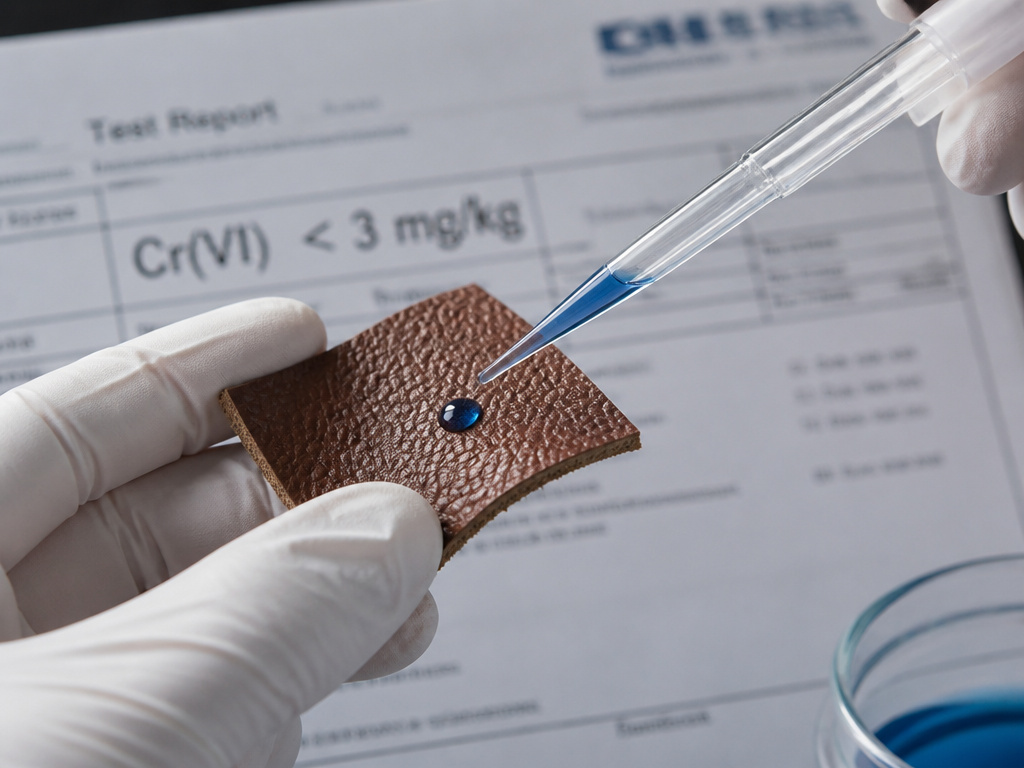 The word “chromium” worries people. Let’s be clear about one thing. The tanning agent is chromium(III), a stable, relatively benign form. The health and environmental concern surrounds chromium(VI) or hexavalent chromium, a known carcinogen.
The critical point is that Cr(VI) is not used in tanning. It can, however, form under specific, faulty conditions: improper chemical balance in the tannery, high heat, or low humidity during storage. The industry knows this. Since May 1, 2015, EU Regulation 301/2014 has prohibited leather in contact with skin containing 3 mg/kg or more of Cr(VI). The test method, EN ISO 17075, is precise enough to verify this minuscule limit (0.0003%).
Common mistake: Assuming all chrome-tanned leather is toxic. The final consumer product is rigorously tested. The environmental impact is managed at the tannery through modern chrome processing in tanneries, not carried in your bag.
So, is the leather in your shoes or bag safe? If it’s from a brand like Bosch or Makita, almost certainly yes. The regulations and testing are strict. The real industry focus is on containing and recycling chromium at the source, not on traces in the final dry, stable leather good.
How to Identify and Choose Chrome-Tanned Leather
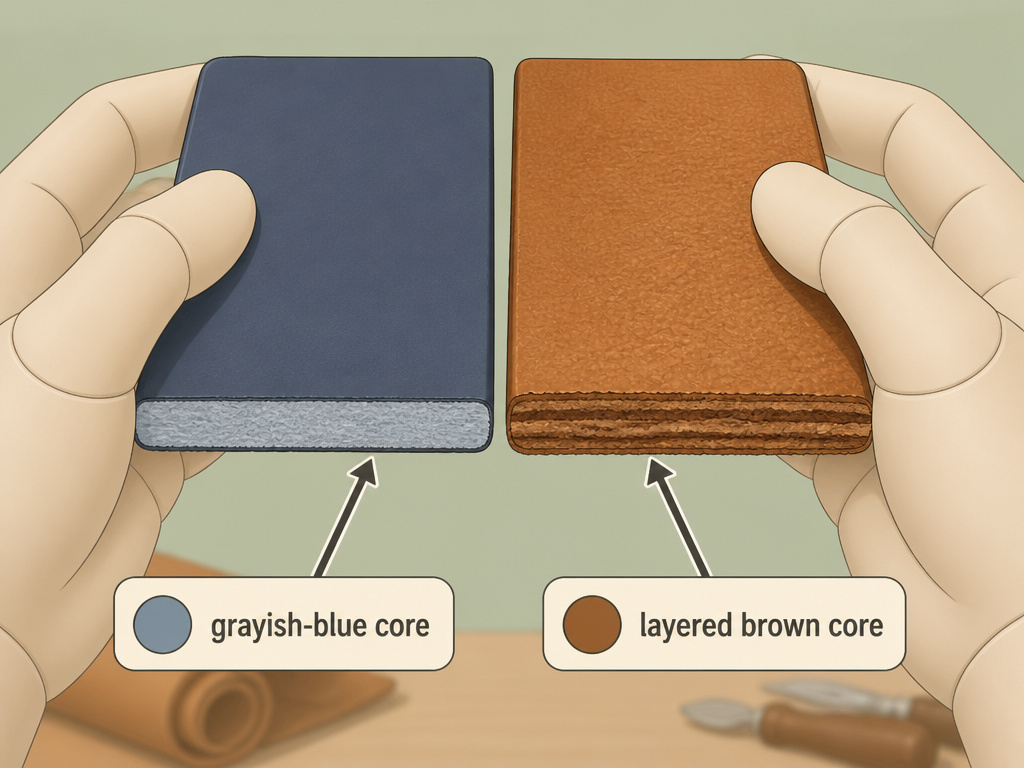 You won’t always find a tag that says “chrome-tanned.” You often have to deduce it from the product’s characteristics and descriptions.
Look for these clues:
- The Feel: It’s uniformly soft and supple across the entire piece, with no stiff areas.
- The Edge: Look at the raw edge. Chrome-tanned leather often has a consistent, grayish-blue or pale tan core, unlike the layered, rich brown of veg-tanned.
- The Product Type: Almost all soft leather garments, sneakers, lined handbags, and automotive upholstery are chrome-tanned. It’s the practical choice.
- The Label: Terms like “nappa,” “suede” (from chrome-tanned splits), and “aniline-dyed” often indicate a chrome-tanned base because it accepts dye so uniformly.
When to choose it:
Choose chrome-tanned leather when you need performance and immediate comfort. It’s the right choice for: * Everyday footwear and boots. * Leather jackets, pants, and gloves. * Handbags, backpacks, and luggage that see rough use. * Any item where water resistance and consistent flexibility are priorities over developing a patina.
If your project calls for tooling, carving, or a leather that will hard-mold into a specific shape, you’re in the market for vegetable tanning. For nearly everything else demanding durability and softness, chrome-tanned is the workhorse. It’s why most top grain leather on the market, used for high-wear items like furniture and accessories, comes from a chrome tannage.
Caring for Chrome-Tanned Leather
The care routine is simpler than for porous vegetable-tanned leather. Its resistance is its advantage.
Cleaning: Wipe with a damp cloth. For deeper cleans, use a mild, pH-balanced leather cleaner. Avoid harsh soaps or saddle soap, they can strip the protective fatliquors and leave the leather dull.
Conditioning: It needs less frequent conditioning. Once or twice a year is often enough. Use a light, non-greasy leather conditioner. Over-conditioning can saturate the leather, weakening fibers and attracting dirt.
Storage: Store in a cool, dry place out of direct sunlight. While mildew-resistant, prolonged dampness is still an enemy. Use a breathable dust bag, not plastic.
The one sensory tell: A dry chrome-tanned leather will start to feel slightly stiff, not crackly, and will lose its luster. That’s your cue for a light conditioner. If you see white streaks forming in the creases, dried salt from sweat, wipe them off promptly with a damp cloth to prevent abrasion.
Frequently Asked Questions
Is chrome-tanned leather real leather?
Absolutely. It is 100% real leather. The tanning method does not change the fundamental material, it’s still animal hide. The “chrome” refers only to the process used to preserve and stabilize it. It is entirely different from synthetic or bonded leather, which contain plastic layers or ground-up fibers.
Does chrome-tanned leather last?
Yes, it is extremely durable. The chromium crosslinks provide excellent resistance to wear, water, and heat. A well-made chrome-tanned item can last for decades with proper care. Its lifespan competes directly with vegetable-tanned leather, just with a different aging character.
Why is chrome-tanned leather cheaper?
Two reasons: speed and scale. The tanning process takes hours, not weeks, allowing tanneries to produce more volume with the same equipment. It also yields a higher percentage of usable leather from each hide due to its consistency. This efficiency translates to a lower cost for brands and consumers, without necessarily sacrificing quality.
Can chrome-tanned leather be eco-friendly?
The environmental impact is centered on the tannery, not the final product. Modern tanneries employ closed-loop systems that recycle over 95% of the chromium, dramatically reducing effluent. When comparing processes, the high resource use (water, energy) and potential for chemical runoff in vegetable tanning can also be significant. The most sustainable choice is leather from a tannery certified by the Leather Working Group, which audits environmental management, regardless of the tanning method.
Does chrome-tanned leather patina?
It develops a wear pattern, not the classic darkening patina of vegetable-tanned leather. It will soften, show creases in high-flex areas, and its color may mellow slightly. Aniline-dyed chrome leather can show subtle color shifts. It’s more of a “worn-in” look than a transformative patina.
The Bottom Line
Chrome-tanned leather isn’t the “lesser” option. It’s the engineered, modern one. It exists because we demanded soft, water-resistant, and consistently reliable leather for everyday life. Over 80% of the leather produced today uses this method for a simple reason: it works exceptionally well for modern applications.
Understand that its advantages, suppleness, water resistance, durability, come from a specific chemical process. Its safety is governed by strict, enforceable limits on hexavalent chromium. When you pick up a soft leather jacket or a durable bag, you’re likely holding the result of this precise, industrial-scale leather production.
The leather will tell you what it needs. Chrome-tanned pieces ask for less fuss, a wipe, an occasional light feed. They reward you with immediate comfort and long service. So next time you see “chrome-tanned,” see it for what it is: the practical, high-performance backbone of the contemporary leather world.
