
Compare Lambskin vs Cowhide Leather: Durability vs Softness
This post contains affiliate links. As an Amazon Associate, we earn from qualifying purchases.
Lambskin leather is thin, lightweight, and pliable, derived from young sheep, and excels in softness and comfort. Cowhide leather is thick, strong, and abrasion-resistant, sourced from cattle, and built for toughness and longevity. Choosing one over the other is a direct trade-off between a refined feel and a durable build.
The mechanical properties creating that difference start at the molecular level, lambskin’s shorter collagen fibers versus cowhide’s dense, cross-linked matrix. This isn’t an abstract concept; it dictates the daily experience of a jacket, the lifespan of a bag, and the maintenance schedule you’ll need to follow.
What follows: a breakdown of the thickness, weight, and tensile strength numbers that define each leather, the specific products each is engineered for, and the one property the marketing often gets wrong.
Key Takeaways
- Lambskin is 40–50% lighter (0.8–1.2 kg per jacket) than cowhide, making it the choice for all-day wear.
- Cowhide’s tensile strength (8–25 N/mm²) is up to three times higher than lambskin’s, which is why it dominates workwear.
- Neither leather is inherently waterproof; resistance depends entirely on the tanning method and finish, not the animal hide.
- A well-cared-for lambskin jacket lasts 10–25 years; cowhide can go 15–50. The difference is in abrasion resistance, not quality.
- Always pair your leather choice with the tannery’s reputation, a poor full-grain cowhide is worse than a superb corrected-grain lambskin.
The Core Differences in Specs
Forget broad adjectives. The real gap between lambskin and cowhide is in measurable, physical properties you can compare side-by-side. A manufacturer like Decrum publishes these numbers because they matter to how a jacket performs. Let’s be clear about one thing: thickness, weight, and fiber structure are engineering, not marketing.
A standard lambskin jacket leather measures 0.5–0.8 millimeters thick. A garment-weight cowhide, by contrast, starts around 1.0–1.4 millimeters. That extra half-millimeter of cowhide isn’t just bulk; it’s a denser network of longer collagen fibers that resist pulling apart under stress. Lambskin’s thinness and shorter fibers are precisely what give it that signature buttery drape, but they also mean it’s more vulnerable to a sharp edge.
Lambskin’s softness stems from three structural factors: hide thickness (0.5–0.8 mm), short collagen fibers creating less internal rigidity, and higher natural lanolin oil content lubricating the fibers from within. This combination yields a leather pliable from day one, without a break-in period. (Decrum)
The weight difference is just as dramatic on the hanger. A lambskin jacket weighs between 0.8 and 1.2 kilograms (1.8–2.6 pounds). A comparable cowhide jacket clocks in at 1.5 to 2.5 kilograms (3.3–5.5 pounds). That’s a 40–50% increase in heft. For a garment you wear for eight continuous hours, commuting, traveling, a full day in the office, that extra weight translates directly to shoulder and neck fatigue. Cowhide’s heft is an asset in a motorcycle jacket where you want the mass to hang straight and protect, but a liability in a fashion blazer meant to move with you.
Here’s the practical takeaway: If your day involves taking the jacket on and off, cowhide’s weight is manageable. If you’re wearing it from morning to night, lambskin’s lightness wins.
Durability: It’s About Tensile Strength, Not Platitudes
Durability gets reduced to “tough vs. Delicate,” which misses the entire point. The real metric is tensile strength, how much force per square millimeter the leather can withstand before tearing. The numbers don’t lie, and they explain why each leather ends up in such different jobs.
Cowhide leather boasts a tensile strength range of 8–25 Newtons per square millimeter (N/mm²). Shoe upper leather, a specific type of cowhide, can reach a staggering 317.795 kg/cm². Lambskin’s tensile strength is moderate in comparison; its fine-fibered structure sacrifices ultimate tear resistance for that luxurious softness. This is why a cowhide work glove outlasts a lambskin dress glove in a rugged environment, and why a lambskin clutch feels divine but shouldn’t be your only bag for a cross-country trip.
| Property | Lambskin Leather | Cowhide Leather | Why It Matters |
|---|---|---|---|
| Typical Thickness (Garment) | 0.5–0.8 mm | 1.0–1.4 mm | Thinner = better drape, less structure |
| Jacket Weight | 0.8–1.2 kg (1.8–2.6 lbs) | 1.5–2.5 kg (3.3–5.5 lbs) | Weight impacts all-day wear comfort |
| Tensile Strength | Moderate | 8–25 N/mm² (High) | Predicts resistance to tearing and abrasion |
| Fiber Structure | Short, fine collagen fibers | Long, dense, cross-linked matrix | Determines hand-feel and break-in time |
| Primary Tanning Method | Often Chrome | Chrome or Vegetable | Affects water resistance, patina, and feel |
This table matches the material’s inherent strengths to the product’s actual use, rather than showing good versus bad. Assuming cowhide is always “more durable” is a mistake, a poorly tanned hide will fail faster than a well-processed lambskin.The leather will tell you what it needs.
Where Each Leather Excels (And Where It Doesn’t)
Choosing a leather based on a single property is a shortcut to disappointment. The right choice is the one whose entire profile, softness, weight, strength, and maintenance needs, aligns with the item’s job. A global cow leather life cycle assessment confirms that half of all cowhide goes into footwear, a direct result of its balanced profile. Let’s break down where each leather truly belongs.
Lambskin’s Domain: Fashion, Drape, and Sensation
Lambskin exists for garments and accessories where the sensory experience is paramount. Its fine, smooth grain and natural sheen give it a polished look that works in smart-casual settings. The leather drapes and conforms to the body, creating a flattering, second-skin fit that stiffer hides can’t match.
Best-fit uses for lambskin:
- Fashion-forward jackets and blazers where comfort and silhouette are key.
- Luxury handbags, clutches, and small leather goods where a buttery feel defines the luxury.
- Fine dress gloves that need to be supple and delicate.
- Garment linings where a soft, lightweight touch is required.
Common mistake: Using lambskin for a heavy-use daily backpack or motorcycle gear. Its thin structure will show scuffs and wear marks within a season of rough treatment, long before the stitching fails.
Cowhide’s Domain: Structure, Protection, and Endurance
Cowhide is the material you reach for when the product has a job to do. Its natural heft and rigidity provide structure, making it ideal for items that must hold their shape or provide physical protection. This is the leather of belts, boots, work gloves, and saddles, items where failure is not an option.
Best-fit uses for cowhide:
- Motorcycle and biker jackets requiring abrasion resistance.
- Boots and work shoes needing to withstand flex and impact.
- Belts, holsters, and tool sheaths demanding rigidity and tear strength.
- Structured bags, luggage, and upholstery where shape retention is critical.
The stiffness of new cowhide is a feature, not a bug. It breaks in over time, molding to the user and developing a rugged character that lambskin never will. For more details on another strong option, see our comparison of deerskin vs cowhide explores a different strength-to-weight balance.
The Tanning & Finish: Where the Real Magic Happens
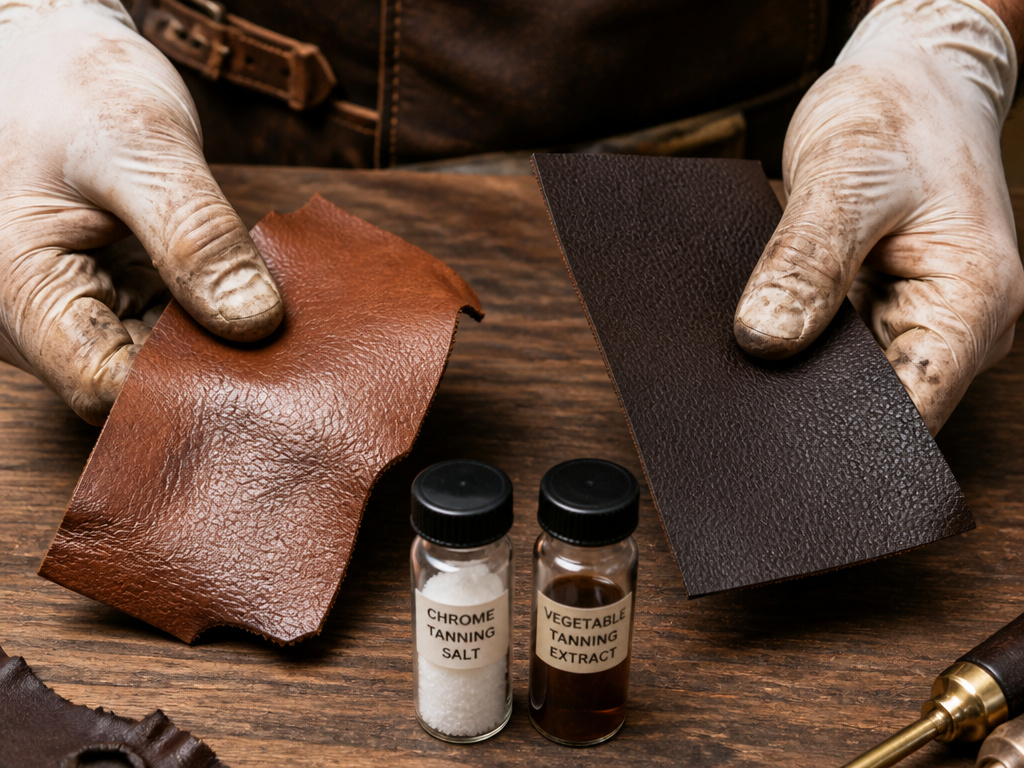 The animal hide is just the starting point. The tanning process, chrome or vegetable, and the final finish (aniline, pigmented, nappa) determine the leather’s performance more than the species ever could. This is where tannery expertise shines, and why a brand like Horween Leather Company commands respect.
Chrome tanning uses chromium salts to produce a soft, pliable, and water-resistant leather in about a day. Most lambskin and a vast amount of cowhide is chrome-tanned. Vegetable tanning uses natural plant extracts (like oak bark) and can take up to two months. It yields a firmer leather that develops a rich patina over time and is preferred for high-end belts, saddles, and goods meant to last generations.
A nappa finish refers to a particularly soft, full-grain leather, often from lamb or calf. A corrected grain leather (often cowhide) has been sanded and embossed to create a uniform surface. An aniline dye penetrates fully, showing the hide’s natural markings, while a pigmented finish coats the surface, hiding imperfections and adding scuff resistance.
Where this goes sideways: Assuming “full-grain” is always best. A full-grain lambskin is still delicate. A beautifully finished corrected-grain cowhide from a top tannery will be more durable, uniform, and often a better choice for a structured bag than a flawed full-grain piece. The obsession with the term often overshadows the more important factor: the tannery’s skill.
Your choice in leather grades directly impacts care. An aniline-dyed lambskin will show water spots instantly and needs gentle, specific conditioning for lambskin. A pigmented, corrected-grain cowhide is far more forgiving.
Care & Longevity: The 20-Year Timeline
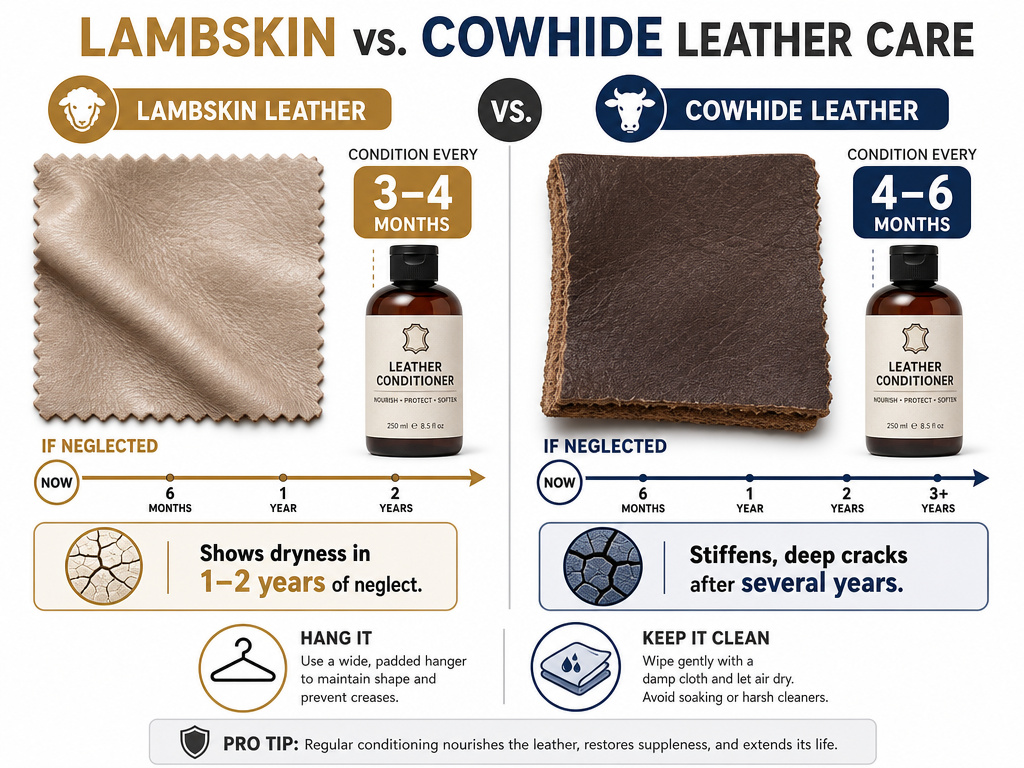 A Decrum lambskin jacket has a projected lifespan of 10–25 years with proper care. A cowhide jacket can last 15–50 years. Lambskin’s thinner fibers lose moisture faster and are more susceptible to abrasion.Cowhide’s thickness gives it a buffer.
The care routines diverge because of this. Lambskin needs conditioning every 3–4 months to stay supple; its porous structure dries out faster. Cowhide can go 4–6 months between conditioning. Both need cleaning with a damp cloth and storage on a padded hanger in stable humidity. But the consequences of neglect differ.
- Lambskin will show dryness and micro-cracks within 1–2 years without conditioning.
- Cowhide will stiffen and may develop deep cracks at stress points after several years of neglect.
The patina they develop tells different stories. Lambskin gains a soft, overall glow. Cowhide develops character marks, scars, and a deep, rich color change, especially if vegetable-tanned. For a leather with a similar soft reputation but different origins, understanding sheepskin leather provides useful context.
Making the Right Choice for Your Project
So, lambskin or cowhide? The answer lives in a short list of questions about the item’s purpose, not in a generic ranking.
Choose Lambskin if:
You want a jacket for daily urban wear, travel, or the office where comfort is king. You’re crafting a delicate accessory like a clutch or pair of gloves where feel is everything. You prioritize a refined, polished look and a garment that moves fluidly with your body.
Choose Cowhide if:
You need a protective motorcycle jacket, work boots, or any item facing abrasion. You’re building a structured bag, belt, or case that must hold its shape under load. You value a rugged, evolving patina and a break-in process that results in a personalized item.
For those seeking a middle path, consider goatskin, durable like cowhide but supple like lambskin, with a distinctive pebbled grain. Or, explore the unique toughness of horsehide leather or the rugged appeal of buffalo leather.
In my early days, I ruined a project by applying the wrong finish for the leather type. I treated a delicate leather like it was a tough hide. The result was a sticky, stiff mess. The lesson was simple: let the material’s nature guide the process. Don’t fight a lambskin’s delicacy; protect it. Don’t resent cowhide’s stiffness; use it to your advantage.
Frequently Asked Questions
Is lambskin leather durable enough for a jacket?
Yes, for a specific type of jacket. A lambskin jacket is durable for fashion, commuting, and daily urban wear, with a lifespan of 10–25 years. It is not durable for motorcycle riding, hiking, or rugged outdoor work where high abrasion resistance is needed. Its durability is for a lifestyle, not for a sport.
Which is more expensive, lambskin or cowhide?
Typically, lambskin. The finer grain, smaller hides (0.2–0.4 m² each), and more labor-intensive handling of delicate skins often command a higher price per square foot than commodity cowhide. However, premium vegetable-tanned cowhide from a renowned tannery can far surpass the price of standard chrome-tanned lambskin.
Can you make lambskin waterproof?
You can treat it for water resistance, but making it truly waterproof is not advisable. Heavy waterproofing sprays or waxes will clog lambskin’s fine pores, altering its soft hand-feel, reducing breathability, and potentially causing discoloration. It’s best to rely on its natural chrome-tanned resistance to light moisture and simply avoid wearing it in heavy rain.
How can I tell lambskin from cowhide by touch?
Lambskin feels consistently soft, buttery, and pliable across the entire piece, with almost no resistance when you try to bend it. Cowhide feels substantial, firmer, and often has a slight waxy or dry pull against your fingers. On the surface, lambskin grain is very fine and smooth, while cowhide usually has a more pronounced, pebbled, or porous texture.
Does cowhide get softer over time?
Yes, significantly. Cowhide breaks in through wear, flexing, and the application of natural oils from your hands and conditioners. The long collagen fibers gradually become more pliable, molding to your body or use patterns. This breaking-in period is a core part of cowhide’s appeal, transforming it from a stiff hide into a personalized, comfortable item.
Before You Go
The real choice is between two different engineering philosophies, not between “good” and “bad” leather. Lambskin is engineered for sensation and elegance, cowhide for endurance and structure.Your decision should lock in the moment you define the item’s primary job. If that job changes, the leather won’t adapt with you.
Ignore the marketing copy that claims one is universally superior. A superb lambskin from a specialist tannery is a better investment than a poorly processed cowhide, regardless of the “full-grain” label. Always look past the animal name to the tanning method and the maker’s transparency. That’s what delivers the 20-year jacket, the heirloom bag, the glove that molds to your hand. Everything else is just background noise.
