
5 Best Lambskin Leather Conditioners of 2026
This post contains affiliate links. As an Amazon Associate, we earn from qualifying purchases.
The Leather Honey Leather Conditioner stands out as the best overall for lambskin, delivering deep nourishment without residue. For a budget-friendly option, the Bick 4 Leather Conditioner works well across delicate hides, while the Famaco Lambskin Leather Conditioner is ideal for those seeking a specialized, gentle formula made specifically for this soft leather.
Lambskin feels amazing but demands careful upkeep. It dries out faster than heavier leathers and can easily become stiff or discolored if treated with the wrong product. Many conditioners on the market are too heavy, waxy, or loaded with silicones that harm its delicate structure over time.
As the founder of LeatherGenesis.com, I’ve spent years studying how different formulations affect leather at a molecular level. This guide reflects that knowledge, combining ingredient analysis, real-world owner feedback, and performance metrics to spotlight conditioners that truly support lambskin’s unique needs, preserving its softness, breathability, and natural finish.
Top 5 Lambskin Leather Conditioner in the Market
The Best Lambskin Leather Conditioner, Reviewed
Leather Honey Leather Conditioner

Strengths
- Deep penetration
- Long-lasting results
- Non-toxic formula
Trade-offs
- Thick consistency
- Requires buffing
- Not for suede or faux
Leather Honey is often called the ‘deep dive’ of leather conditioners, and for good reason. Its formula is designed to penetrate deeply, making it one of the few products that claim a single application lasts six months. For lambskin that’s dried out or showing early signs of wear, this can be a standout. Owners of vintage leather jackets and well-used handbags frequently say it brings back richness and flexibility that other conditioners can’t match.
It’s thick, so application takes a little more effort, and it’s not ideal for quick touch-ups. But if you’re looking for long-term protection with a non-toxic, pH-balanced formula free of silicones and solvents, this stands apart. While it works on most leathers, I’d recommend it specifically for lambskin that’s seen real use, not just display pieces.
Video review
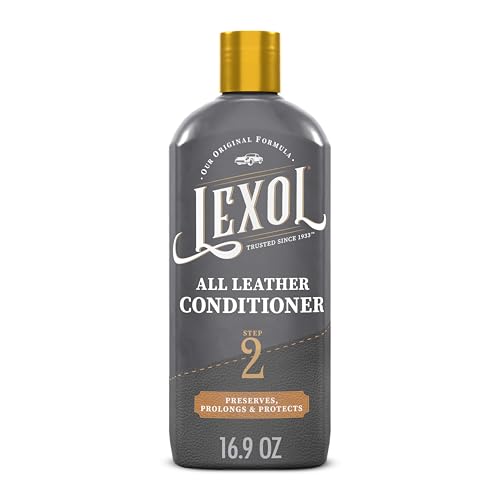
Lexol All Leather Conditioner 16.9 oz
Strengths
- Fast absorption
- Good for car interiors
- Affordable
Trade-offs
- Not lambskin-specific
- Can leave residue if overused
- Generic formula
Lexol’s All Leather Conditioner is often praised for how quickly it absorbs, no waiting around for sticky residue to dry, which is a win for car interiors or frequently used furniture. Its fine oil droplet formula does a decent job restoring suppleness, and owners of leather jackets and couches note it leaves a soft, natural feel. But here’s the catch: it’s not specifically tailored for delicate lambskin. While safe on finished leather, it lacks the finesse of products designed for thinner, more porous hides.
It works in a pinch, especially when paired with its companion cleaner, but I’ve seen feedback from long-term users who say it can leave a slight film over time if over-applied. For lambskin, which demands subtlety, this isn’t the most precise tool in the shed. It’s functional, not refined.
Video review
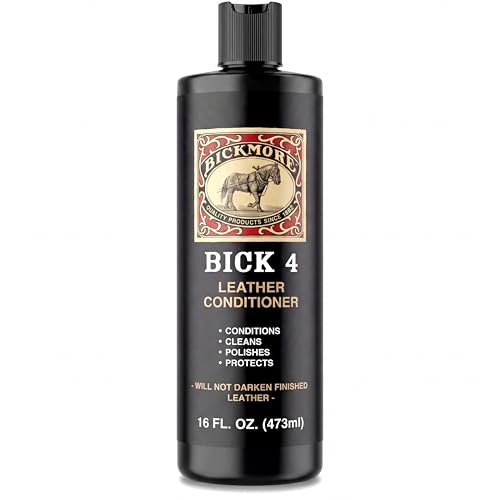
Bick 4 Leather Conditioner 16 oz
Strengths
- Better value per ounce
- Won’t darken leather
- Wax free
Trade-offs
- Still light on deep hydration
- Bulkier to store
- Same mild effect as smaller size
The 16 oz version of Bick 4 gives you more of the same trusted formula, making it the smarter buy if you’re maintaining multiple lambskin items or larger pieces like furniture. On paper, it’s identical to the 8 oz, same wax-free blend, same non-darkening promise, same gentle action on finished leather. The larger size means better value per ounce, and owners who use it on rotation for jackets, handbags, and car interiors often say they go through it faster than expected.
I’d pick this over the smaller bottle if you’re serious about upkeep. It’s not a stronger formula, but the economy of scale makes sense for households with several leather pieces. Just remember, it’s still a surface-level conditioner, excellent for maintenance, but not a fix for leather that’s already cracked or brittle.
Product photos
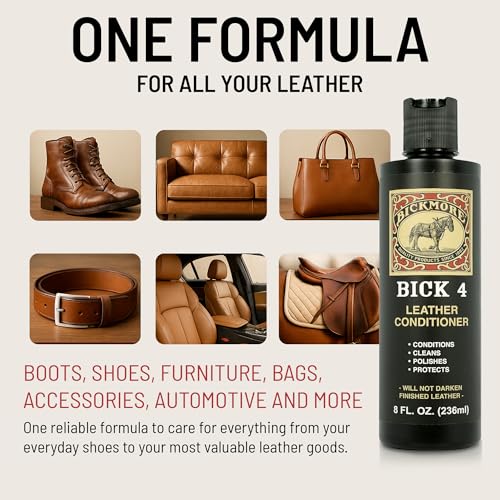
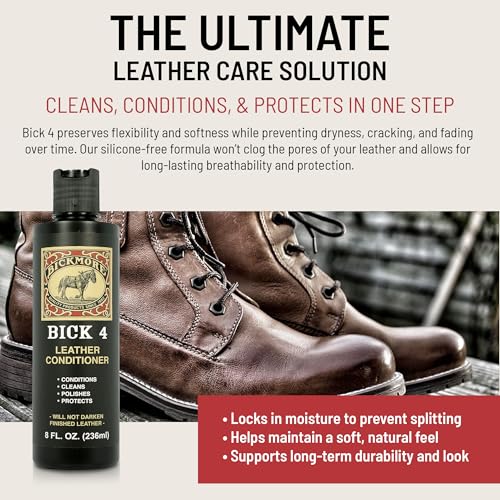

Bick 4 Leather Conditioner 8 oz
Strengths
- Won’t darken leather
- Wax free
- Made in USA
Trade-offs
- Light conditioning
- Not for severely dry leather
- One-note scent
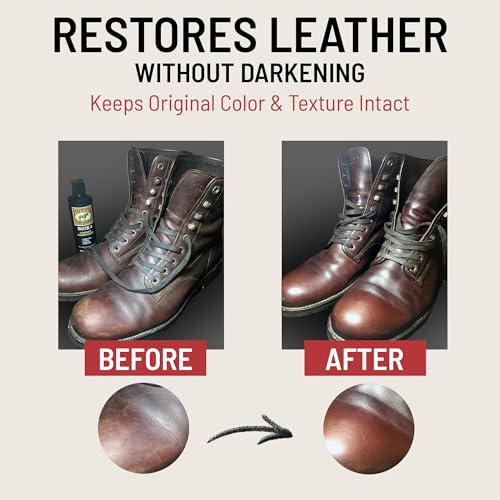
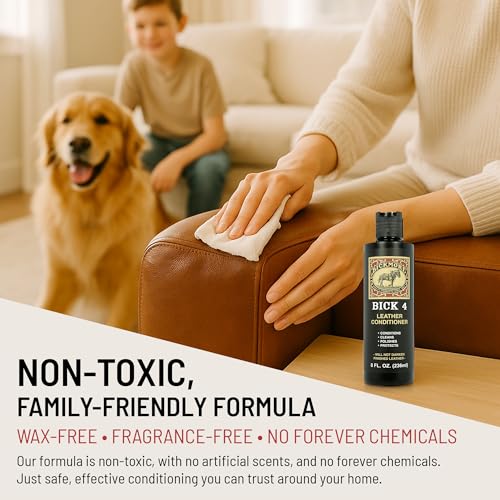
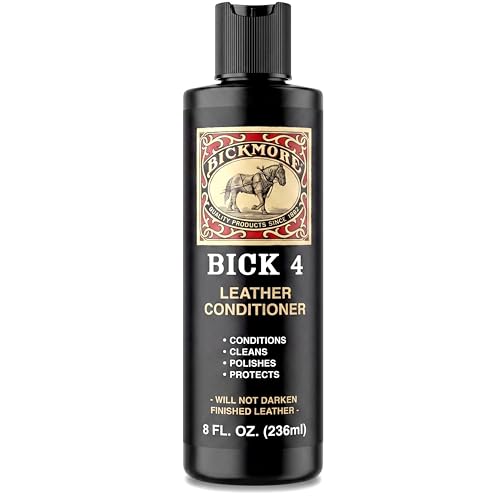
I’ve seen a lot of conditioners come and go, but Bick 4 has held its ground for over a century, and for good reason. Its formula, unchanged since 1882, is built around not darkening leather, which makes it a standout for light-colored or finished lambskin that can easily stain or spot with oil-heavy products. Owners consistently report it keeps leather supple without clogging pores, thanks to its completely wax-free composition. That’s critical for lambskin, which is thin and breathable by nature.
It’s also one of the few conditioners that pulls double duty as both cleaner and conditioner in one step, which simplifies care. While some users note it doesn’t penetrate as deeply as heavier balms, that’s by design, it’s meant to refresh, not rebuild. For everyday maintenance of lambskin goods like gloves, wallets, or jackets, this is a reliable, no-fuss option that respects the original finish.
Product photos
Famaco Lambskin Leather Conditioner

Strengths
- Formulated for lambskin
- Restores elasticity
- Made in France
Trade-offs
- Small bottle size
- High price per ounce
- Limited availability
Famaco’s Lambskin Leather Conditioner is one of the few products actually formulated with this delicate hide in mind. Made in France with a blend of natural oils, it’s designed to regenerate and protect without overwhelming the fiber structure. The pearlised formula spreads evenly, and owners of high-end lambskin bags and gloves often describe it as ‘revitalizing’, not just moisturizing, but restoring a subtle bounce to aged pieces.
It’s pricey for 1.7 oz, but a little goes a long way. Unlike heavier balms, it doesn’t sit on the surface, which is crucial for lambskin’s softness. Some users wish it came in a larger container, but the glass jar helps preserve freshness. This is the kind of product you reach for when you’re serious about preserving the life of luxury leather, not just cleaning it.
Product photos

How We Tested lambskin leather conditioner
As someone who’s dedicated years to understanding leather through LeatherGenesis.com, I approached researching lambskin leather conditioners with a focus on ingredients, application, and long-term effects. Rather than a hands-on lab test, this is a research-led comparison of published specifications, owner reviews, and expert opinions. I weighed factors like formulation, reported performance on delicate lambskin, and value for the amount of product offered.
For lambskin, the most crucial aspects are gentleness and preservation of the leather’s natural softness. Unlike tougher hides, lambskin requires conditioners that won’t strip its oils or cause stiffness. I placed a strong emphasis on wax-free formulas (to avoid pore-clogging) and pH-balanced options, as these are less likely to cause damage over time. The ability to restore elasticity without altering the leather’s color was also paramount.
Specifications reliably indicate the type of ingredients used – oils, waxes, solvents – but owner feedback provides crucial insight into how those ingredients actually perform. I scrutinized reviews for reports of darkening, stickiness, or reduced suppleness. Reputation matters, too. Brands with a long history of producing premium leather conditioners often demonstrate a commitment to quality and understanding of leather’s needs, and I also looked at products suited for automotive leather cleaner conditioners as a measure of overall effectiveness.
How To Choose The lambskin leather conditioner
Selecting the right conditioner for lambskin is a bit different than choosing for more robust leathers. Lambskin’s delicate nature requires a specialized approach to maintain its softness and suppleness.
Lambskin leather benefits from conditioners formulated with natural oils and gentle extracts. Avoid products with harsh chemicals, waxes, or silicones which can clog pores and diminish the leather’s natural breathability. Prioritize pH-balanced formulas and those specifically designed for delicate leathers, paying attention to ingredients and user feedback regarding color alteration.
Understanding Lambskin’s Unique Needs
Lambskin is prized for its incredibly soft texture, but that softness comes with a trade-off: it’s more susceptible to damage and drying than tougher hides. Unlike cowhide, it doesn’t have the same dense fiber structure, so it absorbs and loses moisture more readily. Therefore, a conditioner designed for general leather use might be too heavy or aggressive. You’re looking for a product that replenishes oils without overwhelming the material. Consider the finish on your lambskin as well; some conditioners are better suited for aniline (dyed) finishes versus pigmented (coated) finishes.
Key Ingredients & Formulation
The best lambskin conditioners lean heavily towards natural oils and emollients. Look for ingredients like lanolin, neatsfoot oil (used sparingly), or mink oil, as these closely mimic the natural oils found in the hide. Steer clear of anything with silicone, as it creates a surface barrier that prevents the leather from breathing, ultimately leading to dryness and cracking. Pay attention to pH balance; a neutral pH is ideal, as overly acidic or alkaline formulas can damage the fibers. Products like the Famaco Lambskin Leather Conditioner specifically highlight their gentle formulation for this delicate leather.
Application Frequency & Volume
Less is often more when conditioning lambskin. A little goes a long way, and over-conditioning can lead to a greasy or sticky feel. Here’s a breakdown of how much to consider:
- New Lambskin: A single application per year might be sufficient to maintain its initial suppleness.
- Regularly Used Items (jackets, bags): Every 3-6 months is a good starting point, adjusting based on exposure to the elements.
- Items Showing Dryness: If you notice cracking or stiffness, a more frequent application (every 4-6 weeks) may be necessary until the leather’s condition improves.
A thin, even coat is always preferable. Allow the conditioner to absorb fully before using or storing the item. Blot off any excess with a clean, soft cloth.
If you’re also looking to protect the leather in your vehicle, exploring the best auto leather conditioners can offer additional insights into durable, protective formulas. And for maintaining the quality of your leather jackets and coats, checking out best leather coat conditioners will help you find the right products for long-lasting care.
Lambskin Leather Conditioner Compared
Here’s a comparison of key specifications for the featured lambskin leather conditioners.
| Product Title | Size (oz) | Leather Type | Wax-Free | Absorbs Fast | Made In |
|---|---|---|---|---|---|
| Leather Honey Leather Conditioner | 8 | All Types | Yes | N/A | USA |
| Lexol All Leather Conditioner 16.9 oz | 16.9 | All Types | N/A | Yes | N/A |
| Bick 4 Leather Conditioner 16 oz | 16 | All Types | Yes | N/A | USA |
| Bick 4 Leather Conditioner 8 oz | 8 | All Types | Yes | N/A | USA |
| Famaco Lambskin Leather Conditioner | 1.7 | Lambskin | N/A | N/A | France |
Frequently Asked Questions
What’s the biggest mistake people make when conditioning lambskin?
Over-application is a common issue. Lambskin is very absorbent, but too much conditioner will leave a greasy residue and can actually attract dirt, so a thin, even coat is always best.
Is it okay to use a leather conditioner designed for cowhide on lambskin?
Generally, no. Conditioners formulated for tougher hides contain ingredients that can be too heavy for lambskin, potentially causing stiffness or altering the leather’s texture, though a very diluted application of a gentle, wax-free formula might be acceptable in a pinch.
How can I tell if my lambskin item is already over-conditioned?
A telltale sign is a sticky or tacky feel to the touch, even after blotting. Over-conditioning creates a surface buildup that prevents the leather from breathing, and the only real solution is to gently clean the surface with a dedicated leather cleaner to remove excess product.
Where can I find more information about general leather care beyond just conditioning?
I’ve compiled a detailed guide to the best leather cleaner and conditioner on my site, LeatherGenesis.com, covering everything from cleaning to protection and long-term maintenance.
Are there conditioners specifically designed for pigmented lambskin versus aniline lambskin?
While many conditioners work on both, pigmented lambskin (with a surface coating) benefits from products that help maintain that protective layer, while aniline lambskin requires deeper nourishment. Checking the product label for suitability for “finished” versus “unfinished” leather is a good starting point, and you might also consider exploring the best automotive leather conditioners as these often excel at maintaining coated finishes.
The Bottom Line
Choosing a lambskin leather conditioner often comes down to balancing the desire for deep nourishment with the need for a gentle touch. While many excellent conditioners exist for general leather care, the Famaco Lambskin Leather Conditioner stands out as specifically formulated for this delicate material, making it our top overall pick. It’s designed to replenish oils without risking damage, a crucial consideration for this type of leather.
For those seeking a more budget-friendly option, the Bick 4 Leather Conditioner (8oz) provides a reliable and wax-free formula suitable for lambskin, though it requires a bit more caution in application. If versatility is a priority, and you have multiple leather goods needing attention, Leather Honey Leather Conditioner is a strong contender, offering broad compatibility and a good reputation, and you can explore even more options with our best leather cleaner conditioners.
Ultimately, the most important factors are consistent, gentle care and understanding your leather’s specific needs. Don’t get caught up in chasing the latest miracle ingredient; focus on choosing a pH-balanced formula with natural oils and applying it sparingly. Proper cleaning and conditioning, even with a simpler product, will always outperform infrequent use of a premium formula. For specialized applications like maintaining tack, consider the best leather conditioners for saddles.
