
What Is Pigmented Leather? A Guide to the Common Finish
This post contains affiliate links. As an Amazon Associate, we earn from qualifying purchases.
Pigmented leather is crust leather, the base hide after tanning, that is coated with a layer of colored pigment and a protective topcoat, creating an opaque, uniform surface. This process conceals natural marks, making the leather stain-resistant, durable, and easy to clean, but it also masks the hide’s inherent character and typically results in a stiffer, cooler-feeling material.
That definition comes straight from the industry’s own classification systems. The Leather Research Laboratory classification guide calls it “leather whose surface has a finish containing pigment particles that render the finish completely opaque.” Understanding that isn’t just about picking a color. It’s about choosing the trade-off between a bulletproof, family-friendly surface and the natural, evolving beauty of a hide.
This breakdown cuts past the marketing. You’ll see how that pigment layer is applied, why it makes pigmented leather the workhorse of sofas and car seats, and what you’re giving up in exchange for that rugged practicality. By the end, you’ll be able to read a spec sheet and know exactly what “Type P – Protected” means for your next purchase.
Key Takeaways
- Pigmented leather’s defining feature is an opaque topcoat that completely hides the natural hide, offering superior stain resistance and durability.
- This finish is the most common choice for furniture and automotive interiors because it withstands heavy use and is easy to maintain.
- The protective layer makes the leather less breathable, often feeling cooler and stiffer than unfinished leathers like aniline.
- Most pigmented leather is made from top-grain or corrected-grain leather, where the surface has been buffed to remove major imperfections before the pigment is applied.
- While highly durable, the finish can crack or peel with extreme age or neglect, and repairs, while possible, involve matching the opaque pigment layer.
The Pigmented Layer: How It’s Made
The journey from raw hide to a vibrant, uniform piece of pigmented leather involves a specific sequence aimed at consistency. It starts with the leather finishing process on a piece of crust leather, the tanned hide with most of the moisture removed. If the hide has significant scars or insect bites, it’s often lightly sanded or buffed, placing it in the corrected grain leather category. This creates a blank, even canvas.
Next, a base coat of opaque, colored pigment is applied, usually via spray or roller. This isn’t a light stain; it’s a solid layer designed to be perfectly uniform. Think of it like using a high-quality exterior paint on wood, it covers the grain and any knots completely. According to the industry’s own technical documents, this results in “Type P – Protected” leather, where the surface is more difficult to scratch and requires low preventative maintenance.
A properly applied pigmented finish must pass specific durability tests, including withstanding 50,000 flex cycles without finish cracking and showing a grey-scale rating of at least 3.5 after 500 dry-rub cycles, as outlined in the Joint Industries Standards for upholstery leather.
Finally, a clear protective topcoat is added. This is the final shield, like a varnish, that locks in the color and adds resistance to spills and scuffs. The whole system, corrected base, opaque pigment, clear topcoat, is why you get a predictable, durable product. It’s a world away from the natural leather patina that develops on aniline finishes.
Pigmented vs. Aniline & Semi-Aniline: A Clear Trade-Off
The easiest way to understand pigmented leather is to see what it’s not. When you place it beside aniline leather or semi-aniline leather, the trade-off becomes stark.
| Finish Type | Surface Appearance | Feel & Breathability | Durability & Care | Best For |
|---|---|---|---|---|
| Pigmented (Protected) | Uniform, opaque. Hides all natural grain and marks. | Cooler, stiffer. Less breathable due to topcoat. | High stain resistance. Easy to clean with damp cloth. Very durable. | High-traffic family homes, automotive interiors, commercial settings. |
| Semi-Aniline | Natural grain is visible but muted. Minor flaws are subtly concealed. | Softer, more supple. Moderately breathable. | Good stain resistance with a light protective layer. Requires specific conditioners. | Those wanting a balance of natural beauty and practicality in living rooms or studies. |
| Aniline | Full, natural grain and markings are fully visible. Rich, transparent color. | Softest, most breathable. Develops a unique patina over time. | Low stain resistance. Requires careful, regular conditioning to prevent drying. | Heirloom pieces, collectors, and settings where natural character is prized over uniformity. |
This difference between aniline and pigmented leather is the core choice. Do you want a material that tells the story of the animal and ages with you, or one that provides a consistent, worry-free backdrop for daily life? For most households with kids or pets, the calculus leans heavily toward pigmented. That’s why around 90% of leather sofas are made from it. The durability of pigmented leather sofas isn’t a marketing claim; it’s a function of that opaque, protective armor.
Where this goes sideways: Assuming a pigmented leather sofa will feel as soft and warm as an aniline one. The topcoat that blocks stains also blocks heat transfer. On a cold day, a pigmented leather seat will feel noticeably cooler to the touch than a natural leather one.
Common Uses: Where You’ll Find Pigmented Leather
Pigmented leather’s balance of cost, durability, and design flexibility makes it the default for many applications. Its most visible role is in pigmented leather sofas and sectionals. Manufacturers love it because they can produce vast rolls with perfectly matching colors, making it ideal for mass-produced furniture. You get a cohesive look without the price tag of a full-aniline suite.
The automotive industry relies on it heavily for car seats, steering wheels, and door panels. Here, the methods for coloring leather ensure colorfastness against constant UV exposure, and the topcoat resists blue jean dye transfer and spilled coffee. It’s the definition of a workhorse material.
Beyond furniture and cars, you’ll find it in luggage, work boots, and fashion accessories where a uniform color and scuff resistance are priorities. However, for items meant to develop character, like a wallet or a jacket that molds to your body, the lack of breathability and stiffness of a heavy pigmented finish can be a drawback.
Characteristics and Feel: The Physical Truth
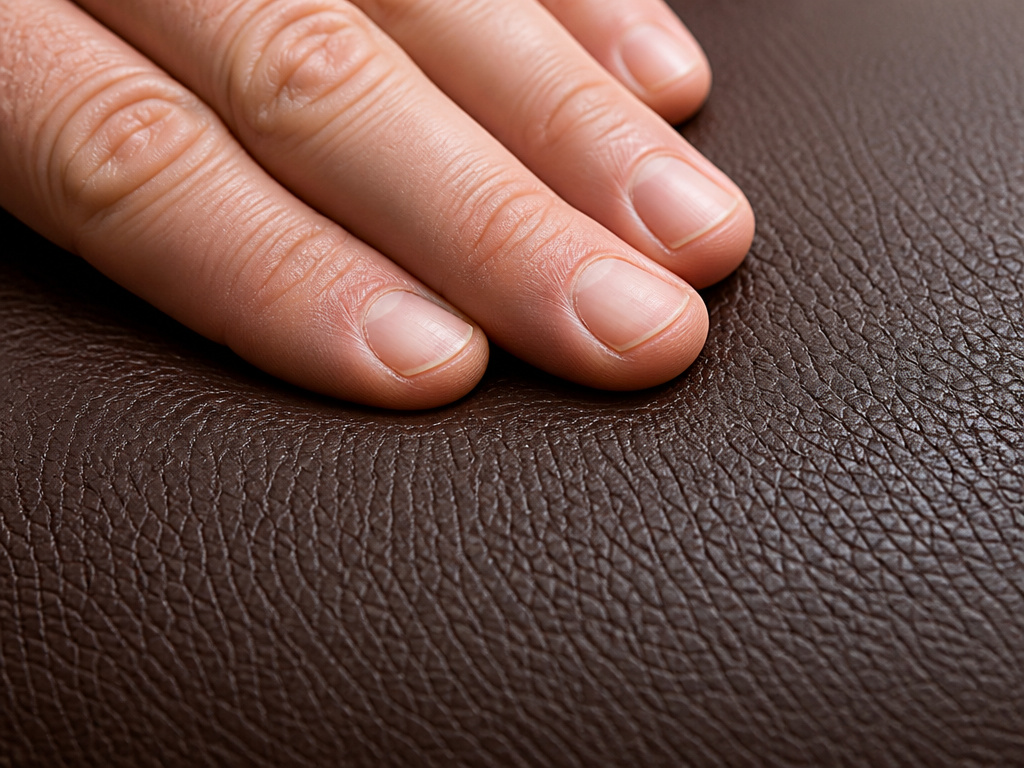 Let’s talk about what pigmented leather actually feels like, because the marketing gloss often skips this. That protective topcoat doesn’t just sit on top; it seals the surface. This means your body heat doesn’t readily transfer into the material, and moisture from your skin can’t breathe out. The result? A pigmented leather sofa often feels cool and slightly firm, especially when new.
On really hot days, the leather tends to transpire, on cold days it can appear cool. The applied colour top layer… prevents body heat or moisture from penetrating.
Over time, with regular use, the finish may soften slightly, but it will never achieve the buttery drape of an aniline leather. This stiffness is a direct trade for its ruggedness. Visually, the surface is predictably uniform. Since the grain is often embossed artificially after the base hide is corrected, you might see a perfectly repeating pattern, a dead giveaway that you’re looking at a pigmented finish on a top-grain leather base.
Common mistake: Trying to force a soft patina on pigmented leather with heavy conditioners. The oils can’t penetrate the topcoat. At best, they sit on top and attract dirt; at worst, they can soften the topcoat’s adhesion over many years. For caring for leather sofas with a pigmented finish, a damp microfiber cloth is usually all you need.
Care and Maintenance: Keeping the Shield Intact
 Caring for pigmented leather is straightforward, precisely because of its sealed nature. Forget complicated rituals. The industry’s own cleaning recommendation for Type P leather is a professionally formulated, pH-balanced cleaner tested in an inconspicuous area. Daily maintenance involves little more than dusting or a quick vacuum to lift grit that could act like sandpaper.
For spills, act quickly with a barely damp, soft white cloth. Blot, don’t rub, moving seam to seam. The topcoat should prevent most liquids from soaking in, giving you a large window to clean up. Avoid harsh chemicals, abrasive cleaners, or excessive moisture.
The part nobody mentions: While the finish is tough, direct, prolonged sunlight is its true enemy. UV radiation can eventually cause the pigment to fade and the topcoat to become brittle, leading to micro-cracks. Rotate cushions if you can.
For conditioning, the rule is less is more. A quality leather conditioner designed for finished leathers, applied very sparingly once a year, can help maintain flexibility. This is where protecting leather sofas is simple: keep them clean, keep them out of direct sun, and don’t over-complicate their care.
Related Leather Types and Quality
Pigmented leather isn’t a specific grade of hide; it’s a finish applied to different grades. It’s most commonly paired with top-grain leather. This is leather that has been sanded or buffed to remove the outermost layer and its imperfections, creating that smooth canvas ideal for the pigment. It’s durable, consistent, and represents a sweet spot of quality and value.
You might also find pigmented finishes on full grain leather, though this is less common as it covers the hide’s prized natural marks. More concerning is its use on split leather, the fibrous lower layer of the hide. When split leather is embossed and heavily pigmented, it can mimic top-grain but lacks the same strength and longevity. This is why testing leather quality by feeling the backing and checking for uniformity is crucial.
It sits in stark contrast to bonded leather, which is a composite of leather fibers and polyurethane. While bonded leather also receives a heavy pigmented coating, it lacks the structural integrity of genuine leather and is not repairable in the same way. A deep scratch on pigmented top-grain leather can often be touched up with a matching pigment; on bonded leather, it’s likely to peel.
Frequently Asked Questions
Is pigmented leather real leather?
Yes, pigmented leather starts as real, tanned animal hide (crust leather). The pigmentation and topcoat are additional finishing steps that coat the surface, but the base material is genuine leather.
Does pigmented leather peel?
It can, but it’s not common with proper care. Peeling typically occurs due to a failure in the finish adhesion, often accelerated by extreme heat, harsh chemicals, or physical damage to the topcoat. High-quality pigmented leather on a good base (like top-grain) is very resistant to peeling under normal use.
Can pigmented leather be repaired?
Yes, minor scuffs and scratches are often the most repairable aspects of pigmented leather. Because the color is in an opaque top layer, a technician can fill a scratch, sand it level, and apply new pigment and topcoat to blend it in, often with no visible trace.
How long does pigmented leather last?
With basic care, a high-quality pigmented leather sofa or car interior can easily last 10-15 years or more. Its durability against stains, scuffs, and fading makes it one of the longest-lasting upholstery options for active households. The failure point is usually gradual fading or cushion wear, not the leather surface itself.
Is pigmented leather good for pets?
It is one of the best leather choices for pet owners. The protective topcoat resists claw scratches better than unfinished leathers and prevents accidents from being immediately absorbed. Hair and dirt also tend to sit on the surface, making it easy to vacuum off.
Before You Go
Choosing pigmented leather means prioritizing resilience and ease over natural narrative. You’re buying a high-performance surface, a decision that makes perfect sense for a daily-driver sofa, a family car, or any item that needs to look good while taking a beating. It’s the finish that asks very little of you in return.
Just remember what that entails. That cool, uniform surface is a deliberate construction. It won’t develop a personal patina on leather like an aniline piece will, and it won’t ever feel as supple. But for roughly nine out of ten households, that’s a trade worth making. Your job is simply to keep it clean, keep it shaded, and enjoy the fact that your leather can handle the life you actually live.
