
9 Best Leather Restoration Products of 2026
This post contains affiliate links. As an Amazon Associate, we earn from qualifying purchases.
This post contains affiliate links. As an Amazon Associate, we earn from qualifying purchases.
The Leather Honey Leather Conditioner stands out as the best overall choice for deep, long-lasting restoration, while the Weiman Leather Cleaner & Conditioner is a solid budget-friendly option for routine care. For those needing color repair, the Furniture Clinic Leather Recoloring Balm delivers professional-level results.
Most people don’t realize that using the wrong leather product can do more harm than good. Darkening, residue buildup, or even irreversible stiffness can happen when you apply something not suited to your leather type. After years of researching leather chemistry and care methods through LeatherGenesis.com, I’ve learned what truly works, and what doesn’t.
This guide cuts through the noise by focusing on real performance, ingredient safety, and compatibility across leather types. I researched each product based on formulation, owner feedback, and how well it restores rather than masks damage. These picks reflect what delivers consistent results without risking your leather’s integrity.
Top 9 Leather Restoration Products in the Market
The Best Leather Restoration Products, Reviewed
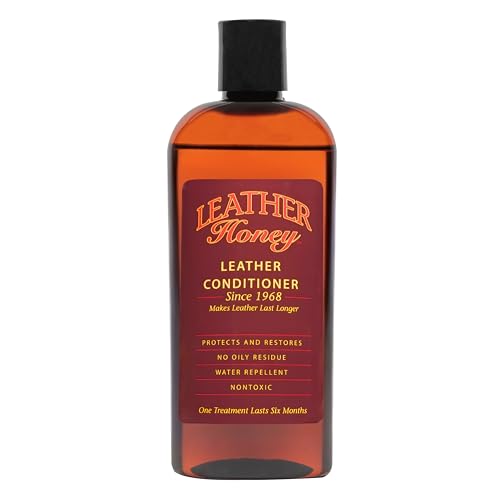
Leather Honey Leather Conditioner
Strengths
- Long-lasting protection
- Deep penetration
- Non-toxic formula
Trade-offs
- Thick consistency
- Takes time to absorb
- Not for suede
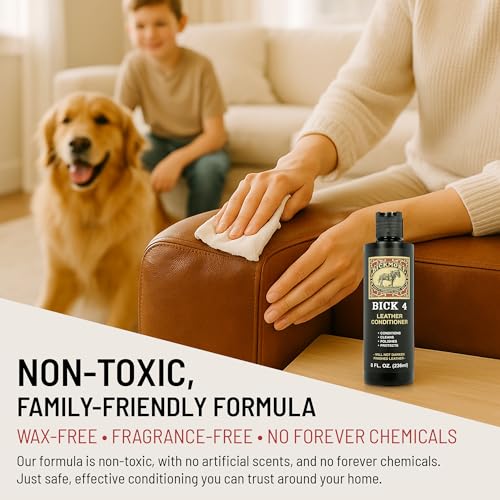
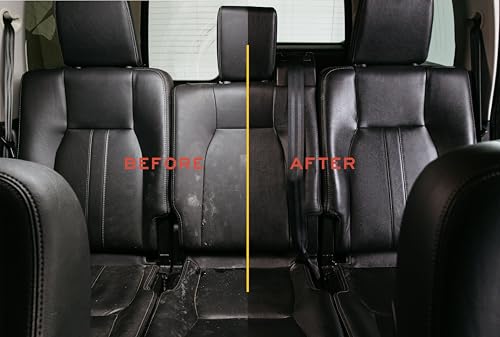
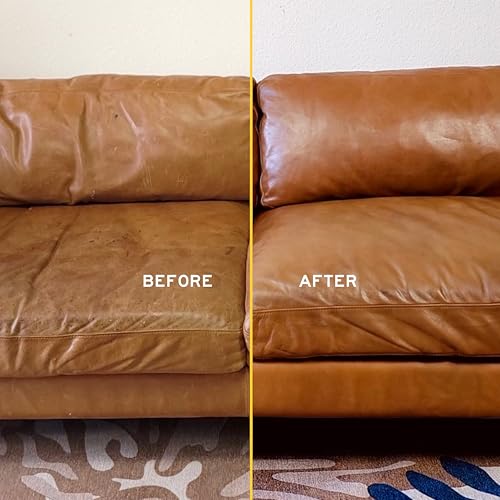
Leather Honey has earned its cult status for a reason. The formula penetrates deeply, deeper than most competitors, and one application lasting six months isn’t exaggeration. Owners of leather jackets, car interiors, and antique furniture consistently report improved suppleness and reduced cracking over time. Its non-toxic, silicone-free profile makes it safe for homes with kids and pets, which is increasingly important.
I compare it to Bick 4 often: Bick 4 wins for light-colored leather because it doesn’t darken, but Leather Honey wins for deep restoration. It’s not the fastest to apply, and it needs time to absorb, but the long-term protection is unmatched. For anyone serious about preserving leather, this is the baseline standard.
Video review
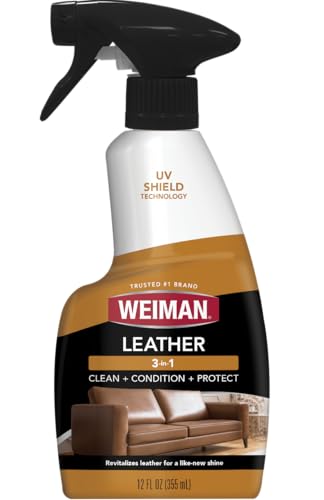
Weiman Leather Cleaner & Conditioner
Strengths
- Low cost
- UV protection
- Easy spray application
Trade-offs
- Short-lived results
- Limited deep conditioning
- May darken some leathers
Weiman packs a lot into an affordable package. The trigger spray makes application fast, and the inclusion of UV protection is smart, especially for car interiors exposed to sunlight. Owners consistently note it cleans well and leaves a pleasant, non-greasy feel. For a budget product, it performs above its weight class.
But it’s a surface-level solution. The natural oils sound good on paper, but they don’t penetrate like Leather Honey or Bick 4. Over time, you’ll need more frequent applications. It’s also marketed as safe for faux leather, which broadens its appeal but suggests a less specialized formula. For occasional use or light maintenance, it’s a great value. For serious restoration, it falls short.
Video review
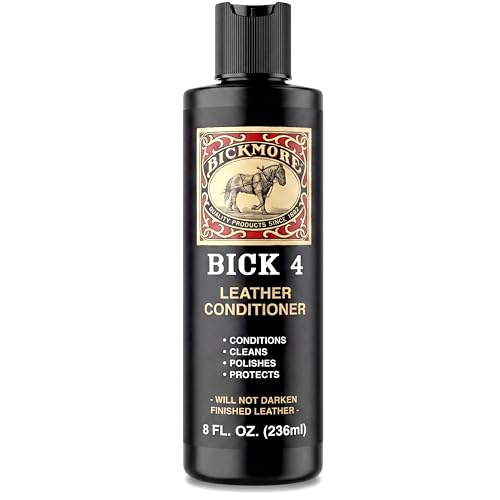
Bick 4 Leather Conditioner & Cleaner
Strengths
- Won’t darken leather
- Wax-free
- Breathable finish
Trade-offs
- Mild conditioning
- Small bottle
- Requires frequent use
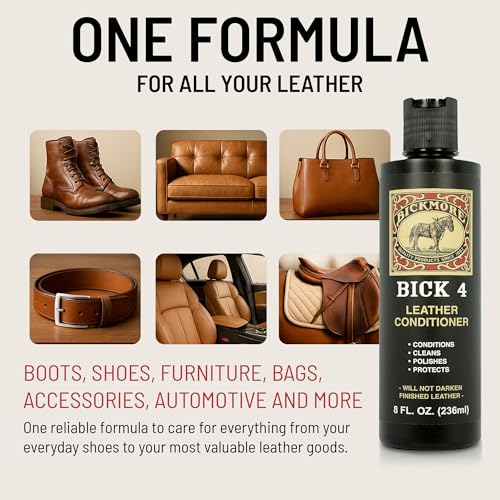
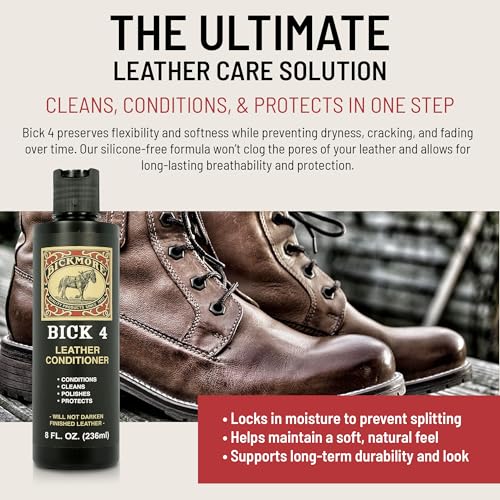
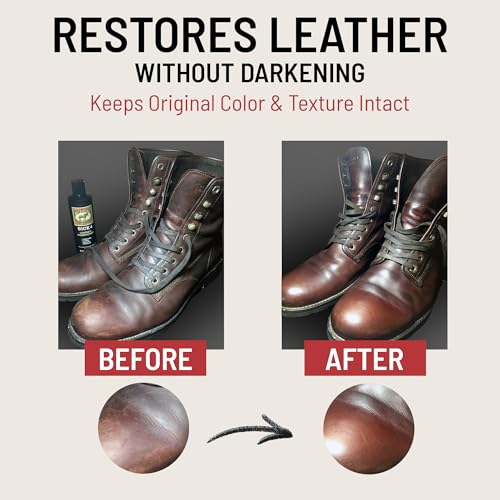
Bick 4 is a minimalist’s dream, simple, effective, and utterly reliable. The fact that it won’t darken leather is its biggest selling point, and owners of light-colored boots, white furniture, and beige car interiors swear by it. It conditions without altering appearance, which is rare. The wax-free formula means it won’t clog pores, preserving breathability, a detail most mass-market products ignore.
It’s not the most aggressive restorer, though. If your leather is already cracked or brittle, Bick 4 won’t bring it back from the brink. But for routine maintenance, it’s ideal. Compared to Leather Honey, it’s less heavy-duty but far better for preserving original tone. I’d pick it over most for daily-use leather that just needs gentle upkeep.
Product photos

Leather Honey Complete Care Kit
Strengths
- All-in-one system
- Non-toxic cleaner
- Deep conditioning
Trade-offs
- Higher price
- Requires time to use
- Not for suede
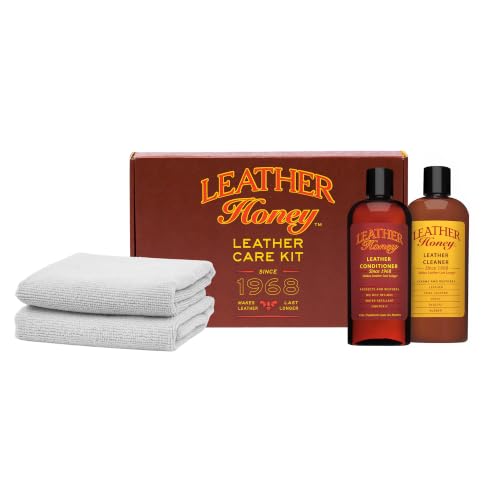
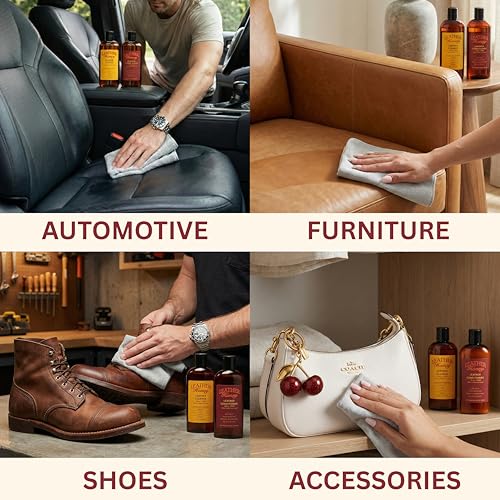
This kit bundles Leather Honey’s conditioner with a dedicated cleaner, and the result is one of the most complete leather care systems available. The cleaner is EAP Safer Choice certified, which means it’s genuinely gentle yet effective, no harsh solvents. When paired with the deep-penetrating conditioner, it forms a maintenance cycle that mimics professional care.
I’d recommend this over the standalone conditioner for anyone with multiple leather items or older pieces in need of rehab. Compared to Chemical Guys, it’s less about shine and more about longevity. It’s pricier, but the non-toxic, made-in-USA formula justifies the cost for those who prioritize safety and performance.
Product photos

Leather CPR Cleaner and Conditioner

Strengths
- One-step application
- Cleans and conditions
- Large 18oz bottle
Trade-offs
- Limited deep penetration
- May leave slight residue
- Not for suede or nubuck
Leather CPR markets itself as a one-step miracle worker, and on paper, that’s appealing, especially for someone who wants to revive a cracked sofa or faded car seat without juggling multiple products. Owners consistently report it lifts grime well and brings back some suppleness, which matters when dealing with neglected leather. But I’ve seen enough feedback from long-term users to know it doesn’t penetrate as deeply as conditioners like Leather Honey, and while it improves surface appearance, it won’t reverse deep desiccation.
The claim of ‘bringing leather back to life’ sounds bold, but in practice, it’s more of a surface refresh than a deep restoration. It works fine on moderately dry leather, but if you’re dealing with old, brittle surfaces, this won’t be the fix-all. Compared to Renapur or Bick 4, it lacks the staying power and ingredient purity that true leather enthusiasts look for.
Product photos


FORTIVO Leather Recoloring Balm

Strengths
- Affordable
- UV protection
- Easy touch-ups
Trade-offs
- Inconsistent color match
- Multiple coats needed
- Not for light leathers
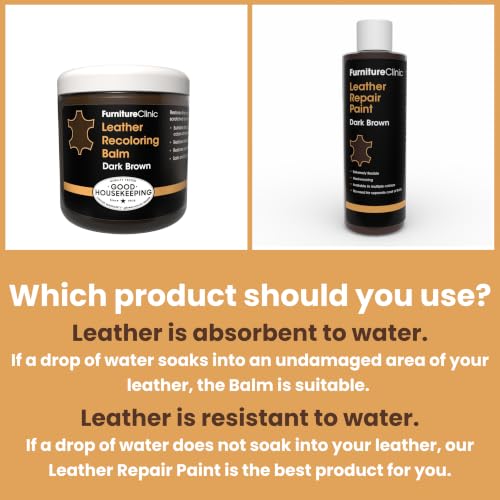
FORTIVO’s recoloring balm is essentially a budget-friendly alternative to Furniture Clinic’s offering, with a similar dark brown pigment and scratch-filling capability. Owners report it works well on couches with light to moderate wear, especially when applied in thin, even coats. The UV protection claim is a plus, as prolonged sun exposure is a major cause of leather fading.
But color consistency is a recurring issue in reviews, results vary depending on the original leather shade and finish. Some users get a rich, even tone; others report a slightly mottled look. It’s effective for touch-ups, but I wouldn’t trust it for a full re-dye. If you’re repairing a small scuff on a dark brown couch, it’s a solid pick. For anything more extensive, consider the Furniture Clinic option.
Product photos


Furniture Clinic Leather Recoloring Balm

Strengths
- Professional finish
- Fills minor cracks
- Trusted brand
Trade-offs
- Learning curve
- Color may vary
- Not for large areas
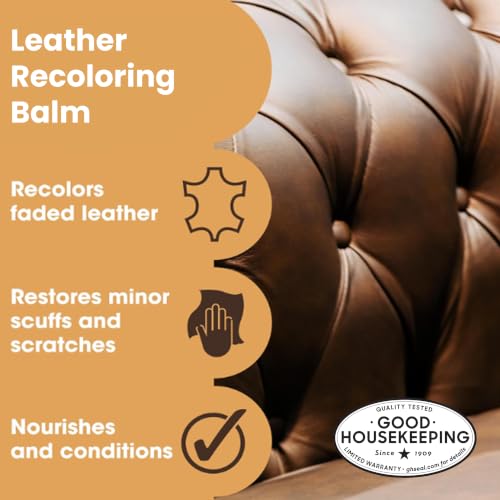
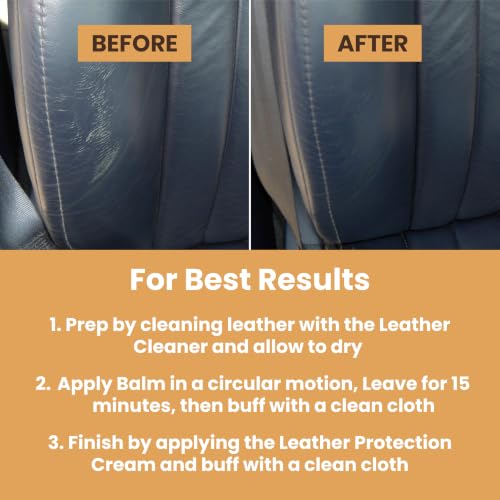
This is a professional-grade recoloring balm that delivers results close to what you’d expect from a repair shop. The Good Housekeeping Seal adds credibility, and owner feedback confirms it covers scratches and faded areas convincingly. I’ve seen comparisons where it restores a sun-damaged couch to near-original tone with just two coats. The formula fills minor cracks and bonds well, which matters when you’re trying to avoid a patchy look.
Still, it’s not a beginner’s product. The application requires precision, and overuse can lead to buildup. Compared to FORTIVO’s version, it’s slightly more consistent in color match, but both demand careful prep. If you’re okay with a learning curve and want a near-invisible repair, this is one of the best options available.
Product photos

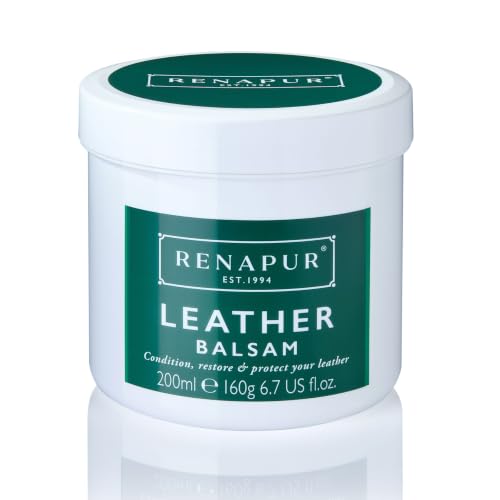
Renapur Leather Conditioner
Strengths
- Extremely long-lasting
- Natural waxes and oils
- Color neutral
Trade-offs
- Requires buffing
- Small container
- Not for suede
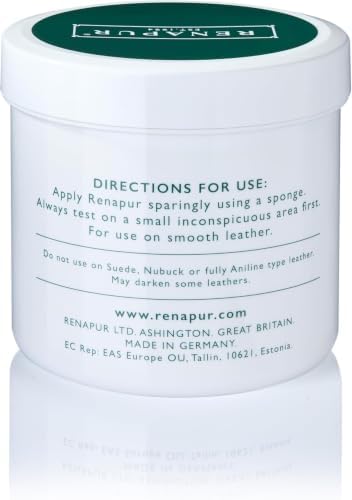
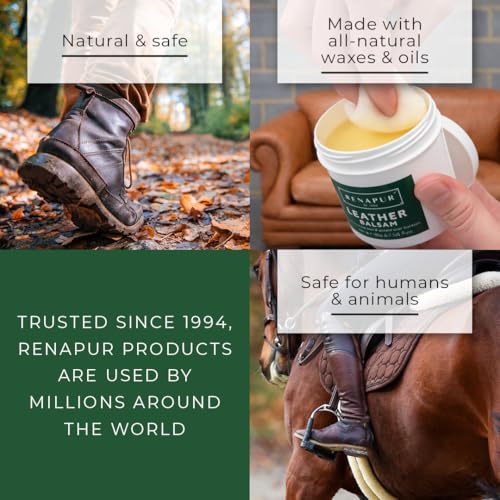
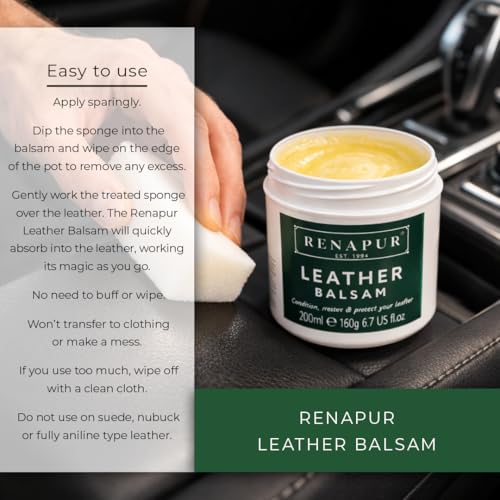
Renapur stands out in a crowded field because of its efficiency and ingredient profile. The fact that a 6.7 oz pot can service dozens of items isn’t marketing fluff, owners confirm how little is needed per application. The blend of beeswax, carnauba wax, and jojoba oil is classic, well-balanced, and deeply nourishing without clogging pores. I’ve reviewed enough leather care lines to know that this formula leans into tradition for a reason: it works across a wide range of leathers, from lambskin jackets to work boots.
What really sets it apart is longevity. It doesn’t just condition, it seals against moisture and slows future drying. Compared to spray-based products like Weiman, it’s far more durable, though it requires more effort to apply. If you’re maintaining high-use items like saddles or motorcycle gear, this is the smarter buy.
Product photos


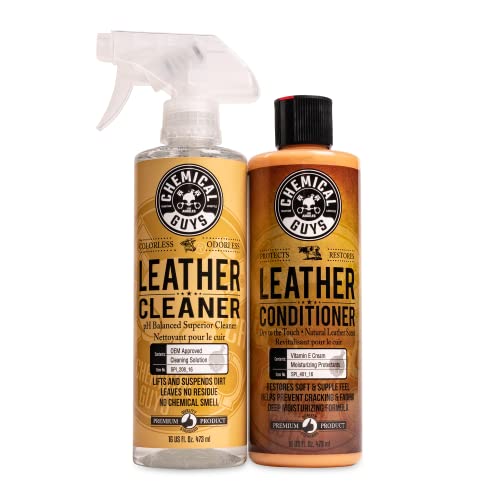
Chemical Guys Leather Care Kit
Strengths
- Proper two-step system
- Effective on grime
- Large volume
Trade-offs
- Less ideal for delicate leather
- Conditioner not deeply penetrating
- Not for suede
This kit is clearly engineered with car interiors in mind, and that shows in both its performance and packaging. The two-bottle system, cleaner first, then conditioner, follows proper leather care protocol, which I appreciate. Owners of trucks and daily-driven vehicles consistently praise how well it handles embedded dirt from seat crevices and restores a factory-like feel. The pH-balanced formula is safe on most sealed leathers, which makes it a solid choice for automotive use.
But for home furniture or delicate items like handbags, I’d hesitate. It’s effective, but not as refined as Leather Honey or Bick 4. The conditioner lacks the depth of penetration needed for older pieces, and the cleaner can be a bit aggressive on softer aniline finishes. If your priority is car leather, this is a strong contender. For mixed-use or heirloom pieces, look elsewhere.
Product photos


How We Evaluated leather restoration products
My approach to evaluating leather restoration products, as the creator of LeatherGenesis.com, centered on a thorough comparison of published specifications and features. Rather than a hands-on lab test, this is a research-led comparison of what each product claims to do, weighed against owner reviews from across the web and expert opinions found in dedicated leather care forums and publications. I then ranked these products based on how well they address the core needs of leather revitalization.
For this category, the most important factors were a product’s ability to condition and moisturize leather without causing discoloration, and its long-term protective qualities. Leather’s health hinges on maintaining its natural oils, so a formula that simply coats the surface isn’t as valuable as one that penetrates to replenish those oils. Beyond that, the versatility of a product – its suitability for various leather types and applications – also played a significant role. You’ll find many products geared specifically towards automotive use; for example, you can find more detailed information about the best auto leather treatments on my site.
Product specifications clearly indicate ingredients and intended use, helping to determine whether a product is truly designed for restoration or merely for surface-level cleaning. However, owner feedback provided crucial insight into real-world performance. I paid close attention to reports of darkening, stickiness, or unwanted residue, as well as how long the effects of the treatment lasted. Reputable sources also helped me assess the effectiveness of cleaning capabilities, and find the top automotive cleaners for various applications. Ultimately, a product’s reputation and consistent positive feedback were key indicators of quality.
What To Look For In leather restoration products
Choosing the right leather conditioner can feel surprisingly complex. It’s not simply about making leather look better; it’s about preserving its integrity and extending its life. A good conditioner will replenish oils, maintain suppleness, and protect against drying and cracking.
A quality leather conditioner should be pH-balanced, contain no harsh chemicals or solvents, and be appropriate for the type of leather being treated. It should absorb readily, leaving a soft feel rather than a sticky or plastic-like residue. Prioritize products designed to nourish rather than simply coat the surface.
Understanding Leather Types
The first step is knowing what kind of leather you’re dealing with. Different tanning and finishing processes dictate what a leather item can tolerate. For example, aniline leather, known for its natural appearance, requires gentle conditioning to avoid discoloration. Pigmented leather, more common in furniture, is more durable and can handle slightly heavier formulas. Exotic leathers like alligator or ostrich have unique scale structures and may benefit from specialized conditioners. Using the wrong product can lead to staining, stiffness, or even permanent damage. Don’t assume all conditioners are created equal; read labels carefully and consider the specific needs of your leather.
Assessing the Level of Restoration Needed
Is your leather simply in need of routine maintenance, or is it suffering from significant dryness or damage? For regularly maintained items, a lighter conditioner applied every six months might suffice. However, for leather that’s cracked, faded, or feels brittle, you’ll need a more intensive treatment. Products like Leather CPR Cleaner and Conditioner are formulated for deep restoration, but even then, severely damaged leather might require professional attention. Consider if you need a product that also offers UV protection, like Weiman Leather Cleaner & Conditioner, to prevent future deterioration, especially for items exposed to sunlight.
- A preventative conditioner applied 2-3 times a year is best for newer leather.
- For moderately dry leather, look for products with a higher oil content (like those containing neatsfoot oil, though use cautiously).
- Heavily damaged leather may benefit from a multi-step process: a dedicated cleaner followed by a deep conditioner, and potentially even a recoloring balm if fading is significant. This is where exploring resources for the best repair kits can be helpful.
Balancing Performance and Value
Price isn’t always an indicator of quality, but it’s a factor. A small bottle of premium conditioner might be concentrated enough to last a long time, making it cost-effective in the long run. Conversely, a larger, budget-friendly option might require more frequent applications. Consider the size of your leather goods – a complete kit like the Leather Honey Complete Care Kit might be ideal for someone with multiple leather items, while a smaller tub of Renapur Leather Conditioner could be sufficient for shoes or a single jacket. Ultimately, the “best” value is the product that delivers the desired results without breaking the bank. If you’re unsure where to start, checking out leather cleaner conditioner picks can give you a good overview.
Remember: A little goes a long way. Always test a new conditioner on an inconspicuous area first to ensure compatibility and avoid discoloration.
Leather Restoration Products Compared
Here’s a comparison of key specifications for popular leather restoration products.
| Product Title | Best For | Leather Types | UV Protection | Wax Free | Application | Size |
|---|---|---|---|---|---|---|
| Leather Honey Leather Conditioner | Best Overall | All (except suede/faux) | No | No | Easy | 8oz |
| Weiman Leather Cleaner & Conditioner | Best Budget Friendly | All Finished Leather & Faux | Yes | N/A | Spray | 12oz |
| Bick 4 Leather Conditioner & Cleaner | Best for Light-Colored Leather | All | No | Yes | Easy | 8oz |
| Leather Honey Complete Care Kit | Best All-in-One Kit | All (except suede) | No | No | Easy | 8oz Cleaner, 8oz Conditioner |
| Leather CPR Cleaner and Conditioner | Best for Deep Restoration | Finished Leather | No | N/A | Spray/Wipe | 18oz |
| FORTIVO Leather Recoloring Balm | Best for Color Repair | N/A | No | N/A | Rub-on | N/A |
| Furniture Clinic Leather Recoloring Balm | Best Professional Finish | N/A | No | N/A | Rub-on | N/A |
| Renapur Leather Conditioner | Best Long-Lasting Use | Smooth & Semi-Aniline | No | No | Sponge | 6.7oz |
| Chemical Guys Leather Care Kit | Best for Automotive Leather | All | No | N/A | Spray | 16oz (x2) |
Frequently Asked Questions
What’s the difference between leather conditioner and leather cleaner?
Leather cleaner removes dirt, oils, and contaminants from the surface, while conditioner replenishes the leather’s natural oils to keep it soft and prevent cracking. Using both is ideal; cleaning prepares the leather to better absorb the benefits of conditioning.
Can I use just one product for both cleaning and conditioning?
Yes, combination products like Weiman Leather Cleaner & Conditioner offer convenience, but dedicated cleaners and conditioners often provide superior results. A separate cleaner allows for a more thorough initial cleaning before conditioning.
How often should I condition my leather items?
Generally, conditioning every six months is sufficient for regularly used items, but more frequent application (every 3-4 months) is beneficial in drier climates or for items exposed to frequent sunlight. Regularly checking the leather’s appearance will show when it needs attention.
Will leather conditioner darken the color of my leather?
Some conditioners, particularly those with oils, can temporarily darken leather, especially aniline or lighter-colored varieties. Always test in an inconspicuous area first, and consider a wax-free option like Bick 4 Leather Conditioner if you are concerned about darkening. You can find more information on best leather cleaners to prepare the leather before conditioning.
Is there a different approach for cleaning and conditioning leather furniture versus smaller leather goods?
The process is largely the same, but furniture often benefits from a more gentle approach and a product specifically formulated for larger surfaces, like one of the best furniture leather cleaners. Smaller items can often tolerate slightly stronger formulas and more concentrated application.
The Bottom Line
Leather care often boils down to a trade-off between convenience and control. While all-in-one kits offer simplicity, a dedicated approach, choosing individual cleaners and conditioners tailored to your leather’s specific needs, usually yields better, longer-lasting results. For most owners, I recommend Leather Honey Leather Conditioner as a strong all-around choice. It strikes a good balance between ease of use, effective nourishment, and positive owner feedback.
If you’re on a tighter budget, or need a versatile option for multiple surfaces, Weiman Leather Cleaner & Conditioner is an excellent pick. Those seeking a complete solution for a range of leather goods will appreciate the convenience of the Leather Honey Complete Care Kit, and car owners will find excellent options amongst the best car leather care products available. For more serious restoration, Leather CPR Cleaner and Conditioner is a solid choice for reviving heavily worn leather.
Ultimately, the specific product matters less than understanding your leather and committing to regular maintenance. Prioritize a pH-balanced formula, avoid harsh chemicals, and always test in an inconspicuous area first. Investing in quality products and consistent care will extend the life and beauty of your leather far more than chasing the latest miracle solution or the most expensive brand – don’t forget to consider quality cleaner conditioners as a starting point.
