
6 Best Natural Leather Conditioners of 2026
This post contains affiliate links. As an Amazon Associate, we earn from qualifying purchases.
This post contains affiliate links. As an Amazon Associate, we earn from qualifying purchases.
The best natural leather conditioner is Leather Honey, which consistently delivers deep nourishment across most leather types without darkening. For a budget-friendly option that still performs well, SALTY FISH is a solid pick. If you’re working with light-colored leathers and want zero darkening, Bick 4 is the safest bet.
Choosing the right conditioner matters because leather isn’t just material, it’s a natural hide that dries out over time, leading to cracks and stiffness. Many products promise restoration but end up leaving greasy residues or altering the color.
As the founder of LeatherGenesis.com, I focused on formulas with high-quality natural ingredients, real-world performance based on owner feedback, and compatibility across different leathers. This guide cuts through the marketing to highlight conditioners that actually protect and preserve.
Top 6 Natural Leather Conditioner in the Market
The Best Natural Leather Conditioner, Reviewed
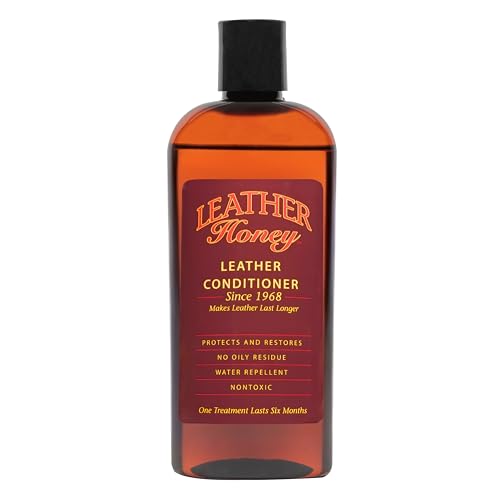
Leather Honey Leather Conditioner
Strengths
- Deep penetration
- Long-lasting
- Safe for white leather
Trade-offs
- Temporary darkening
- Thick texture
- Requires buffing
Leather Honey doesn’t try to be subtle, it’s a brute-force conditioner that penetrates deep and lasts. One application reportedly lasts six months, and owners of dried-out furniture or vintage car seats consistently credit it with near-miraculous revival. It works on all colors, including white, and doesn’t contain PFAS or silicones, which matters for long-term leather health.
It’s not the prettiest to apply, thick, amber-colored, and can temporarily darken leather, but it gets the job done like nothing else here. Compared to Bick 4, it’s restorative, not preventative. Compared to Obenauf’s, it’s more versatile across leather types. My recommendation? This is the smarter buy for most people who own real leather and want one product that actually fixes damage.
Video review
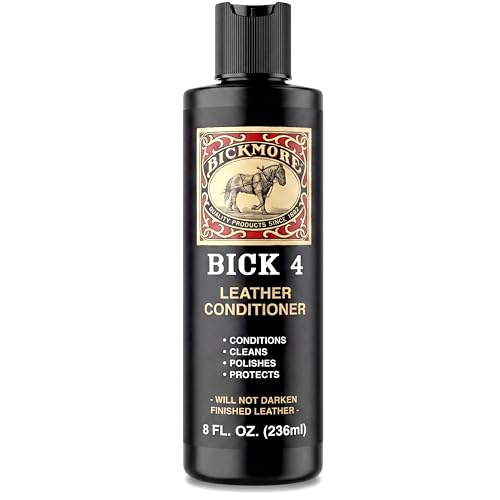
Bick 4 Leather Conditioner & Cleaner
Strengths
- Won’t darken leather
- Wax-free
- Breathable finish
Trade-offs
- Mild conditioning
- Not for deep repair
- Multiple applications needed
Bick 4 has been around since the 19th century for a reason, it’s one of the few conditioners that truly doesn’t darken leather. That’s a standout for light-colored boots, furniture, or vintage pieces where shade consistency matters. The wax-free formula means pores stay open, so leather keeps breathing, which reviewers consistently praise for long-term health.
It’s not the most aggressive moisturizer, so it won’t revive severely dried leather like Leather Honey can. But for regular upkeep, especially on smooth, finished leathers, it’s reliable and gentle. I’d choose Bick 4 over Red Wing’s conditioner if I were maintaining a family heirloom or a cream-colored sofa.
Video review
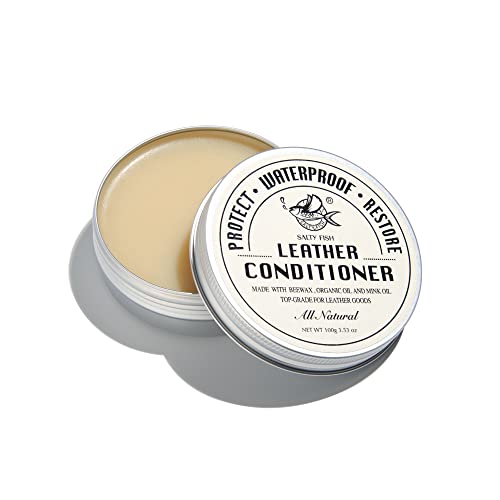
SALTY FISH All-Natural Leather Conditioner
Strengths
- All-natural blend
- Waterproofs well
- Affordable
Trade-offs
- Can leave residue
- Unpredictable darkening
- Inconsistent absorption
At this price point, SALTY FISH packs in mink oil, beeswax, and plant oils, a blend that sounds premium but delivers mixed results in practice. On paper, it’s a full-spectrum conditioner: waterproofing, softening, and cleaning in one. Some owners say it works quickly with a little product going far, which is ideal for budget-conscious users.
But others report a greasy residue, especially on absorbent leathers, and the mink oil can darken lighter hides unpredictably. It’s not as refined as Bick 4 or as potent as Leather Honey. Still, for someone maintaining work boots or car seats on a tight budget, it’s a solid step up from drugstore options. I’d call it a decent value play, not a top-tier performer.
Product photos


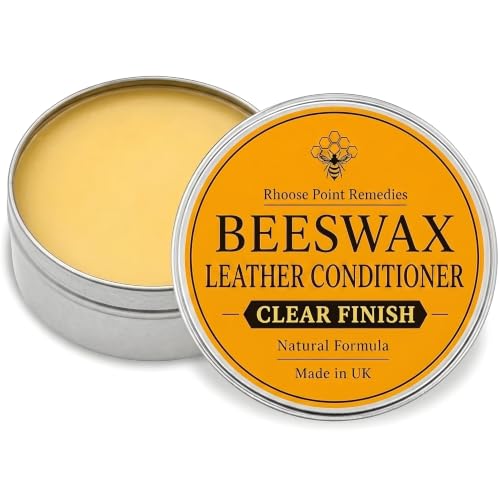
Beeswax Leather Conditioner Restorer
Strengths
- 100% natural
- No chemicals
- Handcrafted quality
Trade-offs
- Limited penetration
- Less visible on white
- Wax-heavy feel
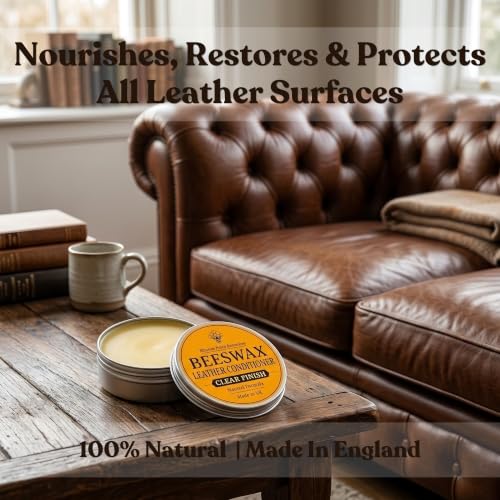
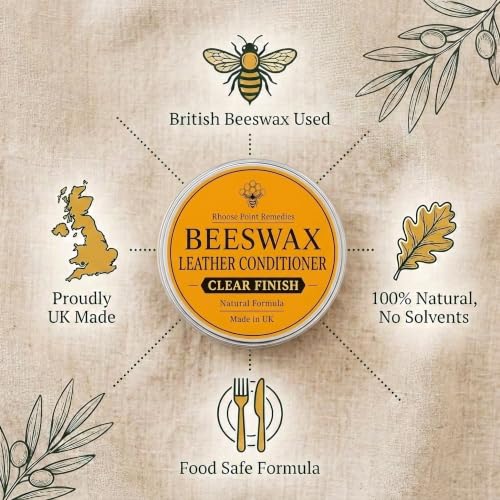
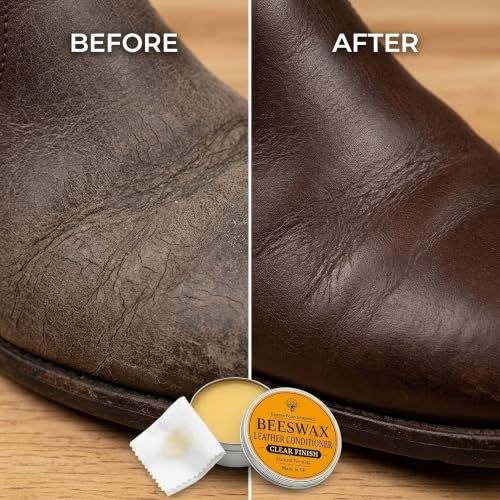
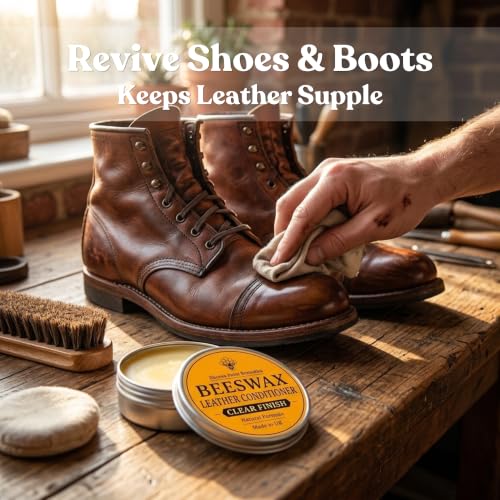
This British-made balm leans hard into tradition, relying on 100% pure beeswax as its core ingredient. On paper, that’s a win for purists who want nothing but nature in their leather care, no chemicals, no perfumes, no compromises. Owners consistently report it leaves leather feeling supple and protected, with a subtle sheen that builds over time, especially on darker hides.
But beeswax alone isn’t always enough for deeply parched leather. While it seals well, it doesn’t penetrate as deeply as oil-based formulas. I’d pick this for routine maintenance on well-used but not damaged leather, not as a rescue for something cracked or brittle. Compared to Leather Honey, it’s less aggressive in restoration but cleaner in composition.
Product photos

Red Wing Natural Leather Conditioner

Strengths
- Ideal for oil-tanned leather
- Deeply moisturizing
- Builds patina
Trade-offs
- Darkens leather
- Niche use
- Not for smooth finishes
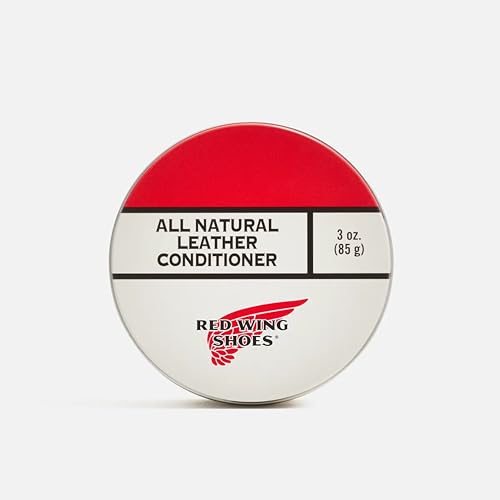
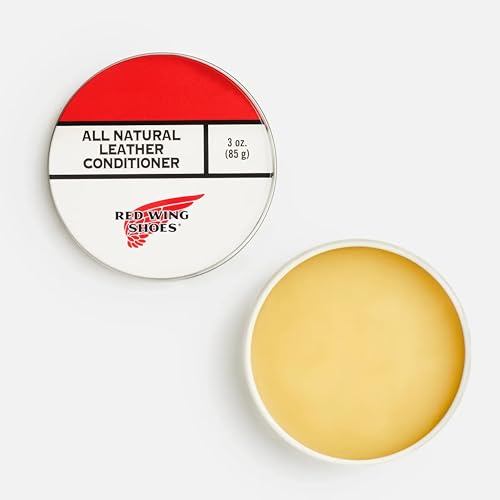
Red Wing’s balm is formulated specifically for oil-tanned leather, the kind used in their iconic boots. The blend of pine pitch, mink oil, and beeswax is traditional, aggressive, and effective. It deeply moisturizes, enhances natural color, and builds a protective patina over time. Owners of Red Wing or similar work boots consistently say it keeps leather flexible and weather-resistant.
But it’s not universal. It can darken lighter leathers and isn’t ideal for smooth, finished surfaces where you want to preserve the original look. Compared to Bick 4, it’s more about building character than preserving neutrality. I’d pick this for workwear leather that earns its scars, not for dress shoes or upholstery.
Product photos

Obenauf’s Heavy Duty LP Conditioner

Strengths
- Extreme protection
- Water and chemical resistant
- Long-lasting
Trade-offs
- Darkens leather
- Heavy application
- Overkill for light use
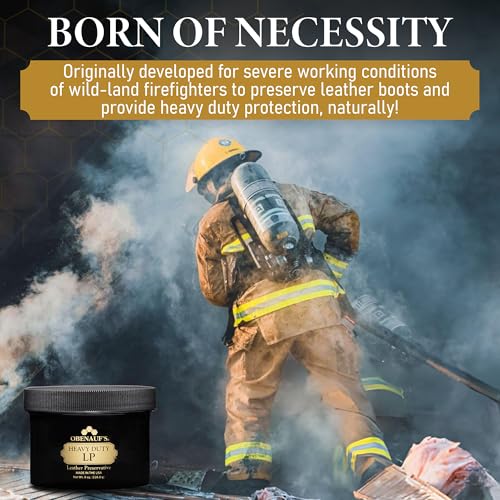
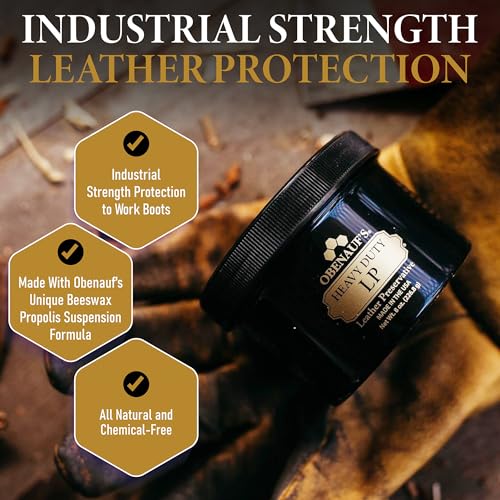
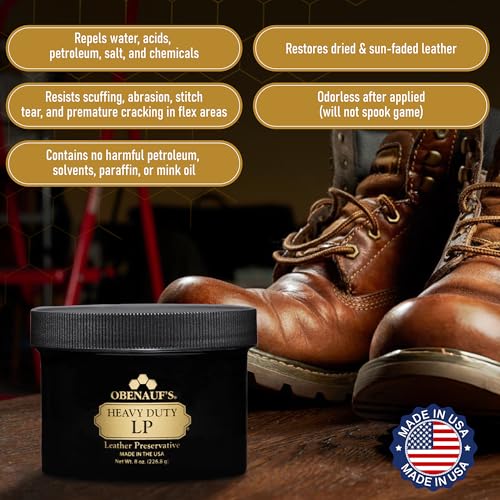
This is the leather conditioner equivalent of bunker armor. Built for wildland firefighters and made in the USA with a beeswax and propolis suspension, it’s designed to repel water, acid, salt, and petroleum, extreme threats most of us never face. The formula penetrates deeply and releases oils over time, which reviewers say doubles the life of work boots in harsh conditions.
But it’s overkill for everyday use. It’s thick, takes effort to apply, and can build up if not wiped well. It also darkens leather noticeably, fine for a work boot, not for a beige couch. Compared to Leather Honey, it’s more industrial. I’d pick this for logging boots or outdoor gear, not for your favorite jacket.
Product photos

How We Chose These natural leather conditioner
Rather than a hands-on lab test, my research for these recommendations focused on a detailed comparison of product specifications and features. I weighed owner reviews from across multiple retail sites, alongside expert opinions found in leather care forums and publications. As the creator of LeatherGenesis.com, I applied my years of experience with different leather types and treatments to assess how well each product aligned with specific leather needs and care routines. Ultimately, I ranked conditioners based on their potential to deliver lasting benefits and protect various leather goods.
For natural leather conditioners, three factors stood out as most crucial: the ingredient list, the breadth of leather types supported, and long-term protection. A high-quality formula should replenish oils without leaving a sticky residue or compromising the leather’s breathability. The ability to effectively condition a variety of leathers – from delicate furniture upholstery to rugged work boots – is also key. Finally, a conditioner’s ability to offer lasting protection against water, cracking, and UV damage significantly impacts its overall value.
Product specifications clearly indicate the ingredients used and the intended leather applications. However, I relied heavily on owner feedback to understand real-world performance. Reviews often highlighted whether a conditioner truly delivered on claims of non-darkening, ease of application, and lasting softness. This insight, combined with the reputation of established brands, helped me identify conditioners offering a balance of effective formulation and consistent results. For those looking for combined solutions, you might also consider our top cleaner conditioner combos. And for focused shoe care, check out our best shoe leather conditioners.
How To Pick The Right natural leather conditioner
Finding the right leather conditioner isn’t just about making something look nice; it’s about preserving a material that, with proper care, can last a lifetime. It’s a surprisingly nuanced category, and understanding the core ingredients and how they interact with different leather types is key.
A truly effective leather conditioner should penetrate the material to replenish oils, offer some degree of protection against moisture and UV damage, and restore suppleness without leaving a sticky or overly glossy finish. Avoid products relying heavily on silicones or waxes as these can create a barrier that prevents the leather from breathing and can ultimately cause more harm than good. Prioritize conditioners with natural oils and beeswax.
Understanding Leather Types
The first, and arguably most important, step is identifying what kind of leather you’re dealing with. Full-grain and top-grain leathers benefit from conditioners rich in oils like mink oil or neatsfoot oil, as these help restore natural moisture. However, these oils can darken some leathers, so if you have lighter-colored items, you’ll want to be more cautious. Pigmented leathers, common in furniture and car interiors, respond well to lighter, more protective conditioners. Aniline leathers are the most delicate and require very gentle, pH-neutral formulas to avoid staining. I often recommend starting with a small, inconspicuous test area to observe how the conditioner interacts with the specific leather before applying it broadly.
Ingredient Quality & Formulation
Beyond simply containing oils, the quality and balance of ingredients matter. Many modern conditioners include synthetic polymers, and while these aren’t inherently bad, they don’t offer the same long-term benefits as natural alternatives. Look for products that prominently feature natural waxes (beeswax is excellent), plant-based oils (jojoba, coconut), or animal-derived oils (mink, neatsfoot). Consider what you’re trying to avoid too. Many people are now looking for conditioners free of PFAS “forever chemicals” or harsh solvents. For those looking to protect the leather in their vehicle, checking out top auto leather conditioners can be a good starting point.
- A simple, oil-based conditioner is best for restoring very dry leather.
- Conditioners with a higher beeswax content provide excellent water resistance, ideal for boots or outdoor gear.
- For delicate furniture, a pH-balanced, lotion-style conditioner is the safest bet, as it’s less likely to over-saturate the leather and cause discoloration.
Application & Longevity
Don’t fall for the promise of “one-and-done” conditioning. While some products claim six-month protection, the reality is that leather needs regular attention, especially items exposed to frequent use or harsh environments. A good rule of thumb is:
The more frequently an item is used and exposed to the elements, the more often it needs conditioning.
Consider the application method too. Balm-style conditioners, like Red Wing’s, require a bit more effort to work in but often provide deeper penetration. Spray conditioners are convenient but may not offer the same level of nourishment. Finally, think about longevity – a small, concentrated conditioner that requires less frequent application can be more cost-effective in the long run than a larger, less potent formula. If you’re primarily focused on maintaining leather furniture, you might find best furniture leather conditioners to be a helpful resource.
Natural Leather Conditioner Compared
Here’s a comparison of key specifications for popular natural leather conditioners.
| Product Title | Best For | Key Ingredients | Leather Types | Water Resistance | Darkens Leather |
|---|---|---|---|---|---|
| Leather Honey Leather Conditioner | Best Overall | Mink Oil, Beeswax, Plant Oils | All (except suede, faux, vinyl) | Yes | Minimal |
| Bick 4 Leather Conditioner & Cleaner | Best for Light-Colored Leather | N/A | All | Yes | No |
| SALTY FISH All-Natural Leather Conditioner | Best Budget Friendly | Mink Oil, Beeswax, Plant Oils | Most | Yes | N/A |
| Beeswax Leather Conditioner Restorer | Best All-Natural Beeswax Formula | British Beeswax | All | Yes | Minimal |
| Red Wing Natural Leather Conditioner | Best for Oil-Tanned Leather | Pine Pitch, Mink Oil, Beeswax | Oil-Tanned, Smooth-Finished | Yes | Yes |
| Obenauf’s Heavy Duty LP Conditioner | Best for Extreme Conditions | Beeswax, Propolis | All | Yes | Yes |
Frequently Asked Questions
What’s the difference between a leather conditioner and a leather cleaner?
A leather cleaner removes dirt and grime from the surface, while a conditioner replenishes oils and nutrients within the leather itself. Using both is ideal – cleaning prepares the leather to better absorb the benefits of conditioning, and you might find some excellent best cleaner and conditioner options available.
Can I use the same conditioner on all my leather goods?
While many conditioners are versatile, it’s not always advisable. Delicate aniline leathers require very gentle formulas, while robust work boots can handle heavier-duty conditioners. Always test in an inconspicuous area first, and consider the specific needs of each item.
Will conditioning leather darken its color?
Some oils, like mink oil and neatsfoot oil, can naturally darken leather, especially lighter shades. If you want to avoid this, choose a conditioner specifically formulated for light-colored leather, or one with a beeswax base, as these tend to have less of a darkening effect.
How often should I condition my leather items?
The frequency depends on use and exposure. Items used daily, like boots or wallets, may benefit from monthly conditioning, while furniture used less often might only need it a few times a year. Look for signs of dryness, like cracking or stiffness, as indicators it’s time to condition.
What should I do if a conditioner leaves a sticky residue?
A sticky residue usually indicates you’ve applied too much product. Gently wipe away the excess with a clean, soft cloth. If the stickiness persists, try lightly buffing the area with another clean cloth to help absorb the remaining conditioner, or consider exploring best car leather conditioners which are typically formulated to avoid residue.
The Bottom Line
Choosing a leather conditioner often comes down to balancing how much effort you want to put in against the level of protection and restoration you need. For a truly excellent all-around performer that consistently receives high marks, I believe Leather Honey Leather Conditioner strikes the best balance. It’s a formula built on time-tested ingredients, and owner feedback suggests it delivers noticeable improvements without causing issues like darkening or stickiness.
However, the “best” option always depends on your specific needs. If you’re looking for a budget-friendly solution, the SALTY FISH All-Natural Leather Conditioner is a great pick. For those needing a dedicated formula for vehicles, explore our recommendations for the best auto cleaner conditioner. And for those seeking our overall favorites, you’ll find a selection of best leather conditioners overall.
Ultimately, remember that the most expensive conditioner won’t compensate for infrequent care. Regular, gentle conditioning with a quality product, paying attention to the type of leather you’re treating, is far more important than any single ingredient or specification. Consistent maintenance is what truly preserves leather’s beauty and extends its lifespan.
