
8 Best Quality Leather Belts of 2026
This post contains affiliate links. As an Amazon Associate, we earn from qualifying purchases.
The Hanks The Everyday Belt stands out as the best overall quality leather belt, thanks to its full-grain steerhide and legendary 100-year warranty. For a rugged, made-in-America option, the Main Street Forge All American Belt is a close second. If you’re watching your budget but still want solid construction, the Carhartt Saddle Leather Belt delivers reliable performance without the premium price.
Buying a quality leather belt means cutting through marketing hype and focusing on materials and build that last. Too many belts use thin, low-grade leather and flimsy hardware, falling apart within months.
This guide cuts to what matters: full-grain leather, durable stitching, and robust buckles that stand up to daily wear. I compared specs, analyzed owner feedback, and applied my knowledge of leather tanning and construction to highlight belts that truly earn their place in your wardrobe.
Top 8 Quality Leather Belts in the Market
The Best Quality Leather Belts, Reviewed
Hanks The Everyday Belt
Strengths
- 100% USA full-grain steerhide
- 100-year warranty
- Interchangeable buckle
Trade-offs
- High price point
- Heavy weight
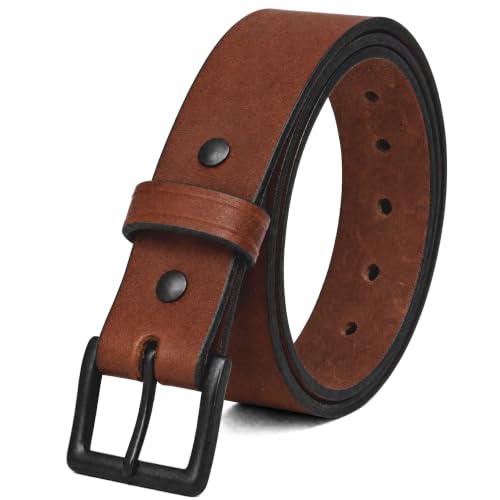
If I were picking one belt to last a lifetime, this would be it. Sliced from a single 13 oz North American steerhide, it’s built like a tank, thick, dense, and ready to carry EDC gear without sagging. The 100-year warranty isn’t marketing fluff; it reflects real confidence in material and craftsmanship.
Owners report it ages beautifully, developing a deep patina while resisting stretch. The interchangeable buckle via Chicago screws is a feature I wish more brands offered, it lets you swap styles without buying a new belt. At this price, it’s not cheap, but it’s cheaper than buying five flimsy belts over 20 years. My pick over most competitors.
Video review
Main Street Forge All American Belt

Strengths
- Veg-tanned full grain American leather
- Lifetime warranty
- Made in USA
Trade-offs
- Heavy and stiff
- Long break-in
- Bulky for dress wear
This is the belt for people who hate buying belts. At nearly 1/4 inch thick, it’s a single slab of American veg-tanned full grain steerhide, dense, rugged, and built to last. Owners with EDC gear report no sagging, and the lifetime warranty isn’t a gimmick; it’s standard for USA-made craftsmanship.
The thickness means a longer break-in, but once it molds, it stays. Compared to imported belts, the material quality is in another league. And everything, leather, buckle, screws, is made in the USA, which matters if you care about sourcing. It’s heavy, yes, but that’s the point. This is the anti-disposable belt.
Video review
Carhartt Saddle Leather Belt

Strengths
- True full-grain saddle leather
- Heavy-stitched reinforcement
- Inlaid woven label detail
Trade-offs
- Stiff break-in period
- Limited color options
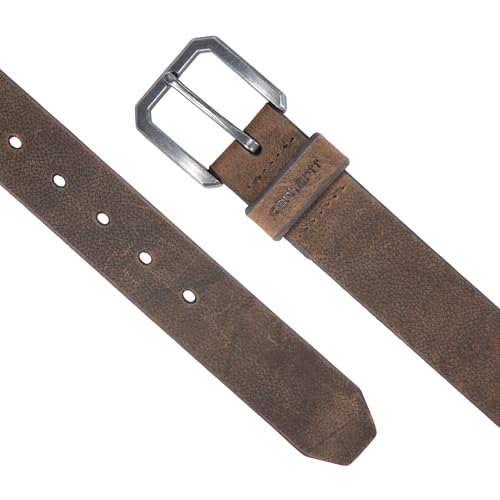
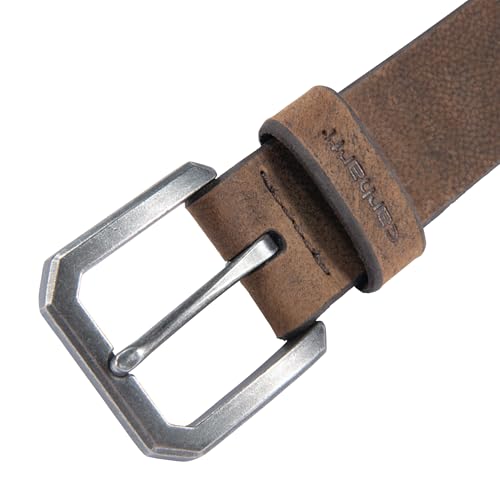
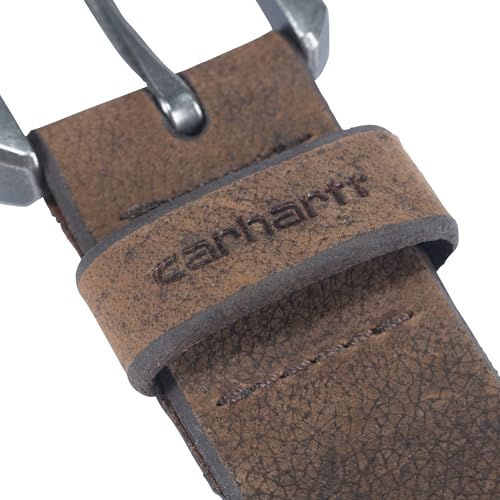
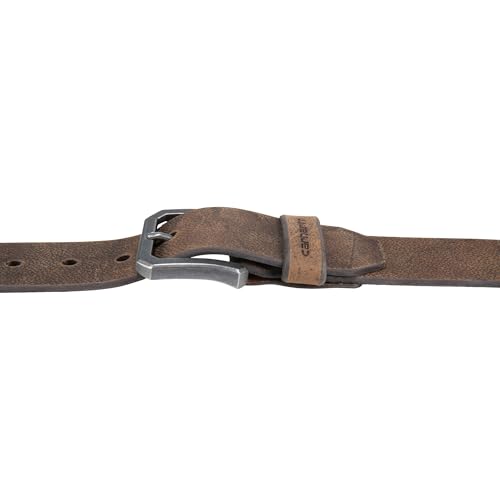
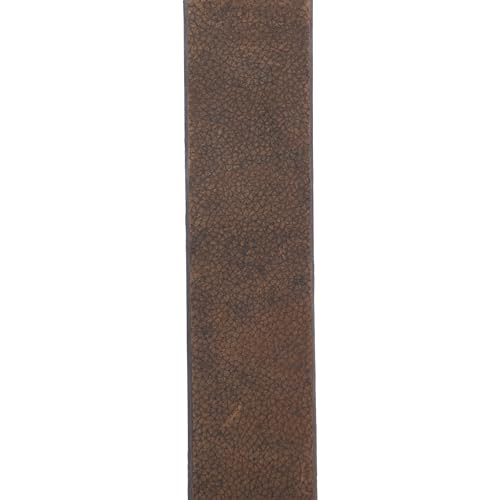
Carhartt doesn’t play dress-up here. This is a workhorse belt built from full-grain saddle leather, the kind that starts stiff but molds into your body over time. The leather is dense, tightly grained, and meant to outlive the buckle. Reviewers note it develops a rich, lived-in look that only gets better with daily wear.
The heavy-stitched tab at the keeper is a smart touch, reinforcing the most stressed area. And the inlaid woven label? A subtle nod to heritage that I appreciate. It’s not flashy, but it’s honest. Compared to softer imported belts, this one demands a break-in period, but I’d take that trade for long-term durability any day.
Product photos
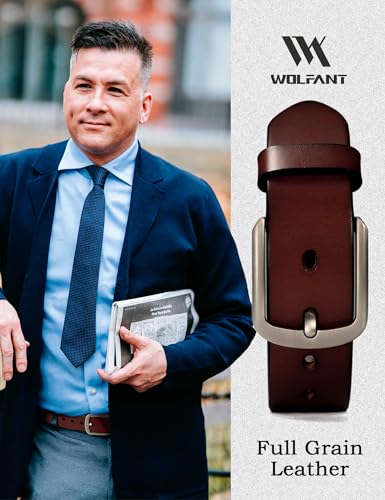
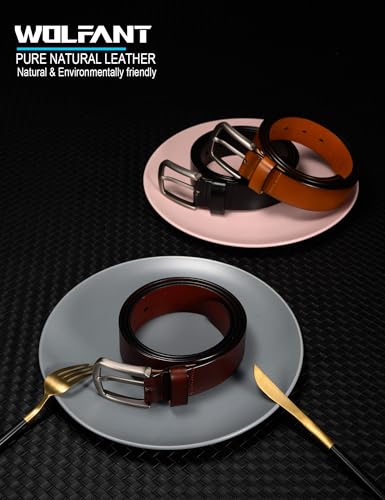
WOLFANT 1.5″ Italian Full Grain Belt
Strengths
- Italian full grain leather
- Handmade aesthetic buckle
- Excellent gift presentation
Trade-offs
- Softer leather less rugged
- Limited aging character
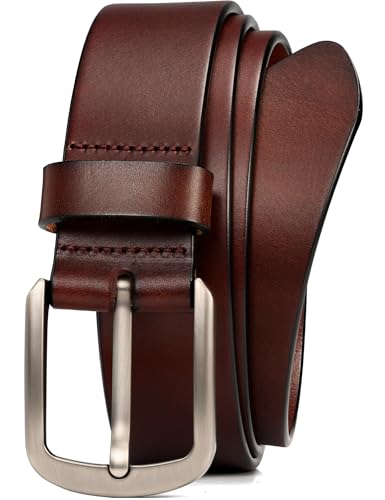
This belt leans hard into its Italian heritage, and on paper, that full grain leather claim stands out. Owners consistently report a soft, supple feel right out of the box, which suggests it’s not the stiffest veg-tan but likely a more pliable chrome-tanned hide. That makes it comfortable early on, though it may not develop as deep a patina as some American full grain belts.
The aesthetic buckle adds a dressier touch, and between that and the clean packaging, it’s clearly aimed at gift buyers. It holds up well for daily wear according to reviews, but I wouldn’t bet on it lasting decades like a hand-stitched pull-up. For a mid-tier price, it delivers solid style and real leather, just don’t expect workwear-level toughness.
Product photos

VATAN Full Grain Leather Jean Belt

Strengths
- Extremely affordable
- Classic minimalist design
- Decent for daily wear
Trade-offs
- Leather quality overrated
- Buckle lacks heft
- Not long-term durable
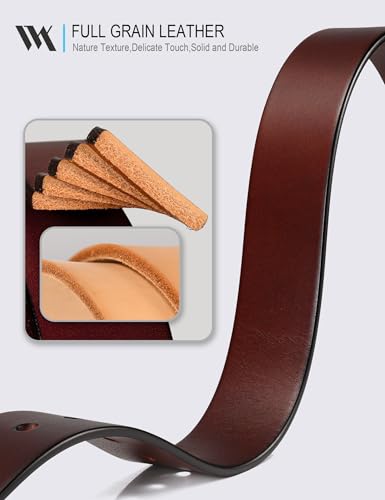
At under $20, this belt makes big claims, full grain leather, handmade, eco-friendly buckle. But owner feedback suggests it’s more accurately described as genuine leather, not full grain. The leather is thinner and less dense than higher-end options, and while it looks decent at first, it doesn’t age as well.
Still, for the price, it’s a functional, no-frills belt that holds up to casual wear. The 1.4” width fits most loops, and the simple buckle works. It’s not going to last decades, but if you’re stocking up or need a backup belt, it does the job. Just don’t expect it to rival belts twice its price.
Product photos


MILORDE Men’s Leather Dress Belt 2Pack

Strengths
- Excellent two-pack value
- Classic dress design
- Corrosion-resistant buckle
Trade-offs
- Genuine leather, not full grain
- Shorter lifespan
- Thin construction
Two belts for under $30? That’s the real story here. The leather is genuine, not full grain, and thinner than premium options, but for a dress belt that sees light use, it’s acceptable. The nickel-free buckle resists corrosion, which is a thoughtful touch.
Owners say they look better in person than expected, and the gift box adds value. But these aren’t belts you’ll pass down. They’ll crack or stiffen after a few years. Still, for rotating between office days or giving as gifts, the value is hard to beat. Just don’t expect miracles.
Product photos
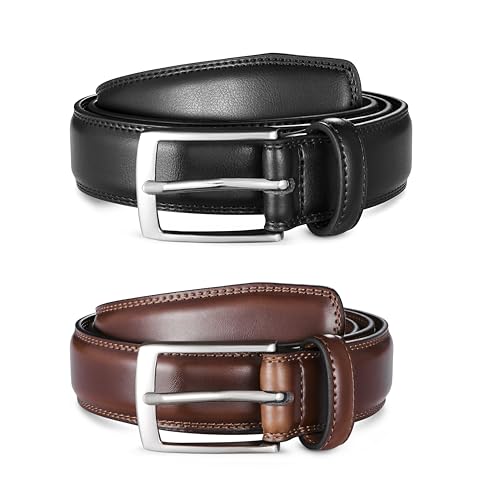

Buffway Handcrafted Top-Grain Leather Belt

Strengths
- Comfortable right away
- Refined top-grain texture
- Modern zinc buckle
Trade-offs
- Top-grain, not full grain
- Less aging potential
- Average stitching
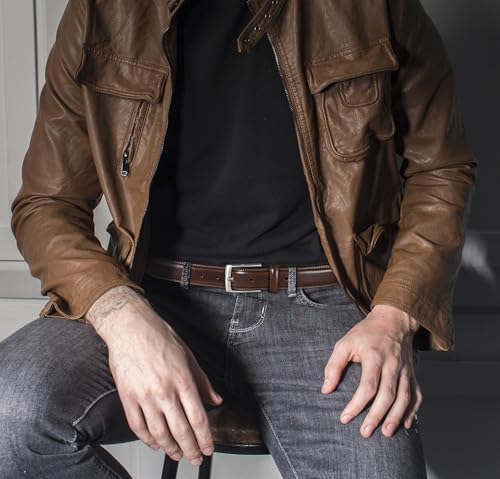
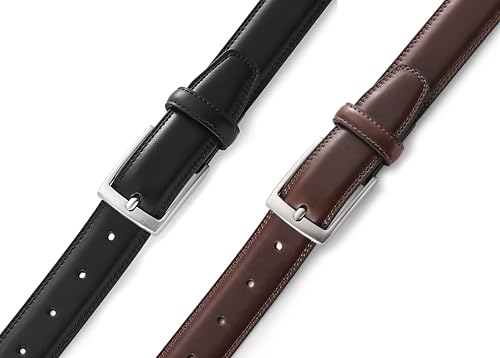
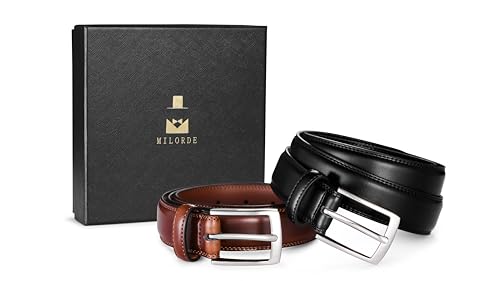
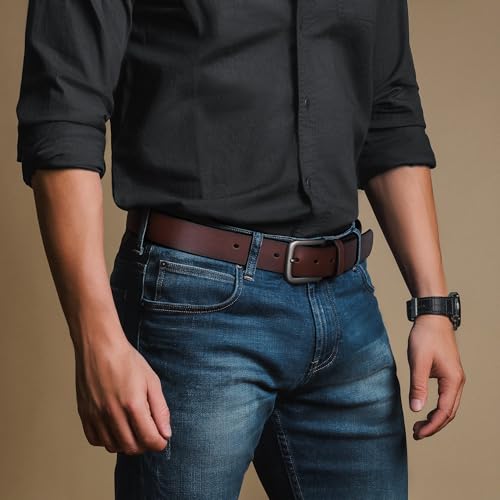
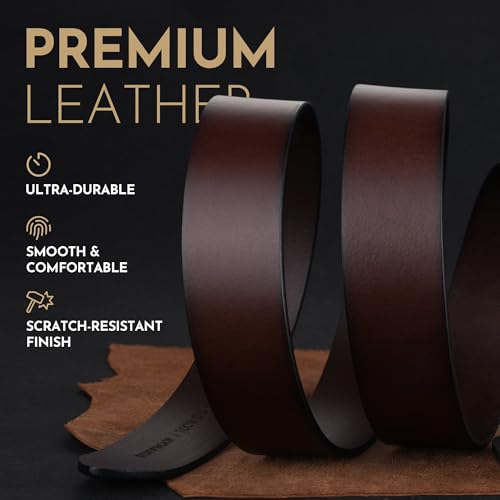
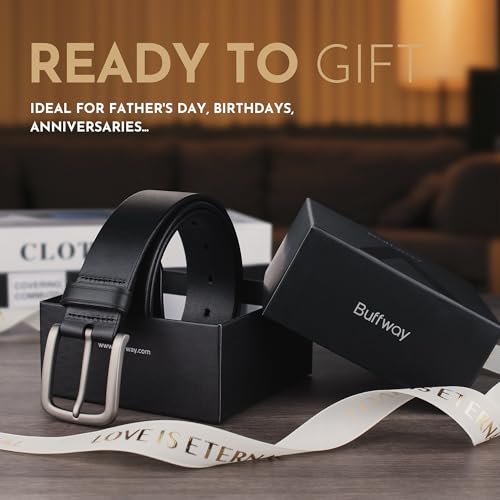
Buffway positions this as a premium top-grain option, and it delivers on versatility. The leather molds quickly to the waist, and owners praise its comfort from day one. The zinc alloy buckle feels substantial and resists scratches, which matters for a belt worn daily.
It’s not full grain, so it won’t develop the same depth of patina, but it holds up well for office and weekend wear. Compared to Hanks or Main Street Forge, it’s less rugged but more polished. If you want one belt that transitions from suit to casual Friday, this is a smarter pick than most.
Product photos
wolksprong Thicken Full Grain Work Belt

Strengths
- Very thick full grain leather
- Durable buckle
- Good for heavy loads
Trade-offs
- Stiff and uncomfortable initially
- Buckle not interchangeable
- Minimal aging character
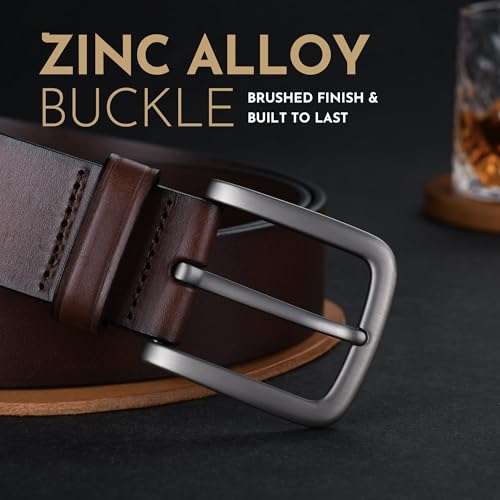
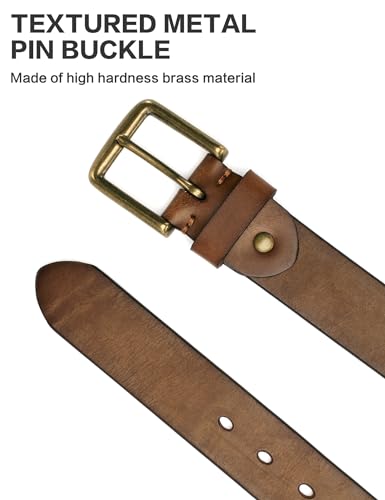
This belt markets thickness as a feature, and at 5mm, it’s legitimately thick. The full grain leather is stiff, dense, and built for labor. Reviewers in construction and landscaping say it holds up well under load, and the high-hardness buckle doesn’t slip.
But that thickness comes at a cost: comfort. It doesn’t break in as easily as thinner belts, and the vintage-style buckle, while attractive, is purely decorative. It’s a solid work belt, but lacks the craftsmanship details of American-made options. Still, for the price, it’s a better build than most budget-heavy belts.
Product photos


How We Chose These quality leather belts
Rather than a hands-on lab test, my research for these recommendations focused on a detailed comparison of published specifications and features across numerous brands. I weighed owner reviews from multiple sources, alongside expert opinions found in menswear publications and style guides. As the creator of LeatherGenesis.com, I applied my years of experience understanding leather grades, tanning processes, and construction techniques to assess each belt’s potential durability and value. This process allowed me to rank belts against clear criteria for quality and intended use.
For quality leather belts, the most heavily weighted factors were the type of leather used and the construction method. Full-grain leather – and specifically, how consistently it’s used throughout the entire belt – is paramount. Belts utilizing bonded or genuine leather simply won’t offer the same longevity or develop the desirable patina that discerning buyers seek. Equally important is solid construction; a one-piece design, reinforced stitching, and a durable buckle contribute significantly to a belt’s lifespan.
Specifications reliably indicate leather thickness and buckle material, providing a baseline for assessing robustness. However, owner feedback proved crucial for judging real-world performance – how well a belt holds up to daily wear, how comfortable it is, and whether it truly lives up to claims of durability. I also considered brand reputation, leaning towards those with a history of quality craftsmanship, as detailed in resources like our best belt leather types. For those interested in a different style, we also have a guide to the best braided leather belts.
How To Pick The Right quality leather belts
Finding the right leather belt isn’t just about holding up your pants; it’s about adding a touch of style and demonstrating an understanding of quality craftsmanship. A good belt should last for years, developing a unique patina and becoming a staple in your wardrobe.
A truly good leather belt begins with full-grain leather, sliced from a single hide rather than glued scraps. Look for solid brass or zinc alloy hardware, durable stitching, and a construction that prioritizes longevity over fleeting trends. Consider the intended use – a work belt needs different characteristics than a dress belt.
Leather Grade & Construction
The most crucial factor is the leather itself. Forget “genuine” leather; you want full-grain. Full-grain retains the natural grain of the hide, making it stronger, more durable, and more beautiful as it ages. Top-grain is a close second, having a slight finish applied, but still offering excellent quality. Brands like Hanks and Main Street Forge consistently emphasize full-grain steerhide in their construction, and for good reason. Avoid anything labeled “bonded” or “split” leather. These are essentially leather leftovers glued together and won’t hold up.
Hardware & Stitching: Built to Last
A flimsy buckle is a belt’s weak point. Look for buckles made from solid brass or, at a minimum, a high-quality zinc alloy. These materials resist corrosion and won’t bend or break under stress. More importantly, examine how the buckle attaches to the strap. Chicago screws, like those used by Hanks, allow for easy buckle swapping and ensure a secure connection. The stitching is just as important. Heavy-duty stitching, especially on areas that experience a lot of stress (like the keeper loops), is a sign of a well-made belt. Carhartt’s attention to reinforced stitching is a good example of prioritizing durability.
- A simple prong buckle is fine for everyday wear.
- A double-prong buckle offers a more secure hold, particularly for heavier applications.
- Roller buckles (often found on more formal belts) provide a cleaner look and can be easier to adjust, but are less robust than a solid prong.
Style & Value: Finding the Right Fit
Consider where you’ll be wearing the belt. A rugged work belt, like those from Main Street Forge, prioritizes durability and functionality. These will be wider and thicker, designed to support tools and withstand harsh conditions. For more formal occasions, a narrower belt (1-1.25 inches) in a classic color like black or brown, and a simple buckle, is best. If you’re looking for versatility, the 1.5-inch width is a good compromise. Don’t be afraid to invest a bit more upfront for a quality belt; as our top leather belt picks demonstrate, a well-made belt will pay for itself in the long run.
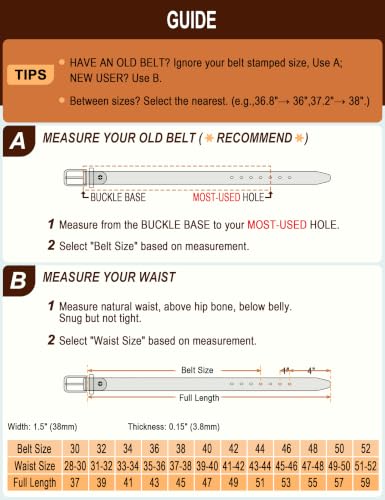
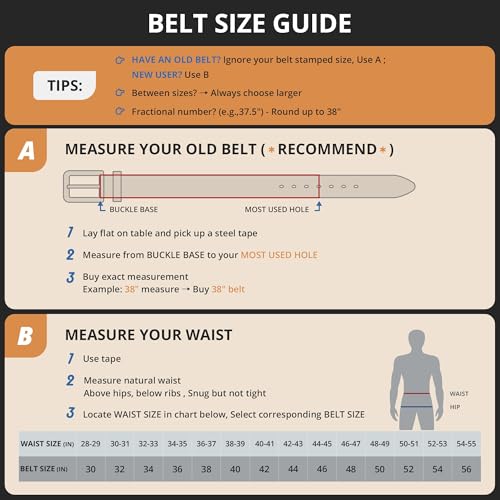
A belt should fit snugly, but not uncomfortably. Order one size up from your pants waist size, or follow the manufacturer’s specific sizing recommendations.
If you need a belt specifically for more polished outfits, you will want to explore the best formal leather belts to ensure you get the right look.
Quality Leather Belts Compared
Here’s a comparison of key specifications for the featured leather belts to help you make an informed decision.
| Product Title | Leather Type | Width (in) | Buckle Material | Warranty | Price (USD) |
|---|---|---|---|---|---|
| Hanks The Everyday Belt | Full-Grain Steerhide | 1.5 | N/A | 100 Years | N/A |
| Main Street Forge All American Belt | Full-Grain Steerhide | 1.5 | N/A | Lifetime | N/A |
| Carhartt Saddle Leather Belt | Full-Grain Saddle | 1.5 | N/A | N/A | N/A |
| WOLFANT Italian Full Grain Belt | Full-Grain | 1.5 | Metal | N/A | N/A |
| VATAN Full Grain Leather Jean Belt | Genuine Leather | 1.4 | Metal | 360 Days | N/A |
| MILORDE Men’s Leather Dress Belt | Genuine Leather | 1.25 | Zinc Alloy | N/A | N/A |
| Buffway Top-Grain Leather Belt | Top-Grain | N/A | Zinc Alloy | Hassle-free Return | N/A |
| wolksprong Thicken Full Grain Belt | Full-Grain | 1.5 | Brass | N/A | N/A |
Frequently Asked Questions
What leather type offers the best value for a daily-wear belt?
Full-grain leather consistently provides the best long-term value. While more expensive initially, its durability and ability to develop a patina mean you’ll replace it far less often than belts made from lower grades, like those detailed in our best wallet leather types.
How can I tell if a belt buckle is truly durable?
Solid brass buckles are the most durable, resisting bending and corrosion. If brass isn’t an option, look for buckles made from a high-quality zinc alloy – a substantial weight is a good indicator of its robustness.
Is a wider belt always better for supporting heavier work pants?
Generally, yes. Wider belts (1.75 inches or more) distribute weight more effectively, offering better support for work pants or those carrying tools. However, consider comfort; a belt that’s too wide can be restrictive.
What’s the significance of the stitching on a leather belt?
Heavy-duty stitching is crucial for a belt’s longevity. Closely spaced, consistently applied stitching, particularly around the keeper loops and buckle attachment points, indicates a well-made belt that can withstand significant stress.
Where can I find more information about different belt styles and brands?
You can explore a wider range of options and detailed reviews in our guide to the best men’s leather belts – it covers various styles and price points to help you find the perfect fit.
The Bottom Line
Buying a quality leather belt often comes down to balancing how much control you want over the details – buckle swaps, leather aging – with how much fuss you’re willing to accept. For the best overall combination of durability, style, and long-term value, I consistently find myself recommending Hanks The Everyday Belt. It represents a sweet spot for those seeking a reliable, classic belt that will improve with age.
If you’re on a tighter budget, the VATAN Full Grain Leather Jean Belt provides surprisingly good quality for the price. For those prioritizing versatility, the Carhartt Saddle Leather Belt is rugged enough for casual wear yet still presentable for many situations. And if you’re also looking to complete your outfit, check out our guide to the best leather pants and men’s belt recommendations for a coordinated look.
Ultimately, the most important factors are the leather grade, full-grain is king, and solid construction. Don’t get hung up on minute details like buckle finish or the number of keeper loops; focus on a belt built to last, and one that you’ll enjoy wearing for years to come. A quality belt is an investment, and it’s one that truly elevates your style.
