
How to Care for a Leather Football & Preserve Its Grip
This post contains affiliate links. As an Amazon Associate, we earn from qualifying purchases.
To care for a leather football, follow a three-part routine: maintain precise inflation (69 kPa / ~10 psi), clean only with a damp cloth and glycerin saddle soap, and condition monthly with a 2:1 mix of leather conditioner and tack spray. This preserves the leather’s grip and prevents the bladder from rotting.
That 69 kPa spec is not a suggestion. It’s the pressure at which the ball’s shape, bounce, and stitching are engineered to hold. Go over by even 10 kPa and you start stretching the seams; go under and the leather wears faster from uneven impact.
What follows is the breakdown of that routine, plus the specific tools that work, the ones that wreck the ball, and the one visual trick that tells you the leather is breaking in just right.
Key Takeaways
- Check pressure with a gauge before every use. 69 kPa (about 10 psi) is the standard game pressure for a size 5 ball; eyeballing it leads to over-inflation, which permanently warps the ball.
- Clean with water and a microfibre cloth, never disinfectants. Official Wilson ball cleaning guidelines state that common disinfectants dry out the leather and degrade performance.
- Brush the ball in a star pattern, not circles. This works the conditioner into the varied grain direction of the panels and evenly flattens the pebbling for a consistent grip.
- Let a wet ball air-dry at room temperature. Never use a hairdryer or heater; artificial heat shrinks and stiffens the leather.
- Store it deflated in a cool, dry place. A ball left in a hot car trunk will have an expanded bladder that can split the internal lining.
The 3-Step Core Care Routine
This isn’t a weekly chore. It’s a pre-game and post-game habit that takes five minutes. Skip the ritual and the ball goes slick, lopsided, or worse, develops a mildew smell from a damp bladder.
You need three things: a pressure gauge with a kPa scale, a soft horsehair brush meant for leather, and a dedicated leather conditioner. A pump with a built-in gauge is ideal. The brush that comes in a shoe-shine kit is too soft. A kitchen sponge is too abrasive.
Step 1: Inflation. The 69 kPa Rule
The number is printed right on the ball, near the valve. For a Sherrin or Wilson game ball, it’s typically 69 kPa. Here’s the translation that matters: 6.9 kPa equals about 1 psi. So 69 kPa is roughly 10 psi.
Use a pump with a pressure gauge. Inflate in short bursts, checking the gauge each time. Rapid, full-stroke pumping can trap the bladder inside the ball, creating a lump you can’t fix.
A properly inflated football, typically at 69 kPa, ensures the correct bounce, feel, and handling. Over-inflation may damage stitching and the ball’s shape, while under-inflation causes the ball to feel flat and wear faster.
A ball at 80 kPa feels rock-hard and will bounce unpredictably. One at 50 kPa feels dead and bags out on impact. Check the pressure before you play, every time. Air naturally seeps out over a week or two.
Step 2: Cleaning. Water, Glycerin, and a Cloth
Forget soap. Forget spray disinfectants. After a muddy game, let the mud dry completely. Then brush off the loose dirt with your hand or a dry cloth.
For the grime stuck in the pebbling, dampen a microfibre cloth with warm water. Add a single drop of glycerin-based saddle soap and work it into the cloth. Wipe the ball down, focusing on one panel at a time. The glycerin cuts through the dirt without leaving a filmy residue that affects grip. Immediately dry the panel with a separate, dry part of the cloth.
This method works for any leather sports gear that picks up ground-in dirt. The goal is to lift the dirt, not soak the leather.
Step 3: Conditioning & Brushing. The Monthly Refresh
Leather loses its natural oils. A dry football feels stiff and loses its tack. Once a month, or whenever the leather looks pale and feels rough, it’s time to condition.
First, deflate the ball to about 8 psi. Lower pressure lets the leather relax and absorb the conditioner better, just like skin. Mix a small batch: two parts leather conditioner to one part tack spray. The tack helps the conditioner adhere.
Apply a thin coat of the mix with your fingers, using small circular motions. The warmth from your hand helps it penetrate. Let it sit for ten minutes.
Then, brush. Don’t just go in circles.
| Brushing Pattern | Why It Works | What Happens If You Don’t |
|---|---|---|
| Clockwise, then counter-clockwise | Works conditioner into the multi-directional grain of the panel cuts. | Conditioner sits on top, creating slick spots. |
| Up, then down strokes | Flattens the pebble grain evenly for a uniform, matte finish. | Pebbles wear unevenly, creating shiny, slippery patches. |
| Focus on the laces last | Avoids driving moisture into the lace holes where it can rot the bladder. | Trapped moisture ices in cold weather, destroying the bladder from the inside. |
Brush each panel for about 30 seconds. When you’re done, the ball should have a consistent, matte look with no shiny streaks. Let it dry completely, at least an hour in dry climates, up to two days in humid ones, before reinflating.
What You Should Never Do to a Leather Football
The fastest way to ruin a hundred-dollar ball is to follow well-meaning but terrible advice. These aren’t minor oops moments. They cause permanent damage.
Common mistake: Using a silicone-based leather protector. It clogs the leather’s pores, making it impossible for the hide to breathe or absorb proper conditioner later. The surface turns into a plastic-like shell that cracks.
Never use disinfectant wipes or sprays. The CIF ball cleaning recommendations PDF is clear: CDC List N disinfectants dry out the leather and decrease performance. They strip the natural oils. If you must sanitize, a lightly dampened cloth with water is the only safe bet.
Never store it inflated in extreme heat. The trunk of a car in summer can hit 150°F. The air inside the bladder expands, putting massive pressure on the seams and the internal lining. This is how bladders split. Always deflate the ball for long-term storage.
Never use artificial heat to dry it. A wet ball after a rainy game needs to air-dry at room temperature. A hairdryer, space heater, or even direct sunlight on a hot day will shrink the leather. It tightens like a drum, becomes brittle, and can pull the stitches.
Never use oils or household products. Olive oil, mink oil, shoe polish, furniture cream, these are not for footballs. They can oversoften the leather, darken it permanently, or contain detergents that break down the rubber bladder. Stick to products designed for sports leather care.
How to Know Your Football is Breaking In (Not Wearing Out)
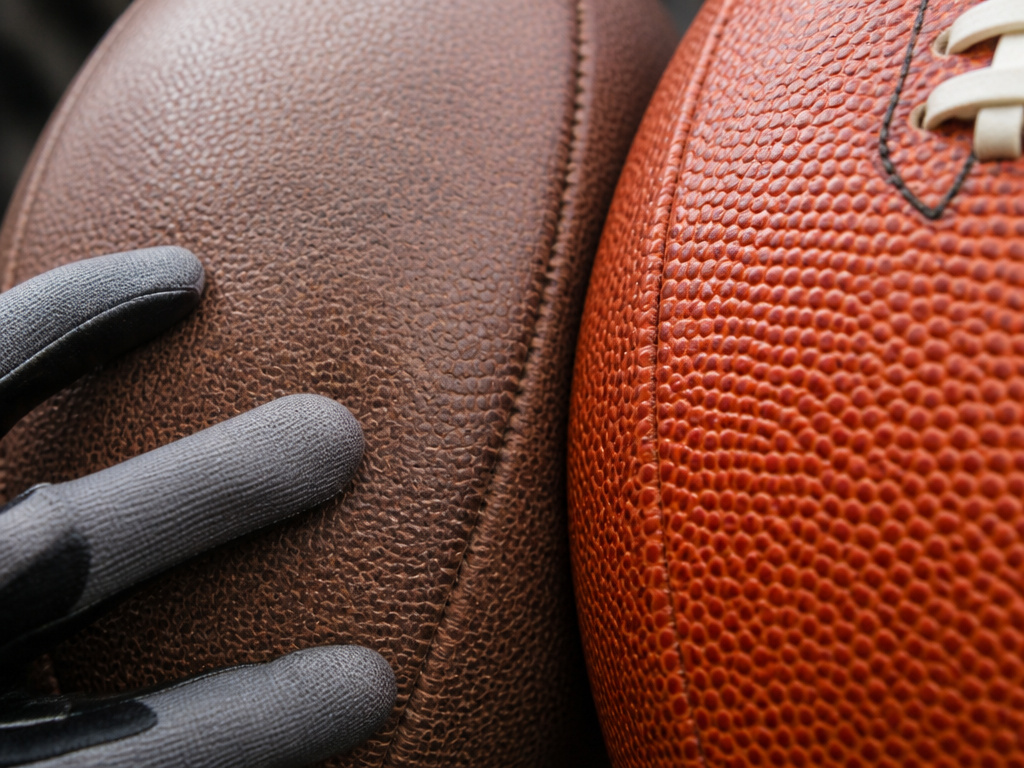 A new leather football is stiff and shiny. A broken-in one is supple and has a matte, tacky feel. The difference is in the pebble grain.
I compared a worn-in Wilson NFL Official ball to a brand-new one under a loupe. In the primary grip areas, the panels where your fingers naturally rest, the sharp peaks of the pebble grain were visibly flattened and polished smooth. It looked worn, but that’s the point. That smoothed surface provides more consistent contact with your skin, especially in the rain, than the jagged grain of a new ball.
You’re not trying to keep the ball looking new. You’re guiding its wear. Proper brushing accelerates this controlled flattening. Bad care leads to uneven gloss in random spots, which is just polished dirt and skin oils creating a slip hazard.
Signs of healthy break-in:
- Uniform matte finish across all panels
- Leather is supple but still firm, not spongy
- Slight darkening of the leather (patina)
- Consistent, predictable grip
Signs of damage or neglect:
- Shiny, slick patches in high-touch areas
- Leather feels hard, brittle, or chalky
- Strong mildew or sour smell (bladder rot)
- Ball no longer holds its round shape
The Gear That Actually Works
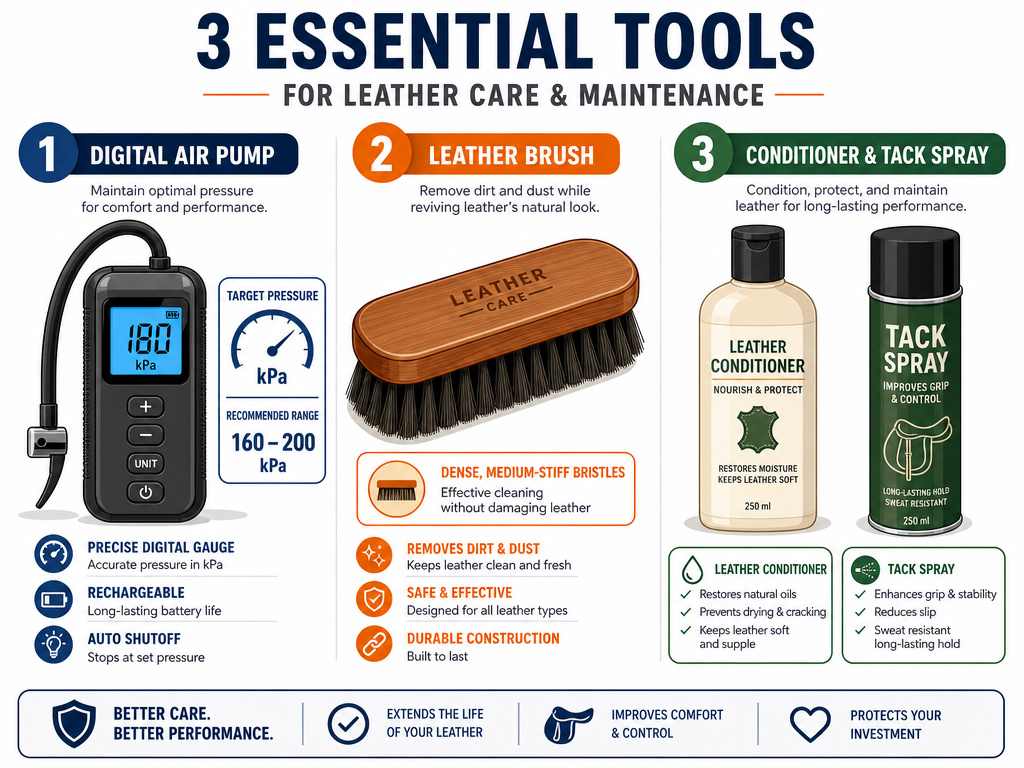 You don’t need a pro kit. You need three specific items, and you likely already have one of them.
- **A Pump with a Gauge (kPa scale).It is essential. The “Sportneer” or “Mikasa” digital pumps are reliable. The gauge must read in kPa.
- A Leather-Specific Brush. Wilson sells one. It has dense, medium-stiff bristles that are firm enough to work the conditioner but soft enough not to scratch. A horsehair brush from brands like Oster or Fuller is a good substitute.
- Conditioner and Tack Spray. Use the brand-matched set if you can. Wilson conditioner with Wilson tack spray. They’re formulated for their leather. For a general-purpose option, look for a conditioner meeting the Bickmore Bick 4 standard. Avoid anything with lanolin in high concentrations; it makes the leather expand.
For cleaning, a pack of plain microfibre cloths and a bottle of glycerin saddle soap will last years. This same kit is the foundation for general leather care on everything from leather boots to a leather wallet.
Fixing Common Problems
A ball isn’t dead at the first sign of trouble. Here’s how to diagnose and fix the usual suspects.
| Problem | Likely Cause | The Fix |
|---|---|---|
| Ball won’t hold air | Faulty valve or pinprick in bladder. | Apply a drop of glycerin to the valve stem to lubricate the seal. If it still leaks, the bladder needs replacement. |
| Leather feels hard and stiff | Over-cleaning with harsh chemicals or extreme dryness. | Condition with the 2:1 mix, deflated. May take 2-3 applications over a week to restore suppleness. |
| White, powdery residue | Mineral deposits from hard water or sweat drying on the leather. | Wipe down with a 50/50 mix of white vinegar and water on a cloth, then dry and condition immediately. |
| Musty smell | Moisture trapped inside, rotting the bladder or lining. | Deflate, stuff the ball with newspaper, and store in a dry place for a week. The paper absorbs internal moisture. If the smell persists, the bladder is likely rotting. |
| Lopsided shape | Chronic over-inflation or a trapped bladder. | Deflate completely. Massage the ball to reposition the bladder. Reinflate slowly to 69 kPa. If the lump remains, it’s permanent. |
Most of these fixes are about reversing a single bad decision. The musty smell is the exception, that’s a race against time to save the ball.
Frequently Asked Questions
Can you use Vaseline on a leather football?
No. Vaseline is petroleum jelly. It will not nourish the leather; it will clog its pores and create a greasy, dirt-magnet surface. It can also degrade the rubber of the bladder over time. Use a conditioner with lanolin or beeswax.
How often should you condition a leather football?
For a ball used weekly, condition it once a month during the season. For a ball in storage during the off-season, give it one thorough conditioning before you put it away. Over-conditioning is better than under-conditioning, but more than once a month is usually overkill.
What’s the best way to store a leather football off-season?
Clean it, condition it, deflate it to about 5 psi, and store it in a cool, dark place. Do not keep it in its original cardboard box long-term, as the cardboard can draw moisture. A cloth bag or a shelf away from heat sources is perfect.
Is it okay to use a leather football in the rain?
Yes, but you must dry it properly afterward. Towel-dry it immediately, then let it air-dry at room temperature, deflated. Never put a wet leather ball away in a bag. The care for a leather basketball follows the same rule: water won’t ruin it, but neglect after exposure will.
Can you wash a leather football?
Do not submerge it or run it under a tap. “Washing” means wiping it down with a damp, soapy cloth as described in the cleaning step. Getting the interior lining wet is a sure path to mildew and a rotted bladder.
Before You Go
The one habit that matters more than any product is checking the pressure with a gauge. Everything else, the grip, the shape, the longevity, stems from that. A ball at 69 kPa is a tool. A ball at 80 kPa is a liability.
If your ball already has a slick spot, hit it with the brush and conditioner mix. You might be surprised. That flattened pebble grain I mentioned earlier often holds more conditioner and can regain its tack. But if the leather is cracked or the smell is sour, you’re not maintaining a piece of gear anymore. You’re preserving a relic.
The goal isn’t a museum piece. It’s a football that feels the same in your hands in week ten as it did in week one. That consistency only comes from the routine.
