
How to Care for Suede | The 6-Week Rule Most Guides Miss
This post contains affiliate links. As an Amazon Associate, we earn from qualifying purchases.
This post contains affiliate links. As an Amazon Associate, we earn from qualifying purchases.
Suede care focuses on prevention, gentle cleaning, and proper storage. Brush regularly, treat stains with specialized tools, and always let wet suede air dry at room temperature. Protective sprays should be reapplied every six weeks to maintain their effectiveness.
The protective spray rule is a timeline. A spray forms a microscopic shield that wears down with friction and UV exposure.At about the six-week mark, the coating is thin enough that water will start to bead inconsistently, leaving patches vulnerable to stains.
What follows is a straightforward guide that moves from daily upkeep to seasonal storage. You’ll learn which tools matter, which cleaning myths to ignore, and how to spot the subtle signs that your suede needs more attention. I’ll break down the details so you can keep that soft nap looking fresh.
Key Takeaways
- Brush suede gently after every wear to lift dirt and maintain the nap; use a dedicated suede brush or a soft toothbrush.
- Reapply a protective spray every six weeks to ensure consistent water and stain resistance.
- Never use heat to dry wet suede; always air dry at room temperature to prevent shrinking and hardening.
- Store suede items in a cool, dark place with moderate humidity, using cedar shoe trees or breathable bags to maintain shape.
- For deep stains, use a suede-specific cleaner like Saphir Médaille d’Or Suede & Nubuck Cleaner instead of household chemicals.
Why Suede Needs a Different Kind of Care
Suede is the fuzzy inner layer of a hide, created by sanding the flesh side. This raised nap is what gives suede its soft hand and rich color, and what makes it a magnet for dirt, oil, and water.That nap acts like a thousand tiny hooks, catching and holding onto everything it touches.
The delicate, porous nature of suede leather means it readily absorbs liquids and retains particulate matter within its fibrous surface, requiring cleaning methods that lift debris without crushing the nap.
If you treat it like smooth leather, you’ll crush the fibers flat. If you treat it like fabric, you’ll drown it. Suede demands its own middle path: enough pressure to clean, but never so much that you alter its texture permanently. Think of it as grooming a very short, dense velvet.
Essential Tools You Already Own (Or Should)
You don’t need a specialty kit. A clean, soft-bristled toothbrush works as a starter brush. A standard pencil eraser can tackle light scuffs. For tougher jobs, a microfiber cloth and white vinegar or rubbing alcohol from your cupboard are your allies.
The upgrade path is simple and worth it. A dedicated suede brush has brass or nylon bristles set at the perfect angle to lift the nap without damaging it. A proper suede eraser contains a slightly abrasive rubber compound designed to roll away dirt particles embedded in the fibers. For a complete approach, a brand like Saphir Médaille d’Or makes a matched system of brush, cleaner, and renovator spray.
| Tool | Primary Job | If You Skip It |
|---|---|---|
| Suede Brush | Lifts surface dirt & restores nap | Dirt grinds into fibers, flattening the nap permanently within a month of regular wear. |
| Suede Eraser | Removes scuffs & ingrained dirt | Minor marks become permanent stains, requiring harsh chemical cleaning later. |
| Microfiber Cloth | Applies cleaning solutions & dries | Cotton towels or paper fibers can snag and pull the delicate suede surface. |
| Protective Spray | Repels water & stains | The first rainstorm or spilled drink will leave a dark, permanent watermark. |
The goal is to clean off the suede, not into it. Every tool on this list is designed to achieve that. For more detail on the products and steps, our essential suede cleaning methods guide covers the specifics.
The Daily & Weekly Suede Care Routine
This is where most guides overcomplicate things. Suede maintenance isn’t a weekly deep-clean; it’s a 30-second habit after you take your shoes off.
Give them a quick, gentle brush in the direction of the nap. This process is about dislodging the fine dust and grit that act like sandpaper under your next step. Do this after every wear, and you’ll rarely need stronger cleaners.
Common mistake: Letting dust build up between wears. That abrasive layer grinds down the nap each time you walk, leaving patches that look worn and discolored long before the rest of the shoe.
For items like bags or jackets, the same rule applies. A weekly once-over with the brush keeps the surface looking uniform. If you encounter a scuff, now is the time for the eraser. Rub gently back and forth; you should see the mark lighten as the eraser rolls the dirt into a little ball you can flick away.
When do you move past brushing and erasing? When you see a stain that brushing doesn’t lift, or when the entire item has a generalized dinginess. That’s your cue for a deep clean, which is a different process altogether. For the specifics on that, from choosing a cleaner to the final brush-out, our suede cleaning guide walks you through it step-by-step.
How to Handle Stains & Spills Without Panic
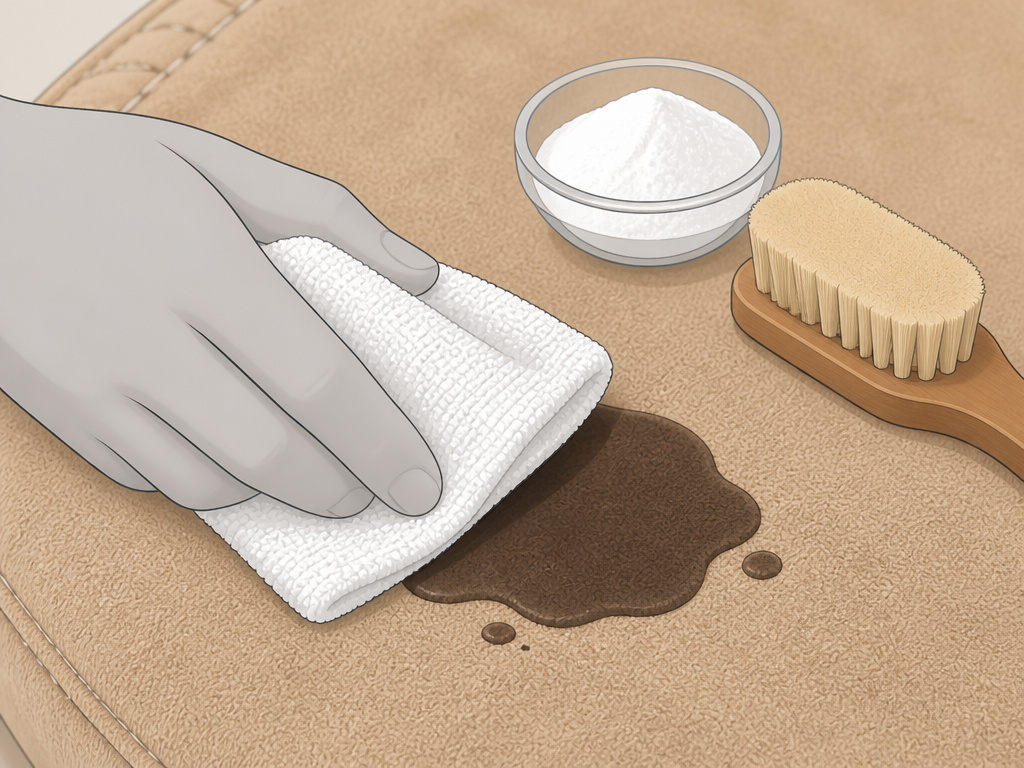 The first rule is the hardest: don’t rub. Blot. Press a clean microfiber cloth or paper towel directly onto the spill to absorb as much liquid as possible. Rubbing pushes the stain deeper into the porous fibers.
For water stains, sometimes more water is the answer, if you’re careful. Lightly mist the entire panel to create an even dampness, then let it air dry. This can blend a solitary water spot back into the surrounding area. For oil or grease, cover the spot with cornstarch or baking soda and let it sit overnight. The powder will draw the oil out of the fibers. Brush it away in the morning.
I learned the hard way that patience is the real tool here. Years ago, I attacked an oil spot on a suede bag with dish soap and vigorous scrubbing. I got the oil out, but I also created a flat, dark patch where the nap was permanently matted. Now I let the absorptive powders do the work overnight, and the nap stays intact.
For stubborn stains, a dedicated suede cleaner is your best bet. Brands like Saphir Médaille d’Or make a cleaner you apply with a soft brush, working in sections. You rinse the brush, lift the dirt, and let the area dry completely. It’s a more involved process, detailed in our guide on cleaning suede shoes.
What Not to Do: The Quickest Ways to Ruin Suede
 This list is shorter than the care list, but the consequences are permanent.
Never use heat. No hair dryers, no radiators, no sunny windowsills. Heat causes the leather to shrink and the fibers to become brittle. A shoe that goes into a warm spot damp will come out stiff and misshapen.
Never saturate suede. A light mist for spot-cleaning is one thing; running it under the tap or throwing it in the washing machine is a death sentence. The suede will absorb water, swell, and then harden into a cardboard-like texture as it dries.
Never use wax, polish, or oil-based conditioners. These products are for smooth leathers. On suede, they will clog the pores, mat the nap into ugly dark clumps, and attract more dirt. The differences between nubuck and suede include how they react to these products, but both will be ruined by traditional leather conditioners.
Drying Wet Suede: A Step-by-Step Rescue Plan
Suede will get wet sometimes. The recovery process is slow, gentle, and essential.
First, blot, don’t wipe, with an absorbent towel. Then, stuff the shoes with paper towels or, better yet, cedar shoe trees. The cedar helps absorb moisture from the inside and maintains the shape. Let them dry at room temperature, away from direct sunlight and air vents. This can take 24-48 hours.
Where this goes sideways: Putting damp suede in a sealed closet or plastic bag. Trapped moisture leads to mold in as little as three days, which shows up as fuzzy white or green spots and a musty smell.
If the item is a jacket or bag, lay it flat on a dry towel in a well-ventilated room. Resist the urge to check on it by bending or folding. Leather is weakest when wet, and you can cause permanent creases. To understand why this material behaves this way, it helps to know how suede is made and how its structure differs from full-grain leather.
Seasonal Storage & Long-Term Protection
How you store suede matters almost as much as how you clean it. The goal is a cool, dark place with stable, moderate humidity, not a hot attic or a damp basement.
Before storage, give items a thorough cleaning. Any leftover dirt or salt will etch into the fibers over months of stillness. Apply a fresh coat of protective spray and let it cure for a day. Then, store each item in a breathable cotton bag, never plastic. Plastic traps moisture and can cause mildew.
For shoes, use cedar shoe trees. They absorb residual moisture, hold the shape, and keep moths away. For bags, stuff them with acid-free tissue paper to maintain their form. Never stack heavy leather items on top of each other; the weight will create permanent pressure marks.
This holistic approach to leather care ensures your suede items are ready to wear when the season comes back around, without any surprises.
Frequently Asked Questions
Can you machine wash suede?
No, never. Machine washing saturates the suede, causing it to shrink, stiffen, and lose its texture. Even the delicate cycle uses agitation and heat that will irreversibly damage the nap. Always use dry cleaning methods.
How often should I reapply protective spray?
Reapply a suede protective spray every six weeks for items in regular use. If the suede is exposed to heavy rain or a spill, reapply it sooner. The coating wears down gradually from friction and exposure.
What’s the difference between suede and nubuck?
Both are created by sanding leather, but nubuck is made from the outer grain side of the hide, resulting in a finer, more velvety nap. Suede comes from the inner flesh side and is generally more porous. The care principles are similar, but nubuck is even more delicate. Our suede vs nubuck article explains the finer points.
Are Ultrasuede® and Sensuede cleaned the same way?
Mostly, but check the label. These synthetic suedes are often designed to be more durable. Ultrasuede® can be machine-washable unless combined with other materials, and Sensuede specifies machine washing in cold water. However, the standard dry-cleaning methods, brushing, spot cleaning, are always safe and recommended first.
How do I restore flattened suede nap?
Use a suede brush and vigorous, directional brushing to reactivate the fibers. For severely matted areas, hold the item over a steaming kettle (not touching the water) for a few seconds to introduce moisture, then brush immediately. The heat from the steam can help the fibers swell and stand up again.
Before You Go
Suede care ultimately comes down to respecting the material. It’s not fragile if you understand its rules: keep it dry, keep it brushed, and keep it protected. That six-week spray reminder is your most useful habit, set a calendar alert.
If you take one action from this guide, make it this: the next time you take off your suede shoes, spend 30 seconds giving them a brush. That single habit will do more to extend their life than any emergency cleaning technique ever could. The leather will tell you what it needs; you just have to learn how to listen.
