
What Is Roughout Leather | The Reverse Side of Full-Grain
This post contains affiliate links. As an Amazon Associate, we earn from qualifying purchases.
This post contains affiliate links. As an Amazon Associate, we earn from qualifying purchases.
Roughout leather is full-grain leather turned inside out, exposing the durable, fibrous underside (the flesh or corium) instead of the smooth grain side. It retains the hide’s full thickness, making it thicker and more abrasion-resistant than suede, which is created by splitting the hide. This construction gives roughout its distinctive fuzzy texture, natural water resistance, and a unique patina that develops with wear.
That “inside-out” definition is the starting point, but the real value of roughout lies in what happens next. The choice to use the flesh side isn’t just aesthetic; it fundamentally changes how the leather handles stress, moisture, and time. Unlike a finished grain that can crack or peel, roughout distributes wear across a dense field of fibers.
This guide walks through the specifics: the anatomy of the hide that makes roughout possible, how it definitively differs from suede, the common types you’ll encounter, and the straightforward care that uses its natural durability. By the end, you’ll be able to spot roughout, understand why it’s chosen for tough boots, and know exactly how to maintain it.
Key Takeaways
- Roughout is not suede. It’s the full thickness of the hide with the flesh side out, while suede is a thinner split layer.
- Its main advantage is abrasion resistance. The fuzzy nap hides scuffs, and the dense fiber structure withstands scraping better than smooth leather.
- Conditioning is rarely needed. Roughout benefits from the natural oils from your skin and wear; adding conditioners can darken and mat the nap permanently.
- Patina is a feature. Roughout develops a unique, personal character from dirt, oil, and dye transfer (like from denim).
- For extreme wet conditions, specific waterproof roughouts like Red Wing’s Mohave exist, tanned with penetrating waterproofing agents.
The Anatomy of a Hide: Where Roughout Comes From
To understand roughout, you need a mental map of a piece of leather. Think of a three-layer stack: the grain, the corium, and the flesh.
The grain is the outermost, smooth surface that was the animal’s epidermis. It’s often finished with dyes and top-coats. Beneath that is the corium, the thick, dense middle layer of collagen fibers that gives leather its strength. The flesh side is the innermost, roughest layer, featuring a loose, fibrous nap.
When a tanner takes a full-thickness hide and simply flips it so the flesh side becomes the exterior, that’s roughout leather. The grain side becomes the interior lining, and the full, un-split corium remains in the middle, providing its core strength.
This is the critical distinction. A piece of full-grain leather becomes roughout by a simple reversal. No material is removed; the full integrity of the hide is preserved. This is why experts stress that roughout is a construction method, not a separate type of leather.
Common mistake: Calling roughout “a type of suede.” They share a fuzzy look, but their origins are opposite. Suede is made by slicing the hide horizontally, creating two thinner pieces with fuzzy surfaces. That splitting process sacrifices thickness and, therefore, potential durability. Roughout keeps everything intact.
Roughout vs. Suede: The Durability Difference
The visual similarity trips up many buyers. Both have a soft, napped texture. The difference under your fingertips and under stress is substantial.
| Aspect | Roughout Leather | Suede |
|---|---|---|
| Construction | Full-grain hide, flipped (grain inside, flesh out). | Hide is split, creating one or two thinner layers. |
| Thickness | Full hide thickness (typically 1-3mm for boots). | Thinner, depending on the split depth. |
| Strength | Higher tensile strength; more resistant to tearing. | Less inherent strength due to split. |
| Abrasion Resistance | Excellent; nap hides scratches, dense fibers resist wear. | Good, but thinner nap can wear flat or tear more easily. |
| Water Response | Generally sheds water well; droplets often evaporate without marking. | Prone to water spotting; stains and darkens easily. |
| Primary Use | Work boots, rugged footwear, durable goods. | Fashion jackets, shoes, accessories. |
The thickness is the essential advantage. Boot leather needs to withstand pressure, flex, and scraping. Using the full thickness means there’s simply more material between your foot and the outside world. Historical use proves the point: roughout was specified for soldiers’ boots in both World Wars because it could handle trench conditions and hide scuffs.
Suede, particularly high-grade full-grain suede like C.F. Stead’s Janus calf, bridges the gap somewhat. It’s made by buffing the flesh side of an unsplit hide for an even nap, keeping most of the corium. But the classic suede on a fashion jacket or loafer is a split. It’s thinner, softer, and requires more careful protection from the elements.
Why Choose Roughout? The Practical Advantages
You don’t see roughout on a dress shoe or a handbag often. Its virtues are utilitarian.
First, it’s incredibly scuff-resistant. A deep scratch on smooth leather can leave a glaring light-colored mark. On roughout, a scratch just rearranges the existing nap, often becoming invisible with a quick brush. This is why it’s a favorite for wildland firefighters and anyone who works in abrasive environments—the boot stays functional and doesn’t look immediately trashed.
Second, it requires less babying. There’s no polished finish to crack, no aniline dye to fade unevenly. The leather’s appearance is the leather itself. While you should brush off dirt, you won’t be constantly reaching for conditioners and polish. In fact, you shouldn’t.
I used to believe exotic leathers were purely for luxury. Working with their unique textures showed me their surprising durability, making them a functional choice for high-wear items. Roughout taught me a similar lesson: the most practical option often doesn’t look the part at first glance.
Third, it develops a patina that’s genuinely unique. Smooth leather patinas through shine and subtle color shifts. Roughout patina is a record of your environment. It picks up dust, oils from your hands, and yes, the indigo from your jeans. This doesn’t ruin it; it personalizes it. The color deepens and evolves in a way that’s impossible to replicate artificially. For many enthusiasts, this developing patina is the main attraction.
Common Types and Finishes
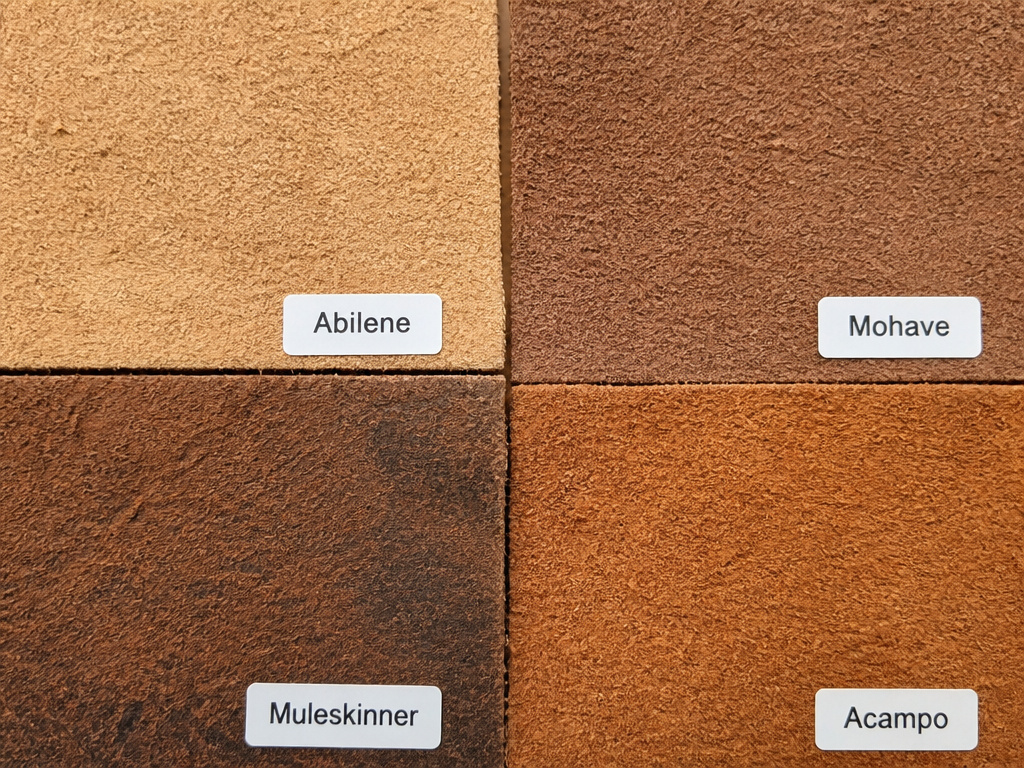 Not all roughout is the same. Tanneries apply different finishes to the flesh side to achieve specific properties. Red Wing’s SB Foot Tannery, which has produced roughout since 1905, offers a clear example of this range.
| Type | Finish / Treatment | Key Characteristics | Best For |
|---|---|---|---|
| Abilene | Buffed grain, dry finish with minimal oils. | Soft, velvety, matte texture. Lightens with patina. | Everyday heritage wear; drier climates. |
| Mohave | Dry-tanned with waterproof (WP) formula penetrated during tanning. | Natural, open-fiber surface with enhanced water repellency. | Wet, harsh field conditions; stain resistance. |
| Muleskinner | Oiled and waxed flesh side, then burnished. | Rugged, slick hand-feel. Dramatic, worn-in look over time. | High abrasion; desired “broken-in” aesthetic. |
| Acampo | Soft retan formula, then lightly oiled. | Softer hand-feel while maintaining durability. | Comfort-focused rugged boots. |
Mohave is a standout for its technology. The waterproofing isn’t a surface spray; the hide sits longer in the tanning drum so the WP formula penetrates completely. This gives water resistance without clogging the natural fibers or changing the dry, tactile feel. It’s a premium example of functional tanning.
Your choice depends on your needs. Want a boot that looks new longer with a dry feel? Abilene. Facing mud and rain? Mohave. Want that classic, oil-rich work boot look that ages dramatically? Muleskinner. Understanding these finishes helps you move beyond “roughout” as a single category.
How to Care for Roughout Leather
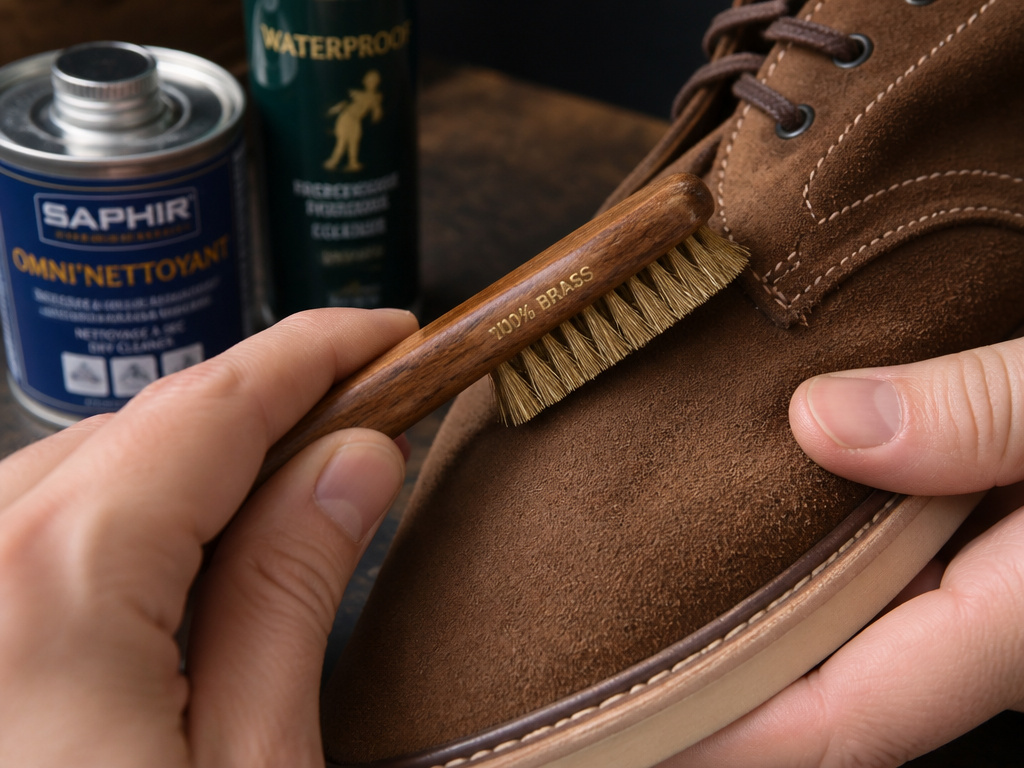 The care routine is refreshingly simple, which aligns with roughout’s low-maintenance philosophy. Forget the extensive conditioning rituals of smooth leather.
The primary tool is a brush. A stiff bristle brush (brass, nylon, or horsehair) is your best friend. Use it regularly to knock off dried dirt and redistribute the nap. For deeper cleaning, use a specialized suede & nubuck cleaner like Saphir Omni’Nettoyant. These are designed to clean without saturating or darkening the nap. Always test any product on a hidden spot first.
Do not use standard leather conditioners. Oils and waxes will soak into the open fibers, darkening the leather permanently and matting the nap into greasy clumps. The leather gets its conditioning from the natural oils in your skin during wear. If the leather becomes abnormally dry and stiff, consult a professional—don’t experiment with off-the-shelf conditioners.
For water protection, use a dedicated spray. If you’re facing a storm or wearing Mohave-like leather, a silicone-based waterproofing spray (e.g., Saphir Super Invulner) can be applied. It won’t drastically alter the look and provides an extra barrier. Remember, even waterproofed roughout benefits from being allowed to dry naturally at room temperature.
Embrace the patina. Blue dye from denim, scuffs from rocks, dust from the trail—these aren’t defects. They’re the story. A light brush is often all you need to integrate these marks into the leather’s character. This mindset is the most important part of care: you’re maintaining a functional material, not preserving a pristine ornament.
Frequently Asked Questions
Is roughout leather waterproof?
Roughout leather is naturally more water-resistant than suede due to its tighter, full-thickness fiber structure. Water droplets often bead up and evaporate without leaving a mark. However, it is not inherently waterproof. Specific types, like Red Wing’s Mohave, are tanned with penetrating waterproofing agents to achieve a high level of water and stain repellency.
Can you polish roughout leather?
No, you should not polish roughout leather. Traditional waxes and polishes are designed for smooth grain surfaces and will clog the nap, creating a messy, discolored appearance. Care focuses on brushing and using specialized cleaners for suede and nubuck materials.
Does roughout leather stretch?
Like all quality leather, roughout will mold to your foot or the shape of an item with wear, a process often called “breaking in.” It does not stretch significantly in the way a synthetic material might. The full-grain construction provides a stable structure that forms to you without losing integrity.
How do you remove stains from roughout?
For oil-based stains, immediately apply an absorbent powder like cornstarch or a specialized suede eraser to draw out the oil. Let it sit for hours, then brush vigorously. For general dirt and mud, let it dry completely, then brush it out. For stubborn stains, use a cleaner specifically formulated for suede leather and nubuck, following the product instructions carefully.
Is roughout more durable than smooth leather?
For abrasion and scuff resistance, yes. The exposed fibrous nap hides scratches and the full thickness can withstand more surface scraping. However, smooth full-grain leather might have higher tensile strength in a direct pull test. The durability advantage of roughout is specifically in its ability to maintain its appearance and function under abrasive wear.
Before You Go
Roughout leather’s value is directness. It takes the strongest part of the hide and presents it without a protective finish, trusting the material’s inherent structure. That’s why it’s survived over a century in Red Wing’s catalog and on the feet of soldiers and workers.
If you’re considering it, your decision tree is short. Prioritize abrasion resistance and a low-maintenance, evolving look? Roughout is your answer. Need a sleek, formal appearance that holds a high shine? Look to smooth full-grain leather instead. The choice is really about what you want the leather to do—and roughout excels at being used hard and aging with undeniable character.
Remember the one non-negotiable: never treat it like suede. They share a look, but their care and construction are worlds apart. Use a horsehair brush, apply a pH-neutral cleaner, and let the leather tell its own story through the patina it earns.
