
What Is Nubuck Leather | The Soft, Velvet Finish Explained
This post contains affiliate links. As an Amazon Associate, we earn from qualifying purchases.
Nubuck leather is top-grain leather that has been lightly sanded or buffed on its outer surface to create a soft, velvet-like nap. It offers a unique combination of durability from the tough outer hide and a plush feel, making it popular for boots, bags, and jackets that see regular use but still need to look good.
That sanding step is the whole game. It transforms a smooth, protective surface into something tactile and rich, but it also changes how the leather behaves with water, dirt, and wear. You don’t just buy a nubuck item, you adopt a specific care routine to keep that nap standing tall.
What follows is a breakdown of where nubuck comes from in the hide, how it stacks up against suede and classic smooth leathers, and the straightforward maintenance it demands to stay handsome for years. Let me share what I’ve learned about making this material work for you.
Key Takeaways
- Nubuck is top-grain leather, sanded for a velvet feel, not a separate material.
- It’s more durable than suede but less water-resistant than full-grain leather right out of the tannery.
- Proper care hinges on regular brushing with a specialized suede/nubuck brush to lift the nap, not liquid cleaners.
- Boots like the Lowa Renegade GTX and Danner Arctic 600 use nubuck for a balance of trail toughness and comfort.
- Applying standard leather conditioner will mat the nap and create dark, greasy spots, a common and costly mistake.
The Anatomy of a Hide: Where Nubuck Comes From
To understand nubuck, you need a quick map of a leather hide. Think of it in three main layers. The outermost surface is the grain layer, tight, dense, and marked by the animal’s pores and natural markings. Beneath that is the junction, a transitional zone, and below that is the corium, the fibrous, spongy inner layer.
Nubuck uses the grain and junction layers of the hide. This top section is sanded or buffed down, removing the hard, shiny top of the grain to expose a fine, velvety nap while leaving most of the strong, dense grain structure intact.
Full-grain leather uses this same top section but leaves it untouched and smooth. Suede, in most modern cases, is made from the split corium layer alone, which is also sanded. This is the fundamental difference. Nubuck is a corrected grain leather, the grain is altered by sanding, not by adding a plastic coating like some cheap corrected leathers. You’re left with a material that has about 80% of the toughness of full-grain but 100% more character to the touch.
I learned the importance of material origin the hard way. Early in my consulting work, I once gave quick advice on a jacket based on a blurry photo, mistaking a synthetic laminate for a low-quality real hide. The recommended treatment was all wrong. It was a career reminder that you must know what you’re working with. The feel, the pull-up, the smell, they all tell a story. With nubuck, that story starts with a buffing wheel on the good stuff.
Nubuck vs. Suede: The Key Differences
People often lump nubuck and suede together because they feel similar. They’re both napped leathers. But their performance and care diverge because they come from opposite sides of the hide. This isn’t a minor detail, it dictates which one you should choose for a hard-wearing boot versus a dress shoe.
| Characteristic | Nubuck Leather | Suede (Split) |
|---|---|---|
| Source Layer | Outer grain layer (top-grain) | Inner corium layer (split) |
| Durability | High – dense, tight fibers remain | Lower – loose, spongy fiber structure |
| Water Resistance | Moderate (needs treatment) | Low – very absorbent |
| Breathability | Good, but less than suede | Excellent |
| Primary Care Tool | Stiff bristle brush (brass/gum) | Softer brush (horsehair/rubber) |
| Cost Driver | Quality of top-grain hide | Lower-cost splitting process |
Nubuck’s toughness comes from its origin. The outer grain layer faced the elements on the animal, so its fibers are densely woven. Sanding scratches the surface but leaves that strong foundation. James King from Lowa, which uses nubuck in models like the Lowa Renegade GTX, notes this makes nubuck boots more durable on the trail than suede. The Danner Arctic 600, a nubuck boot, is built for cold-weather abuse.
Suede’s softness is its allure and its weakness. Made from the inner corium, its fibers are loose and porous. It breathes wonderfully and feels luxurious, but it drinks water and stains if you look at it sideways. That’s why your suede jacket is for dry evenings out, and your nubuck hiking boots can handle a muddy path.
Here’s the practical takeaway: If you need something to survive daily grind and occasional weather, pick nubuck. If you want supreme softness and breathability for light-use items, suede is your choice. For a deep dive on its rival, our article on the definition of suede leather breaks it down further.
Nubuck vs. Full-Grain Leather: The Trade-Offs
Choosing between nubuck and smooth full-grain leather is a debate about priorities: rugged patina versus plush comfort, and how much maintenance you’ll accept.
Full-grain leather is the entire top section of the hide, untouched. It has the highest natural durability and develops a rich patina over time. Its smooth surface also offers the best innate water resistance, beads roll right off. However, it can be stiff initially and may show the animal’s natural scars and markings.
Nubuck sacrifices a slice of that top-layer toughness for immediate comfort and a unique look. The sanding process makes it more pliable from day one. As King points out, this malleability means a nubuck boot can fit and feel more comfortable faster, while retaining suppleness. The trade-off is twofold. First, sanding weakens the very top fibers, making it less water-resistant than full-grain unless treated. Second, it requires more attentive care to keep the nap looking clean.
You can see this trade-off in the market. The Danner Arctic 600 in nubuck is nearly half the price of the full-grain Danner Mountain Pass from the same brand. But that’s not a universal rule. You can’t necessarily count on nubuck being cheaper. Sometimes you’re paying for the specific finish and the brand’s construction, not just the raw material. Other times, brands blend nubuck panels with suede or synthetics to hit a price point, a trick less common with classic full-grain boots.
So, which one? For a workhorse item that will age beautifully with minimal fuss, full-grain is king. For something where softness, a unique texture, and faster break-in are top priorities, nubuck wins. Our guide on how to break in leather boots covers what to expect from both types.
The Nubuck Care Regimen: Brushing is Everything
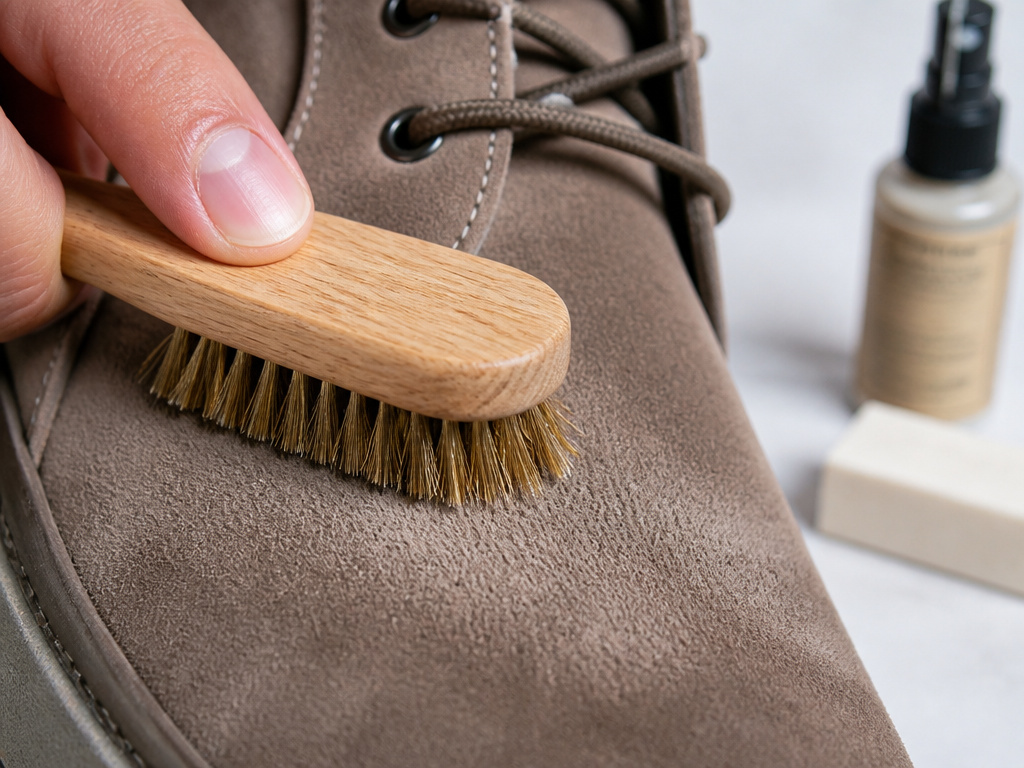 This is where most owners go wrong. You cannot care for nubuck the way you care for smooth leather. Standard leather conditioners are oil-based. Apply one to nubuck, and you’ll mat the nap down permanently, creating dark, greasy spots that never lift. It’s a one-way ticket to a ruined finish.
The core of nubuck care is mechanical, not chemical. You’re maintaining a raised fiber nap.
- Regular Brushing. After each wear, use a dedicated suede/nubuck brush (stiff brass or gum rubber bristles) to brush against the nap’s direction, then with it. This lifts crushed fibers and dislodges surface dust. It resurrects the texture.
- Spot Cleaning. For stains, use a specialized, dry foam cleaner like Saphir Omni’Nettoyant Suede. Gently rub, let dry, then brush. Never use water-based soaps, they can leave rings.
- Protective Spray. Before first use, apply a water-and-stain protector like Tarrago Nano Protector. Hold the can 6 inches away, spray evenly in a well-ventilated area, and let dry completely. Reapply every few months with heavy use.
- Dealing with Scuffs. Light-colored scuffs can often be brushed out. For deeper marks, a suede/nubuck eraser (like the one in the Kiwi Suede & Nubuck Kit) can work gently. For heavy oil stains, an absorbent powder like cornstarch applied overnight can draw out the oil before brushing.
The leather will tell you what it needs. A well-cared-for nubuck boot should feel uniformly soft, with a consistent color and a raised, even nap. If it starts looking flat and matted in high-wear spots, you’ve likely not been brushing enough. For a complete walkthrough, our guide on how to clean nubuck leather has the step-by-step details.
Common Uses for Nubuck Leather
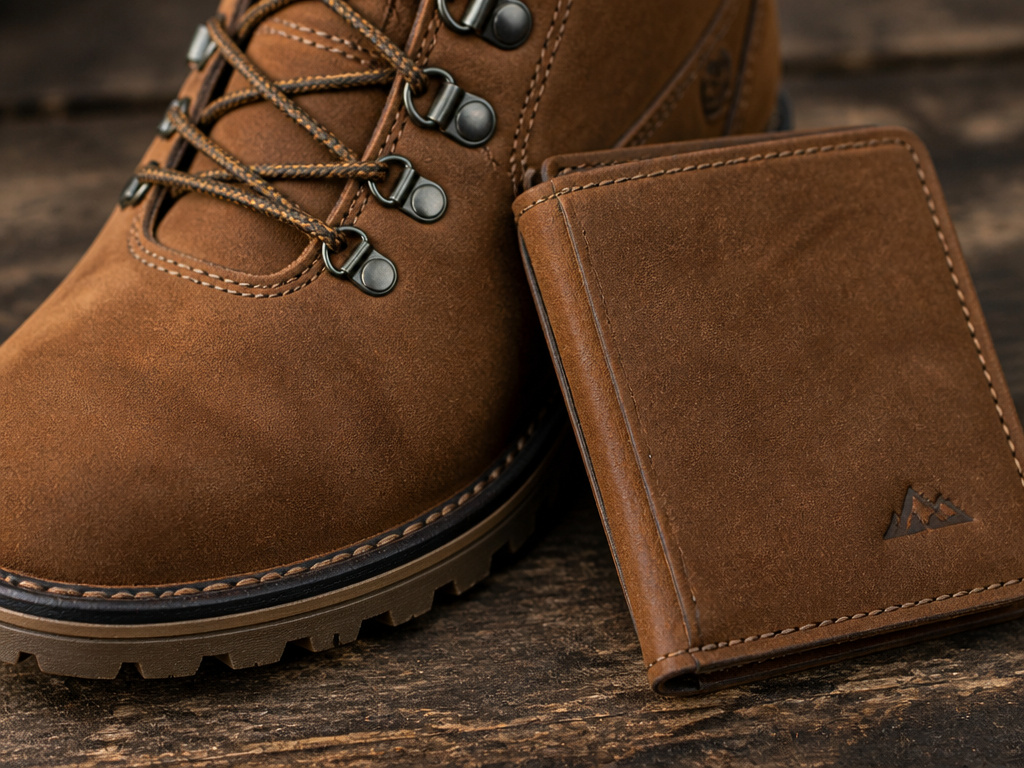 Nubuck’s blend of ruggedness and refined texture gives it a specific job in the leather world. It’s for items that need to be functional and handsome, often facing outdoor elements or daily wear.
- Footwear: This is its primary domain. Hiking boots like the Hanwag Banks or the Lowa Renegade GTX use it for a supple, comfortable fit that’s tougher than suede. It’s also common in casual boots, desert boots, and some fashion sneakers.
- Bags and Wallets: For bags that get tossed around but still need to look sharp, nubuck is a great choice. Its durability resists scuffing better than suede, and the texture hides minor wear.
- Jackets and Outerwear: A nubuck jacket offers a unique, rugged-yet-soft aesthetic. It’s warmer and more wind-resistant than suede, making it suitable for casual fall and spring jackets.
- Accessories: You’ll find it in watch straps, gloves, and even some furniture accents where a tactile feel is desired.
Think of nubuck as the ideal candidate for your “nice but not precious” daily gear. It’s not as delicate as suede, so you can use it without constant anxiety, but it offers more visual interest than standard smooth leather. When assessing any leather good, knowing these intended uses helps you test leather quality effectively, a nubuck hiking boot should feel substantial and tight, not thin and papery.
Frequently Asked Questions
Is nubuck real leather?
Yes, nubuck is absolutely real leather. It is made from the top-grain layer of an animal hide, typically cow or calfskin. The distinction is in the finish, it’s sanded to create its signature nap. This is confirmed by sources like the Cambridge Dictionary nubuck definition, which describes it as a type of leather from cow skin.
Which is better, nubuck or leather?
This question usually compares nubuck to smooth, full-grain leather. “Better” depends on your needs. Full-grain leather is more durable and water-resistant naturally. Nubuck is softer, more pliable, and offers a unique texture. For a hard-use belt or bag that needs to develop a patina, full-grain. For comfortable boots or a soft-feel jacket, nubuck. Our article on suede vs leather explores this dynamic further.
Can you make nubuck waterproof?
You can significantly improve its water resistance, but making it fully submersible-proof is difficult and often ruins its breathability. The key is a specialist silicone- or fluoropolymer-based spray protector (like Tarrago Nano Protector). These coat the fibers without matting them. Even with treatment, nubuck is best for light rain and splashes, not prolonged wet conditions.
How do you fix damaged nubuck?
Minor scuffs often brush out. For stained or greasy spots, start with a suede/nubuck eraser or an absorbent powder (cornstarch for oils). For deeper discoloration, a specialized nubuck dye or recoloring balm can be used, but this requires skill and testing in a hidden area first. Severely matted nap from oil or improper conditioner is often permanent.
The Bottom Line
Nubuck leather is a specific, useful finish on a quality hide. It gives you the durability of the tough outer grain with the soft hand-feel of a sanded nap. Understand that choice, and you understand the care it requires: a good brush, the right protector, and a strict ban on standard conditioners.
If your goal is a pair of boots that feel broken-in from the first hike or a bag that looks refined but can take a knock, nubuck is a fantastic option. Just know you’re signing up to be its caretaker. Keep the nap clean and raised, and it will reward you with years of distinctive service. For everything from cleaning to comparisons, our resources on nubuck vs suede and cleaning nubuck shoes have you covered.
