
The Key Differences Between Pigmented and Aniline Leather
This post contains affiliate links. As an Amazon Associate, we earn from qualifying purchases.
Pigmented leather has a polymer and pigment surface coating that masks the hide’s imperfections and provides stain resistance, while aniline leather is dyed with transparent aniline dyes and has no surface coating, leaving the natural grain fully visible and porous. The choice is a direct trade-off: a uniform, protected surface versus a unique, breathable hide that will develop a patina.
The coating is the whole game. That thin layer of acrylic or polyurethane defines everything about the leather’s behavior, its feel, its reaction to spills, its aging process, and its final appearance. A pigmented piece looks new longer. An aniline piece tells a story faster.
Here’s a straightforward guide to the two finishes. We’ll break down the physical differences, the practical pros and cons that every buyer glosses over, and the specific households each type is built for. By the end, you’ll be able to read a leather tag and know exactly what you’re bringing home.
Key Takeaways
Aniline leather is a premium treatment for high-quality hides that requires informed, not fearful, care, rather than being “unfinished” or delicate. – The stain-resistance of pigmented leather comes from a physical barrier, a polymer coating that sits on top of the leather, not within it. – Choose based on household reality, not an ideal, aniline suits calm, adult spaces; pigmented handles busy, messy, or pet-friendly homes. – “Pull-up” is an aniline characteristic, not a defect, waxes and oils within the hide cause it to lighten when stretched, hiding minor scuffs. – The patina is the payoff, aniline leather’s color and texture evolve with use, while pigmented leather’s appearance remains largely static.
What Is the Physical Difference?
Look at the edge of a leather sample. A pigmented piece has a crisp, painted line. An aniline piece shows a gradual color gradient from surface to core. That’s the first clue, but the real distinction is microscopic.
Pigmented leather undergoes a multi-step finishing process. After the hide is tanned, a base coat of pigment, finely ground color particles, is sprayed onto the surface. This is followed by a binder, usually an acrylic or polyurethane resin, that locks the pigment in place and creates a continuous film. Finally, a clear topcoat is often added for scuff resistance and sheen control. This coating can be matte, satin, or high-gloss.
A pigmented leather finish is a layered, opaque film applied to the grain surface. It typically consists of a colorant (pigment), a polymeric binder (acrylic, polyurethane), and optional additives for feel and durability, resulting in a uniform, protected exterior that masks the natural hide characteristics beneath.
Aniline leather skips those layers. The tanned hide is drum-dyed in a bath of soluble, transparent aniline dyes. These dyes penetrate deep into the leather fibers without obscuring the surface. No opaque pigment, no polymer coating. The leather is then lightly fat-liquored (oiled) and dried. What you see is the naked grain of the hide, with all its natural pores, fine scars, and fat wrinkles, the very markings that get sanded off or hidden in lower-grade leathers.
The hand-feel is the dead giveaway. Run your fingers across a pigmented sofa. It’s smooth, consistent, and often slightly cool or synthetic to the touch. Now feel an aniline one. It’s warmer, supple, and you can detect the texture of the grain itself, it breathes.
Pigmented Leather: The Practical Workhorse
Let’s be clear about one thing: calling pigmented leather “low quality” is a mistake. It’s a different tool for a different job. Its strength is consistency and resilience.
The polymer coating acts as a wearable shield. Spills bead up and can be wiped away before they penetrate. Daily friction from clothing or pets doesn’t immediately alter the color. This makes it the default choice for contract upholstery, hotels, offices, restaurants, and for family homes with young children or pets. Brands like Cortina Leathers engineer finishes like their Rodeo pure aniline for specific markets, but their pigmented lines dominate high-traffic commercial applications because the finish is the first line of defense.
But that shield has trade-offs. The coating affects breathability. In some climates, sitting on a heavily coated leather can feel less comfortable over long periods. The biggest compromise is in hand-feel and aesthetics. The coating can sometimes impart a plastic-like sensation, and it completely obscures the natural character of the hide. Two pieces of pigmented leather from the same dye lot will look identical. There’s no story, just product.
Common mistake: Assuming a pigmented finish is indestructible. The coating can crack or peel if the leather underneath dries out or is subjected to extreme stress, like sharp impacts or folding along the same crease repeatedly. Conditioning the leather beneath the coating (where possible) is still important for long-term flexibility.
Aniline Leather: The Living Material
Aniline leather is the opposite philosophy. It’s not protected from the world; it’s designed to interact with it. Every mark, every subtle lightening from sunlight, every gentle patina from use is incorporated into its character. This is why it’s featured in luxury goods and high-end furniture.
Because there’s no surface coating, aniline leather is exceptionally breathable and develops a rich, deep luster over time. The natural fat wrinkles you see are proof of a full-grain hide from a mature animal, a hallmark of quality that a lesser hide would have been corrected to remove. Optima Leathers’ ANIL Collection explicitly highlights this, stating the vacuum-drying process leaves “the most natural characteristics beautifully visible to patina over time.”
The trade-off is immediate care. A spill isn’t sitting on plastic; it’s soaking into open pores. You have minutes, not hours, to blot it. Direct sunlight will fade it faster than a pigmented piece. This isn’t a flaw; it’s a property. You are buying a material that is alive and will change. The reward is a piece that looks uniquely yours after a few years, not a catalog-perfect replica.
I’ve fielded multiple calls from concerned clients who thought the beautiful, ripple-like markings in their new aniline armchair were stretch marks or poor workmanship. Educating them that these fat wrinkles are a sign of a superior, full-grain hide is a regular part of the job. It’s a perfect example of how aniline leather flips the script on what we consider “perfect.”
Semi-Aniline: The Middle Ground Exists for a Reason
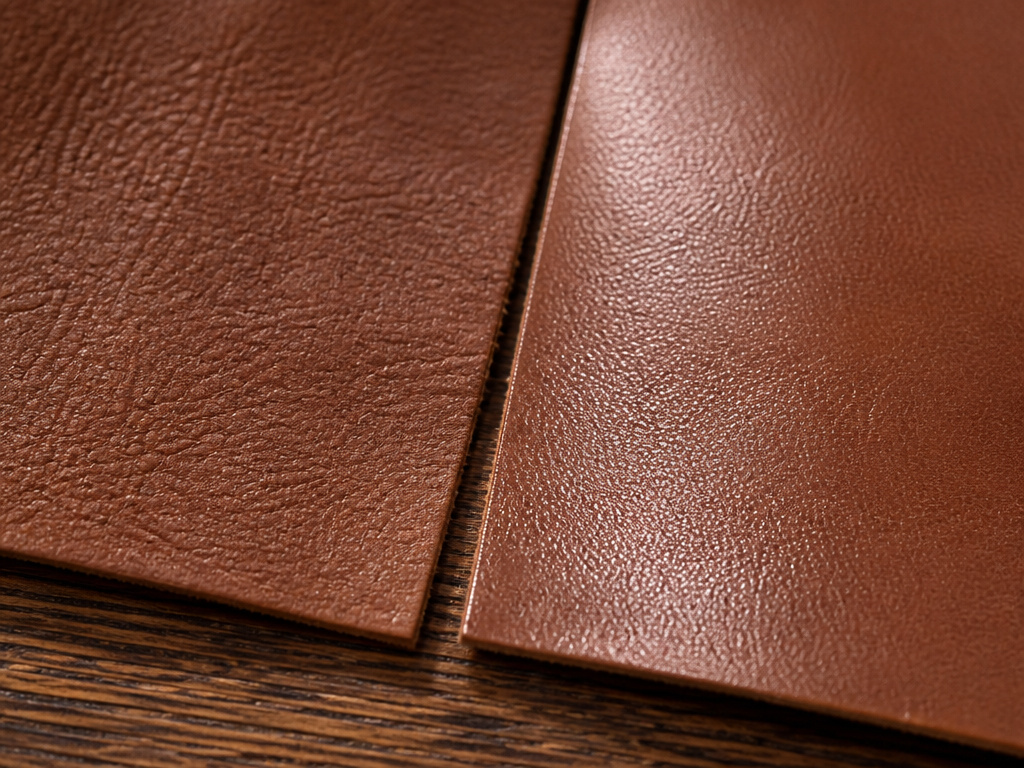
Between the two extremes sits semi-aniline leather, which answers the question: “What if we added just a whisper of protection?” It starts as an aniline-dyed hide, so the natural grain remains visible. Then, a very light application of pigment and a thin, breathable topcoat are applied.
This micro-coating offers a degree of spill resistance, you might get a 10-minute window instead of a 2-minute one, and slightly better fade resistance. It also evens out the color tone slightly, making two hides from the same batch a closer match, which is crucial for larger furniture projects. However, it slightly mutes the tactile experience and the depth of the natural grain compared to a pure aniline.
Semi-aniline is the pragmatic choice for someone who loves the aniline look but has a realistic concern about occasional accidents. It’s the leather finish that admits life isn’t perfect.
The “Pull-Up” Effect: Aniline’s Secret Weapon
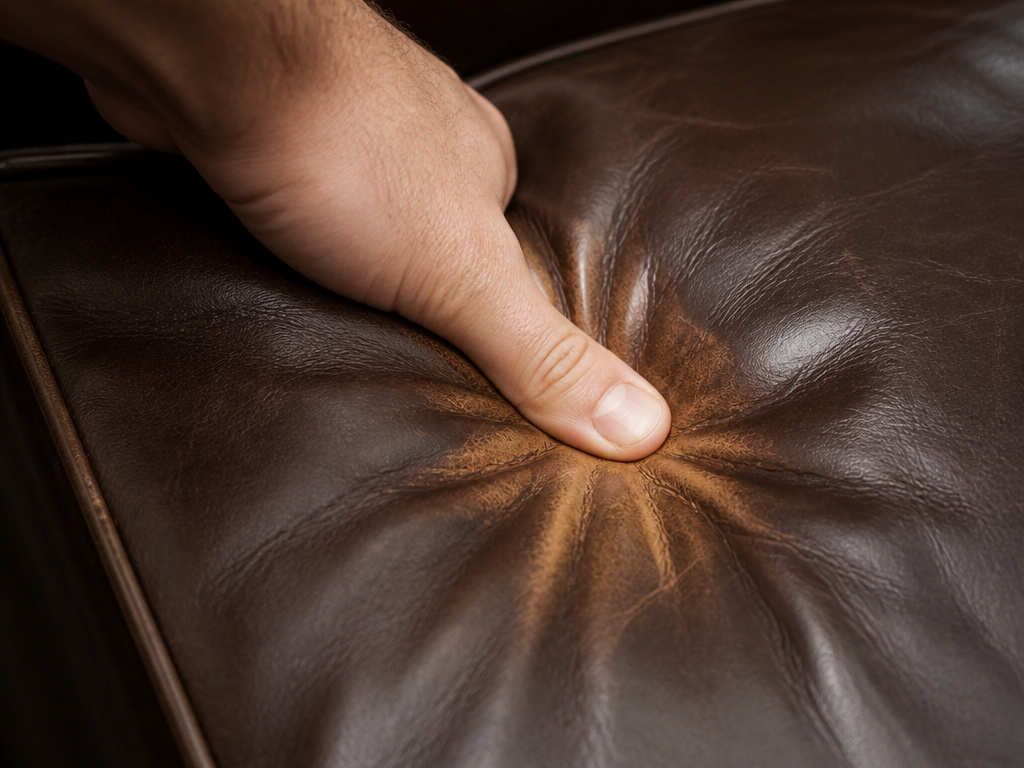
One of the most misunderstood features of certain aniline leathers, especially those labeled “pull-up” or “waxed,” is their ability to lighten temporarily when stretched or scratched. This is not a flaw or damage.
These leathers are heavily impregnated with oils and waxes during the fat-liquoring stage. When the surface is deformed, the oils and waxes shift within the fibers, causing the lighter, undyed underside of the leather to become momentarily visible. Once the pressure is released, the oils flow back, and the color returns to its original shade. This characteristic makes minor scuffs and scratches virtually self-healing, a huge advantage in an otherwise “delicate” leather. It’s a perfect example of aniline leather’s dynamic nature.
Pigmented vs Aniline: A Side-by-Side Decision Guide
Don’t choose based on a vague idea of “quality.” Choose based on how the leather will live in your home. This table breaks down the decisive factors.
| Factor | Pigmented Leather | Aniline Leather |
|---|---|---|
| Surface Feel | Smooth, consistent, can feel slightly synthetic or cool. | Warm, supple, textured; you feel the grain. |
| Stain Resistance | High. Spills bead on the coating, allowing time for cleaning. | Low. Spills absorb quickly into open pores; immediate blotting is critical. |
| Light & Fade Resistance | Excellent. The coating filters UV rays, preventing dye fade. | Poor. Aniline dyes are susceptible to fading in direct sunlight. |
| Aging & Patina | Ages minimally. Color remains stable; coating may wear in high-contact areas. | Ages dramatically. Develops a rich, personal patina; softens and darkens with use. |
| Best For… | High-traffic areas, homes with kids/pets, commercial settings, uniformity. | Low-traffic adult spaces, heirloom pieces, enthusiasts who value character over perfection. |
| Care Regimen | Regular dusting, occasional conditioning of the substrate beneath the coating, prompt cleaning of spills. | Regular dusting, consistent conditioning (with aniline-safe products), immediate spill response, UV protection. |
How to Choose the Right Leather for Your Sofa
Your living room’s lifestyle dictates the finish. This is the practical takeaway.
Start by asking three questions: 1. Who uses this space daily? Toddlers, teenagers, and large dogs introduce unpredictable variables. If the answer isn’t “calm adults,” lean toward pigmented leather or a robust semi-aniline. 2. What’s the light situation? A south-facing room with huge windows is a fading engine. If you can’t or won’t use shades consistently, pigmented leather will maintain its color for decades longer. 3. What’s your tolerance for change? Do you want a sofa that looks the same in ten years as it did on delivery day? Or are you excited by the idea of a unique, worn-in companion that tells the story of your family? The former points to pigmented; the latter is the heart of the aniline appeal.
For most households with busy, modern lives, a high-quality pigmented leather or a durable semi-aniline is the stress-free choice. The performance gap is real. The aniline leather sofa is an investment in artistry and a commitment to a different kind of care, it’s for the person who views furniture as a long-term partner, not just a functional object.
Caring for Each Finish: Two Different Rulebooks
Using the same cleaner on both types is a classic error. The leather will tell you what it needs.
For Pigmented Leather:
- Cleaning: Use a damp microfiber cloth for dust. For smudges, a mild, pH-balanced soap solution works. Avoid harsh solvents that can degrade the polymer topcoat.
- Conditioning: This is the most overlooked step. The coating is durable, but the leather underneath can still dry out and crack. Once or twice a year, use a light, non-oily conditioner designed for finished leathers. Apply sparingly to a hidden area first.
- Protection: Consider a fabric protector formulated for coated leather for an extra spill-defense layer. Avoid silicone-based products that can create a sticky film.
For Aniline Leather:
- Cleaning: Dry dusting only, or use a dedicated aniline leather cleaner. Never use saddle soap, detergent, or anything containing silicone.
- Conditioning: Frequent, light conditioning is key. Every 4-6 months, apply a high-quality leather cream or balm specifically for aniline or nubuck. These products nourish the fibers without clogging pores or darkening the color unevenly.
- Protection: Your main protections are behavior and environment. Use throw pillows on headrests and arms, keep it out of direct sunlight, and have a clean cloth ready for any accident. There is no magic spray that won’t alter its natural character.
Frequently Asked Questions
Is aniline leather real leather?
Yes, aniline leather is often the highest expression of real leather. It uses the best full-grain or top-grain hides because its transparent finish reveals every detail. A pigmented finish can be applied to conceal lesser hides, but aniline has nowhere to hide.
Which is more durable, pigmented or aniline?
They have different definitions of “durable.” Pigmented leather is more durable against stains, spills, and fading, its coating is a wearable shield. Aniline leather is more durable in its ability to develop a beautiful patina and become more attractive with age, whereas pigmented finishes can wear through or crack over very long periods.
Can you condition pigmented leather?
Yes, but you must use a conditioner designed for finished leathers. These are typically lighter, non-oily formulas that absorb without leaving a residue on the coating. Conditioning the leather substrate prevents it from drying out beneath the protective pigmented finish, which is the main cause of coating failure.
Does aniline leather scratch easily?
It marks easily, but that’s not the same as damage. Minor surface scuffs often blend into the patina or, in the case of pull-up aniline leather, disappear as the oils redistribute. Deep scratches are permanent, just as they would be on any material. The choice is between a surface that hides marks (pigmented) and one that incorporates them (aniline).
Is semi-aniline a good compromise?
For many households, yes. Semi-aniline leather offers a tangible increase in spill resistance and color consistency over pure aniline while retaining much of the natural grain visibility and breathability. It’s the best choice when you love the aniline look but need a realistic safety net.
The Bottom Line
The choice between **[pigmented vs aniline leather](https://leathergenesis.The comparison between aniline and pigmented leather sofas is about choosing the right material for the life you actually live, not the one you imagine.
If your home is a busy hub of activity, spills, and sunlight, the engineered resilience of a pigmented leather will serve you well. It’s a practical, long-wearing choice. If your space is a calm sanctuary and you view your furniture as a craft object meant to evolve, the unparalleled beauty and character of aniline leather is the authentic path. It demands more from you, but it gives back a story.
For the vast majority, the smart money is on a high-quality semi-aniline leather. It captures the soul of aniline while acknowledging that life happens. Understand that a matte or dry-feeling leather isn’t uncared for, it might be the desirable, breathable surface of an aniline or nubuck finish that should never be shined with polish. That’s the final, crucial distinction.
