
What Is Leather Finishing? The Protective Layer For Your Gear
This post contains affiliate links. As an Amazon Associate, we earn from qualifying purchases.
Leather finishing is the final chemical and mechanical process that applies a protective, decorative surface layer to tanned leather. It defines the leather’s final color, texture, luster, and resistance to wear, water, and stains, directly impacting its durability, appearance, and feel.
Think of a hide after the leather making and leather dyeing processes. It’s colored but still vulnerable. The finish is what transforms it into a usable product. This isn’t just a coat of paint; it’s a multi-layered system designed to perform under stress while looking good.
The rest of this guide walks you through what finishing actually does, the chemicals involved, how it’s applied, and how to identify different finish types on the products you buy. By the end, you’ll read a product description and know exactly what “aniline finish” or “pigmented topcoat” means for your wallet, jacket, or bag.
Key Takeaways
- Finishing is separate from tanning and dyeing. It’s the last step that adds protection and defines the surface character.
- The primary goal is protection, not just decoration. A finish with a hydrophobic polymer shield protects the leather from water, scuffs, and UV damage.
- Different finishes trade off characteristics. Aniline shows natural beauty but offers less protection; pigmented finishes are tough but can mask the natural grain.
- The finish must remain flexible. Industrial standards test for endurance through thousands of dry and wet flexing cycles.
- Application methods range from hand-rubbing to fully automated spray booths, each affecting the final look and consistency.
What Does Leather Finishing Actually Do?
Leather finishing is a surface coating operation designed to provide color, luster, and protection against water and abrasion. The coating must remain flexible and non-tacky across a wide temperature range, from -30°C to +100°C during end use, and up to 300°C during the fabrication of leather goods, as outlined in industrial process guidance.
Let’s be clear about one thing. Finishing isn’t about changing the leather’s core structure, that’s the job of tanning. It’s about managing the surface. After a hide is tanned and dyed, its grain is still exposed. It will soak up water, stain easily, and show every scratch.
The finish creates a barrier. Think of it like a clear coat on a car. It locks in the leather color, adds a specific sheen (from matte to high-gloss), and forms a shield. This layer is why you can wipe a spill off a sofa or why a boot scuffs instead of tearing.
The Core Goals: More Than Just a Pretty Coat
Finishing serves three interconnected purposes. Ignore one, and the leather suffers.
**1. Protection.This is the essential job. The finish is the first line of defense. It repels water, resists dirt penetration, and reduces scuffing. A study on footwear materials emphasized that finishing forms a protective surface layer specifically to enhance resistance to external factors. Without it, most leather goods would be impractical for daily use.
2. Enhancement & Consistency. No hide is perfect. Finishing evens out the shade, hides minor scars or insect bites, and provides a uniform surface. This is where corrected grain leather comes in, sanding the surface smooth before applying a heavy finish and an artificial embossed pattern. For higher-grade leathers, the enhancement is subtler, aiming to deepen the natural color and highlight the leather grain.
3. Aesthetics & Feel. This is what you see and touch. Do you want a buttery-soft, natural feel? A sleek, glossy look? A rugged, matte texture? The finish formula and application method dictate this. The choice of binder and pigments directly influences whether the surface feels like skin or vinyl.
Common Leather Finishing Methods
How the finish gets on the leather changes everything. The method dictates the equipment needed, the skill of the operator, and the final character of the piece.
| Application Method | Best For / Characteristics | Key Considerations |
|---|---|---|
| Padding (Hand or Machine) | Even, controlled application on flat goods (e.g., garment panels). | Delivers a consistent film thickness; less waste than spraying. |
| Spraying (Manual or Automated) | High-volume production, all-over coverage on complex shapes (e.g., shoes, bags). | Overspray waste is a major cost; automated booths maximize chemical efficiency. |
| Curtain Coating | Creating perfectly uniform, high-gloss films on large, flat sheets. | Used for patent leathers or specific automotive/interior finishes. |
| Foam Application | Transferring a thin, even layer while using less chemical. | A newer, more efficient technique gaining adoption in tanneries. |
| Hand Rubbing & Buffing | Artisanal goods, edge finishing, touch-ups. | Imparts a unique, depth-rich luster impossible by machine. |
Modern automated spray booths, like the ones described in equipment demos, can control 64 spray guns independently. They optimize chemical use and can switch colors in about 30 seconds. Manual techniques, however, often fall below certain solvent-use thresholds and have their own place for bespoke work.
I gave up on aerosol sprays for touch-up work years ago. Every can promised a quick fix, but the finish stayed slightly tacky for weeks, attracting dust and feeling cheap. I switched to brush-on acrylics for total control. The propellants in the cans seemed to interfere with the resins curing properly.
The Chemistry: What’s In the Finish?
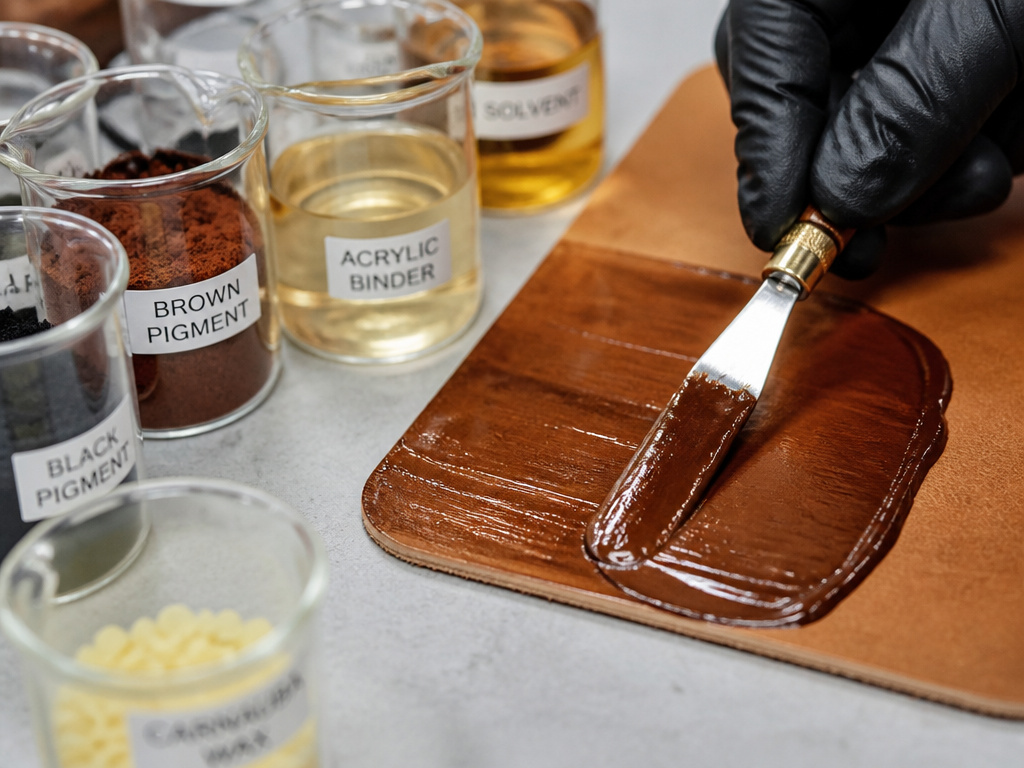
A leather finish isn’t a single chemical. It’s a engineered system, each component with a specific job. The UK government guidance notes that three principal binder systems are in use. Getting the mix right is the difference between a finish that cracks in a year and one that lasts a decade.
- Binders: These are the film-forming glues that hold everything together and stick it to the leather. The two big players are acrylic resins and polyurethane resins. Acrylics are generally more flexible and breathable. Polyurethanes are tougher and offer better water resistance. Many modern finishes use a blend.
- Pigments: These provide color and opacity. Inorganic pigments like titanium dioxide (white) or iron oxides (reds, browns) are common. They sit in the binder film and block UV light, which helps prevent fading. A peer-reviewed paper on footwear finishes detailed metallic-effect pastes using aluminum flakes for sparkle.
- Plasticizers: Ever had an old vinyl car interior crack? That’s plasticizer loss. These chemicals are added to keep the binder film flexible over thousands of flex cycles, preventing it from becoming brittle.
- Waxes & Oils: Added to the mix or applied as a topcoat, they enhance water repellency, feel, and depth of shine. They’re what give a finish its “hand”, that pleasant, slightly waxy tactile quality.
Types of Leather Finishes Explained
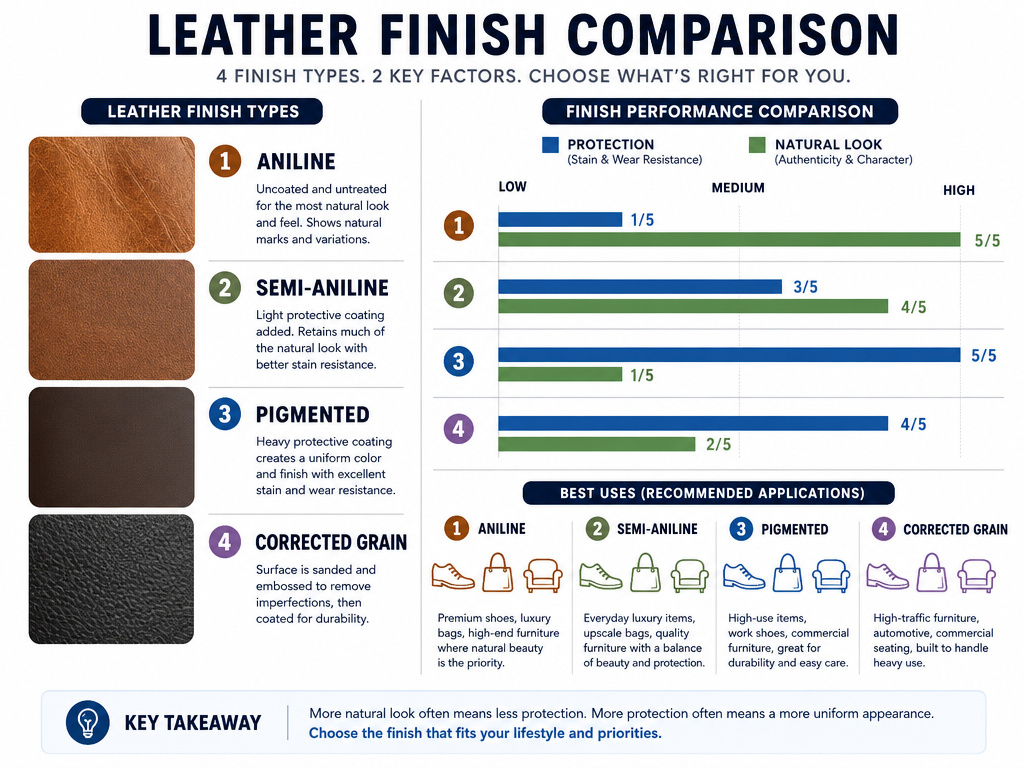
This is where the rubber meets the road for buyers. The type of finish defines the leather’s look, care needs, and longevity. It’s the most common point of confusion.
Common mistake: Equating “finish type” with “leather type.” Aniline, pigmented, and corrected grain are descriptions of the finish, not the hide itself. A single cowhide can be made into all three.
Aniline Finish: This is the most natural look. Aniline dyes penetrate deeply, and then a very light, transparent finish (if any) is applied. You see the full, natural grain and markings. The feel is superb. The trade-off? It offers minimal protection from stains and fading. Spills must be blotted immediately.
Pigmented Finish: Here, a opaque layer of color is applied on top. It’s like painting a wall. This hides imperfections and creates a very uniform, durable surface. It’s the workhorse finish for shoes, bags, and furniture that needs to take a beating. The feel can be stiffer, and the natural grain is obscured.
Semi-Aniline Finish: A smart compromise. The leather is first aniline-dyed to retain richness, then given a light pigmented topcoat with a clear protective layer. You get more color consistency and stain resistance than full-aniline, but more natural character than a full pigment finish. It’s the sweet spot for many high-end goods.
Corrected Grain Finish: The leather’s natural surface is sanded down to remove significant flaws, then a heavy pigmented finish and an artificial grain pattern are embossed on. It’s extremely durable and uniform. Don’t dismiss it, it’s a practical choice for high-wear items, though it lacks the character of top-grain leathers.
| Finish Type | Protection Level | Natural Look/Feel | Best For |
|---|---|---|---|
| Aniline | Low | High | Luxury goods, where natural beauty is paramount and use is gentle. |
| Semi-Aniline | Medium-High | Medium | High-end bags, jackets, and furniture that see regular use. |
| Pigmented | Very High | Low | Work boots, athletic shoes, heavy-duty bags, and commercial furniture. |
| Corrected Grain | Highest | Lowest | Budget-friendly goods, children’s items, and applications where uniformity is key. |
Understanding the difference between aniline and pigmented leather is the single most useful bit of knowledge you can have when shopping.
Testing and Standards: How Finishes Are Proven
Tanneries and finish manufacturers don’t just hope their product works. They test it rigorously. Two tests matter most: temperature stability and flex endurance.
The temperature spec is clear: a finish must stay flexible from -30°C to +100°C. It can’t get tacky in a hot car or crack in winter cold. During manufacturing, like when a leather sole is molded, it must withstand brief exposures up to 300°C.
The real torture test is flexing. How many bends before it cracks? Academic studies detail the standard procedure. For dry flexing, a machine bends a strip of finished leather. They check for damage at 10,000 cycles and again at a brutal 500,000 cycles. For wet flexing, the sample is soaked for 30 seconds, then flexed for 10,000 and 100,000 cycles.
If your boot crease cracks after one season, it failed a test the manufacturer should have run. These standards, referenced in both US and UK regulatory guidance, exist for a reason.
The Final Word on Leather Finishing
Leather finishing is the gatekeeper between a raw, vulnerable hide and a functional, beautiful product. It’s a blend of chemistry, engineering, and artistry.
The practical takeaway is this: let the finish guide your purchase. Want a casual bag that will age with character and you don’t mind babying? Look for an aniline leather finish. Need a backpack for daily commuting through rain and snow? A pigmented leather or corrected grain is your only sensible choice.
Ignore the marketing copy that just says “genuine leather.” Ask about the finish. That single piece of information tells you more about durability, care, and what you’re really buying than any other label on the tag. The finish is where your leather’s story of daily use is written, make sure it’s got the plot armor it needs.
Frequently Asked Questions
What’s the difference between leather dyeing and finishing?
Dyeing colors the leather fibers throughout the hide. Finishing applies a colored or clear protective layer on top of the dyed surface. Think of dye as the wall color and the finish as the protective varnish.
Can you refinish leather?
Yes, to an extent. Worn-off finishes on shoes or bags can sometimes be reapplied with products like liquid acrylic resins or specialized leather paints. It’s a skill, and the result depends on the original leather’s condition. For major projects, professional refurbishment is often required.
Does finishing make leather less breathable?
It can. A heavy, plastic-like polyurethane topcoat will significantly reduce breathability compared to a light, wax-based or aniline finish. This is a key trade-off: more waterproofing often means less breathability.
How can I tell what finish my leather has?
Rub a slightly damp white cloth firmly on a hidden spot. If color transfers, it’s likely an aniline or semi-aniline finish. If no color comes off, it’s a fully pigmented or corrected grain finish. Also, feel it. Aniline feels like skin; heavily pigmented finishes can feel more like coated paper.
