
What Is Semi-Aniline Leather | The Industry’s Gray Area
This post contains affiliate links. As an Amazon Associate, we earn from qualifying purchases.
This post contains affiliate links. As an Amazon Associate, we earn from qualifying purchases.
Semi-aniline leather is a premium hide that has been dyed through with aniline colorants but also receives a light protective coating containing a small amount of pigment. This top layer is meant to even out color and add stain resistance without completely concealing the hide’s natural grain, scars, and character.
That definition seems straightforward, but here’s the practical takeaway. The industry can’t agree on what “a small amount of pigment” actually means. One official British standard lets tanners call a leather semi-aniline even if it has a heavily pigmented finish, as long as the base coat is a different color. Another international glossary insists the pigment must be minimal. This isn’t academic. It changes how the leather is tested, what performance you can expect, and how much you should pay.
The rest walks you through this gray area. We’ll look at the official definitions, the testing they trigger, and the simple, physical ways to spot a true semi-aniline. By the end, you’ll be able to read between the lines of a product description and know exactly what you’re getting.
Key Takeaways
- Semi-aniline leather sits between pure aniline and pigmented leather, but the line is blurry. The core idea is a through-dyed hide with a light, protective pigment layer.
- Conflicting definitions cause real problems. The British Standard (BS 2780) allows a heavily pigmented finish to be called semi-aniline if it has a contrasting top coat, while the International Glossary demands minimal pigment.
- The definition dictates the test. Under European standard EN 13336, leather labeled “semi-aniline” needs to pass only 80 wet rubs, while “pigmented” leather must withstand 250. Mislabeling leads to misleading test results.
- You often pay a premium for the term “semi-aniline.” This assumes you’re getting a higher-quality hide with a natural look. If the leather is actually heavily pigmented, you might be overpaying for a finish that performs like a standard pigmented leather.
- Trust your senses over the label. Real semi-aniline feels soft and supple, warms to your touch, and shows clear grain and pores. If it feels stiff, cold, or looks perfectly uniform, it’s likely a pigmented leather being upsold.
The Official (And Conflicting) Definitions
Let’s be clear about one thing. If you look up “semi-aniline leather,” you’ll find more than one answer. This isn’t a case of simple variation. It’s a fundamental disagreement that changes what you buy.
The International Glossary of Leather Terms, published by the International Council of Tanners, is clear. It defines semi-aniline leather as hide “incorporating a small quantity of pigment, not so much as to conceal the natural characteristics of the hide.” This is also the definition adopted by ISO and IULTCS. The grain, the pores, the minor scars, they should all remain visible. Think of it like a semi-transparent wood stain. It adds a tint and some protection, but you still see the wood grain underneath.
ISO/IULTCS/ITC Definition: “Leather which has been aniline dyed or stained, incorporating a small quantity of pigment, not so much as to conceal the natural characteristics of the hide.”
Then there’s British Standard BS 2780. It throws a wrench in the works. This standard says a semi-aniline leather can have pigment in both the base coat and the top coat. The only distinguishing feature? The base coat must be a different color from the top coat. The amount of pigment and the thickness of the finish can be as much as needed. Under this definition, a leather that is functionally a pigmented leather, thick, opaque, defect-hiding, can still be labeled “semi-aniline.”
Why does this matter? It creates a loophole. A manufacturer can use a lower-quality hide, slap on a thick, pigmented finish with a contrasting color layer, and sell it as premium semi-aniline. You think you’re buying the natural look and feel of a high-grade hide. You’re actually getting a coated leather that performs, and should be priced, like standard pigmented vs aniline leather.
The Semi-Aniline Spectrum: From Thin Wash to Pigmented Coat
Because of these conflicting definitions, “semi-aniline” isn’t a single thing. It’s a spectrum. On one end, you have leather that’s barely distinguishable from a full aniline leather. On the other, you have leather that’s a hair’s breadth from being fully pigmented.
The True Semi-Aniline (ICT/ISO Definition): This is the “golden mean” many guides describe. The hide is first dyed through in a drum, achieving deep, rich color. Then, a whisper-thin top coat containing a tiny amount of pigment is applied. This layer evens out minor color variations and provides a slight barrier against stains. The hand-feel is almost indistinguishable from pure aniline, soft, grippy, and warm. You can see every pore and grain pattern. This is what you should expect when you pay a semi-aniline premium.
The “False-Aniline” (BS 2780 Scenario): Here, the process starts with a base coat that’s already pigmented, often to mask natural imperfections in a lower-grade hide. A contrasting top coat is then applied. The total finish can be thick and opaque. While the surface might be buffed to a soft sheen, the leather beneath feels cooler and denser. The natural characteristics are concealed. Some in the industry call this “false-aniline” for a reason. It’s a pigmented leather in everything but name.
Modern finishing techniques make this spectrum even harder to navigate. Tanners can now incorporate such fine, minimal pigment into a finish that it’s impossible to tell by eye if it’s there at all. This creates a product with the beautiful, natural appearance of aniline but slightly better lightfastness and stain resistance. From a performance standpoint, that’s a win. From a testing and labeling standpoint, it’s a nightmare. Is it aniline or semi-aniline? The answer requires a microscope, not a sales brochure.
Why the Definition Dictates Performance
This isn’t just semantic bickering. The label slapped on the leather determines which set of rules it gets tested against. And those rules have different pass/fail gates.
Take the European standard EN 13336, which guides selection of leather for furniture. It applies the definitions from the ICT International Glossary. Crucially, it sets different performance requirements for semi-aniline and pigmented leathers. The logic is simple: a thinner, less-pigmented finish shouldn’t be expected to perform like a thick, armored coating.
The wet rub test is a perfect example. This test simulates abrasion and moisture resistance, think of denim rubbing against a damp sofa arm. Under EN 13336, a leather labeled pigmented must survive 250 wet rubs to pass. A leather labeled semi-aniline only needs to withstand 80 wet rubs.
Now, see the problem? If a tanner follows the BS 2780 definition, they can produce a heavily pigmented leather, call it “semi-aniline” because of a contrasting top coat, and have it tested to the lower 80-rub standard. It would pass easily, creating a “test report” that shows a semi-aniline leather with “excellent” rub resistance. In reality, it’s a pigmented leather being graded on a curve. It’s a misleading result that benefits the seller, not the buyer who expects durability commensurate with the finish.
| Leather Type (per EN 13336) | Wet Rub Test Pass Requirement | Assumed Finish Thickness & Pigment |
|---|---|---|
| Aniline | Not specified (often not tested this way) | None to a clear, unpigmented coat |
| Semi-Aniline | 80 cycles | Thin coat, minimal pigment |
| Pigmented | 250 cycles | Thick, fully opaque pigmented coat |
The commercial issue is just as stark. Hides good enough for a true semi-aniline finish, where the grain must still be attractive, cost more. Pigmented finishes exist specifically to use more abundant, lower-quality hides. Paying a semi-aniline price for a pigmented leather finish is the scenario these conflicting definitions enable.
How to Spot True Semi-Aniline Leather
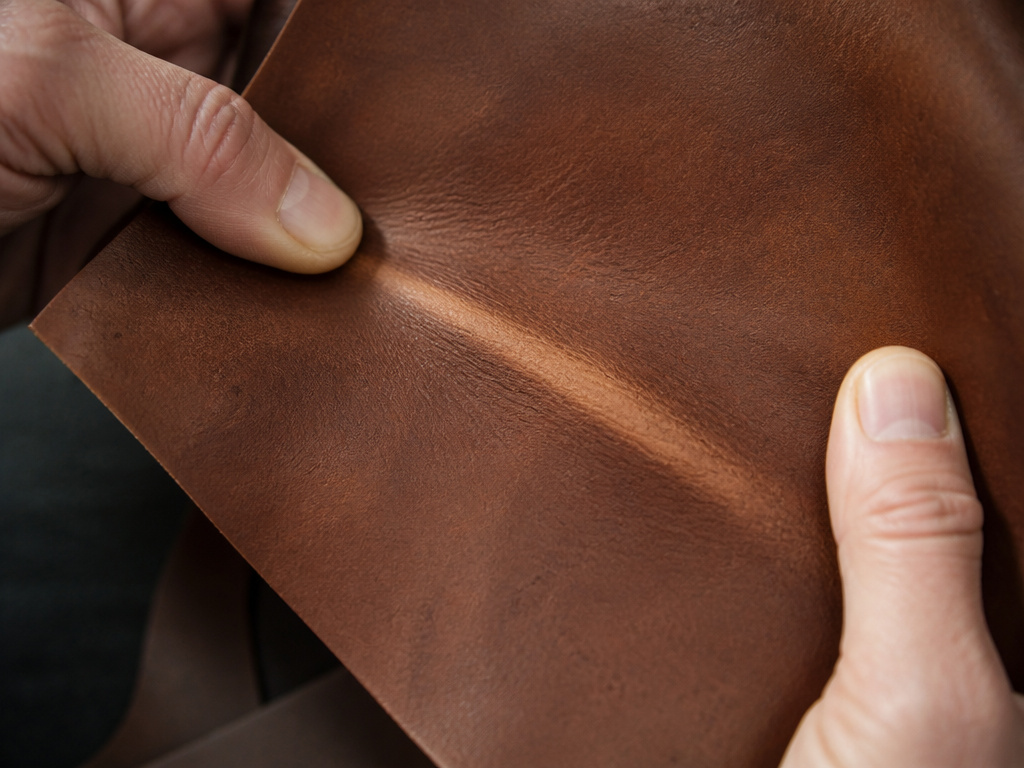
Forget the label for a minute. The leather will tell you what it is. You need to use your eyes and your hands. When shopping for furniture or a high-end bag, do this quick check.
Look at the surface. Get close. Can you see the natural grain pattern? Are there small, healed scars, insect bites, or variations in the pore size? These are good signs. A true semi-aniline finish celebrates these “imperfections.” If the surface looks perfectly uniform, plastic-like, and featureless, you’re likely looking at a heavily corrected and pigmented hide.
Feel it. This is the most telling test. Genuine semi-aniline leather feels soft and supple right away. It’s not stiff. It has a slight grip to it, your hand doesn’t slide off like it’s coated in plastic. Most importantly, it absorbs your body heat. Place your palm on it for fifteen seconds. Does it feel warmer? That’s the breathable, open-pore structure of a light finish. A heavily pigmented leather will stay cool and feel denser.
Check for a “pull-up” effect. While not universal, many semi-aniline leathers have a slight pull-up characteristic. Gently pinch and stretch a small, inconspicuous area (like the back of a cushion). Does the color lighten slightly where you stretched it? This indicates the presence of oils and waxes in the finish, common in higher-quality aniline and semi-aniline hides. It’s a sign of depth and character.
Common mistake: Judging leather quality by its stiffness. A stiff, board-like leather isn’t necessarily more durable; it’s often just heavily coated. The best leathers have a flexible, supple hand that promises comfort and longevity.
If a salesperson insists a stiff, cold-feeling, uniform-looking leather is “premium semi-aniline,” be skeptical. You’re probably being upsold. That leather would be better described, and more honestly priced, as a protected or pigmented leather sofa material.
Caring for Semi-Aniline Leather
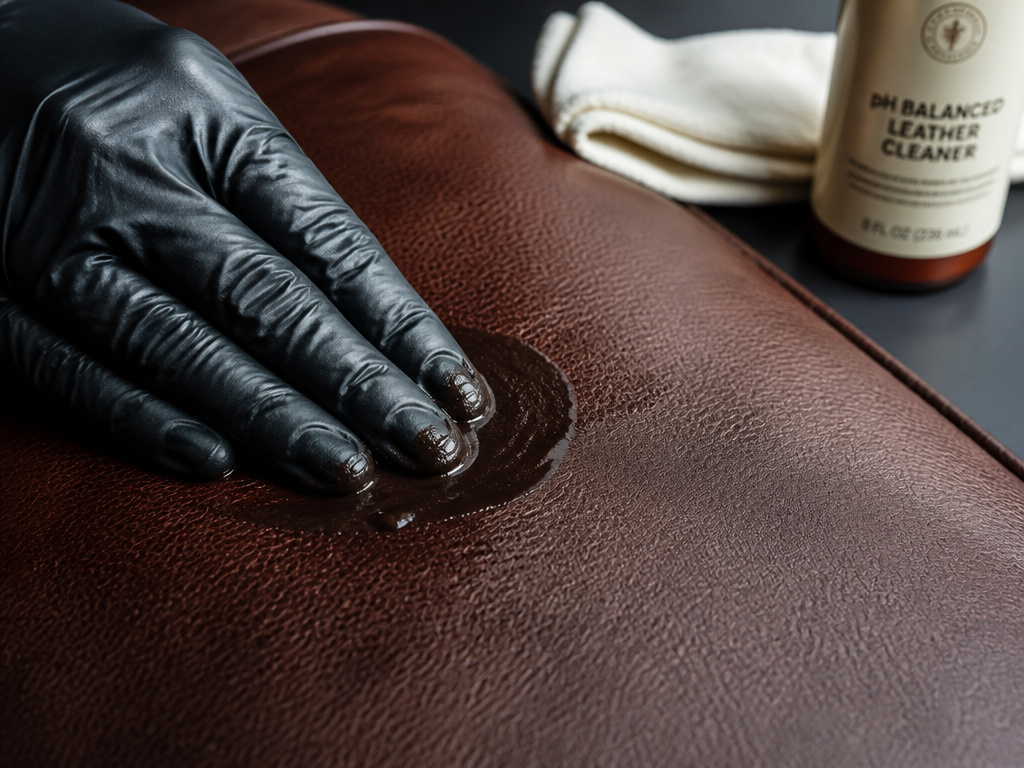
The care routine for semi-aniline is closer to aniline than to pigmented leather. That thin top coat offers some protection, but it’s not a force field. The goal is to maintain its natural look and feel, not to seal it into a plastic shell.
First, never use all-purpose cleaners, saddle soap, or anything with a high alcohol content. I’ve had countless people ask about using hand sanitizer for a quick clean. The alcohol dries out the leather severely, stripping the natural oils from both the hide and the light finish. Over time, it leads to cracking and a dull, parched appearance.
Stick to cleaners and conditioners specifically formulated for aniline and semi-aniline leathers. Look for pH-balanced, non-abrasive solutions. The process is simple: clean first to remove dirt blocking the pores, then condition to replenish oils. Think of it like building a roux, low, patient heat and the right fat. You apply a conditioner, let it soak in fully (overnight is best), and buff off any residue. Rushing and layering on product before the previous layer is absorbed creates a gummy film.
For semi-aniline, a quarterly care schedule is usually perfect for furniture. It keeps the leather nourished and protected without over-saturating it. The right care will allow a beautiful patina to develop, a soft sheen and subtle darkening in high-touch areas that adds character. This is the patina that coated leathers can never achieve, and it’s worth protecting.
The Gray Area: Modern Blends and Marketing
We’ve covered the standards, but the real world is messier. Modern tanneries are incredibly skilled. They can create finishes that defy easy categorization. As noted in industry analysis, some new finishes have such a minuscule amount of pigment that it’s impossible to distinguish them from pure aniline by eye. Is it an aniline leather with a secret shield, or a semi-aniline that’s cheating the test?
This technological blur is a commercial advantage. It gives you a leather with the coveted aniline look and better performance. But it complicates the comparison of pigmented and aniline leather for everyone. Test houses need microscopes to classify it. Sales literature can lean into the ambiguity.
Your best defense is to buy from reputable brands that disclose their testing standards. Some will reference EN 13336 or the ICT Glossary in their specifications, which anchors them to the stricter definition. Others might simply use “semi-aniline” as a marketing term for any leather that’s not fully pigmented. This is why your sensory check, the look, the feel, the warmth, is your most reliable tool. Don’t just buy the label; buy the leather in front of you.
Frequently Asked Questions
Is semi-aniline leather real leather?
Yes, absolutely. It starts with a real animal hide, typically bovine. “Semi-aniline” refers only to the type of dyeing process and the thin protective finish applied to the surface. The base material is 100% genuine leather, often using full-grain or top-grain leather as its foundation.
Which is better: aniline or semi-aniline leather?
“Better” depends on your priorities. Pure aniline leather offers the most natural, unique look and the softest hand-feel, but it is the most susceptible to stains and fading. Semi-aniline provides a middle ground, retaining much of the natural beauty while offering improved stain resistance and color consistency. For a frequently used family sofa, semi-aniline is often the more practical choice.
Does semi-aniline leather peel?
It should not peel if it is a full-grain leather product and cared for correctly. Peeling is a sign of a bonded or bicast leather, where a plastic layer is glued to a fiber base. True semi-aniline leather has the dye and finish absorbed into the top layer of the hide. Cracking can occur from extreme neglect or using harsh chemicals, but the finish won’t separate and peel off in sheets.
How can you tell if leather is semi-aniline?
Trust your senses. Real semi-aniline will show a visible grain pattern and natural markings. It will feel soft and supple, not stiff or plasticky. It will warm to your touch quickly because it’s breathable. If you gently stretch it, the color may lighten slightly (the “pull-up” effect). A perfectly uniform, cool, stiff surface suggests a heavily pigmented finish.
Is semi-aniline leather good for pets?
It’s better than pure aniline but requires vigilance. The light pigment layer offers some protection against scratches and liquid spills compared to unprotected aniline. However, pet claws can still damage the surface, and accidents should be cleaned immediately to prevent stains. For homes with pets, a robust leather care routine is essential.
Before You Go
Understanding semi-aniline leather means understanding a conflict. On one side, a definition that prizes minimal intervention and natural beauty. On the other, a definition that allows a heavy coat of paint to wear the same name. This isn’t just theory, it changes the test results, the price, and what ends up in your living room.
Your simplest path is to ignore the term “semi-aniline” in isolation. Instead, look for brands that cite the Leather Research Laboratory classification guide or the EN 13336 standard. Better yet, use your own judgment. Feel for warmth and suppleness. That tactile truth beats any marketing copy every time.
The leather market counts on confusion. Your job is to see through it. Now you know how.
