
What is Microfiber Leather | The 3.6 N/mm Seam Reality
This post contains affiliate links. As an Amazon Associate, we earn from qualifying purchases.
This post contains affiliate links. As an Amazon Associate, we earn from qualifying purchases.
Microfiber leather is a synthetic leather substitute built from a dense nonwoven mat of ultrafine polyester or polyamide fibers, impregnated and topped with a waterborne or solvent-based polyurethane (PU) resin. It’s the third generation of artificial leather, designed to mimic the fibrous structure of natural hide but with more uniform thickness and often lower cost. The performance, good abrasion resistance, poor breathability, comes down to the chemical coatings and the fineness of the underlying fiber web.
Let’s be clear about one thing. A label that says “microfiber leather” tells you nothing about durability on its own. The fiber diameter, the density of the nonwoven base, and the quality of the polyurethane coating decide whether an item lasts a season or a decade. Ignore the marketing copy and look at the material’s job.
What follows: a breakdown of its two-part construction, the measurable performance specs where it actually competes with cowhide, and the critical, often-overlooked weaknesses, like a seam strength of just 3.6 N/mm, that dictate how you should use it or choose something else.
Key Takeaways
- Microfiber leather is not a single material but a sandwich: a microfiber nonwoven base fused with a polyurethane resin coating.
- Its most significant hidden weakness is low seam strength (3.6 N/mm), often requiring reinforced stitching or alternative construction for durable goods.
- While it can score well on lab tests for abrasion and flexing, it generally has poor breathability and moisture management compared to natural leather, making it feel hotter and less comfortable.
- For a truly durable and repairable alternative to leather, waxed canvas is an underrated, time-tested option that outperforms most plastic-based synthetics.
- Treating it like real leather, with conditioners and oils, is useless and can damage the plastic coatings and adhesives.
The Core Components of Microfiber Leather
Forget the idea of a homogeneous slab. Microfiber leather is a composite, and its behavior is locked in during manufacturing. You have a base and a coating. One provides the structure, the other provides the surface.
The base is a nonwoven fabric made from bundles of ultra-fine synthetic fibers, typically polyester or polyamide (nylon). The definition of “microfiber” hinges on fineness, a fiber with a diameter of less than one denier. Research using FESEM analysis has shown fiber diameters in these nonwovens ranging between 2.2 and 5.5 micrometers. This dense, random web of fibers is meant to imitate the intertwined collagen fiber network in real hide. The density and fineness of this web are what give the material its initial hand-feel and ability to be coated.
The coating is almost always a polyurethane resin. This is where most of the performance characteristics are dialed in. The PU can be applied as a watery solution (waterborne) or in solvents, and it impregnates the top layers of the microfiber base before forming a continuous film on the surface. This film is what you touch. It can be matte, glossy, embossed with a grain pattern, or colored. The chemistry of this PU layer determines the resistance to scratches, UV fading, and staining. It’s also the primary barrier to breathability.
A peer-reviewed ScienceDirect journal article on microfiber leather details advances in polyurethane-based microfiber synthetic leather, tracing its evolution from manufacturing techniques to modern applications.
The process creates a material with consistent thickness and grain, a manufacturing advantage. There are no natural imperfections like bug bites or stretch marks. But that uniformity is a trade. You lose the natural variations in density that give real leather its complex drape and aging character.
How Microfiber Leather Compares to Natural Leather
You can’t just say one is better. They are different materials solving different problems. The comparison is about matching a property to an application. Lab tests give us hard numbers, and the numbers tell a story of trade-offs.
On paper, microfiber leather can post impressive scores. Testing per ISO 17694:2016 for footwear shows it can withstand 80,000 dry flex cycles and 20,000 cycles in wet or freezing (-5°C) conditions without cracking. Its abrasion resistance, tested per ISO 17704:2004, is also robust, 12,800 cycles dry and 6,400 wet under pressure. These are numbers that satisfy many industry standards for items like shoe uppers or luggage trim.
But the lab doesn’t tell the whole story. The real divide is in properties that are harder to quantify in a cycle test: breathability, moisture absorption, and how it feels against skin over time. A review in the Journal of Textile Engineering and Fashion Technology noted that microfiber synthetic leather has inferior transmission and absorption qualities compared to natural leather, making it feel hotter. Your foot sweats, the moisture has nowhere to go, and the comfort drops. This is the “sanitary performance” gap.
Then there’s the seam. In a direct EJSD comparative analysis of leathers, microfiber synthetic leather showed a seam strength of just 3.6 N/mm. Compare that to the 11.7 N/mm for a polyurethane leather certified to ISO 20345 or 8.1 N/mm for natural leather. That low number is a measurement, not an opinion. It means a stitched seam in a microfiber leather bag or shoe is the most likely point of failure under stress.
| Property | Microfiber Leather | Natural Leather (Top Grain) | Why It Matters |
|---|---|---|---|
| Seam Strength | ~3.6 N/mm | ~8.1 N/mm | Lower strength means seams on bags, shoes, and upholstery need reinforcement or will fail first. |
| Breathability | Poor | Excellent | Microfiber feels hotter and less comfortable against skin, especially in footwear. |
| Abrasion Resistance | High (per lab tests) | Moderate to High | Microfiber can score well on machine tests, but natural leather develops a protective patina. |
| Consistency | Perfectly Uniform | Naturally Variable | Microfiber is easier for mass production; natural leather has unique character marks. |
| Aging | Cracks or peels | Develops a patina | Microfiber has a finite lifespan before the plastic coating fails; leather can be renewed. |
Here’s the practical takeaway. For a formal shoe that needs to look pristine and is worn occasionally, the lab flex numbers might be fine. For a hiking boot or a daily messenger bag, that seam strength and breathability deficit are potential deal-breakers.
The Practical Downsides You Need to Know
If you’re working with this material or buying something made from it, two issues will dictate its lifespan. One is a quiet structural flaw, the other is a sensory experience.
First, the seam problem. That 3.6 N/mm figure means the threads can literally tear through the material under load. It’s not that the thread breaks; the leather itself gives way around the stitch holes. This is why you’ll see many microfiber leather goods using wide, decorative top-stitching. Its purpose is to distribute the load over a greater area. For any serious application, you must reinforce the inside with fabric tape at the seam line.It’s a step most fast-fashion manufacturers skip.
Where this goes sideways: Assuming a stitched seam in microfiber leather is as strong as one in cowhide. Under daily load, the weaker material will tear at the stitch line within months, not years.
Second, it doesn’t breathe. At all. The polyurethane coating is a plastic membrane. While the underlying microfiber base might have some capillary action, the surface layer locks moisture in. This is why car seats made from it can feel sticky in summer, and why shoes can become uncomfortable. It’s also why cleaning spills is easier, the non-porous surface wipes clean. But that wipe-clean convenience is the flip side of the comfort coin.
You also can’t maintain it like real leather. Applying a leather conditioner or oil to the surface does nothing for the plastic coating and can actually degrade the adhesives binding the PU layer to the base. The best you can do is clean it with a damp cloth. Once the surface coating scratches, cracks, or wears through, you’re looking at the fuzzy, less-durable microfiber base underneath. There’s no buffing out a scratch or nourishing the material back to health.
Alternatives: When Microfiber Leather Isn’t the Right Answer
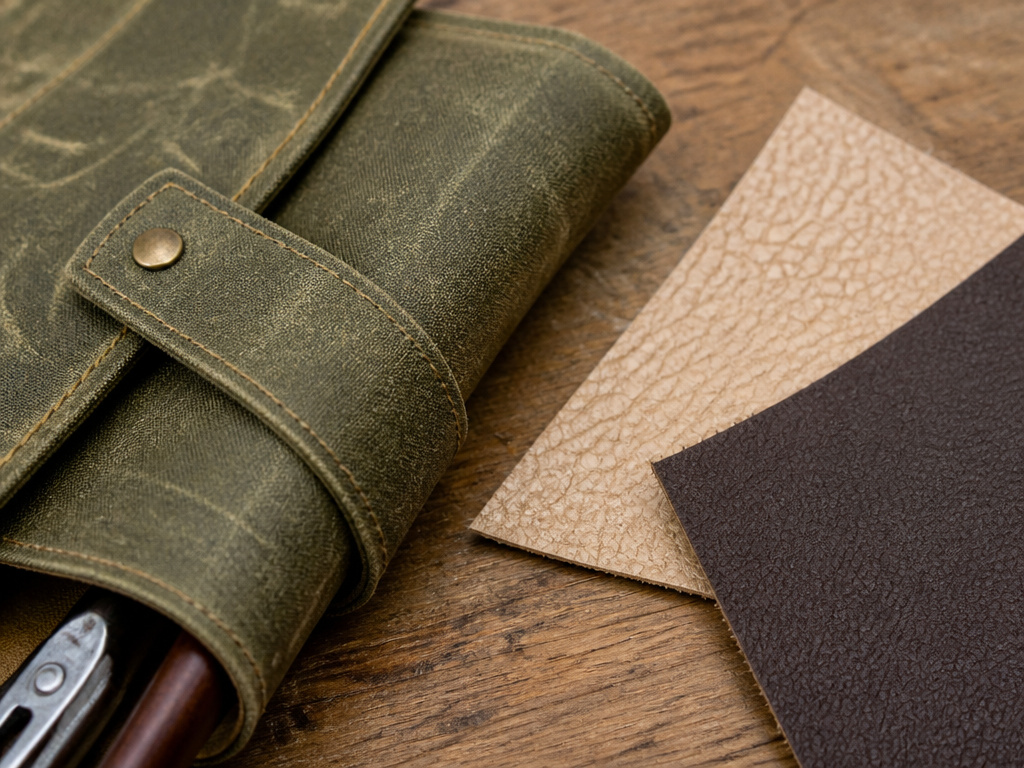
Given the breathability and seam limitations, what should you use instead? It depends on what you’re trying to achieve. If you want a vegan material, there are options that don’t rely on plastic coatings. If you just need durable performance, older solutions still work best.
For a true, high-performing vegan alternative, I look to emerging plant-based materials. Brands like Natural Fiber Welding with their Mirum material, or Desserto’s cactus leather, are creating composites from natural rubber and plant fibers. They’re not perfect, often still needing binders, but they represent a move away from pure petrochemicals. I find the hype around pineapple leather (Piñatex) for heavy-duty bags a bit overrated; it’s brilliant for accessories but often lacks the tensile strength for long-strap weight bearing without significant backing.
I’ll break down the details for you. Sometimes the best alternative to leather isn’t another leather lookalike. For tool rolls, duffels, or jackets where you need weather resistance and toughness, waxed canvas is the answer. It’s been used for centuries, it’s made from natural cotton, it’s completely repairable, and it develops a fantastic character with age. It’s often overlooked in the ‘vegan leather’ conversation because it doesn’t try to look like hide.
When you’re evaluating a bonded leather item or a bicast leather.
How to Spot Quality Microfiber Leather
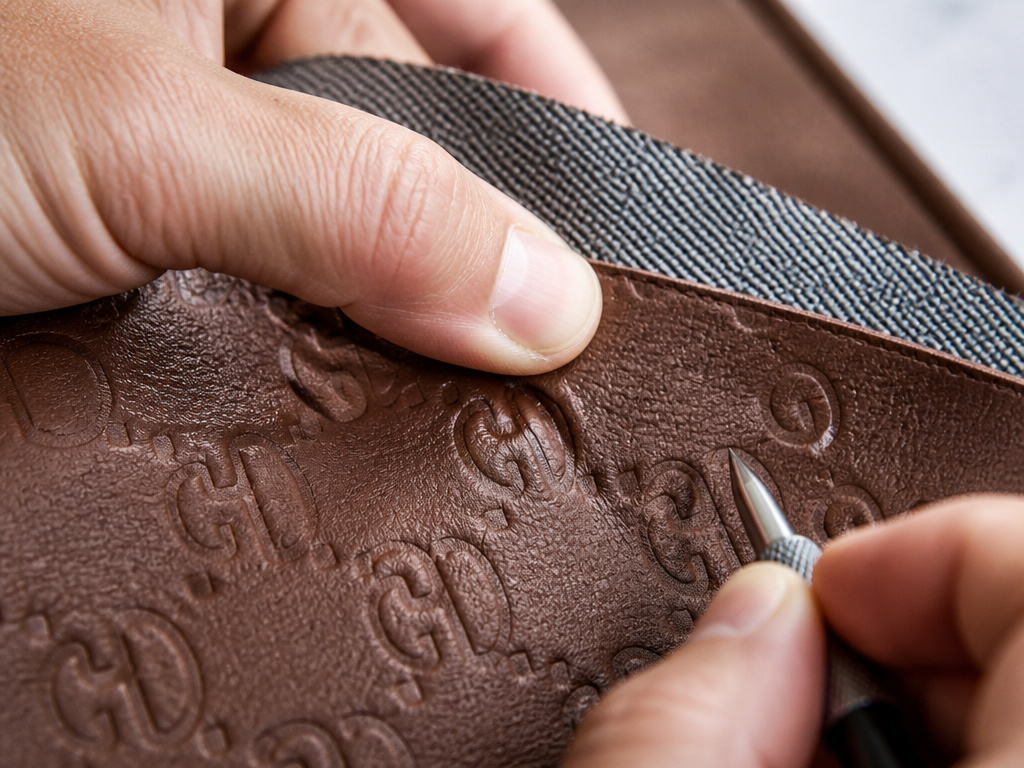
You can’t judge a book by its cover, but you can feel a material with your hands. Check for a continuous grain pattern and a uniform backing material.
Press your thumb into it firmly. A very cheap version will have a spongy, hollow feel, the PU coating is thick and the base is loose. A better one will have a denser, more substantial resistance, hinting at a tighter nonwoven base. Look at the back. You should see a tight, uniform fabric-like backing, not a loose, fuzzy web. A fuzzy back can indicate a lower-density base that won’t hold stitches or coatings as well.
Examine the grain. Is it perfectly, artificially uniform? That’s standard. But does the embossing look deep and sharp, or shallow and blurry? Deep, crisp embossing (like that on Saffiano leather or pebbled leather) often requires a firmer coating and can be a sign of better finishing. Run your fingernail lightly across the surface. Does it leave a white, scratchy mark that won’t buff out? That’s the plastic coating being damaged immediately, a bad sign for longevity.
Finally, check the seams. Are they single-stitched with thin thread on a thin strap? That’s asking for trouble given the material’s low seam strength. Look for double stitching, thicker thread, or taped seam allowances. A manufacturer that reinforces the seams knows the material’s weakness and has invested a bit more in construction.
Frequently Asked Questions
Is microfiber leather the same as faux leather?
No, it’s a specific type. “Faux leather” or synthetic leather is a broad category that includes PVC (vinyl) leather, PU leather, and microfiber leather. Microfiber leather is distinguished by its ultra-fine fiber nonwoven base, which aims to more closely mimic the fibrous middle layer (corium) of real hide.
Can you waterproof microfiber leather?
It’s already largely water-resistant due to the plastic polyurethane coating. You can’t make it more “waterproof” with sprays like you might with natural leather. In fact, silicone-based sprays might degrade the coating over time. Its weakness is liquid getting through a stitch hole or seam, where it can soak into the fibrous base and potentially delaminate the coating.
How do you clean and care for microfiber leather?
Use a soft, damp cloth only. Avoid soaps, detergents, and especially leather conditioners. Conditioners won’t penetrate the plastic coat and can leave a greasy residue that attracts dirt. For stubborn stains, a tiny drop of mild dish soap in water can be used, but dry the surface immediately. Never soak it.
Is microfiber leather eco-friendly?
This is a complex question. It uses petrochemicals (polyester, polyurethane) and is not biodegradable. However, it uses no animal products. Its environmental impact is largely in its production and its end-of-life in a landfill. Some brands use water-based PU coatings (as specified in standards like QB/T 4909-2016) which reduce solvent emissions. For a lower-impact choice, look for plant-based alternatives or durable natural materials like waxed canvas.
Before You Go
Microfiber leather is a specific industrial product with measurable strengths and well-documented flaws; it is neither a miracle material nor a scam. Its best uses are in applications where uniformity, cost, and good abrasion resistance are valued over long-term reparability, breathability, and natural aging.
If your project requires stitching under load, factor in seam reinforcement from the start, that 3.6 N/mm number is a real constraint, not a suggestion. And if comfort in wear is a priority, remember its plastic nature will always trap heat and moisture against the skin.
Understand leather better to make confident choices. Sometimes the right material isn’t a leather at all, but a purpose-built fabric like waxed canvas. Other times, a different type of synthetic leather might be the better fit. The goal is to match the material’s reality to your project’s demands, ignoring the marketing that surrounds it.
