
Full Grain vs Top Grain Leather: Choosing Leather for Life
This post contains affiliate links. As an Amazon Associate, we earn from qualifying purchases.
This post contains affiliate links. As an Amazon Associate, we earn from qualifying purchases.
Full grain leather keeps the hide’s natural surface completely intact, offering unmatched durability and a rich, evolving patina. Top grain leather has that surface sanded and refinished for uniformity and better stain resistance, trading some long-term strength for easier maintenance and a consistent look. The choice hinges on whether you value a material that ages with character or one that resists the marks of daily life.
Most guides oversimplify this as “full grain is best.” That’s not wrong, but it’s incomplete. The real decision is about the relationship you want with the material. A full grain belt becomes a personal artifact over fifteen years. A top grain sofa handles a family room for a decade with less worry. The difference isn’t just about a label; it’s about how the leather is physically altered during production, which changes everything from how it feels to how it eventually fails.
What follows is a breakdown of the leather’s anatomy, the documented performance gaps backed by industry tests, and a straightforward guide to picking the right grain for your next wallet, sofa, or bag.
Key Takeaways
- Full grain leather’s unsanded surface retains the hide’s tightest, strongest fiber layer, giving it superior tensile strength and a lifespan often 2–3 times longer than top grain in comparable use.
- The surface finish on top grain leather provides a practical shield against stains and spills, making it a more forgiving choice for active households or dry climates where uncoated leather can crack faster.
- The term “top grain” is a technical tannery term for the upper layer of the hide after splitting; it includes both full grain (uncorrected) and corrected grain (heavily sanded) leathers, which is why the label alone is unreliable.
- A true patina, a deepening of color and sheen from natural oils, only develops on uncoated, full grain leather. Top grain’s coated surface will scratch, dull, and may eventually peel, revealing a different layer underneath.
- The most cost-effective choice is full grain for items you’ll use daily for decades (belts, boots, bags). Top grain makes sense for larger, less intimate items where uniform appearance and easy cleaning are priorities (family room furniture, car interiors).
The 2-3-4 Grain Rule: Decoding The Leather Layers
Let’s be clear about one thing: “grain” in leather doesn’t refer to wheat or texture in the abstract sense. It’s the hide’s outermost skin layer, complete with the original hair-cell pattern and pore structure. To understand the grades, you need to visualize how a tannery processes a hide.
A full, raw hide is too thick for most products. The first mechanical split divides it horizontally. The top section, which contains the dense, fibrous grain layer, is called the top grain. The bottom, fuzzy layer becomes split leather or suede. So, right away, “top grain” is a location, it’s the raw material block that higher grades are cut from.
The Technical Snippet: In tannery operations, the initial splitting machine separates the hide into top grain (upper, grain-bearing layer) and split (lower, flesh layer). All subsequent finishing, sanding, dyeing, coating, is performed on the top grain section. The split layer is used for suede, velour, or bonded leather substrates.
From that top grain block, tanneries make three main decisions that define your final product.
Full Grain: No sanding. The grain layer is used exactly as nature made it, dyed with transparent aniline dyes that let every pore, scar, and natural mark show through. This is the pinnacle of natural leather grain expression.
Top Grain (Corrected): Light to heavy sanding. Minor imperfections are buffed out (typically 0.05 to 0.1mm of removal). A finish is applied, often semi-aniline, which adds slight pigment while allowing some grain character to remain visible.
Corrected Grain: Aggressive sanding. Here, 0.3 to 0.5mm of the surface is removed, erasing the natural pore structure entirely. A thick pigmented finish and an artificial grain pattern are embossed onto the surface. This is the most uniform and stain-resistant, but also the least breathable.
The sanding depth is the invisible line between these grades. That fraction of a millimeter determines whether the leather will breathe, patina, and flex naturally for thirty years or whether it will depend on a plastic-like coating for its entire service life.
The Durability Debate: What the Tests Actually Show
You’ll hear that full grain is “more durable.” That’s true, but it’s worth knowing what that means in terms a testing lab would recognize. The sanding process that creates top grain leather removes the tightest fiber layer, the very layer that gives the hide its structural integrity.
ASTM International’s leather testing standards quantify this gap. Top grain leather typically shows reduced metrics in three areas:
| Test Metric | Full Grain Leather | Top Grain Leather | Why It Matters |
|---|---|---|---|
| Tensile Strength (ASTM D2209) | Higher (varies by hide) | 20-30 MPa (per manufacturer specs) | Resistance to stretching and tearing under load; critical for belts and bag straps. |
| Abrasion Resistance (Martindale) | Develops a protective glaze | 30,000–50,000 cycles (coating-dependent) | Surface wear from rubbing; a worn-through coating reveals a vulnerable layer beneath. |
| Tear Strength | Higher | 15–25 N (ASTM D4705) | How well it resists a propagating rip; a key factor in long-term upholstery durability. |
The practical translation? A daily-worn full grain leather belt often lasts 15-20 years, developing a sheen at the bend points. A top grain leather belt in the same rotation shows coating scratches at the buckle holes within 2-4 years and may need replacement in 5-10. The math consistently favors full grain for anything you bend, pull, or load regularly.
For furniture, the failure mode changes. Top grain’s protective coating resists spills and scuffs better initially. But in flex zones, seat fronts, arm tops, the coating can develop “film fatigue.” Micro-cracks appear within 2-5 years under heavy use, which then allow dirt to penetrate and the coating to eventually peel. Full grain won’t peel, but it can show fine surface cracking if neglected in a dry environment. The trade-off is upfront stain defense versus long-term structural honesty.
Sensory Reality: How to Tell Them Apart by Sight and Feel
Marketing copy is one thing. Your hands and eyes are better judges. Here’s a straightforward guide to identifying what you’re actually looking at.
Look at the surface. Full grain leather has variation. You’ll see a subtle pattern of hills and valleys, the natural pore structure. There might be a small scar, a wrinkle, or a shade difference. If it looks perfectly uniform, like a vinyl sheet, it’s almost certainly a heavily corrected grain. Top grain sits in the middle; it looks consistent but not plastic, often with a slight, pebbled texture that feels a bit too even.
Feel the temperature and stiffness. Pinch a fold. Full grain, especially vegetable-tanned, feels firm yet pliable, and it warms up quickly in your hand. Heavily corrected grains with thick coatings feel cooler to the touch and stay cooler longer, they’re less breathable. That “clammy” feel on a car seat in summer? That’s a sealed surface trapping moisture against your skin.
Examine the edge. The raw, cut edge of a full grain piece will show a tight, consistent density. The edge of a coated leather often reveals a color line where the dyed top layer meets a paler core. It’s a dead giveaway.
The smell test. This is the simplest one. Full grain leather, particularly vegetable-tanned, has a rich, earthy, almost sweet smell. Top grain with a semi-aniline finish smells more neutral, maybe slightly chemical. Corrected grain with a heavy polymer coating often smells vaguely plasticky. Your nose knows.
Common mistake: Judging leather quality by its softness out of the box. A super-soft leather might be thin, heavily processed, or stuffed with fatliquors that will evaporate. Good temper, the right balance of stiffness and flexibility for the item’s job, is a far better indicator of quality than initial suppleness.
Full Grain vs Top Grain: Best-Fit Use Cases
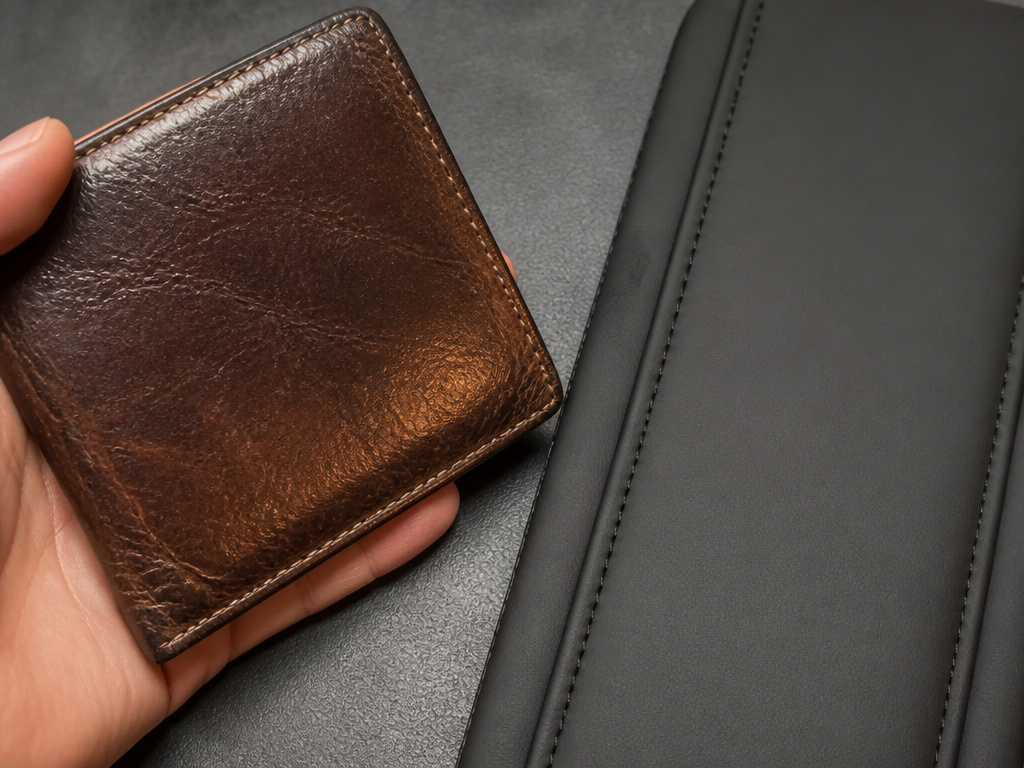
This isn’t about which is “better.” It’s about which is better for what. Let me share what I’ve learned from years of looking at how leather ages in different settings.
Choose Full Grain For:
- Daily-worn accessories: Belts, watch straps, wallets, and boots. These items bend constantly and are in direct contact with skin oils, which feed the patina. The longevity payoff is massive.
- Heirloom furniture: In a living room with controlled sunlight and a commitment to conditioning every 4-6 months, a full grain sofa will develop a breathtaking character over decades. It’s an investment in a narrative.
- Anything vegetable-tanned: The natural tanning process pairs perfectly with an uncorrected surface, resulting in a leather that darkens and glows with age in a way chrome-tanned leathers can’t match.
Choose Top Grain (Semi-Aniline) For:
- Family room or office furniture: When you need a balance of quality and practicality. The light finish resists juice spills, pet accidents, and UV fading better than unfinished leather, buying you time to clean up.
- Dry or variable climates: As one furniture retailer’s guide noted, in places like Arizona, the protective coating on top grain provides a buffer against low-humidity desiccation that can crack uncoated leather faster.
- Car interiors: The need for stain resistance, color consistency, and resistance to UV damage makes a high-quality semi-aniline top grain the industry standard for a reason. Top grain leather with a corrected grain finish offers a cleaner, more tailored appearance.
Here’s the practical takeaway. Match the leather’s properties to the item’s stresses. For high-flex, high-touch items you want forever, go full grain. For large, static surfaces where life happens, a protected top grain is a smart, resilient choice.
The Patina Principle: Why Only One Ages Gracefully
Patina isn’t just a fancy word for “worn out.” On leather, it’s a physical transformation. Natural oils from your hands, along with light and oxygen, slowly oxidize and penetrate the unsealed surface of full grain leather. The color deepens, highs spots develop a soft sheen, and the leather becomes uniquely yours.
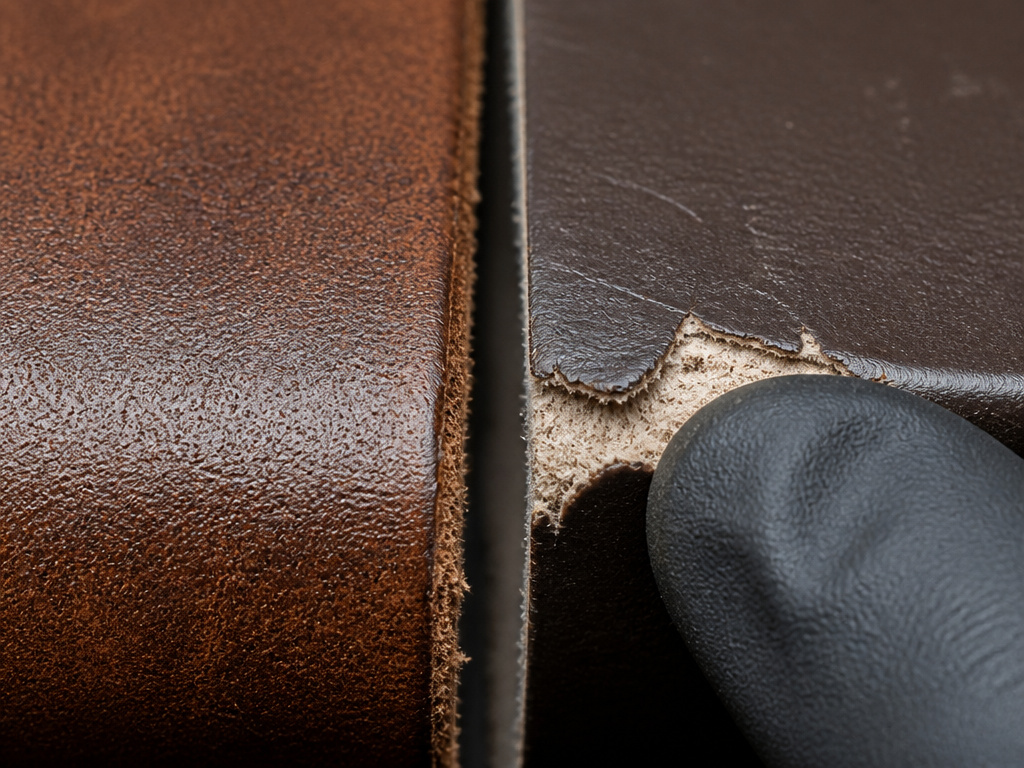
Top grain leather doesn’t develop a true patina. The surface coating seals the pores. Instead of a gradual deepening, the coating itself wears. It scratches, dulls, and eventually may peel or crack, revealing the sanded leather beneath, which then stains unevenly.
Where this goes sideways: Buying a “patina-ready” top grain belt because it’s cheaper. In two years, the coating at the belt holes is scuffed white, and the belt looks cheaply worn, not richly aged. You’ve saved $30 upfront but lost the entire point of the exercise.
I tested this principle on a different scale. Comparing a worn-in leather football to a new one, the heavily used grain was visibly polished smooth in the grip areas. That wasn’t damage, it was the leather compressing and hardening from repeated stress, improving its performance. That’s patina-as-evolution, not patina-as-decay. You can’t get that from a coated surface.
How to Test Leather Quality Before You Buy
Ignore the label on the tag for a minute. Let the leather tell you what it is. This is based on years of practical experience inspecting hides.
- The Bend Test: Fold the leather gently. Full grain and good top grain will crease smoothly, like bending a stiff piece of paper. Cheap corrected grain or bonded leather will wrinkle or show a white stress line along the fold, the coating is cracking.
- The Pull Test: Gently try to pull the leather apart at an edge. It should offer strong, elastic resistance. If it stretches easily or feels spongy, the fiber structure is loose (common in splits or low-quality hides).
- The Water Drop Test (Discreetly): Place a tiny drop of water on an inconspicuous spot. On full grain or semi-aniline top grain, it will darken the spot as it’s absorbed, then slowly evaporate. On heavily pigmented corrected grain, the water will bead up and sit on the surface. That bead-up means less breathability.
- Examine the Back: The flesh side should look like a dense, fibrous felt. It shouldn’t be covered in a cloth backing (a sign of a thin split leather being reinforced) or have a weird, uniform, paper-like texture.
These are the methods for testing leather quality that cut through marketing. They work on a swatch, a bag flap, or the back of a sofa cushion.
Frequently Asked Questions
Is top grain leather real leather?
Yes, top grain leather is 100% real leather. It comes from the upper, grain-bearing layer of the hide. The confusion arises because the surface is sanded and refinished, but the base material is genuine animal skin. It sits above genuine leather but below full grain in the quality hierarchy.
Which is more expensive, full grain or top grain?
Full grain leather is almost always more expensive. The premium reflects the need for higher-quality hides with fewer natural imperfections, the lower yield per hide (you can’t sand away flaws), and the additional skill required to work with an unprocessed surface. Top grain allows tanneries to use more variable raw material, reducing cost.
Can top grain leather last a lifetime?
It’s unlikely for daily-used items. Due to the removal of the strongest fiber layer and the eventual failure of the surface coating, top grain leather has a shorter functional lifespan than full grain. For a belt worn daily, 5-10 years is a realistic expectation. For a sofa in moderate use, 10-15 years is achievable with proper care. Full grain items routinely last 2-3 times longer.
Does full grain leather scratch easily?
It can mark, but it doesn’t scratch in the same way a coated leather does. A minor scuff on full grain leather can often be lessened with gentle rubbing and conditioning, as it’s just compressing the surface fibers. A scratch on a coated top grain leather actually damages the finish layer itself, which is much harder to repair without a visible trace.
Is full grain leather better for the environment?
It can be, depending on the tanning process. Full grain leather, especially vegetable-tanned, uses fewer chemical coatings and surface treatments. It’s also more repairable and long-lasting, reducing consumption over time. However, the environmental impact is more heavily influenced by the tanning method (chrome vs. Vegetable) than the grain grade alone.
Before You Go
The choice between full grain and top grain leather ultimately frames a question about value. Do you value a material that tells its own story alongside yours, that requires a bit more knowledge and care but rewards you with a unique, lifelong companion? Or do you value a material that offers a solid, consistent performance with a protective barrier against everyday life, understanding its serviceable lifespan is shorter?
Check for the specific tannery or brand name on the product label. Think about the item’s mission. Then, use your hands and eyes. Feel the temper, check the edge, and trust the smell. That direct inspection will tell you more than any marketing copy ever could. Understand leather better to make confident choices.
