
What Is Split Suede? The Rugged Military Material Explained
This post contains affiliate links. As an Amazon Associate, we earn from qualifying purchases.
Split suede is suede leather made from the fibrous middle or flesh layers of a cowhide, after the top-grain layer has been removed. It is defined by standards like BWB TL 8330-0023 for use in military combat shoes and ranges from 0.4mm to 1.4mm thick. Unlike the fuzzy nap of traditional suede, split suede can be buffed, coated, or embossed, making it a versatile, cost-effective material that is often stronger than suede from the flesh side.
Let’s be clear about one thing. When you hear “split suede,” you’re not hearing about a new type of leather. You’re hearing a precise description of where that suede comes from inside the hide. This distinction isn’t academic, it dictates everything from the item’s lifespan in a soldier’s boot to whether your car’s interior will crack in three years or thirty.
What follows is a breakdown of the hide’s anatomy, the industrial splitting process, and the specific standards that govern this material. By the end, you’ll be able to read a product description and know exactly which layer of leather you’re actually getting.
Key Takeaways
- Split suede originates from the middle or flesh splits of a hide, not the top-grain, giving it a different fiber structure and strength profile.
- It is a standardized material; for example, BWB TL 8330-0023 specifies cowhide split suede for combat shoes in hot, dry climates.
- The thickness of the initial cowhide (5-10mm) allows it to be split multiple times, creating layers as thin as 0.4mm for fine suede.
- Grain splits (with the grain layer sanded off) make the strongest suede, while drop splits (flesh side) are weaker and often coated for use in car interiors. Proper care is essential; storing split suede in a breathable bag with silica packets prevents mold, a real risk with this fibrous material.
The Anatomy of a Hide: From Full-Grain to Split
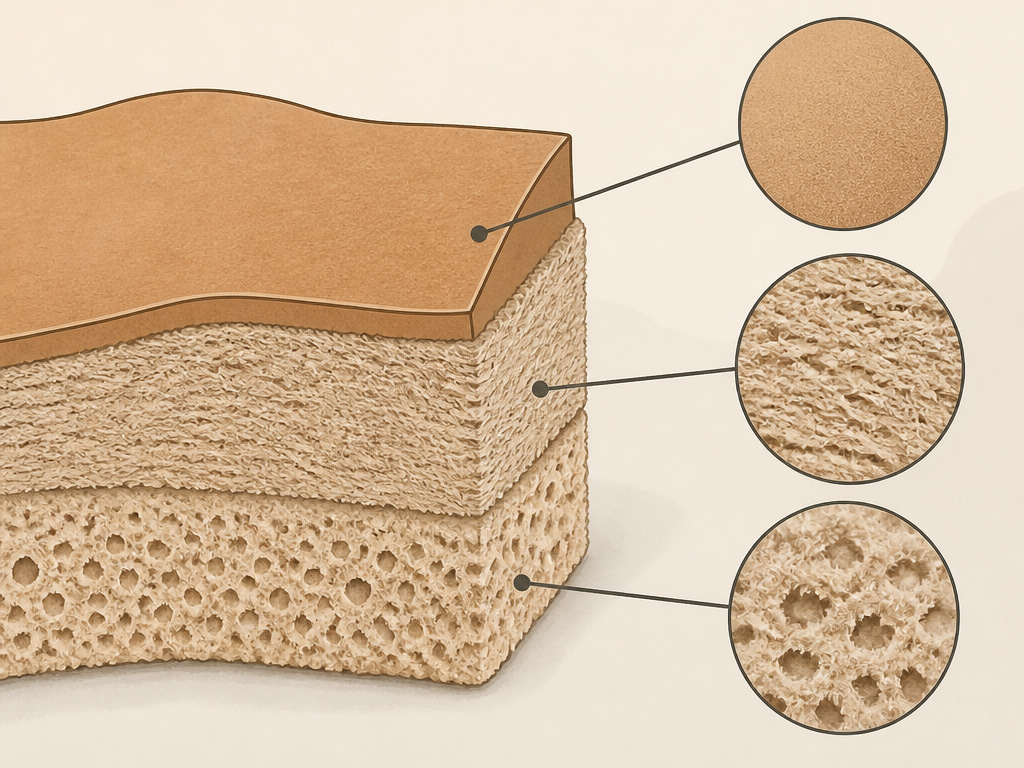
To understand split suede, you need to start with the whole hide. Think of a thick piece of cow leather, typically between 5mm and 10mm. This isn’t a uniform slab; it’s a layered structure. The outermost surface is the top-grain. This is the premium layer, marked by the hide’s natural pores and imperfections. It’s dense, tight, and incredibly strong.
The ISO 2419:2012 standard governs the preparation and conditioning of leather samples for physical testing, including the split layers used for suede. This ensures consistency when evaluating materials like the cowhide split suede specified for military gear.
Beneath the top-grain lies the corium, the fibrous middle of the hide. When this hide passes through a splitting machine, the top-grain is peeled away. What’s left is called the drop split. In thicker hides, this drop split can be split again, yielding a middle split (closer to the grain) and a flesh split (the innermost layer). This is the origin of all split leather.
Here’s where “suede” enters the chat. Suede is created by sanding or buffing one of these split layers to raise a soft, fuzzy nap. The strongest suede comes from the grain split, that’s a middle split that has had every last trace of the grain layer sanded off. The fibers there are still relatively tight. The suede you typically think of, the very soft kind, usually comes from the buffed flesh side of a flesh split. Its fibers are looser, which creates that luxurious feel but sacrifices durability.
| Layer of Hide | Common Name | Key Characteristic | Best Use For |
|---|---|---|---|
| Outermost Surface | Top-Grain | Natural grain, strongest, develops patina | High-end bags, belts, footwear |
| Layer beneath Top-Grain | Drop Split | Fibrous, no natural grain surface | Further splitting into middle/flesh splits |
| Upper part of Drop Split | Grain Split / Middle Split | Tight fiber structure, grain removed | Strongest suede, upholstery |
| Innermost part of Drop Split | Flesh Split | Loosest fiber structure, softest nap | Soft suede apparel, linings |
How Split Suede is Made (and Why It Matters)
The process begins with a wet, tanned hide. It’s fed into a splitting machine, which uses a razor-sharp blade to slice the hide horizontally. The operator targets a specific thickness, anywhere from a heavy 1.4mm for a work boot liner down to a delicate 0.4mm for fine garment suede.
I once rushed conditioning a vintage suede jacket without a spot test. The conditioner soaked into the split leather’s thirsty fibers and reacted with some old, unseen finish, creating dark, blotchy stains I couldn’t fully fix. That jacket taught me to never skip the basics with any split material, especially suede.
A critical detail: hides are split while wet. Variations in water content mean the thickness can fluctuate across the hide. The machine operator must account for this in real-time. Get it wrong, and the resulting split leather will have inconsistent strength, a flaw you might not see until the material is under stress in a finished product.
After splitting, the path diverges. To make split suede, the surface of the split (whether middle or flesh) is buffed with abrasive rollers or sandblasted. This abrasion teases the fibers upward to form the nap. The height of this nap is controlled by pressure and grit; a short, velvety nap of about 0.5mm is standard for fine suede.
But not all splits become fuzzy. Many are destined to hide their origin. A drop split with a weak fiber structure is often sanded smooth, imprinted with a fake grain pattern using an embossing roller, and then coated with a layer of pigment or polyurethane (PU). This creates coated split leather or corrected grain leather. It feels colder and harder than top-grain, and that coating will eventually crack and peel, it cannot develop a patina. This is what you find on many car steering wheels, door trims, and budget furniture.
Common Applications of Split Suede
Because of its variable nature, split suede wears many hats. Its application directly depends on which split is used and how it’s finished.
- Military & Work Gear: This is split suede in its most rugged form. The BWB TL 8330-0023 standard explicitly specifies cowhide split suede for combat shoes in hot, dry climates. Here, durability and moisture-wicking are prioritized over a plush nap. The grain split is used for its strength.
- Fashion Suede: Jackets, skirts, and accessories often use the softer, more plush suede from the flesh split. It provides the classic, luxurious drape and feel. Designers love it for its color depth and tactile quality.
- Automotive Interiors: This is the great deception. Most “leather” on modern car steering wheels, gear knobs, and door cards is actually coated split leather. It’s a drop split that’s been sanded, embossed, and painted to look like top-grain. It feels cold, doesn’t breathe, and that coating will wear through with abrasion.
- Furniture Upholstery: Sofas and chairs frequently use split leathers on the sides and backs. A high-quality sofa might use a durable grain split, often dyed and lightly finished. A budget piece will use a coated drop split, which is prone to tearing and won’t age gracefully.
- Footwear Linings and Accents: Inside boots or as decorative panels on shoes, split suede offers a soft feel and breathability at a lower cost than full-grain leather linings.
Where this goes sideways: Using all-purpose cleaners or magic erasers on a car’s coated split leather interior. The chemicals degrade the PU coating, and the abrasive pad scratches it, leading to a dull, patchy surface within a year. You’re not cleaning plastic; you’re scrubbing off a thin, fragile veneer.
Split Suede vs. Traditional Suede and Nubuck
The terms get tangled. Let’s untangle them.
- Split Suede: This is the category. It means the suede came from a split layer (middle or flesh). It can be fine or coarse, strong or soft.
- Traditional Suede (from the Flesh Split): This is the classic, soft suede. It’s a type of split suede known for its plush nap but lower abrasion resistance. It’s what most people picture.
- Nubuck: Often confused with suede, nubuck is different. It’s made by lightly sanding the grain side of top-grain leather. This creates a short, velvety nap that is much more durable than suede from a flesh split. Nubuck is not a split leather at all; it’s premium top-grain with a textured finish. For a detailed breakdown, see our guide on nubuck vs suede.
The choice between them comes down to use and budget. Need a tough, scuff-resistant material for boots? A heavy grain split suede or nubuck is the answer. Want a soft, drapey jacket? Traditional suede from a flesh split works. On a tight budget for a bag? A coated split leather with an embossed pattern might be used, but know it won’t last or age like the others.
How to Identify and Care for Split Suede

Identifying what you have is the first step to proper care.
For Uncoated Split Suede (Fuzzy Nap):
Look for the fuzzy surface on both sides of the material. Gently pull at an inconspicuous spot. True suede from a flesh split may show some fiber stretch and tear more easily than a tight-weave fabric. The care protocol is specific: 1. Brush First, Always. Use a suede brush (brass, gum rubber, or horsehair) regularly to lift the nap and remove dust. This is 90% of maintenance. 2. For Stains, Use Specialized Products. Never use standard leather conditioner. It will mat the nap. Use a dedicated suede cleaner like Saphir Omni’Nettoyant Suede. For water stains, let the item dry completely, then brush vigorously. 3. Protect It. Apply a spray protector like Tarrago Nano Protector before first use. Reapply every few months.
For Coated Split Leather (Smooth Finish):
This feels smoother, often colder, and has a perfectly uniform grain pattern. You might see slight peeling at stress points over time. Care is different: 1. Wipe, Don’t Soak. Use a damp cloth with a mild, pH-neutral soap. Avoid soaking, as water can seep under the coating. 2. Avoid Conditioners. The plastic/PU coating cannot absorb oils. Conditioners will just sit on top, attracting dirt. 3. Store Properly. Keep items in breathable cotton bags, never plastic. For long-term storage, use silica packets to control humidity and prevent mold, the fibrous split layer underneath is still susceptible.
Easy to miss: The inside of a suede jacket or bag. If the fuzzy side is facing in, that’s often a “reversed suede” made from a grain split turned inside out. It’s more durable than standard suede but requires the same careful brushing.
Frequently Asked Questions
Is split suede real leather?
Yes, split suede is 100% real leather. It comes from the lower layers of an animal hide after the top-grain has been removed. The “split” refers to its origin from the splitting process, not a synthetic source.
Why is split leather considered lower quality?
It’s not inherently lower quality, but it has different properties. The fibrous split layers lack the dense, tight structure of the top-grain, making them less resistant to tearing and abrasion. However, for applications like suede or reinforced linings, where flexibility or a specific texture is needed, it is the correct and high-quality material.
Can split suede get wet?
Uncoated split suede is very susceptible to water stains. Water darkens the nap and can leave permanent rings. Always treat it with a waterproofing spray designed for suede. Coated split leather is more water-resistant, but prolonged moisture can cause the coating to separate from the leather base.
How can I tell if my car has split leather interiors?
Try the temperature test. Real top-grain leather feels close to ambient temperature. Coated split leather often feels cooler to the touch, like vinyl. Also, look for a perfectly uniform grain pattern with no natural pores or variations, a sign of embossing. When in doubt, ask the manufacturer for a material specification in writing.
The Bottom Line
Split suede is a workhorse material defined by its place of origin inside the hide. Its value isn’t a question of “real” or “fake” leather, it’s about matching the right split to the right job. A grain split suede in combat boots is premium; a coated drop split on a budget car seat is a cost-cutting measure.
The practical takeaway is this: learn to identify the finish. Is it a fuzzy nap or a smooth, coated surface? That answer dictates every cleaning and care decision you’ll make. Ignore the marketing copy about “genuine leather.” Look for specifics: top-grain, full-grain, nubuck, or suede from grain splits. Your wallet, and your leather goods, will last much longer for it.
