
What Is Pull-Up Leather? Defining the Patina-Rich Finish
This post contains affiliate links. As an Amazon Associate, we earn from qualifying purchases.
This post contains affiliate links. As an Amazon Associate, we earn from qualifying purchases.
Pull-up leather is aniline-dyed leather that has been heavily treated with oils, waxes, or both during its finishing process. This infused layer causes the leather to visibly lighten in color when it is stretched, bent, or scratched, a deliberate effect called the “pull-up” or “color-burst.” The result is a robust, naturally water-resistant leather that develops a unique, vintage-looking patina over time, masking light scratches within its character.
That characteristic lightening isn’t a flaw or a sign of delicate material. It’s the entire point. This finish turns everyday wear into a feature, not a failure. If you’ve ever seen a leather bag or jacket where a crease appears lighter, only to blend back in after a moment, you’ve seen pull-up leather doing its job.
What follows is a breakdown of the oils and waxes that make it work, the three physical traits that identify it at a glance, and the specific care that keeps it from drying out. You’ll also see where it fits alongside other finishes like aniline leather and pigmented leather, and why it’s a favorite for goods that are meant to be used hard and look better for it.
Key Takeaways
- Pull-up leather lightens when stretched because of a thick internal layer of oils or waxes that displace the dye, this is intentional, not damage.
- It is surprisingly durable and water-resistant, but it will dry out and crack if stored in direct sunlight or heat for prolonged periods.
- Simple maintenance involves rubbing lightened areas with a dry cloth to redistribute oils and darken the leather; avoid heavy conditioners that can clog its open pores.
- Due to natural color variation within a single hide, matching panels for a project requires laying pieces out first to ensure a consistent shade.
- It is often confused with low-quality PU (polyurethane) leather because of the similar name, but they are completely different materials in feel, quality, and lifespan.
What Makes Pull-Up Leather Look Like That? (The Pull-Up Effect)
The signature look comes from chemistry, not magic. After the leather dyeing process, the hide is drum-stuffed or hand-fed with a heavy dose of oils, waxes, or a blend. This isn’t a thin surface coat; the material is massaged deep into the fibers until it’s fully saturated. Think of it like butter worked into bread dough, it becomes part of the structure.
When you bend or stretch this stuffed leather, you’re physically displacing those oils and waxes within the fiber matrix. This movement temporarily changes how light reflects off the surface and can even push the dye slightly aside, causing the leather to appear lighter in that exact spot. Once the pressure is released, the oils slowly flow back, and the color darkens again. This is the “pull-up” or “color-burst” effect.
This effect is not superficial. The oils and waxes are integral to the leather’s structure, which is why a scratch doesn’t necessarily mean the color is removed, it’s often just displaced, and can be coaxed back with heat from your hand or a gentle rub.
This characteristic is why pull-up leather is sometimes called fat leather. It’s a direct result of the oil tanning process taken to an extreme in the finishing stage, giving it a distinct hand-feel and behavior separate from drier aniline leather or sealed pigmented leather.
The 3 Telltale Signs You’re Looking at Pull-Up Leather
You can spot this leather without a label. Here’s what to look and feel for.
1. The Color-Burst Test
The most reliable check is the simplest. Gently pinch or bend a discreet corner of the item. Authentic pull-up leather will show a distinct, immediate lightening along the stress line. It’s a dramatic shift, like turning up a brightness slider. A faux material or a lightly oiled leather will show little to no change.
2. The Feel: Supple Yet Substantial
It feels different than other leathers. The high oil and wax content gives it a unique drape and softness, but it doesn’t feel thin or flimsy. It has a waxy, almost moisturised hand-feel, your fingers might even detect a slight resistance, as if the surface has a tiny bit of tack. This is a far cry from the dry, papery feel of some corrected grain leather or the plastic-like feel of coated finishes.
3. The Visual Texture: Natural and Open
Pull-up leather is almost always made from high-quality, minimally corrected hides. You should see the natural leather grain, the unique pore structure, minor scars, and growth marks, clearly through the finish. It’s not a perfectly uniform surface. This open-pore quality is key to its breathability and also makes it sensitive to immediate moisture absorption. A spilled drop of water will darken the spot quickly because the liquid is drawn into the pores, unlike on a sealed pigmented finish.
| Trait | Pull-Up Leather | Standard Aniline Leather | Pigmented/Coated Leather |
|---|---|---|---|
| Surface Response | Lightens noticeably when bent/scratched | May darken with oil transfer, no dramatic lightening | Color remains completely unchanged; finish may crack |
| Hand-Feel | Supple, waxy, substantial | Dry, soft, natural | Stiff, plastic-like, uniform |
| Pore Visibility | High; natural grain is clearly visible | Very high; completely natural grain | Low to none; grain is often obscured by coating |
| Water Reaction | Spot darkens quickly as water absorbs, then dries | Darkens immediately and can stain | Beads up on surface initially |
How Pull-Up Leather Is Made: More Than Just a Dip
The process starts with full-grain leather, typically vegetable-tanned or chrome-tanned, that has undergone aniline dyeing to achieve a rich, transparent color. The real transformation happens next.
- Drum-Stuffing: The dyed hides are placed into large rotating drums along with molten waxes and hot oils. The tumbling action works the blend into every fiber over hours, ensuring total saturation. It’s a messy, industrial process.
- Setting & Cooling: The leather is hung to allow the blend to set and cool within the structure, solidifying its new, pliable character.
- Finishing: Finally, it’s lightly milled or pressed to achieve the desired surface sheen, usually a soft matte or a low luster. No heavy top-coats are applied, or they would seal in the oils and kill the pull-up effect.
The thickness of the leather impacts the result. Most pull-up leathers are a medium 4oz to 6oz (1.6mm to 2.4mm). Thicker hides can reduce the dramatic “burst” effect because there’s less relative stretch, which is why you’ll often find it in this weight range for bags, belts, and upholstery.
The Practical Pros and Cons: Is It Right for Your Project?

Let me share what I’ve learned from working with this material. Its personality is strong, and it’s not for every application.
Where Pull-Up Leather Shines:
- Hides Minor Wear: Scratches and scuffs blend into the patina instead of standing out as damage. It’s forgiving.
- Develops Unique Character: No two items will age exactly the same. Your bag becomes truly yours.
- Inherent Water Resistance: The wax/oil content causes water to bead up initially and absorb slowly, offering good protection from rain and spills.
- Durable and Long-Lived: The oily structure keeps fibers lubricated and resistant to drying out with regular use, leading to an average lifespan of 25 years or more.
The Trade-Offs and Things to Know:
- Color Matching is Hard: Manufacturers like CTL Leather Inc. Stress that color varies within a single hide and from one hide to the next. If you’re making something requiring multiple panels, you must lay all pieces out first to match shades. The sides of a hide are stretchier, and this area can look different, it’s best used for non-primary sections.
- It Demands Specific Care: Open pores mean sensitivity. You can’t use just any conditioner. Heavy products will clog the pores, trapping dirt and creating a gummy film.
- Heat and Sun are Enemies: Prolonged exposure to direct sunlight or high heat (like near a radiator) will cook the oils right out, leaving the leather dry, brittle, and prone to cracking.
- Initial “Defects”: Customers sometimes mistake the natural patina development for rapid wear, a point The Leather Dictionary has noted. You have to appreciate, not fight, its changing nature.
How to Care for Pull-Up Leather (And What to Skip)
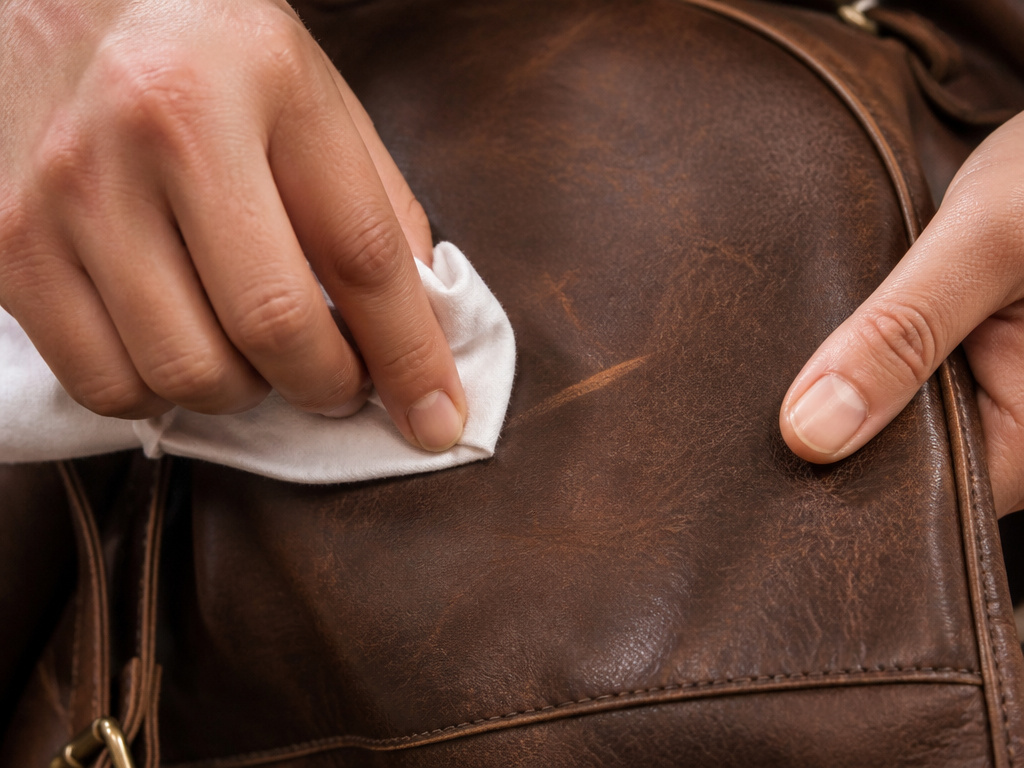
Care is straightforward once you understand the material. You’re managing the oil and wax content, not fighting the patina.
For Regular Cleaning & Darkening Light Spots:
Forget commercial cleaners. A dry, clean, cotton cloth is your primary tool. Simply rub any lightened scratches or creases firmly. The friction generates mild heat and helps redistribute the oils back across the surface, darkening the area. It’s that simple.
For Occasional Nourishing:
Skip this if: Your leather still feels waxy and supple. Over-conditioning is the most common mistake and will clog the open pores. If the leather starts to feel dry or stiff, use a tiny amount of a pure, liquid oil like neatsfoot or a dedicated aniline leather balm. Apply a few drops to a cloth, rub it in thoroughly, and let it absorb for 24 hours. The leather will drink it in and restore its pliability.
For Water Protection:
Its natural waxes offer some resistance, but for a bag or boots, a light, breathable waterproofing spray designed for nubuck or suede can be used. It adds a protective layer without sealing the surface completely. Never use wax-based waterproofer like you would on a boot, it will create a stiff, shiny crust.
Storage is Non-Negotiable:
Always store it in a cloth dust bag, away from direct sunlight and heat sources. A closet shelf is perfect. This prevents dust accumulation and, most importantly, stops the essential oils from evaporating or drying out.
Pull-Up Leather vs. Other Finishes: A Quick Comparison
It sits in its own category, but here’s how it stacks up against common alternatives.
Pull-Up vs. Aniline Leather
Both showcase natural grain, but aniline leather is dyed only, with little to no oil/wax finish. It’s softer and drier, developing a patina through darkening and polishing. Pull-up is aniline leather’s oil-stuffed, more rugged cousin, more water-resistant and better at hiding scuffs, but with a less “naked” feel.
Pull-Up vs. Oil-Tanned Leather
All pull-up leather is oil-tanned leather, but not all oil-tanned leather is pull-up. Oil-tanning refers to the curing process using oils. Pull-up specifies the additional, heavy post-dye oil/wax infusion that creates the visual lightening effect. The difference is in the degree of treatment.
Pull-Up vs. Corrected Grain/Embossed Leather
This is a night-and-day difference. Corrected grain leather has its surface sanded to remove imperfections, then is painted with a pigmented finish and often embossed with an artificial grain pattern. It’s uniform, stain-resistant, and shows no pull-up effect. It’s about consistency, not character.
The PU Leather Confusion:
This is a critical mix-up. PU (Polyurethane) leather is a plastic coating applied to a leather or fabric base. It’s cheap, uniform, and has no natural grain or pull-up effect. If a “pull-up” item feels plasticky and has a perfectly uniform surface, it’s likely PU. Genuine pull-up leather is a premium, natural material.
Frequently Asked Questions
Is pull-up leather real leather?
Yes, it is 100% real leather, typically made from high-quality cow or calf hides. The “pull-up” refers to the special oil/wax finishing process, not the base material.
Does pull-up leather scratch easily?
It marks easily, but scratches are part of its design. The oils and waxes allow scratches to lighten the surface temporarily, and they can often be rubbed darker again with a dry cloth. It’s more scratch-forgiving than delicate aniline leather.
Can you make pull-up leather darker?
Yes, temporarily. Rubbing a lightened area with a dry cloth redistributes oils and darkens it. For an overall darkening, a very light application of a pure oil conditioner can deepen the color, but this changes the character and should be done sparingly.
Is pull-up leather good for shoes?
Excellent for casual boots and shoes where a rugged, vintage patina is desired. Its water resistance and durability are assets. It’s less ideal for formal shoes requiring a high, consistent shine.
How do you clean pull-up leather?
For dirt, use a slightly damp cloth, then dry immediately. For scuffs, use a dry cotton cloth to rub the area. Avoid soaps, saddle soap, or heavy leather cleaners, as they can strip or clog the essential oils.
Before You Go
Pull-up leather isn’t a leather type you choose for pristine, static perfection. You choose it for a companion that changes with you, that turns your daily adventures into its story. Its magic is in making you stop worrying about the first scratch.
The one rule that matters most: if it feels dry, it’s been neglected. The oils and waxes that define it can leave. Keep it out of the sun, rub it with a cloth now and then, and understand that its color will shift, across a single bag, and from one hide to the next. That variability isn’t a defect. It’s the proof you’re not holding something mass-produced.
For your next bag, belt, or jacket that you actually plan to use, give it a look. Let the leather tell you what it needs, and it’ll outlive trends.
