
The Correct Way to Clean a Leather Dog Leash & Keep It Supple
This post contains affiliate links. As an Amazon Associate, we earn from qualifying purchases.
This post contains affiliate links. As an Amazon Associate, we earn from qualifying purchases.
To clean a leather dog leash, wipe it with a damp cloth and a drop of mild soap, rinse with a damp cloth, dry completely away from heat, then condition with a leather balm. Never soak it, machine wash it, or use harsh cleaners. The type of leather, vegetable-tanned or chrome-tanned, changes how careful you need to be with water.
That last part is where most guides stop. They give you the generic wipe-and-condition routine, which works until your dog drags the leash through a saltwater puddle or a downpour hits your vegetable-tanned lead. Then you’re left with a stiff, cracked strap and corroded hardware wondering what went wrong.
The process isn’t one-size-fits-all. It’s a series of choices based on the leather’s tanning and the grime you’re fighting. What follows is the difference between a leash that lasts a season and one that develops a good patina over years: the right soap, the critical drying step everyone rushes, and the one type of leather that should never see a rainstorm.
Key Takeaways
- Never soak a leather leash. Submerging it forces water into the fibers, which weakens them and leads to cracking as it dries. Vegetable-tanned leather is especially sensitive.
- Condition after every clean, without exception. Cleaning strips natural oils; a quality leather balm like Obenauf’s or Skidmore’s restores moisture and flexibility.
- Saltwater is a hardware killer. Rinse the metal D-ring and clip immediately with fresh water after beach walks to prevent rapid corrosion.
- Skip the saddle soap for routine cleaning. It’s a heavy-duty degreaser meant for filthy saddles; on a leash, it strips too much oil and dries out the leather.
- Dry slowly, away from heat. Laying the leash flat in a room-temperature, well-ventilated area for 24-48 hours prevents the leather from drying too fast and becoming brittle.
The Supplies You Actually Need
Grab the wrong bottle and you can do more harm than good. You don’t need a specialty kit.
A soft cloth, microfiber or an old cotton t-shirt, is your main tool. For soap, a drop of plain Castile soap or a dedicated leather cleaner like Lexol Leather Cleaner works. Dish soap is a last resort; it can leave a residue. The conditioner is essential. Look for a balm with beeswax and natural oils, such as Obenauf’s Leather Oil or Huberd’s Shoe Grease. These penetrate and protect without clogging the pores.
You’ll also want a small bowl of lukewarm water and a separate dry towel. That’s the whole list. The fancy sprays and “leather rejuvenators” are usually just silicone in a bottle. They sit on top of the leather, making it shiny temporarily while doing nothing for its long-term health.
What You Should Never Do to a Leather Leash
This is the short list that prevents long-term damage. Break one of these rules and you’ll see the consequences in weeks, not months.
First, never machine wash or tumble dry a leather leash. The agitation and heat will warp the leather, crack any finish, and likely ruin the stitching. The FIREDOG safety guide is explicit on this point: avoid soaking and machine washing.
Second, avoid all harsh chemicals. Bleach, ammonia, vinegar, and abrasive cleaners will strip the leather’s natural oils and can discolor it permanently. Even some “gentle” baby wipes contain alcohols that are drying.
Common mistake: Using saddle soap on a lightly soiled leash. It’s formulated to remove heavy grease and dirt from saddles, so it’s overly aggressive for a leash that just has some mud and slobber. Regular use dries the leather out.
Third, keep it away from direct heat sources. Never dry your leash on a radiator, in direct sunlight, or with a hair dryer. Heat bakes the moisture out too quickly, causing the leather to shrink and become brittle. Let it air-dry at room temperature.
Finally, don’t let mud or salt dry on it. Grit acts like sandpaper, wearing down the surface as the leash moves. Salt accelerates rust on the hardware and draws moisture out of the leather itself. Green Dog’s care instructions specifically call for rinsing leather immediately after saltwater exposure.
Step-by-Step: Cleaning a Leather Leash
Follow this sequence and you won’t miss the step that leads to stiffness.
1. Remove Surface Dirt. Shake the leash off outdoors. Then, take your dry cloth and wipe the entire length to remove loose dirt, hair, and sand. This prevents grinding grit into the leather during the wet wash.
2. Spot Clean Stains. Dampen a corner of your cloth with plain water and gently rub any visible stains or heavy soil. For sticky residue, use the smallest drop of your chosen soap on the damp cloth. Work in small circles. Skipping this means you’re just spreading the dirt around when you do the full wipe-down.
3. The Full Wipe-Down. Dampen your cloth with clean water (wring it out so it’s not dripping). Add a single drop of soap to the cloth. Wipe the entire leash from the handle to the clip, following the grain of the leather. You’re not soaking it; you’re giving it a bath with a damp rag. This is the core of leather leash maintenance.
4. Rinse. Rinse your cloth thoroughly, wring it out, and wipe the leash again with clean water to remove any soap residue. Soap left behind will attract more dirt.
5. Dry the Hardware. This is the step everyone forgets. Use a dry corner of your towel to thoroughly dry the metal D-ring, buckle, and clip. Moisture gets trapped in the crevices and causes rust, which can stain the leather and weaken the connection. It’s the same attention to detail you’d apply when you clean leather boots after a wet walk.
6. Air Dry Flat. Lay the leash flat on a dry towel in a well-ventilated area, away from sun and heat. Don’t hang it by the clip, this can stretch the leather as it dries. Let it sit for a full day, maybe two. It should feel completely cool and dry to the touch before the next step.
Conditioning Is Not Optional
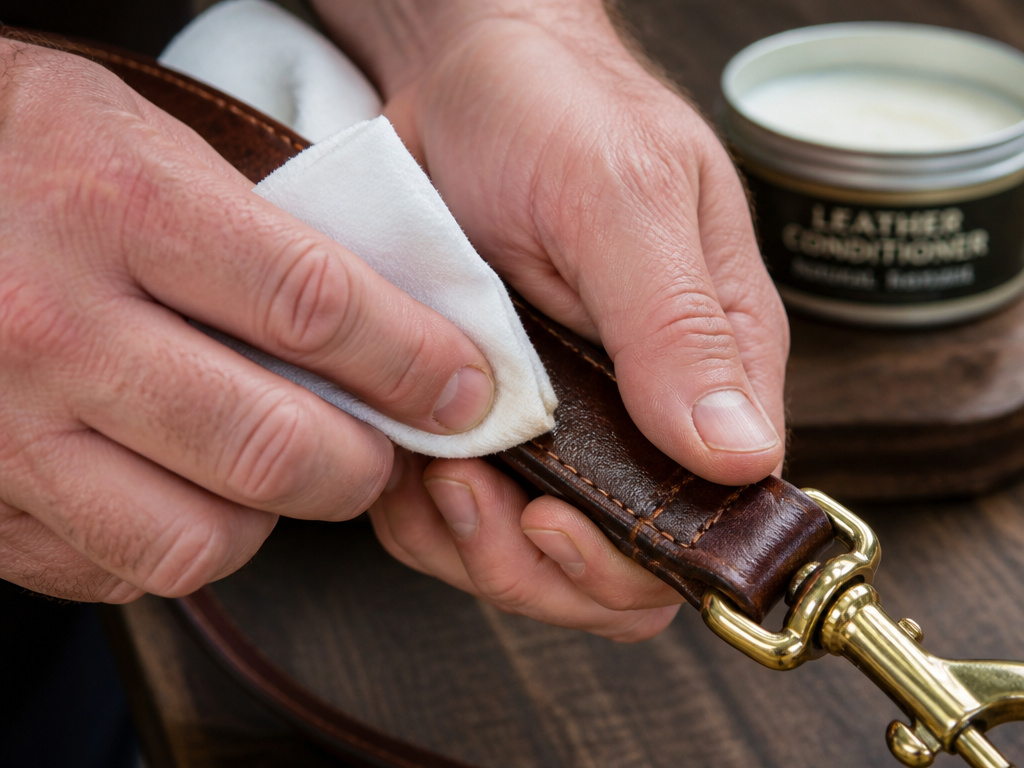 Cleaning without conditioning is like washing your hands and then not drying them, the leather is left vulnerable. The process opens the pores and removes dirt, but also some of the natural oils that keep it supple.
Once the leash is bone-dry, apply a small amount of leather conditioner to a clean, dry cloth. Rub it onto the leather in a thin, even coat, covering the entire surface. Pay extra attention to areas that bend frequently, like near the clip, and the backside that rubs against your dog.
Let the conditioner absorb for at least an hour, then buff off any excess with a clean cloth. A slight tacky feel is fine; a greasy feel means you used too much. This routine of care for a leather leash keeps it from drying out and cracking. The same principle applies to a matching leather collar, which needs its own regular conditioning a dog collar schedule.
Vegetable-Tanned vs. Chrome-Tanned: Why It Matters
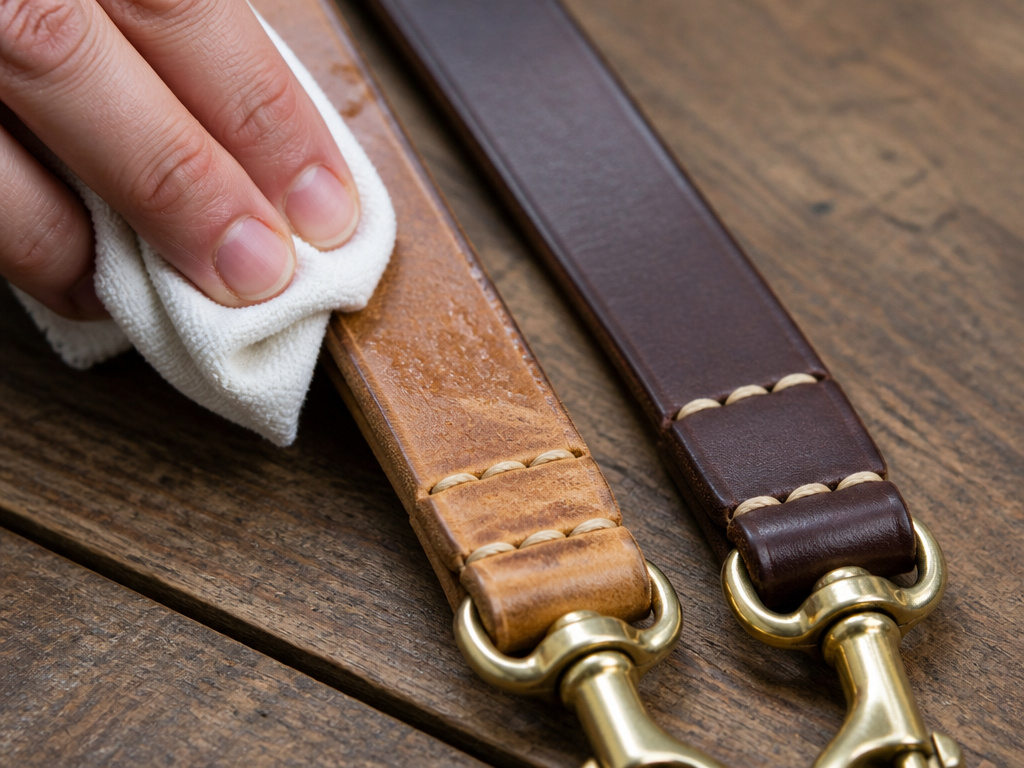 Not all leather is the same. The tanning process dictates how it reacts to water and wear, which changes your cleaning approach.
Vegetable-Tanned Leather is processed using natural tannins from tree bark. It’s the stiff, light-colored leather that darkens beautifully with age and use. Denjo Dogs explicitly states this type is sensitive to water. If your leash is veg-tan, you need to be extra cautious. Use a barely-damp cloth for cleaning, and consider a waterproofing wax conditioner. In pouring rain, you might want to switch to a Biothane lead. The patina is worth the extra care, it tells your dog’s story.
Chrome-Tanned Leather is tanned with chromium salts. It’s more common in mass-market goods, is softer out of the box, and is more water-resistant. It can handle a slightly more thorough cleaning but still shouldn’t be soaked. It won’t develop the same rich patina; it tends to just wear out.
If you’re shopping for a new leash and want durability, look for quality leather leads made from full-grain, vegetable-tanned leather from a known tannery like Hermann Oak.
| Leather Type | Best For | Key Cleaning Limitation |
|---|---|---|
| Vegetable-Tanned | Durability, developing a patina | Very water-sensitive; avoid getting soaked. |
| Chrome-Tanned | Softness, initial water resistance | Can become stiff and crack if dried with heat. |
| Biothane (Coated Webbing) | Wet climates, easy cleaning | Wipe clean only; conditioners can damage the coating. |
Troubleshooting Common Problems
Sometimes a leash has issues beyond everyday dirt. Here’s how to handle them.
The leash is stiff and cracked. This is usually from repeated wetting and drying without conditioning, or drying with heat. You can’t reverse deep cracks, but you can improve flexibility. Apply a generous amount of leather conditioner, wrap the leash in plastic wrap, and let it sit overnight. Wipe off the excess in the morning. Repeat monthly.
There’s a foul odor. Odor means bacteria or mold is in the leather. Mix equal parts white vinegar and water. Dampen a cloth with the solution and wipe the leash thoroughly. Let it dry completely, the vinegar smell will dissipate, then condition immediately. This is more intensive than a standard clean a leather collar job.
The hardware is rusted. Light surface rust can be scrubbed with a soft brush and a paste of baking soda and water. Dry it immediately and thoroughly. If the rust is deep or the swivel is seized, the hardware is compromised. For a quality leash, a leatherworker can often replace the D-ring. For a cheap leash, it’s time to replace it with one from our list of best dog leashes.
There’s black mold spots. This is a serious sign of being stored damp. The mold can weaken the leather. Wipe it down with a diluted isopropyl alcohol solution (1 part alcohol to 3 parts water), dry thoroughly in the sun for an hour (the only time sun is acceptable), then condition. If the spots remain or the leather feels slimy, the damage may be too deep.
Frequently Asked Questions
Can I use dog shampoo to clean the leash?
You can, but it’s not ideal. Many dog shampoos contain de-greasing agents and perfumes meant for skin and fur, not leather. They can strip the leather’s oils. A plain, mild soap is a safer, more predictable choice.
How often should I clean and condition my leather leash?
Clean it when it’s visibly dirty or feels gritty. Condition it every time you clean it, and also about every 3-6 months as preventative maintenance, depending on use. A leash used daily in all weather needs more frequent care than one for occasional walks.
Is it okay to get my leather leash wet in the rain?
Occasional light rain is fine if you dry and condition it properly afterward. However, prolonged soaking will damage the leather, especially if it’s vegetable-tanned. For dogs that love water or for rainy climates, a waterproof Biothane leash is a more practical choice for daily use.
Can I use olive oil or coconut oil to condition it?
I don’t recommend it. These kitchen oils can go rancid over time, leading to a sour smell. They also don’t contain waxes to protect the surface. A product formulated for leather, like a beeswax-based balm, will nourish it without the risk of spoilage.
What’s the best way to store a leather leash?
Hang it in a cool, dry place out of direct sunlight. Don’t coil it tightly or store it in a sealed plastic bag, as this can trap moisture. Let it breathe. Proper storage is a key part of maintaining a leather collar and leash set.
Before You Go
The goal isn’t a sterile, like-new leash. It’s a leash that stays strong and supple while it earns its character. The difference between a cracked, discarded leash and a trusted one with a deep patina comes down to avoiding heat, replacing oils, and knowing your leather type.
If your leash is stiff, hit it with conditioner tonight. If the hardware is looking dull, wipe it dry. And if you’re in the market for a new one, skip the cheap chrome-tanned options and invest in a vegetable-tanned leash from a brand like Loyal Canine. It’ll cost more up front, but with the right care, it’ll be the last leash you need to buy for years. That’s the whole point.
