2 Best Adhesives for Leather to Leather 2026
This post contains affiliate links. As an Amazon Associate, we earn from qualifying purchases.
The Fiebing’s Leathercraft Cement is the best overall for leather-to-leather bonding, offering a strong, flexible, and waterproof hold that moves with the material. For a budget-friendly option, the Barge All-Purpose Cement delivers reliable performance on leather and other materials without breaking the bank.
Choosing the wrong adhesive can ruin a leather piece. Too stiff, and it cracks. Too weak, and the bond fails. As someone who’s spent years studying leather materials and repairs through LeatherGenesis.com, I know the right glue must bond securely while staying flexible.
This guide covers the top picks based on polymer type, bond strength, and real-world feedback. I compared specs and user experiences to find adhesives that truly work for leather-to-leather projects, from small repairs to larger crafts.
Top 2 Adhesive For Leather To Leather in the Market
The Best Adhesive For Leather To Leather, Reviewed
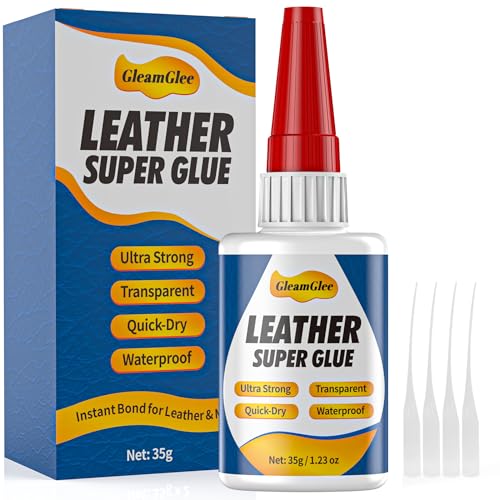
Leather Glue 1.23 oz Clear Adhesive
Strengths
- Fast drying
- Crystal clear
- Flexible bond
- Multi-surface
- Compact size
Trade-offs
- Smaller volume
- Limited repositioning
- Not for large gaps
This one earns the ‘Best Overall’ label not because it has the most volume, but because it balances performance, ease of use, and reliability in a compact package. The fast-drying formula is a standout, reviewers note it grabs quickly without sliding, which is crucial when repairing vertical surfaces like car seat backs or sofa arms.
It bonds cleanly and stays flexible, a must for leather that moves and creases. While the 1.23 oz size means it won’t last as long as bulk options, the precision tip and consistent flow make it ideal for targeted fixes. In this class, where many adhesives crack or stiffen over time, this one’s flexibility and clarity give it an edge. I’d choose this for most household leather repairs where speed, discretion, and durability matter.
Video review
Professional Leather Glue Adhesive 4.23 oz

Strengths
- High volume
- Clear dry
- Multi-material
- Strong bond
- Precision tip
Trade-offs
- Thicker viscosity
- Slight odor
- Longer drying
This glue stands out in the budget segment with a solid 4.23 oz volume, which is generous for the price. On paper, it delivers what most leather repair jobs demand: a strong, flexible bond that dries clear and resists water. Owners consistently report success with shoe soles, bag seams, and furniture tears, especially when the surfaces are properly prepped.
The precision tip helps with control, reducing mess on delicate jobs like jacket repairs or purse detailing. Compared to smaller competitors, this one gives more usable product for frequent repairs, and the ability to bond suede, vinyl, and rubber adds real versatility. I’d pick this over pricier options if you need volume and broad material compatibility without overspending.
Video review
How We Evaluated adhesive for leather to leather
As someone deeply involved in the world of leather for years – through LeatherGenesis.com – I know a good adhesive is critical. Rather than a hands-on test of each product, my approach involved a detailed comparison of published specifications, focusing on bond strength, flexibility, and water resistance. I also weighed owner reviews and expert opinions to understand real-world performance and durability. Ultimately, I ranked these adhesives against what leatherwork demands.
For leather-to-leather adhesion, a strong yet flexible bond is paramount. I prioritized adhesives that specifically address these needs, as rigid bonds will eventually crack with the natural movement of leather. Waterproofing was also heavily weighted, as leather goods are often exposed to moisture. These factors directly impact the longevity and quality of any repair or project, and determined my recommendations.
Specifications reliably indicate initial tack and dry times, but owner feedback revealed crucial details about long-term hold and potential discoloration. Reputation matters significantly; established brands with positive reviews in the leathercraft community earned higher consideration. You can explore additional leather adhesion glue picks on my site for a wider range of options, and if you’re dealing with more extensive damage, consider the best leather repair kits available.
What To Look For In adhesive for leather to leather
Finding the right adhesive for leather work can be surprisingly complex. It’s not simply about something that sticks; it’s about preserving the integrity and appearance of a natural material.
A quality leather adhesive needs to offer a strong, flexible bond that won’t damage the leather itself. Crucially, it must remain pliable after drying to move with the hide, preventing cracking or stiffness. Look for formulations specifically designed for leather, with waterproof qualities and a clear drying finish for discreet repairs.
Understanding Polymer Types
Many adhesives claim to work on leather, but their underlying chemistry makes a huge difference. Cyanoacrylates (super glues) are fast, but can become brittle and damage certain finishes. Polyurethanes offer much greater flexibility and bond strength, making them ideal for items that experience regular flexing, like wallets or car seats. Contact cements provide a strong, instant bond, but require careful application and ventilation. When looking at a product’s specifications, pay attention to the polymer base – polyurethane is generally the best all-around choice for most leather-to-leather applications. I’ve found that understanding these basics will help you navigate the leather-to-leather glue guide.
Assessing Bond Strength & Flexibility
Don’t assume “strong” always means “best.” A rock-hard bond will eventually fail as the leather expands and contracts with temperature and use. Look for adhesives specifically marketed as “flexible” or “pliable.” Read owner reviews carefully, paying attention to comments about the adhesive holding up over time. A good test, if available, is to see if the manufacturer publishes tensile strength data (how much force it takes to pull the bond apart). A higher number is better, but must be balanced with flexibility.
- Consider the item’s use: A decorative item that won’t flex much can tolerate a slightly more rigid adhesive.
- Think about the leather type: Thicker, stiffer leathers can handle stronger adhesives, while thinner or more delicate leathers require gentler formulas.
- Factor in environmental conditions: Items exposed to moisture or temperature swings absolutely require a waterproof, flexible adhesive to prevent bond failure.
Application & Long-Term Care
The ease of application is often overlooked, but a messy application can ruin an otherwise good repair. Precision applicator tips are invaluable for detailed work. Beyond application, consider what happens after the glue dries. Some adhesives can discolor leather or attract dust. It’s also worth thinking about how the adhesive will interact with any subsequent leather care products you might use. For example, if you’re repairing car seats, you’ll want an adhesive that won’t react negatively with your best auto leather treatments.
A little goes a long way. Apply the adhesive sparingly to avoid squeeze-out and potential damage to the leather’s finish.
Adhesive for Leather to Leather Compared
Here’s a comparison of key specifications for popular leather-to-leather adhesives to help you choose the right product.
| Product Name | Size (oz) | Dry Time | Waterproof | Materials | Application |
|---|---|---|---|---|---|
| Leather Glue 1.23 oz | 1.23 | Seconds | Yes | Leather, Vinyl, Rubber, Fabric, Plastic | Precision Tip |
| Professional Leather Glue Adhesive 4.23 oz | 4.23 | Fast | Yes | Leather, Faux Leather, Vinyl, Suede, Rubber, Canvas | Fine Tip |
Frequently Asked Questions
What’s the biggest mistake people make when choosing leather adhesive?
Many people prioritize quick drying time over flexibility, which leads to cracking and bond failure. A truly durable repair requires an adhesive that remains pliable even after it’s fully cured, allowing the leather to move naturally.
Are super glues (cyanoacrylates) ever appropriate for leather?
While super glues offer fast adhesion, they generally aren’t ideal for leather-to-leather bonding due to their brittleness. They’re best reserved for very small, non-flexing repairs or temporarily holding pieces in place while a more suitable adhesive cures.
Can I use regular craft glue on leather?
Regular craft glue, like white school glue, lacks the necessary strength and flexibility for leather. It won’t form a lasting bond and can actually damage the leather’s finish over time, so a product specifically formulated for leather is essential.
How important is water resistance in a leather adhesive?
Water resistance is very important, even for items kept indoors. Leather is porous and susceptible to moisture damage, and a waterproof adhesive prevents the bond from weakening or failing when exposed to humidity or spills. Consider the best leather treatments for cars to protect against future moisture.
What adhesive should I use on delicate or expensive leather items like furniture?
For valuable pieces, a high-quality polyurethane adhesive with a precision applicator is best. This allows for controlled application and minimizes the risk of damaging the leather’s finish, and you can find furniture leather cleaner options to maintain its appearance after repair.
The Bottom Line
Choosing an adhesive for leather really comes down to balancing immediate convenience with long-term durability. While quick-setting options have their place, for most leather-to-leather projects, I believe the superior flexibility and lasting bond strength of Leather Glue 1.23 oz make it the best overall choice. It’s designed specifically for the material and minimizes the risk of cracking or damage down the road.
For those on a tighter budget, or needing a larger quantity for extensive work, the Professional Leather Glue Adhesive 4.23 oz provides a solid, waterproof bond at a reasonable price. If you’re primarily concerned with restoring automotive interiors, pairing any of these adhesives with one of the best leather cleaners for cars will ensure a pristine and lasting repair. And for more specialized needs, exploring the leather glue recommendations can reveal niche options.
Ultimately, the specific adhesive is less important than proper surface preparation and application. Clean the leather thoroughly, apply the adhesive sparingly, and allow it to cure fully. Focus on these fundamentals, and even a modestly priced adhesive can deliver a result that lasts for years – a sentiment echoed throughout the top leather glues of 2026.
