4 Best Adhesives for Leather of 2026
This post contains affiliate links. As an Amazon Associate, we earn from qualifying purchases.
The Fiebing’s Leather Weld is our top pick for its strong, flexible bond and reliability across leather types. For a budget-friendly option, Leathercraft Glue offers solid performance on small repairs. If you need maximum versatility for mixed materials, the Barge All Purpose Cement handles leather, vinyl, and fabric with ease.
Leather doesn’t forgive bad glue. Use the wrong adhesive and you’ll end up with stiffness, cracking, or worse, damage to the material itself. After comparing the field and reviewing feedback from users repairing shoes, bags, and furniture, I focused on formulas that balance strength with flexibility and actually perform as promised.
This guide cuts through the marketing to highlight adhesives that work where it matters: on real leather, in real conditions. We looked at bond behavior, drying characteristics, and long-term durability, all through the lens of someone who understands how leather moves and ages.
Top 4 Adhesive For Leather in the Market
The Best Adhesive For Leather, Reviewed
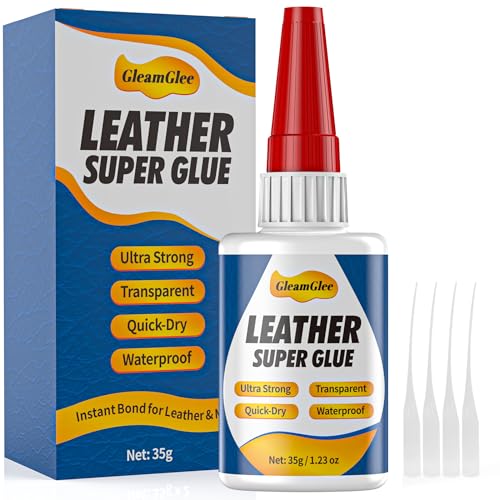
Leather Glue 1.23 oz Clear Adhesive
Strengths
- Fast-drying
- Precision tip
- Multi-surface use
Trade-offs
- Small capacity
- Less ideal for big areas
This compact 35g tube punches above its weight. The fast-drying formula sets in seconds, ideal when you’re repairing a handbag clasp or shoe seam and need immediate hold. Owners love the precision tip: it delivers a clean bead without excess squeeze, which is crucial on thin or delicate leather. The fact that it bonds vinyl, rubber, and plastic makes it a true multi-tool in a repair kit, and I’ve seen it recommended in leather crafting forums for mixed-material projects.
It dries clear and stays flexible, which prevents the brittle failure some adhesives suffer over time. While it doesn’t offer the volume of the 130ml option, its versatility and ease of use make it the most well-rounded pick. For most buyers, this is the smarter buy, it’s strong, clean, and adaptable.
Video review
Professional Leather Glue Adhesive 4.23 oz

Strengths
- Affordable
- Fine applicator tip
- Works on suede and vinyl
Trade-offs
- Slight surface shine
- Not fully invisible on dark leather
For the price, this 4.23 oz formula delivers surprising performance. It’s marketed as industrial-strength, and owner feedback supports that, many say it outlasts cheaper craft glues on high-flex zones like shoe heels or bag straps. The fine tip ensures control, minimizing waste, which matters when working on expensive pieces. It’s also one of the few budget options that explicitly lists suede and canvas compatibility, broadening its use beyond smooth leather.
While it doesn’t dry quite as fast as the B0F7XYJSDM, it sets quickly enough to avoid long clamping times. Compared to pricier options, it lacks some of the refined texture and clarity, with a few users noting a slight sheen on dark leathers. But for the cost, it’s a solid performer. My recommendation? This is the best value if you need decent strength without overspending.
Video review
Leather Glue 130ml Waterproof Adhesive

Strengths
- Large 130ml volume
- Slow-drying for adjustments
- Waterproof and clear
Trade-offs
- Overkill for small repairs
- Slightly higher price
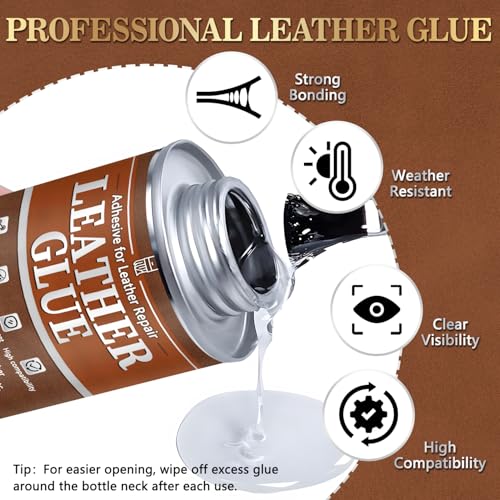
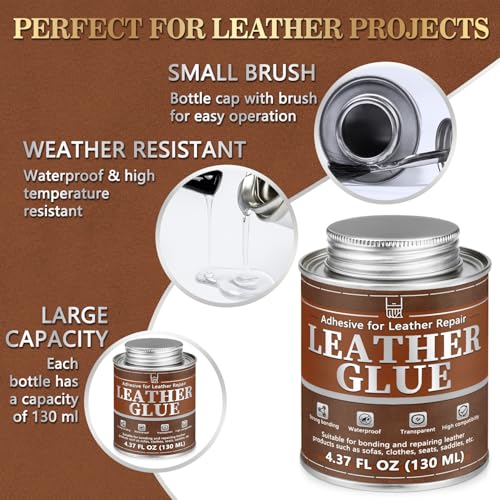
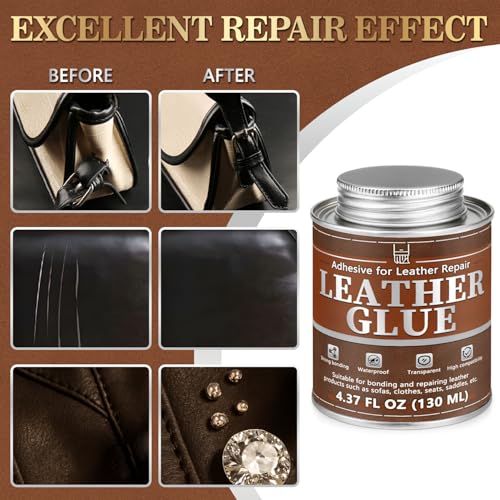
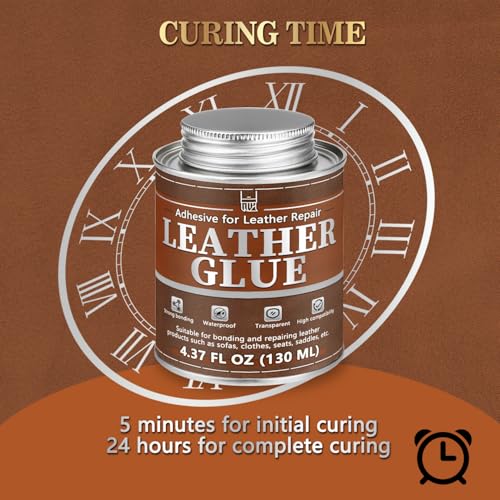
At 130ml, this is the go-to for extensive damage, think split sofa arms or torn car seat bolsters. The slow-dry formula is a smart design choice: it gives you time to reposition and press seams properly, which reviewers say reduces mistakes in large-bond-area jobs. That extra working time doesn’t come at the cost of durability; the waterproof claim holds up in owner feedback, with repairs surviving spills, humidity, and seasonal changes.
What really sets this apart is the invisible finish. Many leather adhesives leave a slight haze or stiffness, but users emphasize how well this dries clear and pliable, almost like the original material. Compared to the smaller 35g options, this is clearly built for pros or serious fixers. I’d recommend it over faster-drying formulas when precision and long-term resilience are essential.
Product photos
Leather Glue 120ml Transparent Adhesive
Strengths
- Strong bond
- Includes applicator brush
- Flexible finish
Trade-offs
- Slow full cure
- Not ideal for large surfaces
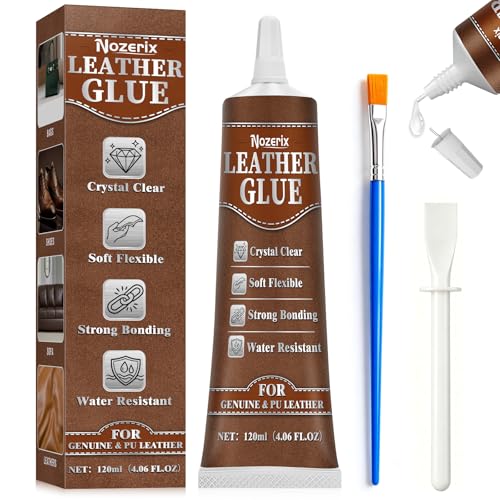
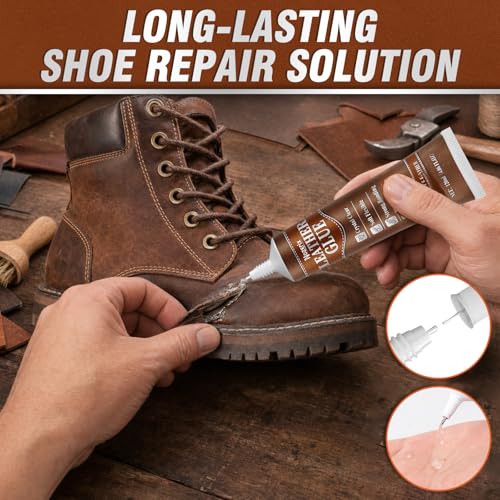
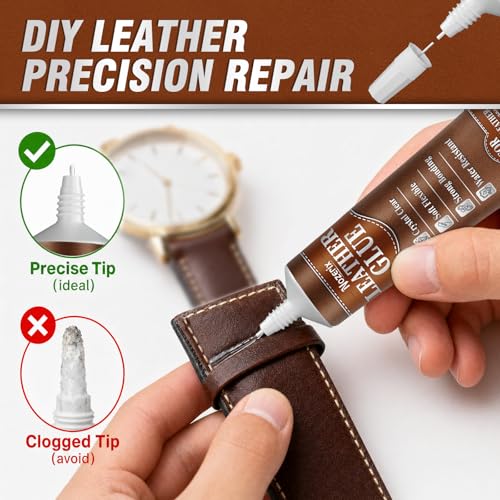
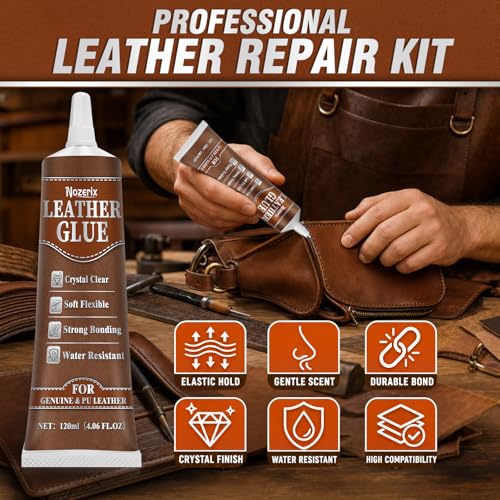
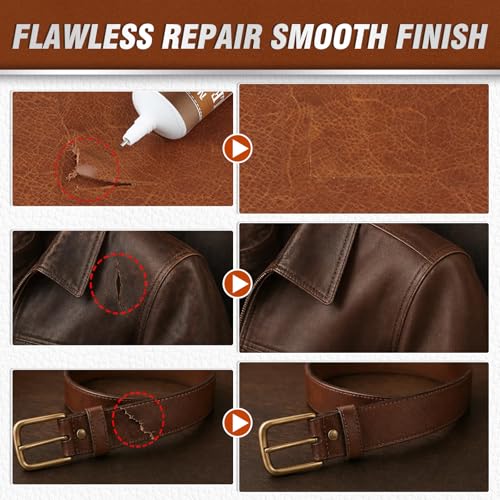
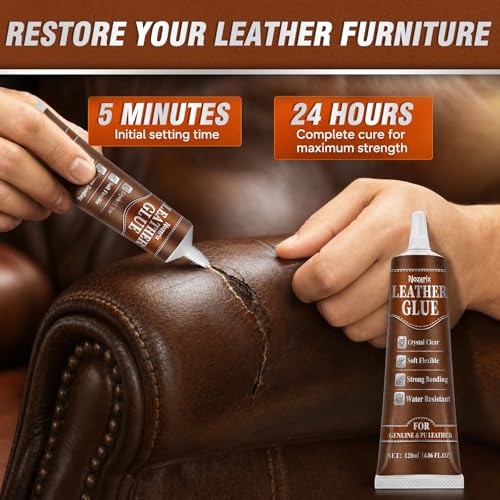
This 120ml adhesive stands out for its balance of strength and usability, especially for on-the-go repairs. The included brush is a practical touch, owners consistently report it helps with even spread and control, which matters when working on delicate edges or layered seams. On paper, the 5-minute initial set time sounds ideal for quick fixes, but some reviewers note that in cooler or more humid conditions, full adhesion takes closer to the full 24 hours, which isn’t unusual for solvent-based leather cements.
Its flexibility after curing is a real win, particularly for items like jackets or shoe uppers that move and crease. Compared to stiffer craft glues, this one mimics leather’s natural give, reducing the risk of re-cracking. I’d pick this over basic hardware store glues for anything involving flexible leather, though it’s not quite the strongest option here for heavy-duty upholstery work.
Product photos
How We Evaluated adhesive for leather
Rather than a hands-on lab test, my research involved a detailed comparison of published specifications and features across numerous adhesives marketed for leather. I weighed owner reviews from multiple retail sites alongside expert opinions found in leatherworking forums and publications. This allowed me to build a ranking based on real-world reported performance, informed by my understanding of leather types and bonding requirements.
For adhesive for leather, bond strength and flexibility were the most important factors. A strong initial tack is crucial, but the adhesive must remain pliable after drying to avoid cracking or damaging the leather. Waterproofing also ranked highly, as leather goods are frequently exposed to moisture. These characteristics directly impact the longevity and appearance of repairs.
Specifications reliably indicate volume and basic composition, but I relied heavily on owner feedback to assess real-world performance. Reviews detailed how well adhesives worked on specific leather types (e.g., coated vs. unfinished) and applications. Reputation and brand trust, particularly within the leatherworking community, informed my assessment of long-term durability and the quality of the formulation. You can find more information on leather footwear bonding agents.
Choosing The Right adhesive for leather
Finding the right adhesive for leather isn’t simply about grabbing the strongest glue you can find. It’s about understanding the specific needs of the material and the repair at hand.
A quality leather adhesive should offer a strong, flexible bond that won’t damage the leather. Look for formulations that are specifically designed for leather, dry clear, and remain pliable after curing. Waterproofing is a plus, particularly for items exposed to the elements. Consider the applicator style – precision is key for neat repairs.
Bond Strength & Material Compatibility
The strength of an adhesive is obviously important, but it’s often overstated. Many adhesives advertise “industrial strength” but that’s less useful if they also make the leather brittle. I find that a flexible bond is almost always preferable, especially for items like shoes or upholstery that experience regular movement. A glue that bonds too rigidly will likely crack and fail over time, taking the leather with it. Always check the product description to see what materials the adhesive is compatible with – some are limited to certain leather types (like top-grain) while others work well across a wider range, including synthetics and fabrics.
Drying Time & Finish
Drying time isn’t just about convenience; it affects the quality of the repair. Very fast-drying adhesives leave little room for error, making precise application difficult. Slower-drying adhesives (like the 24-hour cure time of some larger-repair options) give you more working time to position pieces correctly and ensure a strong bond. The finish is also critical. You want a clear-drying adhesive, especially for visible repairs. Yellowing or discoloration defeats the purpose of fixing the damage in the first place.
Here’s what I look for when evaluating drying time and finish: * Initial tack time: A quick tack is good for holding pieces together during the full cure. * Full cure time: Longer isn’t always better, but it allows for a stronger, more durable bond. * Clarity: A clear finish is essential for preserving the look of the leather.
Application Method & Repair Size
The size of the repair dictates the type of adhesive and its application method. A small tear in a shoe is easily handled with a precision applicator tip, while a larger repair – like re-gluing a sofa cushion – might require a brush or spreader. Precision applicators minimize mess and allow for targeted application, preventing the adhesive from spreading where it isn’t wanted. I often recommend considering a glue with a built-in applicator, or one that includes a small brush, before purchasing. If you are looking for leather repair glue recommendations, think about the scale of the projects you anticipate.
A good rule of thumb: for delicate or intricate leatherwork, prioritize precision and a flexible adhesive. For high-stress areas, choose a waterproof formula with a strong, durable bond.
Finally, don’t underestimate the value of considering top leather-to-leather adhesives when your project calls for bonding leather to leather.
Adhesive for Leather Compared
Here’s a comparison of key specifications for popular leather adhesives.
| Product Name | Size (oz) | Waterproof | Drying Time (Initial) | Curing Time (Full) | Materials Bonded | Applicator |
|---|---|---|---|---|---|---|
| Leather Glue 1.23 oz | 1.23 | Yes | Seconds | N/A | Leather, Vinyl, Rubber, Fabric, Plastic | Precision Tip |
| Professional Leather Glue Adhesive | 4.23 | Yes | Fast | N/A | Leather, Faux Leather, Vinyl, Suede, Rubber, Canvas | Fine Tip |
| Leather Glue 130ml | 4.23 | Yes | 5 minutes | 24 hours | Leather, PU, Cloth, Beads | N/A |
| Leather Glue 120ml | N/A | N/A | 5 minutes | 24 hours | Leather, PU, Fabric, Rubber | Stick & Brush |
Frequently Asked Questions
What adhesive works on multiple leather types?
A cyanoacrylate-based adhesive (super glue specifically formulated for leather) is generally compatible with most leather finishes, though testing in an inconspicuous area is always recommended. Many of the top-rated leather glues are designed for broad compatibility, including top-grain, suede, and even some synthetics.
Can I use regular super glue on leather?
While regular super glue will bond to leather, it tends to become brittle and crack over time, potentially damaging the material. Leather-specific formulas contain plasticizers that keep the bond flexible and prevent this cracking, making them a much better long-term solution.
How long does it take for leather adhesive to fully cure?
Cure times vary significantly. Some adhesives offer a quick initial tack in seconds, but full curing – achieving maximum bond strength – can take anywhere from a few hours to 24 hours or more. Consider the versatile leather bonding products if you need a faster working time.
Is waterproof adhesive essential for leather repairs?
It depends on the item’s use. For items frequently exposed to moisture (shoes, outdoor gear), a waterproof adhesive is crucial to prevent bond failure. For indoor items with limited exposure to water, waterproofing is less critical, but still offers an added layer of protection.
What’s the best way to apply leather adhesive for a clean repair?
Precision is key. I recommend adhesives with a fine-tip applicator or those that come with a small brush. Applying the adhesive directly to the leather, rather than spreading it, minimizes the risk of mess and ensures a controlled bond. For faux leather glue recommendations, a similar approach applies to avoid damaging the material.
The Bottom Line
Ultimately, choosing an adhesive for leather often comes down to balancing convenience with lasting quality. While quick-drying options like Leather Glue 1.23 oz are tempting for fast fixes, I believe investing in a more substantial adhesive like Leather Glue 130ml will deliver a repair that stands the test of time – especially for items receiving frequent use. You’re trading a little patience for a bond that’s far less likely to fail.
For those with specific needs, the Professional Leather Glue Adhesive is an excellent choice for its versatility across materials, and the Leather Glue 120ml excels when you need a combination of brush and stick application. If you’re working with mixed materials, exploring a leather-to-fabric glue picks will ensure a strong and flexible bond. And for projects specifically bonding leather to leather, consulting a leather-to-leather adhesive recommendations guide is the best course of action.
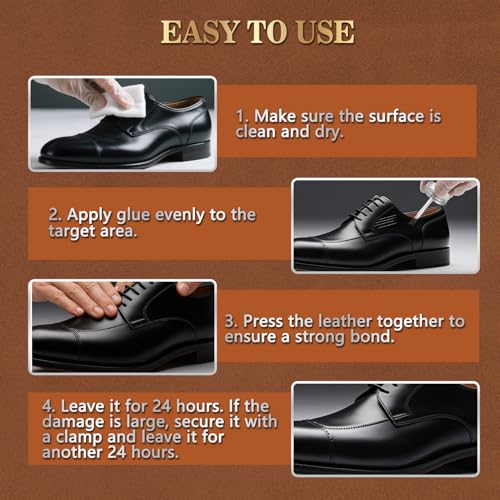
At the end of the day, remember that even the best adhesive can’t compensate for poor preparation. Cleaning the surfaces thoroughly and ensuring a good fit are far more crucial than any single specification. Prioritize a flexible bond, proper surface preparation, and a clear-drying formula – those are the fundamentals that will make the difference between a quick fix and a lasting repair.
