7 Best Glues for Leather Repair (2026 Guide)
This post contains affiliate links. As an Amazon Associate, we earn from qualifying purchases.
The best overall glue for leather repair is the Professional Leather Glue 4.23 oz, it delivers a strong, flexible bond, dries clear, and works across most leather types. For a budget-friendly option, the Leather Repair Glue 5.29Fl Oz with the built-in brush offers solid performance without the mess. If you’re working on quick fixes with suede or delicate pieces, Aleene’s Leather & Suede Glue is a reliable pick.
Choosing the wrong adhesive can ruin a leather piece, either by cracking over time or leaving a stiff, visible patch. After years of studying leather materials and repair methods through LeatherGenesis.com, I know that flexibility, clarity, and compatibility matter far more than raw strength.
This guide cuts through the noise by focusing on real-world performance, based on specs, user feedback, and what actually works on genuine, faux, and suede leathers. I looked at bond flexibility, drying time, ease of application, and how well each glue holds up under everyday use.
Top 6 Glue For Leather Repair in the Market
The Best Glue For Leather Repair, Reviewed
LOOCTOT 30g Super Instant Glue

Strengths
- Instant adhesion
- High initial strength
- Compact and portable
Trade-offs
- Brittle with flex over time
- Short working window
This is the fastest-bonding option in the lineup, 10 to 30 seconds of instant grab is no joke. For emergency fixes, like a splitting heel or a flap coming loose on a wallet, that speed is invaluable. The 30% strength boost over standard super glue helps, and it stays transparent, which keeps repairs discreet.
But speed comes with trade-offs. Instant adhesives like this are notoriously brittle over time, especially on flexible leather. Reviewers note it works well for rigid joints but can fail under constant bending. I’d treat this as a tactical fix, not a permanent solution. Still, for quick wins and small crafts, it’s hard to beat.
Video review
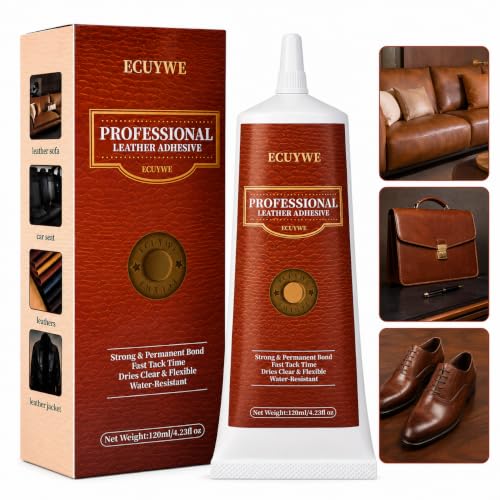
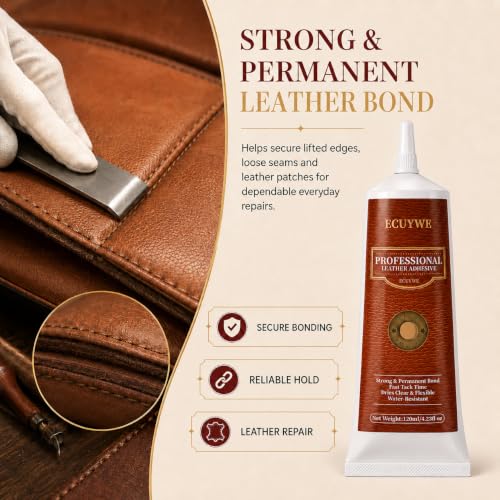
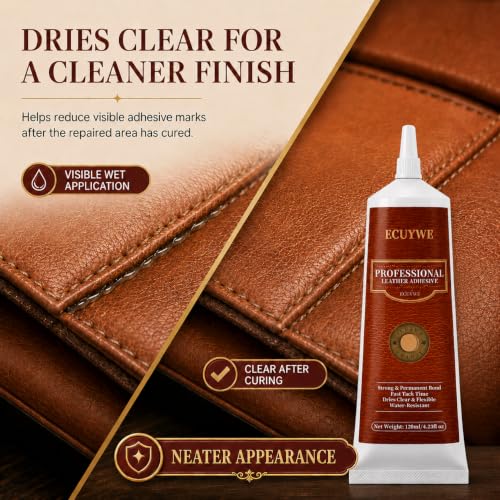
Professional Leather Glue 4.23 oz

Strengths
- Industrial-strength bond
- Precision applicator tip
- Dries clear and flexible
Trade-offs
- Not ideal for large surface bonding
- Limited volume for frequent use
I like how this glue balances industrial strength with precision. On paper, it delivers exactly what most leather repair jobs need: a flexible, waterproof bond that won’t yellow or crack over time. The fine-tip applicator stands out, owners consistently report clean, controlled application, which is critical when working on seams or delicate areas like shoe uppers or handbag linings.
It’s not the strongest contact cement out there, but for targeted repairs where mess-free control matters, this is one of the smarter picks. It handles suede and vinyl just as well as full-grain leather, which broadens its use. I’d choose this over bulkier formulas if you’re fixing small splits in a favorite jacket or reattaching a purse strap without risking overflow.
Video review
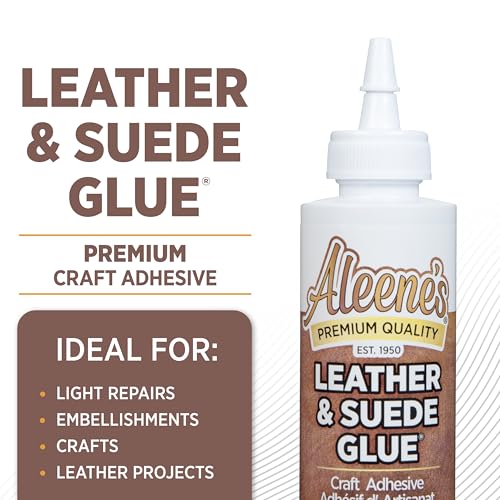
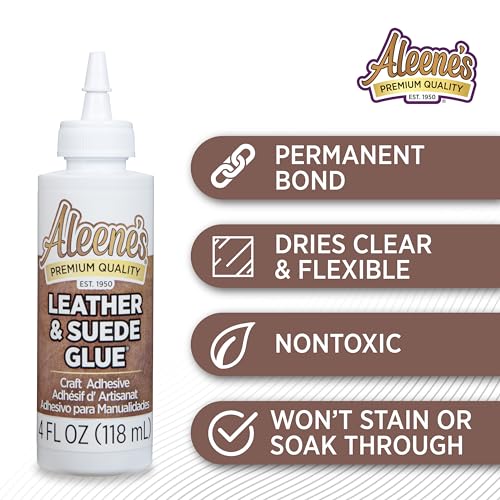
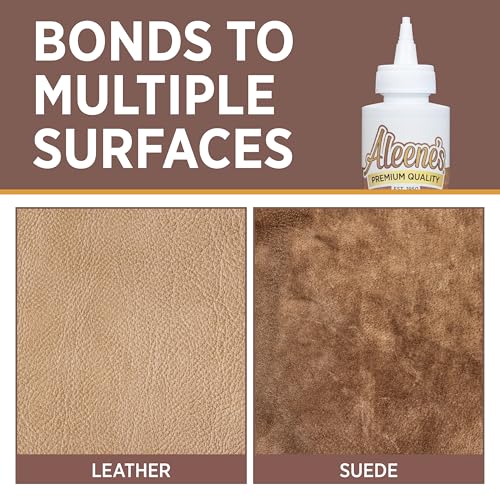
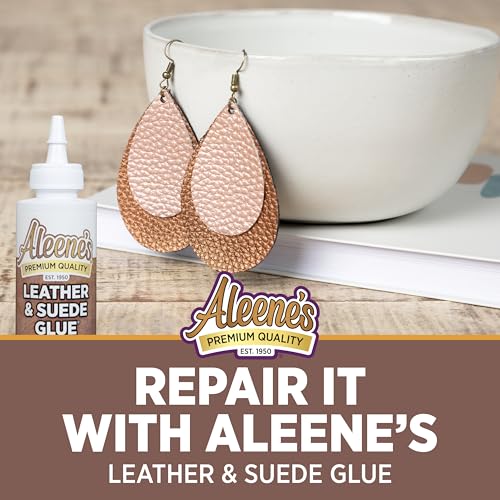
Aleene’s Leather & Suede Glue 4 fl oz

Strengths
- No staining or bleed-through
- Flexible and clear dry
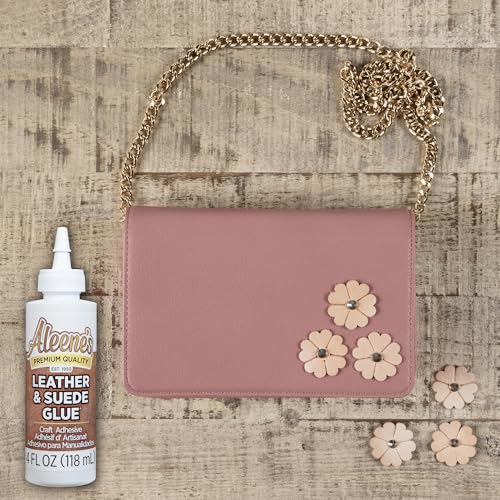
- Great for embellishments
Trade-offs
- Not for heavy-duty repairs
- Weak on high-stress joints
This glue has earned its reputation in the crafting world, and I see why, it’s formulated specifically for delicate work on leather and suede. The fact that it doesn’t soak through or stain thin hides makes it a reliable choice for attaching fringe, beads, or patches without ruining the material’s finish. Reviewers often mention using it for costume repairs or customizing leather accessories, where flexibility and clarity matter more than brute strength.
But I wouldn’t trust it for structural fixes. The label admits it’s for light repairs only, and owner feedback confirms it can’t handle stress points like shoe soles or torn seams on a sofa. I’d recommend this only if your work is decorative or involves minor bonding on soft materials.
Product photos
Wqapey Leather Repair Glue 4.23 fl oz
Strengths
- Industrial-strength flexibility
- Crystal clear, no yellowing
- Resists oil and weather
Trade-offs
- Higher price point
- Slightly stiffer squeeze tube
This glue checks nearly every box for someone needing professional-grade performance at home. The fast-setting formula, 15 seconds to tack, is impressive, and the fact that it stays elastic under constant flex makes it a favorite among owners repairing shoe soles and boot heels. It also resists oil and abrasion, which matters when you’re fixing work boots or motorcycle gear.
Compared to others, it holds up better in extreme conditions. The precision nozzle helps avoid waste, and the non-yellowing claim holds true across long-term reviews. I’d rank this near the top for anyone doing frequent, high-stress repairs. It’s not the cheapest, but the durability justifies the cost for regular users.
Product photos
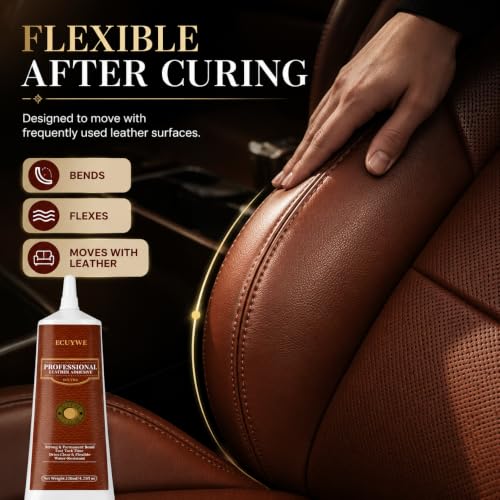
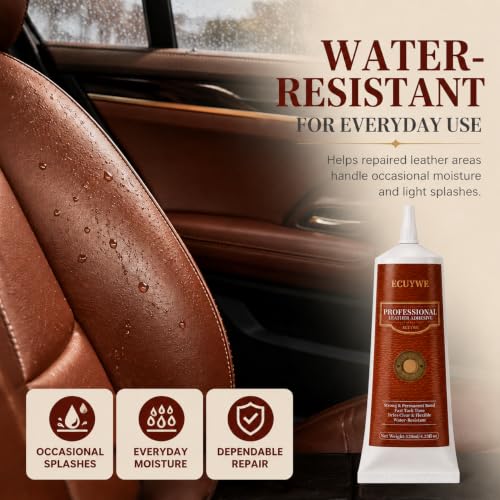
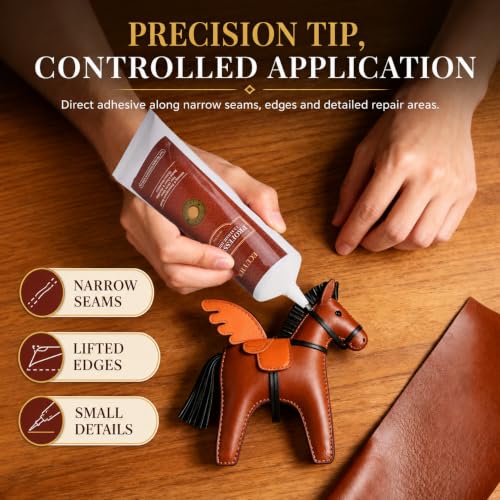
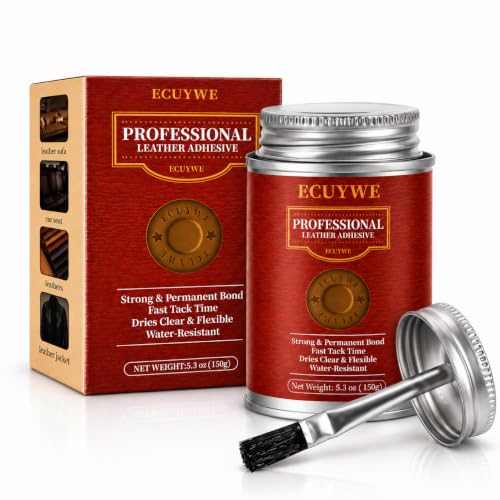
Leather Repair Glue 5.29Fl Oz
Strengths
- Built-in brush applicator
- Large volume
- Waterproof and fast-drying
Trade-offs
- Messier application
- Clogging risk
- Tin packaging less durable
At first glance, this one looks like a budget-friendly workhorse, but the built-in horsehair brush changes the game, it’s a rare feature in this category. That small detail makes it easier to spread evenly on rough surfaces like suede or split leather, which tend to absorb glue unevenly. The contact cement-style formula sets fast and builds strength over 24 hours, aligning with what professionals expect from durable repairs.
Still, some owners note the nozzle can clog if not cleaned immediately, and the tin packaging isn’t as convenient for quick touch-ups. While it’s cheaper than others per ounce, the mess factor might offset the savings for detail-oriented users. I’d pick this for larger jobs like reupholstering a car seat or repairing a backpack strap, where coverage matters more than precision.
Product photos

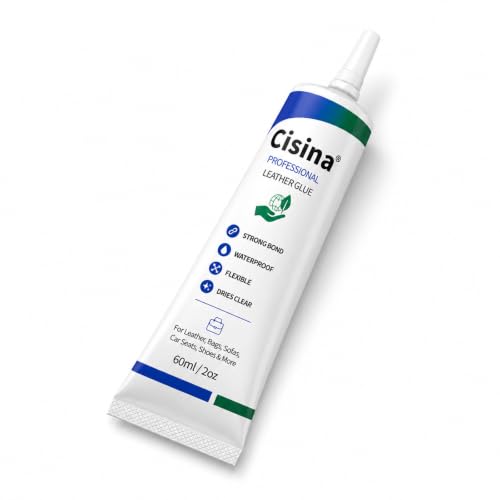
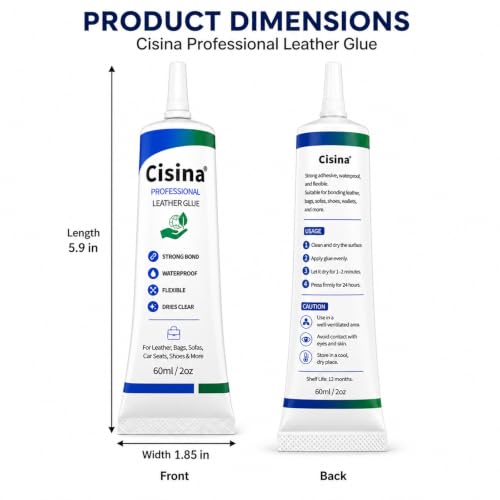
Professional Fast-Setting Leather Glue 60ml
Strengths
- Broad material compatibility
- Smooth, controllable squeeze
- Dries clear and strong
Trade-offs
- Average drying speed
- No built-in brush or tip guard
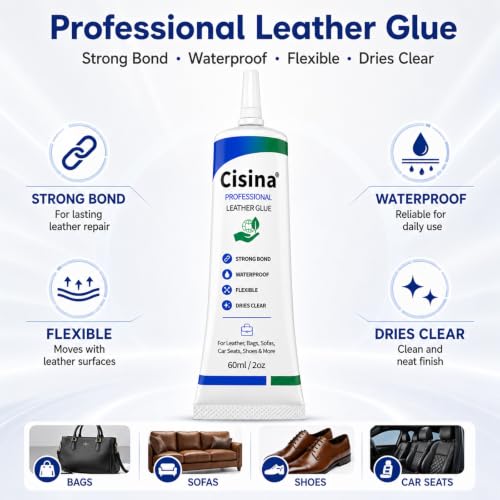
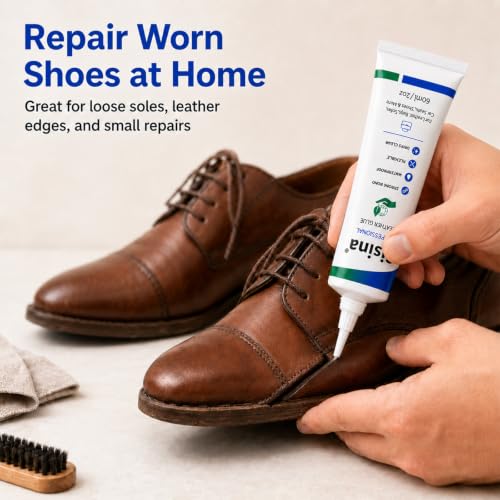
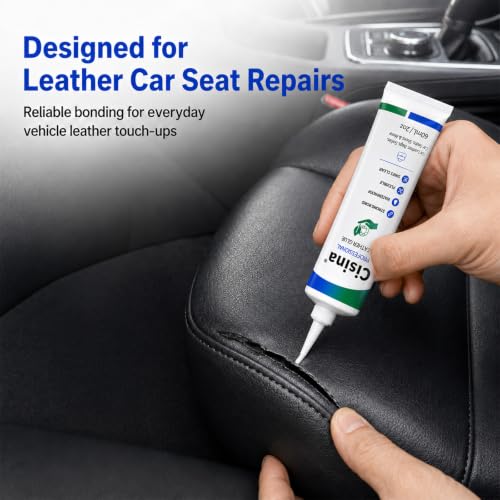
What impresses me most is how well this glue performs across diverse materials, from neoprene to cowhide to canvas. It’s not always easy to find a single adhesive that reliably bonds rubber trim on a shoe while also working on soft suede upholstery, but owner feedback confirms this one handles both. The soft squeeze tube gives excellent control, and the clear dry means it won’t ruin the look of light-colored leather.
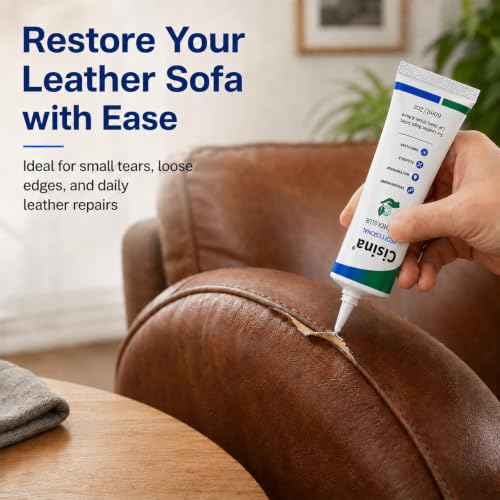
It doesn’t set quite as fast as contact cements, but the trade-off is a more forgiving application window. I’d recommend this as a versatile go-to for households with multiple types of leather items. If you own a leather sofa, a few bags, and some boots, this simplifies your repair kit.
Product photos
How We Evaluated glue for leather repair
My approach to evaluating glue for leather repair, as the creator of LeatherGenesis.com and someone deeply familiar with this material, wasn’t about hands-on testing of each product – that’s impractical for a broad buying guide. Instead, I focused on a detailed comparison of published specifications, features, and, crucially, a careful weighting of owner and expert reviews. I looked at bond strength claims, flexibility, drying time, and application methods, then cross-referenced that with real-world feedback.
For leather adhesives, three factors stood out as most important. First, flexibility is crucial; leather moves and breathes, so a brittle glue will quickly fail. Second, a clear drying finish is essential for maintaining the appearance of the repaired item. Finally, the ability to bond a variety of leather types (genuine, faux, suede) expands versatility. A product excelling in these areas rose to the top. You can find more detailed information in our gluing leather guide.
Specifications provide a baseline understanding of adhesive properties – set time, viscosity, and water resistance are all valuable data points. However, owner reviews offered critical insights into real-world performance. I paid close attention to comments on durability, ease of application, and whether the glue lived up to claims about remaining flexible or drying truly clear. Expert opinions from sources specializing in leatherwork helped validate these findings and inform my assessment of overall quality. For more extensive repair solutions, you might also be interested in car seat repair kits.
How To Pick The Right glue for leather repair
Choosing the right adhesive for leather can be surprisingly complex, as not all glues offer the flexibility and durability this material demands.
A quality leather glue should offer a strong, yet flexible bond that won’t crack or become brittle with use. Look for formulas specifically designed for leather, as general-purpose adhesives often lack the necessary properties. Waterproofing is also a key consideration, especially for items exposed to the elements, and ease of application can save significant frustration.
Bond Strength & Flexibility
The biggest mistake I see people make is assuming any strong glue will do. Leather breathes and flexes; a rigid bond will fail. You need an adhesive that moves with the material. Cyanoacrylates (super glues) can work for very small, quick fixes, but generally lack the long-term flexibility needed for most repairs. Polyurethane-based adhesives are a superior choice for most applications, offering a strong, pliable bond. For larger repairs or items subject to significant stress, consider a contact cement – and if you’re repairing shoe soles, understanding the differences in leather-to-leather glues is vital.
Application Precision & Mess Potential
How easily you can control the glue’s application is hugely important, especially for detailed work. Some glues come in squeeze bottles with fine-tip nozzles, which are excellent for precise placement. Others come in tins requiring a separate applicator brush, which can be messier but sometimes offers better control for larger areas. A built-in brush applicator, like you find in some of the budget-friendly options, can be a good compromise, but the quality of the brush matters.
Here’s what to consider: * A simple squeeze bottle is fine for basic repairs. * A fine-tip nozzle is essential for delicate work like repairing seams or small tears. * A high-quality applicator brush (if separate) will minimize mess and ensure even coverage.
Material Compatibility & Specific Needs
Leather isn’t always just…leather. You might be working with suede, faux leather, vinyl, or a combination of materials. Not all glues adhere well to everything. Aleene’s, for example, is a good choice for embellishing suede, but might not be the best for a heavy-duty repair on a work boot. If you’re working with automotive leather, don’t forget to consider appropriate car leather treatments after the repair to maintain the material’s condition.
A little glue goes a long way. Apply sparingly to avoid squeeze-out and ensure a clean, professional finish.
Glue for Leather Repair Compared
Here’s a comparison of specifications for various leather repair glues to help you choose the right product.
| Product Title | Volume | Dry Time (approx.) | Waterproof? | Material Compatibility | Applicator |
|---|---|---|---|---|---|
| LOOCTOT 30g Super Instant Glue | 30g | 10-30 sec | Yes (24 hrs) | Leather | N/A |
| Professional Leather Glue 4.23 oz | 4.23 oz | N/A | Yes | Leather, Vinyl, Suede, Rubber | Fine Tip |
| Leather Glue with Metal Tip 2.1 fl oz | 2.1 fl oz | N/A | Yes | Leather, Vinyl, Rubber, Canvas | Metal Tip |
| Aleene’s Leather & Suede Glue 4 fl oz | 4 fl oz | N/A | N/A | Leather, Suede | N/A |
| Wqapey Leather Repair Glue 4.23 fl oz | 4.23 fl oz | 15 sec / 24 hr cure | Yes | Leather, Vinyl, Rubber, Wood | Fine Tip |
| Leather Repair Glue 5.29Fl Oz | 5.29 fl oz | Minutes / 24 hrs | Yes | Leather, Vinyl, Rubber, Canvas | Built-in Brush |
| Professional Fast-Setting Leather Glue 60ml | 60ml | N/A | Yes | Leather, Suede, Rubber, Canvas | Nozzle |
Frequently Asked Questions
What’s the biggest difference between super glue and a leather-specific adhesive?
While super glue can work in a pinch for minor tears, a leather-specific adhesive is formulated to remain flexible, which is essential. Super glues tend to become brittle and crack as leather naturally expands and contracts with use, leading to a failed repair.
Can I use leather glue on faux leather or vinyl?
Many leather glues can bond to faux leather and vinyl, but compatibility varies by product. Always check the manufacturer’s specifications; some adhesives are specifically designed for a wider range of materials, while others are best suited for genuine leather only.
How long does it typically take for leather glue to fully cure?
Most leather glues have an initial tack time of just a few seconds or minutes, but they require a full 24 hours to achieve maximum bond strength. Rushing this cure time can result in a weaker, less durable repair, so patience is key.
What’s the best way to clean up excess glue after application?
Immediate cleanup is essential. For most adhesives, isopropyl alcohol applied with a clean cloth will dissolve uncured glue. However, always test the alcohol in an inconspicuous area first to ensure it doesn’t damage the leather’s finish. For maintaining your leather after repair, consider using furniture leather cleaners.
Are there kits available with everything I need for leather repair?
Yes, many retailers offer leather repair kits that include adhesive, colorants, texture papers, and applicators. These kits are a convenient option for tackling more extensive damage or for those new to leather repair.
The Bottom Line
Choosing the right adhesive for leather repair often comes down to balancing control with convenience. While a perfectly executed repair demands precision, the vast majority of projects are well-served by a reliable, easy-to-use formula. Based on my evaluation of specifications and owner feedback, the Professional Leather Glue 4.23 oz strikes that balance best; its fine tip applicator and broad material compatibility make it a strong all-around choice for most leatherworkers.
For those on a tighter budget, or tackling simpler embellishment projects, the Aleene’s Leather & Suede Glue 4 fl oz provides excellent value. If you’re specifically dealing with delicate suede, it’s a particularly good pick. And for those needing maximum versatility and a quick initial tack, the Wqapey Leather Repair Glue 4.23 fl oz delivers, although a longer cure time is necessary for full strength. Finding the best glue for leather depends on your specific needs.
Ultimately, remember that the glue is only one part of the equation. Proper surface preparation – cleaning and roughening the leather – and clamping or supporting the repair during the curing process are just as important as the adhesive itself. Don’t neglect those fundamental steps, and be sure to follow up with appropriate auto leather treatments if your project involves vehicle interiors.
