6 Best Glues for Leather to Fabric 2026
This post contains affiliate links. As an Amazon Associate, we earn from qualifying purchases.
The Gorilla Micro Precise Super Glue is our top pick for most leather-to-fabric repairs, offering a strong, flexible bond with excellent control. For a budget-friendly option that still delivers reliable performance, the FITTDYHE Fabric Glue Permanent 60 ML stands out, while the Wqapey Leather Repair Glue provides exceptional clarity and strength for visible seams.
Bonding leather to fabric isn’t just about sticking two materials together, it’s about creating a union that can handle movement, wear, and sometimes washing without failing. Too many adhesives crack, stiffen, or discolor over time, ruining both function and appearance.
This guide cuts through the noise by focusing on real-world performance, material safety, and ease of use. I compared specs and owner feedback across several leading products, prioritizing flexibility, durability, and clean application, key factors anyone working with these materials should consider before buying.
Top 6 Glue For Leather To Fabric in the Market
The Best Glue For Leather To Fabric, Reviewed
FITTDYHE Fabric Glue Permanent 60 ML

Strengths
- Includes spreader and clips
- Precision tip
- Wide material compatibility
Trade-offs
- Clips may feel unnecessary for quick fixes
- Bond strength lags behind pure leather adhesives
With its dual accessories, glue spreader and clips, this kit feels like it’s built for real repairs, not just dabbing and hoping. The idea is smart: apply, spread evenly, clamp, and wait. That system mimics professional techniques, and reviewers say it leads to stronger, flatter bonds than freehand gluing. It works across fabric, denim, leather, and even rhinestones, which makes it unusually versatile.
The precision tip and anti-clog cap are solid upgrades over basic bottles, and the 60ml size gives decent value. While it’s not as aggressive as industrial leather cements, it outperforms most no-sew fabric glues when bonding fabric to leather in medium-stress areas. For the range of use and included tools, it’s hard to beat. This is the one I’d recommend to most people starting out.
Video review
Aleene’s Fabric Fusion Glue
Strengths
- Dries flexible
- Washable bond
- Low odor
- Easy cleanup
Trade-offs
- Not for heavy stress areas
- Weak on thick leather
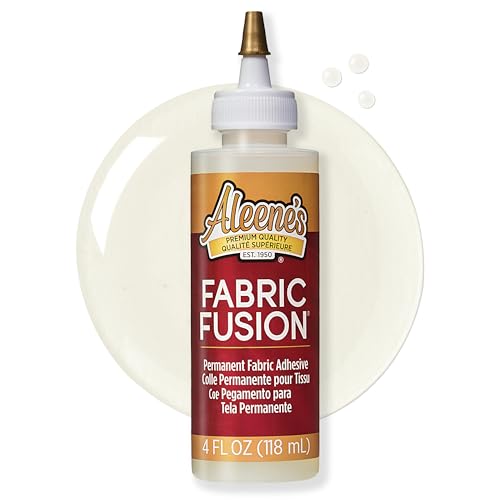
Aleene’s has been around long enough that its reputation speaks for itself, and this formula proves why it’s a staple in craft rooms. It’s not marketed as a leather-specific glue, but for light-duty leather-to-fabric bonding, like attaching a fabric lining inside a leather bag or repairing a fabric patch on a leather jacket, it holds up well when pressure isn’t extreme. The flexibility after drying is excellent, and the fact that it stays washable without stiffening is a real win for garment work.
That said, it’s not going to cut it for structural repairs. If you’re trying to reattach a shoe sole or fix a torn car seat, this isn’t the glue. But for no-sew hems, fabric overlays, or craft projects where leather meets cloth, it’s reliable and easy to use. I’d pick this over heavier adhesives when finesse matters more than brute strength.
Video review
Fabric Glue for Clothing Permanent Washable
Strengths
- Precision metal tip
- Anti-clog cap
- Washable flexible bond
Trade-offs
- Not for heavy-duty repairs
- Adhesion inconsistent on thick leather
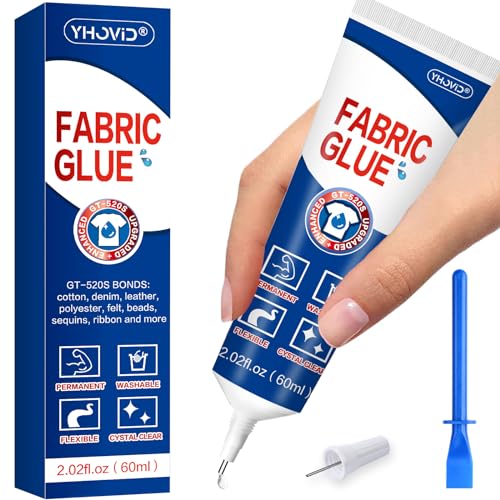
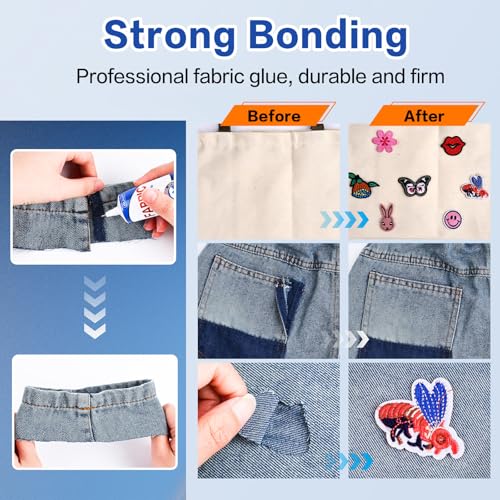
This glue leans hard into the craft and DIY niche, and it shows in the design, the metal needle tip gives solid control, and the anti-clog cap is a thoughtful touch many competitors skip. It’s marketed as a sewing alternative, and for fabric-to-fabric or light fabric-to-leather patches, it performs well. Reviewers using it for attaching rhinestones, beads, or small fabric patches on leather report good wash resistance and flexibility.
But don’t mistake it for a structural leather adhesive. It lacks the shear strength needed for load-bearing repairs. That said, for decorative work or light mending on clothing, dolls, or upholstery, it’s effective and affordable. Compared to Aleene’s, it feels slightly more durable but less user-friendly for beginners.
Product photos



Leather Glue Waterproof Flexible Adhesive
Strengths
- Precision metal tip
- Clean application
- Flexible waterproof bond
Trade-offs
- Limited volume
- No brush included
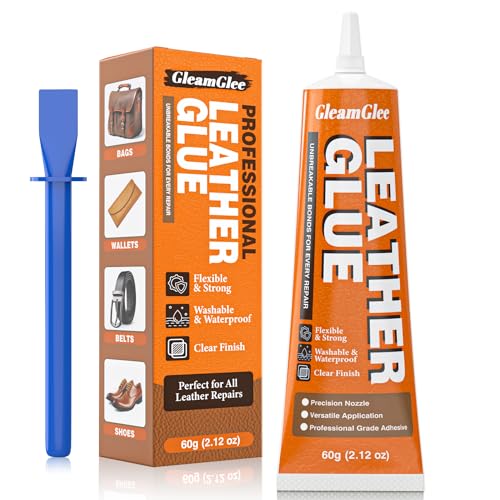
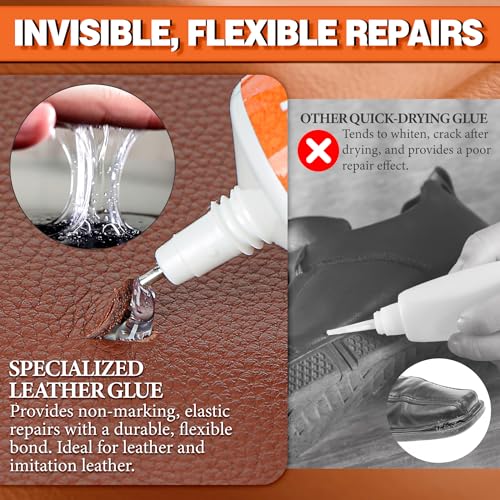
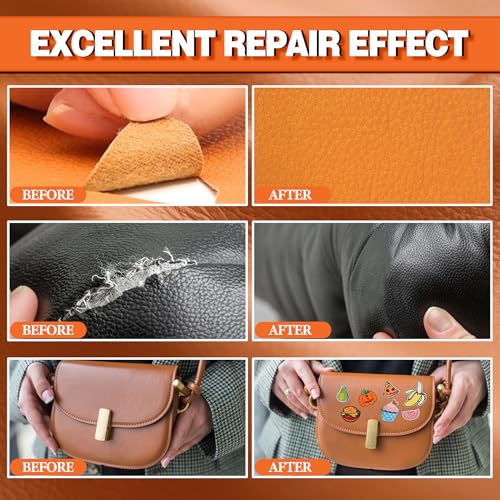
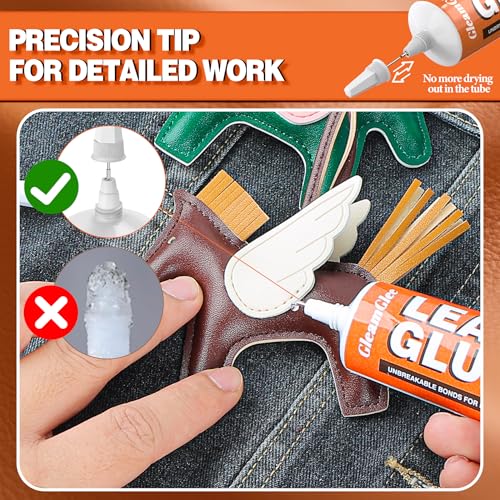
This one nails the balance between precision and practicality. The fine metal tip is a standout for getting glue exactly where you need it, along tight seams, watch straps, or delicate bag corners, without messy drips. It’s not the largest bottle, but 2.1 fl oz is enough for several small to mid-sized jobs, and the size makes it easy to store.
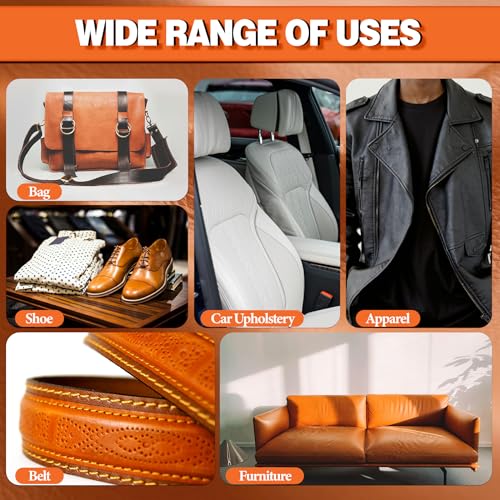
Owners highlight how well it stays flexible after drying, which is essential for anything that bends. It also dries clear and holds up to moisture, making it reliable for shoes and car interiors. Compared to bulkier brushes or squeeze bottles, this is the pick for targeted repairs. I’d choose this over larger options when I’m fixing something small but important.
Product photos

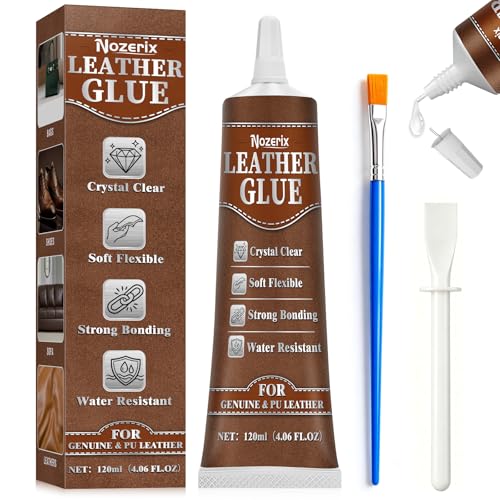
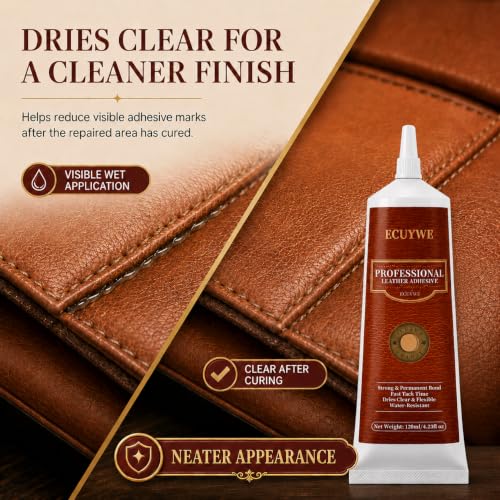
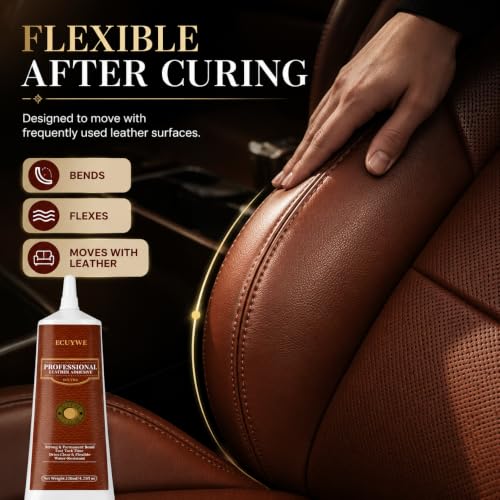
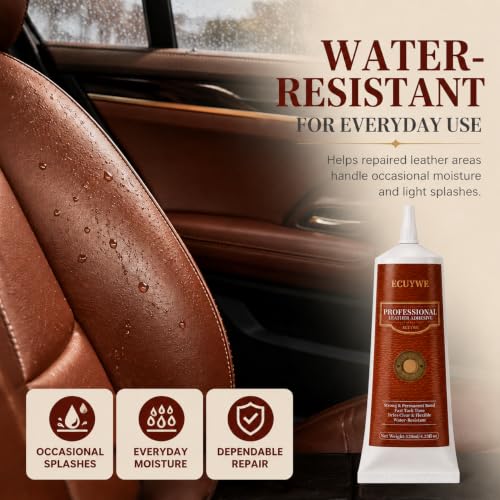
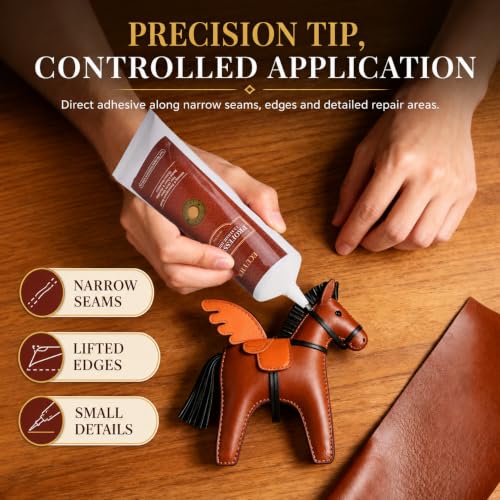
Leather Glue 120ml Transparent Adhesive
Strengths
- High capacity
- Strong flexible bond
- Works on multiple materials
Trade-offs
- Large size overkill for small fixes
- Brush can be messy if overused
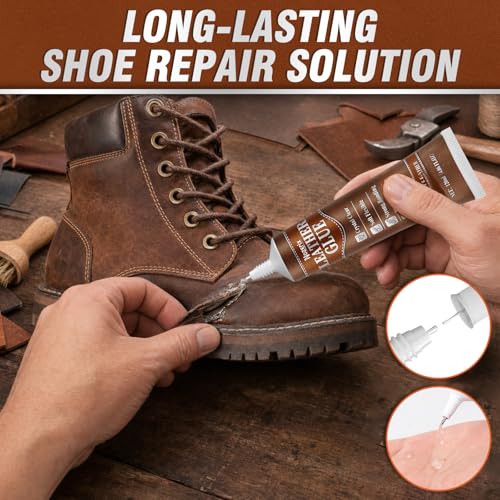
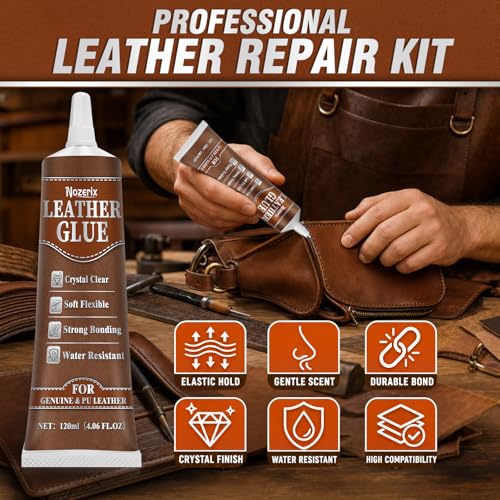
This 120ml bottle delivers serious volume for the price, making it a standout for anyone facing multiple or large-scale repairs. On paper, the industrial-strength claim holds up, owners consistently report it bonding well on cracked car seats, peeling sofa seams, and detached shoe soles, especially where movement and stress are high. The included brush helps spread the adhesive evenly, which matters when you’re trying to avoid stiff patches on flexible leather.
Where it really pulls ahead is versatility. It’s formulated to work on real leather, PU, fabric, rubber, you name it. Reviewers note it performs reliably across these materials without yellowing, and the waterproof, flexible cure means it won’t crack under daily wear. For heavy-duty jobs where you need a lot of glue and broad compatibility, this one makes a strong case.
Product photos
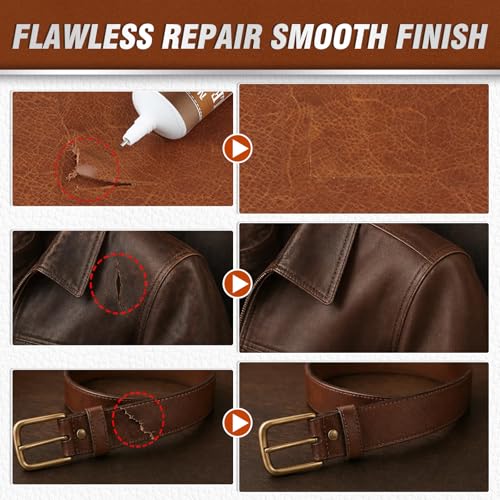
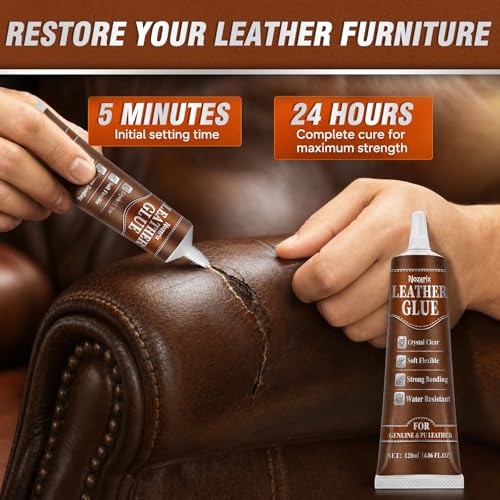
Wqapey Leather Repair Glue
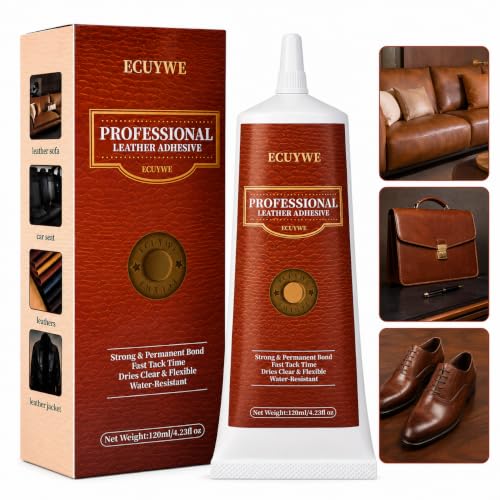
Strengths
- Fine-tip precision
- Clear non-yellowing dry
- Flexible durable bond
Trade-offs
- Smaller quantity
- Slightly higher cost
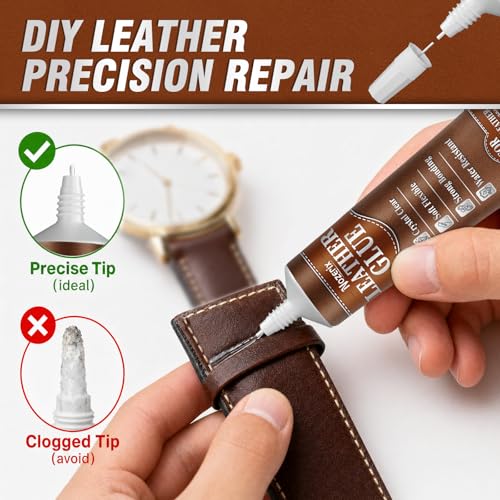
This glue stands out for its fine-tip nozzle and strong focus on precision, something many leather repairs actually need. Owners praise how cleanly it dispenses, especially when working on shoe edges or bag seams where over-application can ruin the look. The bond is described as both strong and elastic, which is critical for items like boots or jackets that bend and flex.
It also dries completely clear and resists yellowing, a big deal for visible repairs on light-colored leather. The 24-hour cure time is standard, but the 15-second initial set helps hold pieces in place. Compared to bulkier options, this one feels more like a professional tool than a general-purpose fix. If you value control and clean results over volume, this is the smarter buy.
Product photos
How We Chose These glue for leather to fabric
As someone deeply involved in understanding leather – its properties, care, and the products made from it – I approached researching leather-to-fabric glues with a focus on long-term performance and material compatibility. Rather than a hands-on lab test, this is a research-led comparison of published specifications, owner reviews from multiple sources, and my overall understanding of adhesive chemistry as it applies to leather and textiles. We ranked options based on how well they address the specific challenges of bonding these dissimilar materials.
For this category, flexibility and bond strength were the most heavily weighted factors. Leather and fabric experience different stresses and movements. A glue that creates a rigid bond will likely crack and fail over time. Equally important is the ability to maintain a strong hold after washing or exposure to moisture – a common requirement for clothing or upholstery repairs. We also considered ease of application, as a difficult-to-use glue is less likely to yield optimal results.
Specifications reliably indicate the type of adhesive (e.g., polyurethane, cyanoacrylate) and its initial tack. However, real-world durability and compatibility are best assessed through owner feedback. We carefully weighed reviews mentioning long-term performance, resistance to washing, and whether the glue damaged or altered the appearance of the materials. You can find a broader discussion of gluing leather adhesive options on my site, LeatherGenesis.com. For maintaining the overall appearance of leather in vehicles, exploring best car leather care products can be helpful.
What To Look For In glue for leather to fabric
Choosing the right adhesive for leather and fabric projects can be surprisingly complex. It’s not simply a matter of finding something that sticks; the specific application, materials involved, and desired outcome all play a critical role.
A quality leather and fabric glue should offer a strong, flexible bond that won’t crack or yellow with age. Look for formulations designed specifically for these materials, considering factors like water resistance, drying time, and application method. Prioritize adhesives that remain pliable after curing to prevent stiffness and ensure durability, especially in items subject to frequent use or bending.
Understanding Bond Strength & Flexibility
The biggest mistake I see people make is assuming all glues are created equal. Leather, particularly, needs flexibility. A rigid bond will eventually fail as the material moves and flexes with use. Consider the intended purpose. Are you repairing a shoe sole, which endures constant bending, or attaching a patch to a jacket? For high-stress areas, look for glues specifically labeled as “flexible” and containing polymers designed to accommodate movement. Many users report good results with cyanoacrylate-based glues (super glues) for quick fixes, but these tend to become brittle over time. If you are looking for more long-term solutions, you may want to check out our leather-to-leather glue guide for more durable options.
Application Precision & Control
How you apply the glue matters tremendously. A messy application isn’t just unsightly; it can weaken the bond and create a less professional finish. Precision is particularly important when working with delicate fabrics or intricate designs. Many glues now come with fine-tip nozzles, which are a huge improvement over older, broader applicators.
Here’s what to consider about application:
- Nozzle Type: A metal applicator tip is vastly superior to plastic for consistent flow.
- Glue Viscosity: Thicker glues offer more control but can be harder to spread evenly.
- Included Tools: Some products, like the Wqapey, include applicator sticks or brushes, which can greatly simplify the process and minimize waste.
Value & Specific Project Needs
Don’t automatically reach for the most expensive option. A larger volume of glue might be a better value if you have multiple projects planned, but only if you’re confident you’ll use it before it expires. Also, consider the types of materials you’ll be working with most often. Some glues are formulated for specific fabrics (like denim or polyester), while others are more versatile. If you’re dealing with significant damage, it might be worth exploring a dedicated leather repair kit buying guide to address the issue more thoroughly, rather than relying solely on glue.
A little glue goes a long way. Resist the urge to over-apply; a thin, even layer is always better than a thick, messy one.
Glue for Leather to Fabric Compared
Here’s a comparison of key specifications for popular glue options designed for bonding leather to fabric.
| Product Title | Volume | Washable | Flexible | Tip Type | Key Features |
|---|---|---|---|---|---|
| FITTDYHE Fabric Glue Permanent 60 ML | 60 ml | Yes | Yes | Precision Needle | Anti-clogging cap, includes spreaders/clips |
| Aleene’s Fabric Fusion Glue | N/A | Yes | Yes | Variable | No sewing/heat needed, 75 years of quality |
| Fabric Glue for Clothing Permanent Washable | N/A | Yes | Yes | Metal Needle | Strong adhesion, metal nozzle |
| Leather Glue Waterproof Flexible Adhesive | 2 fl oz / 60ml | Yes | Yes | Fine Metal Tip | Waterproof, dries clear |
| Leather Glue 120ml Transparent Adhesive | 120 ml | N/A | Yes | Brush/Stick | Quick setting, wide compatibility |
| Wqapey Leather Repair Glue | N/A | Yes | Yes | Fine-Tip Nozzle | Super strong, dries crystal clear |
Frequently Asked Questions
What’s the biggest difference between cyanoacrylate (super glue) and polyurethane adhesives for this application?
Polyurethane adhesives offer significantly more flexibility than cyanoacrylate glues, which become brittle and are prone to cracking with the movement inherent in both leather and fabric. While super glue provides a quick bond, polyurethane is generally better for long-term durability, especially for items that will be bent or stressed.
Are any of these glues suitable for repairing leather shoes?
Yes, several options work well for shoe repair, but a flexible polyurethane-based glue is crucial. Shoes experience constant flexing, so a rigid bond will quickly fail. Look for a glue specifically designed for footwear or one advertising high flexibility, and consider a smaller applicator for precise use on delicate shoe materials.
Can I use these glues on suede or nubuck leather?
Generally, yes, but testing in an inconspicuous area is always recommended. Some glues can darken or alter the texture of these materials. Polyurethane adhesives tend to be less problematic than cyanoacrylates, but always check for colorfastness before applying broadly.
If a glue claims to be washable, how many wash cycles can I expect before the bond weakens?
Washability varies greatly. Most “washable” glues will withstand several gentle wash cycles (cold water, delicate setting), but repeated or harsh washing will inevitably degrade the adhesive over time. Owner feedback suggests that glues with higher polymer content tend to hold up best through multiple washes. For maintaining the overall appearance of leather in vehicles, exploring car leather treatment recommendations can be helpful.
I’m repairing a leather patch on a denim jacket. Is a specific type of glue better suited for this combination?
A flexible polyurethane glue is an excellent choice for denim and leather. Denim is a relatively rigid fabric, but leather needs to remain pliable. Polyurethane provides a strong, flexible bond that can withstand the stresses of wear and washing. If you are looking to maintain the overall appearance of your leather items, consider top-rated leather sofa care products.
The Bottom Line
Ultimately, choosing the “best” glue for leather to fabric comes down to balancing immediate convenience with long-term durability. While a quick fix with a cyanoacrylate-based glue might suffice for a temporary repair, for projects where a lasting bond is crucial – and especially those subject to wear or washing – I recommend the FITTDYHE Fabric Glue Permanent 60 ML. Its combination of flexibility, washability, and precision applicator consistently receives high marks from users.
For those prioritizing a budget-friendly option, the Leather Glue Waterproof Flexible Adhesive is an excellent choice. And if you anticipate a variety of projects, or need to work with different fabric types, the Aleene’s Fabric Fusion Glue offers impressive versatility and a track record of reliability. Refer to our leather glue buying recommendations for a broad range of options.
Don’t get too caught up in specific tensile strength numbers or drying times. The most important factors are material compatibility, flexibility, and proper application technique. Taking the time to prep the surfaces, apply a thin and even layer of adhesive, and allow it to cure fully will yield far better results than simply choosing the most expensive or heavily advertised product. Don’t forget to consider furniture leather cleaner recommendations to keep your leather looking its best.
