
3 Best Leather Dyes for Car Seats (2026 Guide)
This post contains affiliate links. As an Amazon Associate, we earn from qualifying purchases.
The Angelus Leather Dye in Jet Black stands out as the best overall choice for car seats, delivering deep, permanent color with strong UV resistance. For a budget-friendly option, the Boncart Black Leather Dye with Sealer offers an all-in-one solution that simplifies the process. If you’re experienced and want maximum control, Fiebing’s Pro Dye is a professional-grade alternative known for its consistency and penetration.
Dyeing car seats isn’t just about color, it’s about durability under sun, heat, and constant use. Many people end up with uneven results, peeling dye, or colors that fade within months because they used the wrong type of product or skipped essential prep steps.
This guide cuts through the confusion by focusing on what actually works: alcohol-based dyes that bond with the leather, not sit on top of it. I compared formulations, analyzed owner feedback, and evaluated real-world performance to recommend dyes that deliver lasting results when applied correctly.
Top 3 Leather Dye For Car Seats in the Market
The Best Leather Dye For Car Seats, Reviewed
Angelus Leather Dye – Jet Black

Strengths
- Highly pigmented
- Alcohol-based formula
- Includes dauber applicator
Trade-offs
- Small bottle size
- Requires even application
- Needs proper prep
I’ve seen a lot of leather dyes come and go, and Angelus stands out for a reason. The alcohol-based formula delivers deep penetration, which is critical when working on car seats that endure heat, UV exposure, and constant use. Jet Black is one of their most reliable shades, and owners consistently report that it covers evenly, even over faded or worn leather, as long as the surface is prepped properly.
It’s not the largest bottle, but the 3oz size is concentrated and can be diluted if needed. The included dauber makes spot applications easier, though for larger surfaces like car seats, a sponge or brush works better. Compared to oil-based dyes, this one dries faster and doesn’t leave a greasy residue. I’d pick this over Fiebing’s for car work simply because the finish is more flexible and less prone to cracking under temperature swings.
Video review
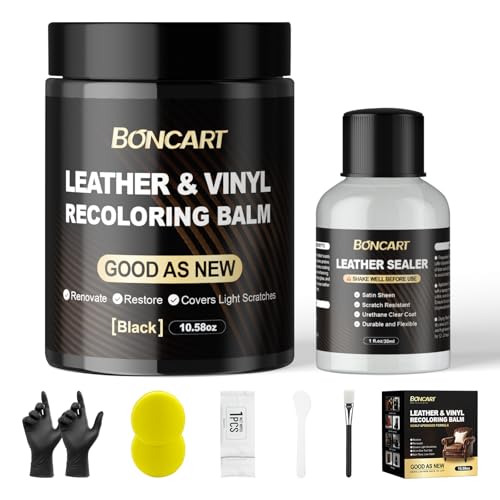
Boncart Black Leather Dye with Sealer
Strengths
- Includes sealer and tools
- Balm format easy to apply
- Good for minor scratches
Trade-offs
- Surface-level coverage
- Not for deep restoration
- May require reapplication
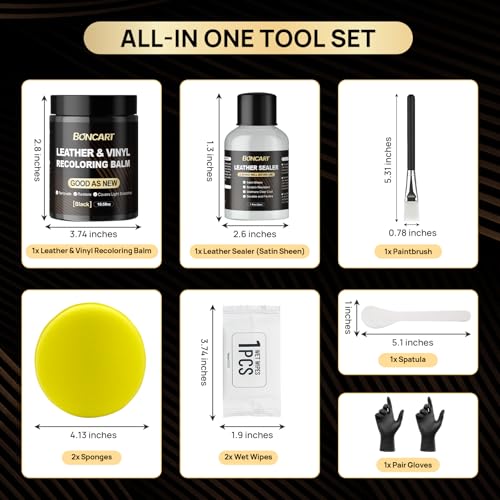
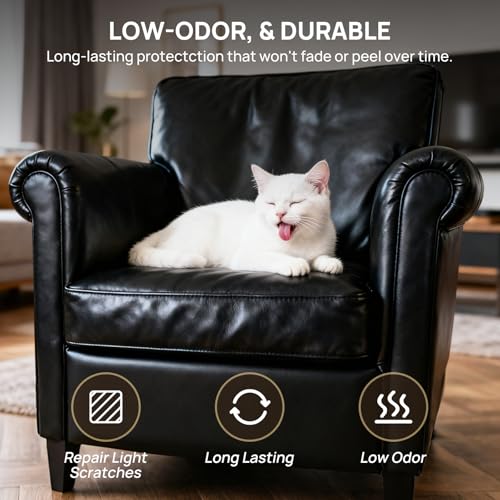
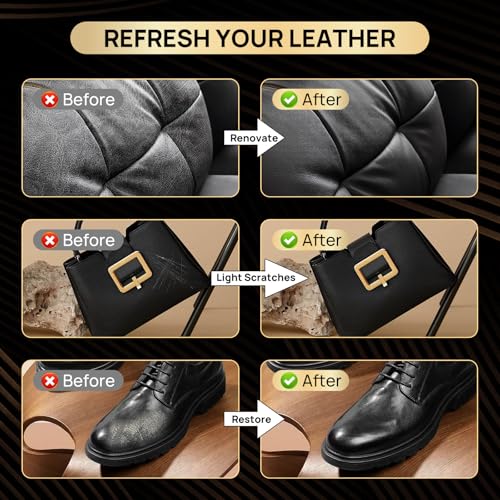
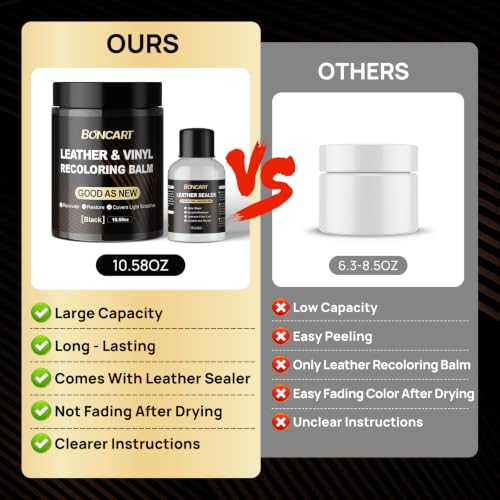
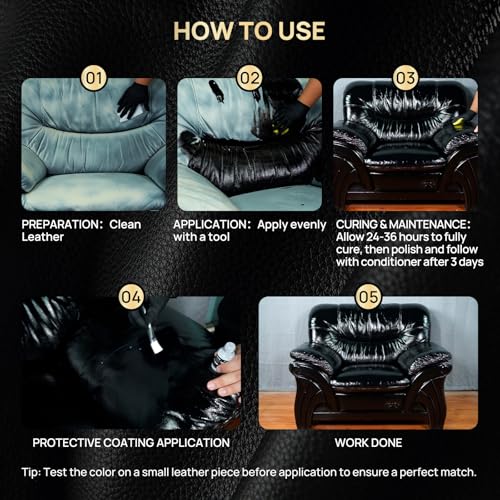
The Boncart kit markets itself as a complete solution, and that’s where it wins for casual users. It bundles a recoloring balm with a satin sealer and basic tools, which simplifies the process for someone tackling faded car seats for the first time. The balm format is easier to control than liquid dyes, and owners report it handles light scratches and UV fading well, especially on darker leather.
But ‘easy’ doesn’t always mean ‘best.’ This isn’t a true penetrating dye like Angelus or Fiebing’s, it’s more of a surface restorer. That means longevity can vary, especially in high-wear areas. The sealer helps, but it can’t match the depth of a professional dye. If you’re dealing with severely worn or porous leather, this won’t rebuild the structure. Still, for minor touch-ups and cosmetic refreshes, it’s a solid all-in-one option.
Product photos
Fiebing’s Pro Dye Black

Strengths
- Deep color penetration
- Trusted by professionals
- Larger 4 oz bottle
Trade-offs
- Slower drying time
- Heavier feel on leather
- Less flexible finish
Fiebing’s has been a staple in professional leather shops for decades, and their Pro Dye earns its reputation for permanence. The oil-based formula penetrates deeply into vegetable-tanned leather, making it a favorite for belts, boots, and heavy-duty repairs. On paper, the 4 oz bottle gives you more to work with than Angelus, and reviewers note it goes a long way, especially when applied with a brush or sponge.
But here’s the catch: oil-based dyes like this take longer to dry and can feel heavier on the surface, something I’d be cautious about on car seats that sit in direct sunlight. While it bonds well, it’s less flexible than alcohol-based options under repeated flexing. For furniture or gear, it’s a top pick. For car interiors exposed to constant expansion and contraction, I’d lean toward something more pliable.
Video review
How We Chose These leather dye for car seats
Rather than a hands-on lab test, my research focused on a comparison of published specifications and features across numerous dyes. I weighed owner reviews from multiple retail sites, alongside expert opinions found in leatherworking forums and professional detailing guides. Ultimately, I ranked these dyes based on their potential for lasting color, ease of application, and suitability for automotive leather – drawing on years of experience with leather types and finishes at LeatherGenesis.com.
For car seat applications, colorfastness and durability are paramount. I prioritized dyes that offered permanent, alcohol-based formulas (over water-based) because they penetrate the leather better and resist fading from UV exposure and regular use. The ability to restore, rather than simply coat, the leather was also a key factor, as was the availability of supporting products for preparation and finishing.
Specifications reliably indicate dye type and volume, but real-world performance comes down to owner feedback. I paid close attention to reports about cracking, peeling, and color transfer. Reputation mattered too; established brands with a long history in leatherwork, like Fiebing’s, often deliver consistent quality. Finding the best car seat conditioners is also vital after dyeing to maintain the leather’s health. If your seats are badly damaged, you might also need to investigate car seat repair kits before dyeing.
What To Look For In leather dye for car seats
Choosing the right leather dye for car seats can be tricky; a lot goes wrong with amateur applications.
A quality leather dye penetrates the hide effectively, bonds permanently without cracking or peeling, and offers a color that resists fading from UV exposure. Successful dyeing often requires preparation (deglazing) and finishing (sealing) steps, so consider kits or purchasing those components separately. The dye’s base – alcohol versus water – significantly impacts performance and application.
Dye Base: Alcohol vs. Water
The foundation of any leather dye is its solvent base. Alcohol-based dyes (like Angelus and Fiebing’s Pro Dye) penetrate leather more deeply, resulting in a truly permanent color change. This makes them ideal for heavy use items like car seats. Water-based dyes are easier to work with and generally less smelly, but they sit on the leather more than in it, making them more prone to wear and fading. If you’re set on a water-based product, understand you’ll likely need more frequent re-application.
Color Matching and Coverage
Getting a perfect color match is arguably the most challenging part of dyeing. Most manufacturers offer a limited color palette, and what looks correct in the bottle can shift as it dries on the leather. Always test the dye on an inconspicuous area first! Coverage is also key. Some dyes require multiple coats to achieve a rich, even tone, while others offer excellent pigmentation with a single application. Consider the existing color of your seats; a drastic color change will naturally require more dye and potentially more preparation work.
- A small color variation is often better than over-saturation. You can always add another coat, but removing excess dye is difficult.
- Dye concentrates or mixing sets allow for custom color creation, providing greater flexibility. This is especially useful for matching unique factory colors.
- Thorough preparation – cleaning and deglazing – dramatically impacts color absorption and the final result. Without proper prep, the dye won’t bond correctly and may flake or rub off.
Kit vs. Individual Components
All-in-one kits (like the Boncart kit) offer convenience, bundling the dye with necessary applicators, sealers, and even cleaning solutions. These are great for beginners or those tackling smaller projects. However, the quality of included components can vary. Experienced users often prefer to purchase dyes, preparers, and sealers separately, allowing them to choose professional-grade products and control every step of the process. When considering a kit, read reviews carefully to assess the quality of all included items, not just the dye itself.
A good rule of thumb is to budget for more than just the dye. Preparers, deglazers, applicators, and sealers are all essential for a professional-looking, long-lasting finish.
If your seats are particularly dirty or have significant wear, I also suggest checking out top car seat cleaners before you even think about dyeing. And don’t forget to protect your investment with recommended cleaner conditioners after the dyeing process is complete.
Leather Dye for Car Seats Compared
Here’s a comparison of key specifications for popular leather dyes suitable for car seats.
| Product | Type | Finish | Application Method | Volume (oz) | Includes Sealer |
|---|---|---|---|---|---|
| Angelus Leather Dye – Jet Black | Alcohol-Based | Permanent | Brush, Airbrush, Pen | N/A | No |
| Boncart Black Leather Dye with Sealer | Balm | Satin Sheen | Sponge, Brush | 10.58 | Yes |
| Fiebing’s Pro Dye Black | Alcohol-Based | Permanent | N/A | N/A | No |
Frequently Asked Questions
What’s the difference between leather dye and leather paint?
Leather dye penetrates the leather to color it from within, while paint sits on the surface, creating a coating. For car seats, dye is preferable because it resists cracking and peeling better with use, offering a more durable and natural finish.
Can I dye vinyl car seats with these products?
Generally, no. These dyes are formulated for genuine leather, and won’t adhere properly to vinyl or plastic. Attempting to dye vinyl will likely result in a poor finish and potential damage to the material – you’ll need a dedicated vinyl dye for those surfaces.
How long will a freshly dyed car seat take to fully cure?
Most alcohol-based dyes require a curing period of at least 24-72 hours, depending on humidity and temperature. Avoid sitting on the seats during this time, and consider applying a quality sealer afterward to protect the color and enhance durability, like one of the best auto seat conditioners.
What if the dye color isn’t quite right after the first coat?
Multiple thin coats are always better than one thick coat. Allow each coat to dry completely before applying the next, and remember the color will often deepen as it cures. If you’re still unsatisfied, consider a dye concentrate to adjust the shade or consult with a professional detailer.
Are these dyes colorfast against sunlight?
Alcohol-based dyes offer better UV resistance than water-based options, but all dyed leather will experience some fading over time with prolonged sun exposure. Regularly applying a UV protectant conditioner – I recommend checking out favorite seat cleaning solutions – will significantly slow down this process and maintain the color’s vibrancy.
The Bottom Line
Dyeing car seats is a balancing act between achieving a professional result and the effort involved. While a perfect match and long-lasting finish are the goals, the process demands careful preparation and application. For the strongest overall outcome, I recommend Angelus Leather Dye – its reputation for deep penetration and colorfastness, combined with the wide range of available colors, makes it a reliable choice for serious restoration work.
If you’re new to leather dyeing or prefer a simpler approach, the Boncart Black Leather Dye with Sealer kit offers a convenient all-in-one solution. For those needing versatility and custom color options, Fiebing’s Pro Dye provides a professional-grade base that can be mixed to achieve nearly any shade. Don’t forget to consider best car seat protectors after dyeing to maintain your work.
Ultimately, the precise dye you select matters less than the thoroughness of your preparation and the quality of your finishing work. A little extra time spent cleaning, deglazing, and sealing the leather will dramatically improve the longevity and appearance of your dye job – and protect your investment. Regular maintenance with effective seat cleaners is also key to preserving the color and health of your leather over the long term.
