
Understanding Genuine Leather: Key Advantages & Drawbacks
This post contains affiliate links. As an Amazon Associate, we earn from qualifying purchases.
“Genuine leather” is a description of material origin, not a specific quality grade like full-grain or top-grain. The Federal Trade Commission allows its use on any product containing leather fibers, from premium full-grain hides to bonded leather scraps. The real pros are affordability and leather content; the cons are inconsistent durability, poor aging, and misleading marketing that obscures true quality.**
That regulatory definition is the whole game. It means a ten-dollar belt and a thousand-dollar wallet can both legally carry the same stamp. Your job isn’t to trust the label, but to see past it.
What follows is a breakdown of what that label legally permits, the tangible hierarchy of leather it hides, and the specific questions to ask before you buy anything stamped “genuine.”
Key Takeaways
- The term “genuine leather” is not a grade. It’s a material description with no durability or quality standards attached.
- Under the FTC leather labeling guides, it can describe everything from high-end shell cordovan to bonded leather made from pulverized scraps.
- Most mass-market products labeled “genuine” are made from split leather or bonded leather, which lack the strong top grain layer.
- These lower-tier leathers often have a uniform, plastic-like finish that cracks instead of developing a patina.
- To find quality, ignore the “genuine” stamp and look for specific terms like “full-grain” or “top-grain,” and ask about the tannery.
What Does “Genuine Leather” Actually Mean?
Let’s be clear about one thing. In a workshop, “genuine” just means real, it comes from an animal hide. In a store, it’s a marketing term emptied of useful meaning.
The Federal Trade Commission leather guides set the rules. They state it’s deceptive to misrepresent the material content of a product. Critically, they don’t define “genuine” as a grade. They only require that if you say it, the product must contain some leather. This is why you find the stamp on a bonded leather journal, it has leather fibers glued together, and on a Horween shell cordovan keychain. Both are “genuine.” The former might disintegrate in a year; the latter will outlive you.
The FTC’s guides for leather products focus on preventing deception about material content. They do not establish a quality hierarchy like “genuine” being a mid-tier product; the term’s meaning is defined by common usage, which marketers have stretched to cover the entire spectrum of leather quality.
I used to think all cracks in leather were fatal. A student brought in a jacket with fine lines all over the shoulders. It looked done for. But when we flexed the material, the cracks were only in the plastic-like topcoat. The hide underneath was still supple. That jacket was a classic example of a corrected-grain leather, often sold as “genuine”, where the surface is sanded and coated to hide imperfections. The coating fails, not the leather. It’s a finish problem, not a hide problem.
The takeaway? The stamp tells you what it’s made of, not how well it’s made.
The Real Leather Hierarchy: What “Genuine” Hides
When you strip away the marketing, leather quality follows the hide’s natural structure. Think of a cowhide like a cross-section of a tree. The outermost layer is the strongest and most beautiful.
Here is the actual hierarchy, from most to least desirable for longevity and character: | Shows the hide’s natural grain, scars, and pores. | Premium bags, boots, belts. Develops a rich patina, grows more beautiful with age. | | Top-Grain | Top layer, sanded/buffed. | “Corrected” surface for uniformity. Imperfections are removed. | High-end furniture, luxury goods. More stain-resistant than full-grain, but develops less character. | | Split | Lower layer, split from the top-grain. | Fibrous, fuzzy surface (suede). No tight grain structure. | Suede items, shoe linings, low-cost goods. Less durable, absorbs stains easily. | | Bonded | Pulverized fibers from scraps. | Fibers bonded with latex or PU onto a fabric backing. | Very low-cost furniture, book covers. Lacks grain, feels stiff, cracks and peels with age. |
A product labeled only “genuine leather” could legally be made from any of these, though it most commonly lands in the bottom two rows. This is why understanding the differences between top-grain and genuine leather is a more useful skill than trusting a stamp.
The feel test never lies. Run your thumb across the surface. Full-grain leather has texture, you feel the pore structure. A heavily corrected top-grain leather feels smooth, almost polished. A bonded leather feels consistently flat, like dense cardboard with a plastic film. That plastic film is what eventually crazes and flakes.
Genuine Leather Pros: The Honest Appeal
The benefits are real, but they’re narrower than ads suggest.
It Contains Real Leather. This is the core pro. Compared to PU leather or vinyl, it’s a natural material. It breathes better than plastic, which matters for shoe linings or watch straps. Even a lower-quality split leather will have some of the hygroscopic properties that make leather comfortable.
It’s Affordable. This is the primary driver. By using splits or bonded materials, manufacturers hit low price points. If you need a leather-looking item for a short-term or low-stakes use, decorative pillows, a conference folio, this is the category. You’re paying for the aesthetic, not the heirloom.
It Offers Uniform Appearance. For some applications, consistency is the goal. A corporate office chair line needs hundreds of identical seats. Using corrected top-grain or coated splits under the “genuine” banner ensures no natural scars or grain variation shows. It looks clean and predictable straight from the factory.
Where this goes sideways: Assuming uniform appearance means uniform durability. That perfect surface is often a thin coating. Once scuffed through, the fibrous layer underneath stains and wears rapidly.
The appeal is straightforward. You get the word “leather” on the tag and in the product for less money, with a neat, consistent look. The trade-offs come later.
Genuine Leather Cons: The Long-Term Costs
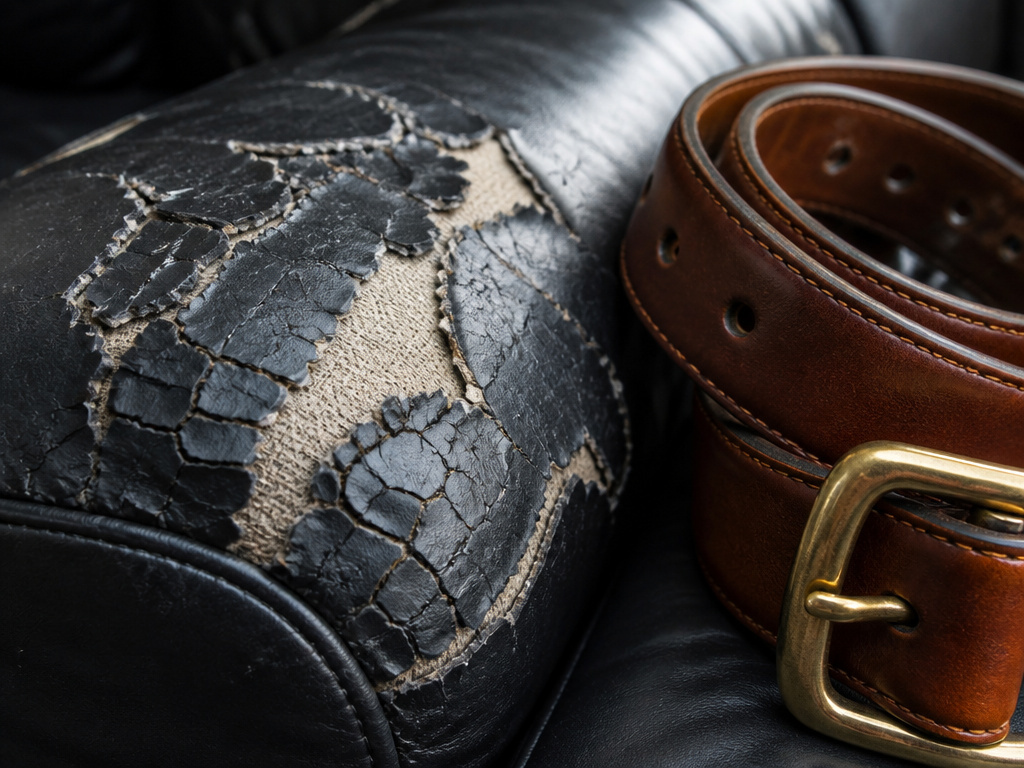
The disadvantages aren’t about leather itself, but about the low-grade materials this label frequently shields.
Durability is a Lottery. Without the tight, dense grain structure of the hide’s top layer, the material is inherently weaker. A bonded leather couch arm will crack and peel from friction within a few years. A split leather belt will stretch and deform faster than one made from full-grain leather. The advantages and disadvantages of bonded leather are extreme: low cost upfront versus guaranteed premature failure.
It Ages Poorly (If At All). High-quality leather develops a patina, a deepening of color and a softening of surface character from use and care. Low-grade genuine leather doesn’t patinate; it deteriorates. The coatings crack, the color rubs off, and the underlying material stains. Instead of looking richer, it just looks worn out.
Care is Trickier and Riskier. That coating isn’t just for looks. It often acts as a barrier against stains. Harsh cleaners or conditioners can dissolve it. A 2022 IULTCS leather research paper found that some common care products increased gloss temporarily but actually damaged the leather’s water resistance and color fastness over repeated applications. You can’t nourish a plastic film.
The Marketing is Deliberately Misleading. This is the biggest con. The term is used to create a perception of quality where little exists. It preys on the consumer’s correct assumption that “real is better than fake,” while hiding the fact that within the world of real leather, quality tiers are vast.
How to Spot Quality When You See “Genuine”
Ignore the stamp. Your investigation starts with the specifics the manufacturer does volunteer.
Look for the terms “full-grain” or “top-grain.” If the description says “full-grain leather” or “top-grain leather,” that’s a real signal. They’re moving you from the meaningless bucket into a defined category. Brands proud of their full-grain leather advantages** will shout it.
Feel and Examine the Surface. Look for natural grain patterns, pores, and variations. Bend the item. Quality leather creases smoothly; cheap coated leather forms sharp, white stress lines immediately. Smell it. Good leather has a rich, organic smell; low-grade leather often has a chemical or plastic odor, sometimes masked with artificial fragrance.
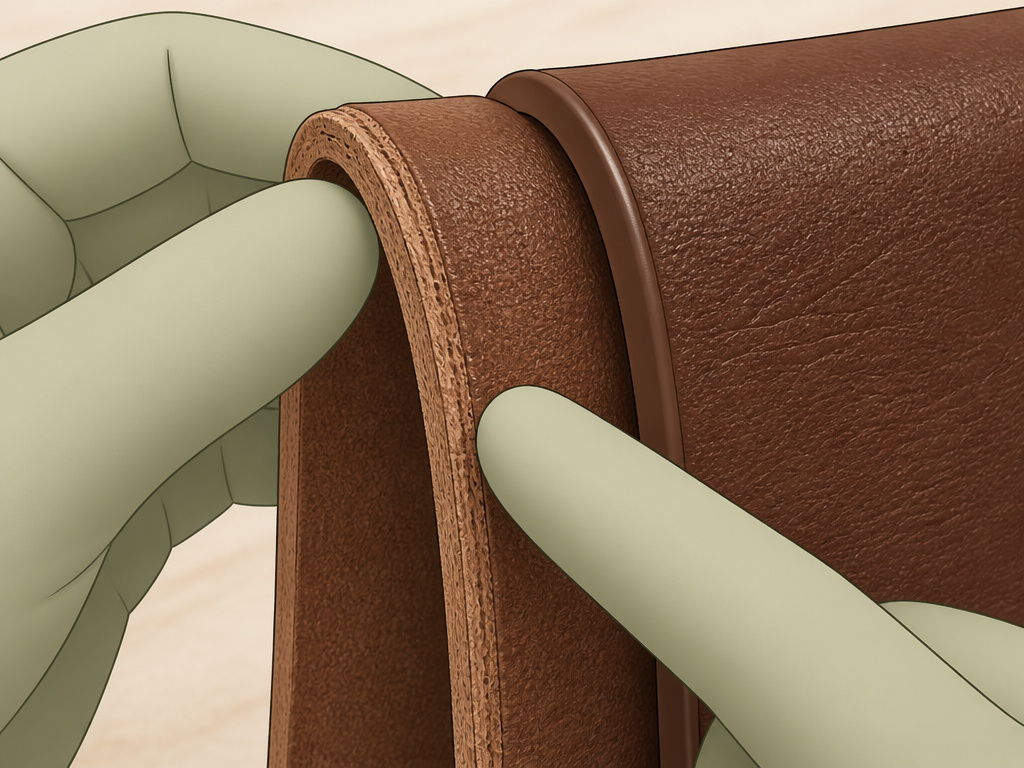
Check the Edges. The cut edge of a leather item is a tell. Full-grain and good top-grain pieces often have painted or burnished edges that look dense and smooth. Bonded or very thin split leather will have a rough, layered edge, like plywood, or be covered with a plastic strip.
Ask About the Tannery. This is the insider’s move. Brands using excellent leather name their tanneries. Horween, Sedgwick, Wickett & Craig. It’s like a chef naming their farm. If the seller can’t or won’t say where the leather comes from, assume it’s a commodity grade.
Consider the Price and Purpose. Be honest about the item’s job. A disposable fashion belt for a single season? The genuine leather tag is fine. A sofa you want for fifteen years? The label is a warning to dig deeper, likely into the world of top-grain leather advantages for furniture.
Frequently Asked Questions
Is genuine leather good quality?
It can be, but the label itself doesn’t tell you. “Genuine leather” is a material claim, not a certification like the Leather Working Group’s Gold rating. A product stamped with it could be high-quality full-grain or low-quality bonded. You must assess other factors like feel, edge finishing, and price to guess the likely grade.
What are the disadvantages of genuine leather?
The main disadvantages are inconsistent and often poor durability, a lack of patina development, susceptibility to cracking in coated varieties, and misleading marketing that can lead you to overpay for a low-tier product. Its performance is unpredictable because the term covers too wide a range.
How long does genuine leather last?
There is no single answer. A bonded leather item may fail in 2-3 years. The label gives you no timeline. For longevity, you need to identify a higher grade like top-grain or full-grain.
Can you fix cracked genuine leather?
Cracks in the surface coating are often permanent. If the crack has gone through to the fibrous layer underneath, conditioners can’t rebuild it. You can use leather fillers and dyes for cosmetic repair, but the structural weakness remains. Prevention through proper care is the only reliable strategy.
Is genuine leather real leather?
Yes, by the legal definition. It contains collagen fibers from an animal hide. However, “real leather” includes everything from the best part of the hide to the pulverized leftovers. The real question isn’t authenticity, but which part of the hide was used and how it was processed.
Before You Go
The practical takeaway is this: treat “genuine leather” as a starting point for an interrogation, not an answer about quality. When you see it, your next questions are “What grade?” and “What part of the hide?”
For any item where longevity matters, footwear, bags, furniture you love, spend your effort identifying full-grain or top-grain leather. Learn the pros of full-grain versus the advantages and disadvantages of top-grain leather. That’s where the real value decisions live.
For temporary or decorative items, the genuine label is functionally fine. You’re buying a look, not a legacy. Just know the difference, and let the leather, not the stamp, tell you what it is.
