
How to Clean Leather Sneakers | The Step That Prevents Cracks
This post contains affiliate links. As an Amazon Associate, we earn from qualifying purchases.
This post contains affiliate links. As an Amazon Associate, we earn from qualifying purchases.
To clean leather sneakers, remove loose dirt, wipe with a mild dish soap solution, rinse, air dry at room temperature, and apply a leather conditioner. Never use a washing machine, direct heat, or suede products on smooth leather. Conditioning every 4-6 weeks prevents the leather from drying and cracking.
That sequence, clean, dry, condition, is the whole game. Most guides get the first two steps right but treat the third as optional. It isn’t. Leather is skin. Washing it strips natural oils; failing to replace those oils is how you end up with a stiff, cracked upper within a season.
What follows is the manufacturer-backed method, the one mistake that mats suede for good, and the monthly habit that keeps Italian full-grain leather developing a patina instead of creases.
Key Takeaways
- Use a mild dish soap solution, never a washing machine. Machine agitation degrades leather fibers and dissolves adhesives.
- Air dry at room temperature for at least 8 hours. Radiators or direct sunlight cause leather to dry out, fade, and crack.
- Condition after every clean. Unconditioned leather loses flexibility and will crack, regardless of price point.
- Match your polish to the shoe color. A mismatched polish alters the leather’s tone permanently over applications.
- Clean suede and nubuck with specific brushes and cleaners. Using a standard leather cream on suede mats the nap and leaves greasy stains.
The 6-Step Leather Sneaker Cleaning Process
This process maintains the material so it ages with character, not damage. Follow these steps in order.
Step 1: Remove Dry Dirt. Use a soft-bristled shoe brush or a clean, dry toothbrush. Brush in one direction to lift grit from the grain without grinding it in. Skipping this scratches the leather during the wet clean.
Step 2: Mix Your Solution. Combine a few drops of mild, colorless dish soap with a cup of lukewarm water. The Nike guide warns that a high concentration of soap can strip natural oils and cause discoloration. Test this mix on an inconspicuous spot first, like the inside edge of the tongue.
Step 3: Clean the Upper. Dampen a soft cloth, microfiber is ideal, in the solution, wring it out thoroughly, and wipe the leather in gentle, overlapping strokes. For stubborn marks, use a soft-bristled brush dipped in the solution. Avoid soaking the leather.
The part nobody mentions: Work on one shoe at a time. This prevents the soap from drying on the surface before you can rinse it, which can leave a filmy residue.
Step 4: Rinse and Wipe. Dampen a second cloth with clean water, wring it out, and wipe over the cleaned areas to remove soap residue. Then, blot the entire shoe dry with a clean, absorbent towel. Don’t rub.
Step 5: Dry Completely. Stuff the shoes with white paper towels or a shoe tree to hold their shape. Place them in a well-ventilated room, away from windows, radiators, or vents. Uniform Standard’s care guide is explicit: radiators and sunlight dry out leather, causing it to crack or fade. Expect this to take at least 8 hours.
Step 6: Condition the Leather. Once fully dry, apply a thin, even coat of leather conditioner. Use a clean cloth and work in circular motions, letting the leather absorb it. This is essential. Conditioning rehydrates the fibers washed clean by the soap.
What You’ll Need: A Short, Specific Toolkit
You don’t need a cabinet full of products. You need the right ones for the job.
- Soft-Bristled Brushes: Two are ideal, a dry brush for step one and a separate, clean brush for applying cleaner.
- Microfiber Cloths: They don’t leave lint and are gentle on the grain. Have three on hand: one for cleaning, one for rinsing, one for buffing.
- Mild, Clear Dish Soap: Brands like Dawn or Joy. Avoid detergents with dyes, fragrances, or moisturizers.
- Leather Conditioner: A dedicated product like Saphir Renovateur or Collonil 1909 Leather Cream. “Clean-and-shine” combo products are always a compromise.
- Shoe Trees or Paper Towels: For maintaining shape during the long dry.
| Tool | Purpose | What Happens If You Skip It |
|---|---|---|
| Soft brush | Removes abrasive grit | Grit acts like sandpaper during the wet clean, leaving micro-scratches. |
| Microfiber cloth | Applies solution & buffs | Terry cloth or paper towels can lint or be too abrasive on damp leather. |
| Leather conditioner | Replaces lost oils | Leather dries from the inside out, becoming brittle and prone to cracking within months. |
What Not to Do: Three Rules That Save Shoes
Manufacturer guides agree on the don’ts more than the do’s. Here’s where standard advice goes sideways.
Never Use a Washing Machine. Converse, Vans, and Nike all explicitly warn against it. The agitator degrades leather fibers, the heat can warp the shape, and the moisture compromises the adhesives holding the sole on. What looks like a time-saver guarantees a shorter shoe life.
Common mistake: Drying shoes on a radiator or in direct sun to speed up the process. The leather dries too fast, from the outside in. The surface tightens and hardens while the core is still damp, creating stress points that become cracks. You’ll see them first at the toe creases.
Don’t Use Suede Products on Smooth Leather. The Uniform Standard guide is blunt: “Do not use suede or nubuck products on smooth leather.” Suede cleaners often contain stiffening agents or napping brushes that will ruin a smooth finish. The reverse is also true, using a standard leather cream on suede will mat the nap and create dark, greasy spots that are nearly impossible to remove.
Avoid Mismatched Polish. If you choose to polish for shine, the color must match. Using a dark brown polish on a chestnut shoe will slowly shift its hue over time. Polish sits on top; it doesn’t absorb like conditioner. A mismatch is a permanent alteration.
Cleaning Schedule: After Every Wear, Monthly, and Seasonally
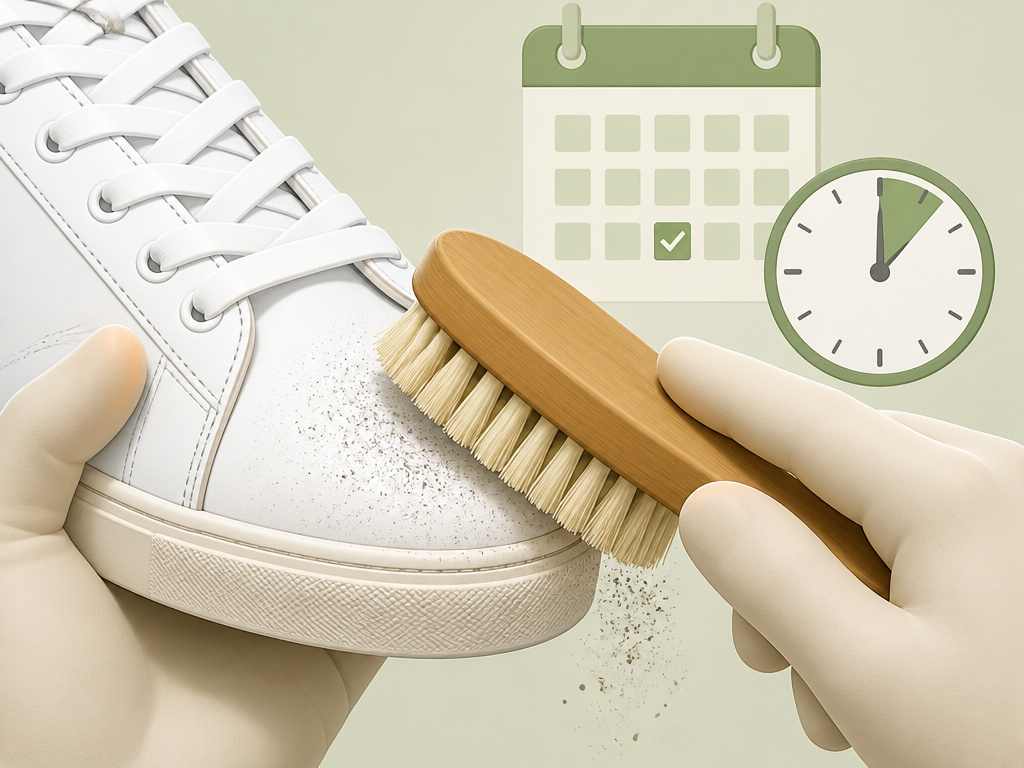 How often you clean depends on wear, but the intervals are predictable.
- After Every Wear: A quick, dry brush. This removes surface dust and grit that acts as an abrasive. Ten seconds when you take them off.
- Monthly: The full six-step clean, condition, and protect cycle. This is the maintenance rhythm for shoes worn regularly.
- Seasonally: A deep clean before storage. This includes a thorough conditioning and ensuring the shoes are completely dry before going into their box.
This schedule isn’t arbitrary. Leather needs consistent care. Letting dirt build up for months makes the cleaning process harder and increases the risk of permanent staining.
Conditioner vs. Polish: What Each One Actually Does
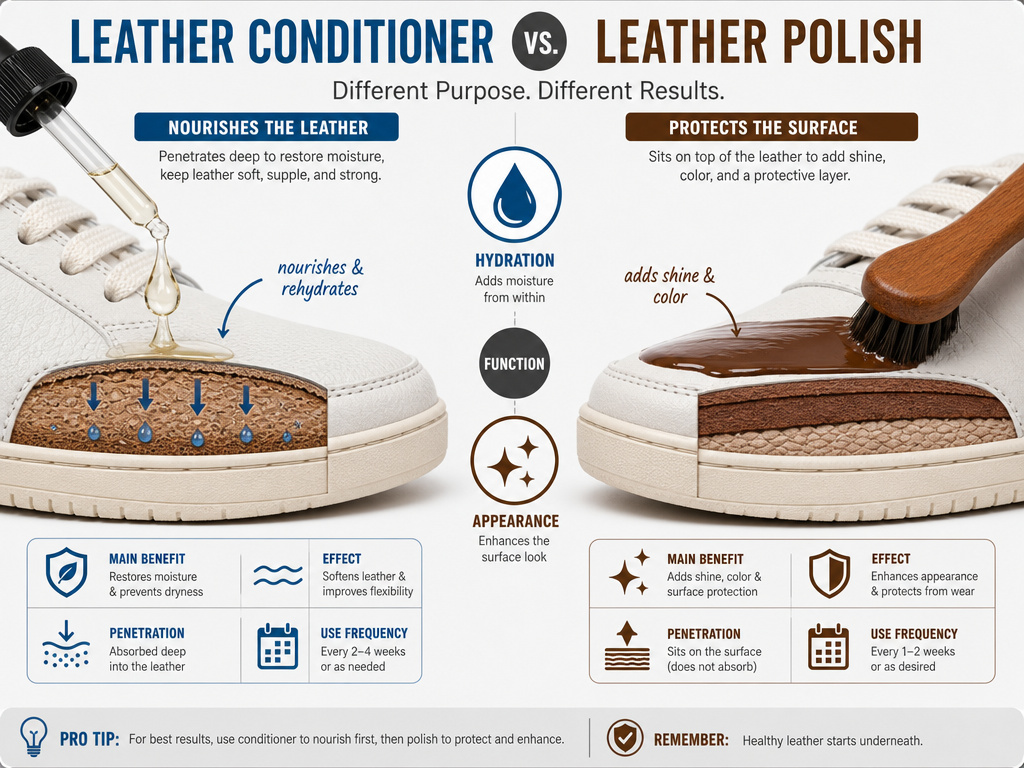 This is the most common point of confusion. They are separate steps with separate jobs.
Conditioner is nourishment. It’s an emulsion of oils and waxes that soaks into the leather to replenish the lipids lost to cleaning and wear. It keeps the material supple and prevents drying. You should condition after every clean.
Polish is primarily cosmetic. It contains pigments and hard waxes that sit on the leather’s surface to add shine and cover minor scuffs. It does almost nothing for the leather’s health underneath. Polish is optional and should only be applied to clean, conditioned leather.
Think of it like skincare: conditioner is the moisturizer, polish is the makeup. You wouldn’t apply foundation to a dirty, dry face and expect good results.
| Product Type | Primary Function | When to Use | Key Ingredient |
|---|---|---|---|
| Conditioner (e.g., Saphir Renovateur) | Rehydrates and nourishes leather fibers | After every clean, before storage | Mink oil, lanolin |
| Cream Polish (e.g., Saphir Pommadier) | Adds color and a soft shine | On clean, conditioned leather for aesthetics | Pigments, beeswax |
| Wax Polish (e.g., Kiwi Parade Gloss) | Creates a hard, high-gloss shine | For formal shoes requiring a “mirror” finish | Carnauba wax |
Special Cases: White Leather, Suede, and Nubuck
Not all leather sneakers are the same. The core principles hold, but the details change.
White Leather Sneakers demand extra vigilance. Use the same mild soap solution, but be meticulous about rinsing to prevent soap residue from yellowing the material. A dedicated guide to cleaning white sneakers covers bleach alternatives and stain management.
Suede and Nubuck are a different universe. They have a raised, velvety nap. Water can leave permanent dark spots, and standard conditioners will ruin the texture. You need a suede-specific brush and a dry cleaner. For a full walkthrough, see our methods for cleaning suede shoes and the specific cleaning process for nubuck.
The hard lesson here is product specificity. I once used a standard leather cream on a suede jacket, assuming “leather is leather.” It matted the nap into greasy, dark patches. The jacket was never the same. Suede and smooth leather require different, dedicated products.
How to Maintain Your Clean Sneakers
Cleaning is reactive. Maintenance is proactive. A few habits stretch the time between deep cleans.
- Use a Protective Spray: A product like Saphir Super Invulner, applied monthly, creates a water- and stain-resistant barrier. Spray from 12-18 inches away in a well-ventilated area and let dry for 30 minutes.
- Address Scuffs Immediately: A minor scuff can often be buffed out with a dry cloth or treated with a matching cream polish before it sets. For deeper marks, learn the methods for removing scuffs from leather.
- Control Odors: Let shoes air out after wear. For persistent smells, remove the insoles and use a dedicated shoe deodorizing method. Never store damp shoes.
- Store Them Correctly: Use shoe trees, keep them in a cool, dry place, and avoid plastic bags that trap moisture. Proper shoe storage prevents mold and misshaping.
Frequently Asked Questions
Can I use baking soda or vinegar on leather sneakers?
Some manufacturer guides, like Clarks, recommend a diluted white vinegar solution (two parts water, one part vinegar) for leather. It can be effective for stains. Baking soda is more abrasive and is better suited for rubber soles. Always test any household product on a hidden area first, as vinegar’s acidity can affect some dyes.
How do I get rid of deep-set stains on leather?
For oil-based stains, sprinkle with cornstarch to absorb the oil overnight, then brush away. For other set-in stains, a dedicated leather cleaner formulated for stain removal is safer than aggressive home remedies. Avoid harsh chemicals like acetone.
Is saddle soap good for cleaning sneakers?
Generally, no. Saddle soap is designed for heavily soiled, oiled work leather like saddles. It’s too aggressive for most sneaker leathers and can strip away essential finishes and dyes, leaving the leather dull and vulnerable.
How often should I replace my leather sneakers?
Nike recommends replacing running shoes every 300 to 500 miles. For casual leather sneakers, replacement is less about mileage and more about irreparable damage to the structure, sole, or leather upper. Proper cleaning and conditioning can extend their functional life for years.
Can I use the same conditioner on all my leather goods?
Universal leather conditioner is fine for most smooth leather shoes, bags, and belts. However, very delicate or specialty leathers (like aniline-dyed or garment leather) may benefit from a specific product. For footwear, a recommended leather conditioner designed for shoes will handle the flex and stress points better than a general-purpose one.
The Bottom Line
Leather sneakers are a material that responds to care. The rule that changes everything is to condition them after every clean.Not every month, not when they look dry, every single time you wash them. That’s the step that prevents the leather from turning into a stiff, cracked shell.
Skip the washing machine, respect the dry time, and keep suede products away from smooth leather. Your reward is a shoe that develops a soft, earned patina and lasts for seasons longer than it otherwise would. That’s the point of a timeless material.
