
The Correct Way to Store Leather Shoes & Avoid Damage
This post contains affiliate links. As an Amazon Associate, we earn from qualifying purchases.
Store leather shoes in a cool, dry, and dark place with stable temperature (50-70°F) and humidity (30-60% RH). Always clean and fully dry them first, use cedar shoe trees to maintain shape and absorb moisture, and store them in breathable cloth bags, never plastic. Rotate pairs to allow at least 24 hours of rest between wears.
That’s the short answer. The long answer is that storage is where negligence compounds. You can follow every step of a perfect leather shoe care routine, but if you then shove them into a hot attic or a damp basement, you’re essentially baking or stewing your investment into an early grave. The damage is slow, silent, and often irreversible.
What follows is a breakdown of the environmental science, the material-specific warnings straight from brand care manuals, and the practical habits that actually extend a shoe’s life. We’ll cover why a $10 hygrometer is a smarter buy than a $100 “preservation” box, and the one storage mistake I see destroy good shoes every single season.
Key Takeaways
Climate is essential. Aim for 50-70°F (10-21°C) and 30-60% relative humidity. Stray outside this range and you invite dry rot or mold. * Plastic is the enemy. Airtight plastic containers or bags trap moisture and promote mildew. Always use the shoe’s original dust bag or a breathable cloth alternative. * Shape and dry from the inside. Cedar shoe trees are essential, they absorb moisture, fight odors, and prevent the leather upper from collapsing and creasing. * Preparation beats reaction. Never store dirty or damp shoes. A full clean leather shoes process and a light conditioning must happen first. * Not all leather is the same.** Patent leather can’t touch other materials, suede must be brushed, and embellished shoes need their own space to avoid snags.
The Golden Rules of Leather Shoe Storage (50-70°F, 30-60% RH)
Leather isn’t an inert object; it’s a preserved organic material that reacts to its environment every single day. Think of it like a wooden instrument. You wouldn’t leave a guitar next to a radiator or in a dank cellar and expect it to stay in tune. The same principle applies, but with more concrete numbers.
According to leather manufacturer Townsend Leather, the optimal storage conditions for leather goods are a temperature between 50 and 70 degrees Fahrenheit (10-21°C) and a relative humidity between 30% and 60%.
This band is the sweet spot. Below 30% RH, the air is too dry and will steadily wick the essential oils from the leather, leading to the brittle, cracking nightmare known as dry rot. Above 60% RH, you’re in mold and mildew territory, especially if airflow is poor.
Here’s what that looks like in practice:
| Environment | Temperature/Humidity | Risk to Leather Shoes |
|---|---|---|
| Heated Attic | >85°F, <20% RH | Rapid drying, fiber cracking (dry rot) within a season. |
| Damp Basement | <50°F, >70% RH | Mold growth, musty odors, structural weakening. |
| Next to HVAC Vent | Fluctuating, very dry | Accelerated moisture loss, stiffening, and cracked seams. |
| Interior Closet | 65°F, 45% RH | Ideal. Slow, even aging with minimal stress. |
The tool you need is a hygrometer, a simple device that measures temperature and humidity. Place one in your storage closet. If the readings are consistently outside the safe zone, you need to adjust. A small dehumidifier can work wonders in a damp space; a bowl of water can slightly raise humidity in a desert-dry apartment.
Why “Rest” is a Measurable Concept
The common advice to rotate your shoes isn’t just about evening out wear. It’s about giving the material time to recover from the mechanical and moisture stress of a day on your feet. Your feet release a significant amount of moisture and heat.
A shoe worn all day needs a full 24 to 48 hours to completely dry out from the inside. If you put it back on before then, you’re starting the next cycle with a damp foundation. This constant dampness weakens the leather fibers, breaks down the adhesive holding the sole, and creates a perfect environment for bacteria.
This ties into a broader idea of material fatigue. While not a direct storage point, it frames why care matters: a high-end shoemaker’s manual notes that welted construction can experience material fatigue after approximately 3,000 “operating hours.” Every hour spent sweaty, misshapen, or under stress in a hostile environment counts against that clock. Proper storage is how you pause the timer.
Step-by-Step: Preparing Shoes for Storage
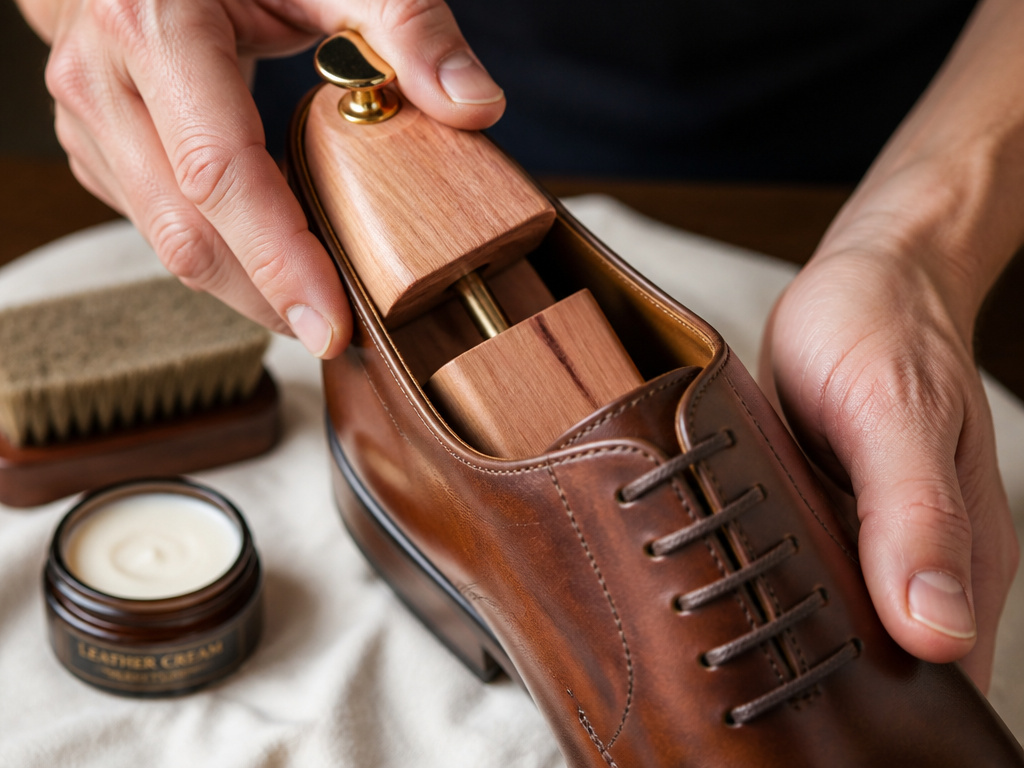 You don’t just take off your shoes and put them away. Storage is a process, and skipping any step undermines the whole point.
1. Clean Them Thoroughly. This is non-negotiable. Dirt and salt act like sandpaper, grinding into the leather grain every time the shoe moves or is handled. Use a horsehair brush to remove all surface debris. For stubborn stains, follow a dedicated process for how to clean shoes. The goal is to start with a perfectly clean slate.
2. Dry Them Completely. Naturally. If they’re wet, stuff them with newspaper or acid-free tissue paper to absorb moisture and hold shape. Then, let them air dry at room temperature, away from direct heat or sunlight. The smell of warm, drying leather might be pleasant, but it’s the scent of the leather’s oils evaporating. Heat dries it out from the outside in, causing it to shrink and crack.
3. Condition if Needed. Is the leather looking dry or dull? After cleaning, and only if the leather is fully dry, apply a thin coat of conditioner. This isn’t a monthly ritual for stored shoes, it’s a “as-needed” step to replenish oils before a long dormancy. The technique for condition leather shoes is about thin, even coats, not slathering it on.
4. Insert Cedar Shoe Trees. This is the most important step. Cedar shoe trees absorb residual moisture, combat odors, and, critically, hold the shoe’s shape. They prevent the toe from curling up and the upper from developing deep, permanent creases. Spring-loaded, split-toe designs offer the best fit. Don’t use plastic ones; they don’t absorb anything and can create pressure points.
5. Place in a Breathable Bag. Use the cotton or flannel dust bag that came with the shoes. If that’s lost, a clean pillowcase works. The bag keeps dust off while allowing the leather to breathe. This is where people make a catastrophic error.
Common mistake: Storing shoes in sealed plastic containers or bags. Plastic traps any residual moisture inside, creating a miniature swamp that promotes mildew and accelerates rot. It also prevents the cedar’s moisture-wicking and odor-neutralizing properties from working.
Material-Specific Storage Warnings
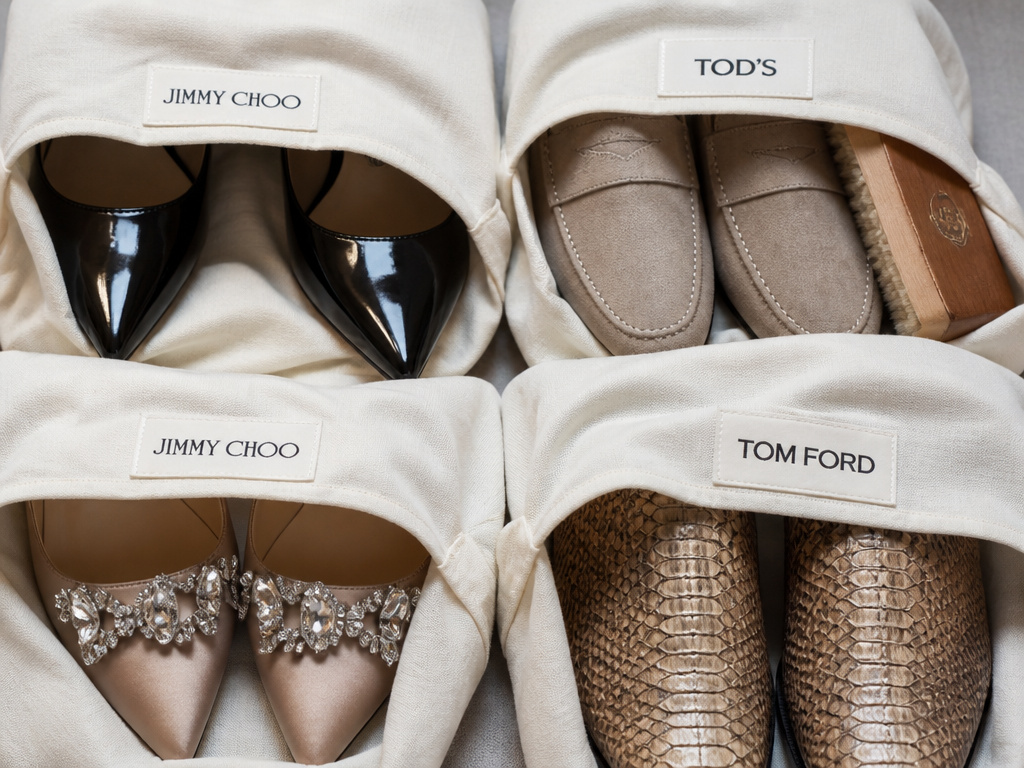 A one-size-fits-all approach will ruin something. Different leathers and finishes have unique vulnerabilities that your storage method must address.
Patent Leather: The high-gloss finish is incredibly delicate. Brand care guides, like the one from Giuseppe Zanotti, explicitly warn against storing patent leather in plastic due to color transfer. They also advise keeping it away from direct contact with other materials. Store patent shoes in their individual cloth bags, and make sure the glossy surfaces aren’t pressed against anything that could stick or imprint.
Suede & Nubuck: The napped surface is easily crushed. Before storage, gently brush the suede with a specialist brush to lift the nap and remove dust. Never store anything on top of suede shoes. The dust bag is mandatory to prevent dust from embedding itself deeply into the material, which is a nightmare to remove scuffs and stains from later.
Embellished Shoes (Crystals, Embroidery): Manolo Blahnik’s care guide stresses that shoes with crystals or hardware must be stored so the accessories do not pull on or snag the fabric (like satin) or scratch adjacent leather. This often means ensuring they are alone in their bag and that the bag is arranged so the delicate parts aren’t under pressure.
Exotic Leathers (Reptile, Ostrich): These are often more sensitive to humidity fluctuations. The advice from high-end brands is to store them in a consistently dry, well-ventilated environment. Avoid overcrowding, as the scales or quill patterns can be imprinted upon by adjacent objects.
The Tools You Actually Need (And One to Avoid)
You don’t need a museum-grade archival chamber. A few simple, correct tools do 95% of the work.
- Cedar Shoe Trees: The undisputed MVP. They manage moisture, odor, and shape.
- Hygrometer: For $10-15, it tells you if your closet is a friend or foe.
- Breathable Dust Bags: The originals are best. Cotton pillowcases are a fine substitute.
- Acid-Free Tissue Paper: Perfect for stuffing bags or shoes that don’t have trees, without risk of dye transfer. This is the underrated champion over crumpled newspaper.
- Horsehair Brush: For that essential pre-storage clean.
The Tool to Avoid: The “Airtight Preservation Box.” It’s a marketing trap. Leather needs to breathe. Sealing it away with trapped air of unknown humidity is a gamble you always lose. If you need a box for stacking, use the original cardboard shoebox (which is breathable) with the shoes inside their dust bags.
How to Store Leather Shoes You Rarely Wear
For seasonal or sentimental shoes you won’t touch for months, the preparation is identical but more critical. After the full clean-condition-tree-bag routine, place them in a cool, dark, and stable closet. Avoid attics, garages, or basements where temperatures and humidity swing wildly.
Check on them twice a year. Give them a quick visual inspection and a gentle feel. Does the leather still feel supple? Do you see any suspicious spotting or feel any dampness? This biannual check-up takes two minutes and can catch a problem before it becomes a disaster requiring a full restore leather shoes project.
Frequently Asked Questions
Can I store leather shoes in their original box?
Yes, but with conditions. First, the shoes must be clean, dry, and inside their cloth dust bags. Second, the box should be stored flat in a climate-controlled space, not in an attic. The cardboard box provides physical protection and is slightly breathable, which is better than plastic.
How do I stop my stored shoes from smelling musty?
Mustiness is a sign of trapped moisture and mildew. First, ensure they are bone-dry before storage with cedar shoe trees inside. Second, verify your storage humidity is below 60%. For existing odors, you may need to deodorize shoes with baking soda or specialist sprays before re-starting the storage process correctly.
Is it okay to store shoes in a vacuum-sealed bag?
Absolutely not. Vacuum sealing crushes the shape irreparably and removes all airflow, creating a perfect anaerobic environment for the wrong kind of microbes. It’s one of the fastest ways to destroy leather footwear.
Should I polish my shoes before long-term storage?
It depends. A light polish can provide a thin protective wax layer. However, if you’re conditioning them, do that first, let it absorb fully for 24 hours, then apply polish. Never store shoes with a thick, un-buffed layer of polish on them, as it can become gummy and attract dust.
What’s the best way to store leather boots?
The same rules apply, but shape is a bigger challenge. Use boot trees or stuff the shafts firmly with acid-free tissue paper to prevent them from slouching or developing deep horizontal creases. Store them upright if possible.
The Bottom Line
Here’s some straightforward advice: storage isn’t passive. It’s an active extension of the care you give your shoes while wearing them. The goal isn’t to create a time capsule, but a stable, benevolent environment where the leather can simply exist without deteriorating.
Forget complex rituals. Control the climate (get the hygrometer), use cedar trees, keep them in breathable bags, and never, ever store them dirty or damp. That’s it. This is a timeless material, but it lasts only as long as its environment allows. A closet that stays between 50 and 70 degrees Fahrenheit with 30-60% humidity does more to protect shoes from rain in the long run than any last-minute spray applied as you’re running out the door.
