
The Correct Way to Clean Nubuck Shoes in 3 Easy Steps
This post contains affiliate links. As an Amazon Associate, we earn from qualifying purchases.
To clean nubuck shoes, follow a three-step sequence: brush off dry dirt, clean with a specialized nubuck cleaner applied with a soft brush, and dry away from heat for at least 24 hours. Never use water, soap, or standard leather conditioners, they will flatten the nap and cause permanent stains.
That sequence works because nubuck is a full-grain hide that’s been sanded to create a velvety surface, which acts like a sponge for liquids and grease. Most cleaning failures happen when people treat it like smooth leather.
What follows is the method, the exact tools that match it, and the two storage mistakes that undo all your work.
Key Takeaways
- Always protect new nubuck shoes with a waterproofing spray before their first wear; the open pores absorb stains instantly. Drying is required. Wet nubuck must air-dry at room temperature for a full 24 hours, never above 37°C (98°F), or the leather will stiffen and shrink.
- Regular maintenance with a dedicated nubuck brush is more important than deep cleaning; it lifts the nap and prevents permanent flattening.
- Never use saddle soap, mink oil, or silicone-based conditioners. They clog the pores and create dark, greasy patches that won’t come out.
Why Nubuck Needs a Different Playbook
Nubuck is the top layer of the hide, full-grain leather, that’s been buffed with an abrasive wheel. This process raises thousands of tiny fibers, giving it that soft, suede-like feel.Those open fibers are the whole point, and they’re also the vulnerability. Any liquid or oil wicks straight in.
Think of it like unfinished wood versus varnished wood. You wouldn’t clean raw oak with furniture polish. The same principle applies here. Using a product meant for finished, smooth leather will gum up the fibers, matting them down into a hard, shiny patch. Once that happens, you’re looking at a professional restoration job.
The part nobody mentions: A brand-new, unprotected nubuck shoe can absorb a water droplet in under three seconds. That’s why the first step in care happens before you ever step outside.
The Tools You Actually Need
You can’t clean nubuck with whatever’s under the sink. The wrong tool guarantees a bad result. Here’s the shortlist.
A Nubuck/Suede Brush: This is your first-line tool. Look for one with stiff, brass bristles, like the Saphir Mini Suede & Nubuck Brass Brush. Rubber-bristled “suede” brushes often lack the stiffness to lift embedded dirt. You’ll use this for dry cleaning before and after each wear.
A Specialized Cleaner: General leather cleaners are formulated for sealed surfaces. You need a cleaner designed for nubuck’s open nap, such as Saphir Suede & Nubuck Cleaner or Urad AQUILA. These are typically foam-based and applied with a separate, soft applicator brush to lift grime without soaking the leather.
A Waterproofing Protector: This is not optional. A spray like Urad SAHARA or Alfa Protection Spray creates an invisible barrier. It doesn’t make the shoe waterproof, but it causes water and oil to bead up long enough for you to wipe them away.
A Nubuck Eraser: For stubborn scuffs or salt stains, a dedicated eraser (like Saphir’s Gommadin) can gently abrade the mark away without damaging the surrounding nap.
| Tool | Its Real Job | If You Skip It |
|---|---|---|
| Brass-Bristle Brush | Lifts the nap and dislodges dry dirt | Dirt gets ground in, flattening the fibers permanently within a few weeks. |
| Specialized Nubuck Cleaner | Suspends grease and dirt in foam for removal | Water or soap drives stains deeper, leaving a dark, permanent watermark. |
| Waterproofing Spray | Makes the surface temporarily hydrophobic | The first rainstorm or coffee splash becomes a permanent stain. |
| Eraser | Targets localized, set-in scuffs | You resort to more cleaner and brushing, which can overwet and damage a larger area. |
Gathering these first turns a risky chore into a straightforward process. Now for the sequence.
The 3-Step Nubuck Shoe Cleaning Process
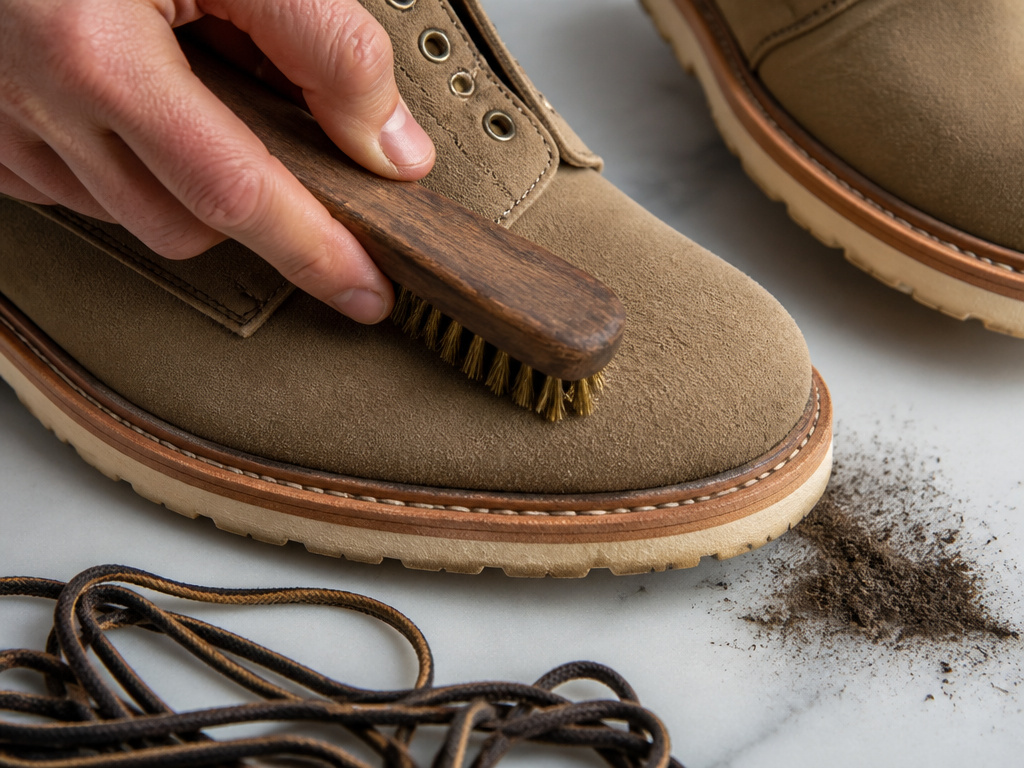 This isn’t a casual wipe-down. Each step has a specific goal and a consequence for rushing.
Step 1 – The Dry Clean (Brush, Don’t Wash)
Before any liquid touches the shoe, remove the laces. Then, take your brass brush and work it over the entire surface. Go with the grain of the nap, usually from heel to toe, using short, firm strokes.
You’re listening for a faint, dry shushing sound. If you hear a gritty scrape, you’ve hit a patch of dried mud. Brush that spot a bit more diligently. This step alone removes about 80% of everyday dirt and restores the flattened nap. It’s the most underrated part of cleaning nubuck leather.
Common mistake: Going straight for a wet cleaner on a dusty shoe. You’ll just make mud on the surface and grind it into the fibers.
Step 2 – The Wet Clean (When You Must)
Only break out the cleaner for actual stains or overall grime. Pour a small amount of your specialized nubuck cleaner into a dish. Using a separate, soft-bristled applicator brush (a natural silk hair brush is ideal), work up a foam and apply it in circular motions over the stained area or the whole shoe.
Scrub gently over a sink. The foam will turn gray as it pulls dirt out. Rinse your applicator brush frequently. The goal is to clean with the foam, not saturate the leather with liquid. For a localized stain, focus there. For overall filth, clean the entire shoe to avoid color mismatch, as the cleaner can slightly revive the leather’s shade.
Step 3 – The Critical Dry
This is where patience is everything. After cleaning, blot any excess moisture with a clean, absorbent towel. Then, stuff the shoes firmly with newspaper or paper towels.
Do not place them near a radiator, heater, or in direct sunlight. The Alfa Shoes guide is explicit: do not exceed 37°C (98°F). High heat bakes the leather, causing it to shrink, curl, and become stiff as cardboard. Let them dry at room temperature for a full 24 hours. The paper stuffing will wick moisture from the inside out.
I learned this the hard way with a pair of work boots. I got them soaked and, in a hurry, set them on a heating vent to dry fast. Twenty-four hours later, they were so stiff I could barely flex the ankle. It took a week of careful conditioning to make them pliable again, and the shape was never quite the same.
Protecting Your Shoes Before They Get Dirty
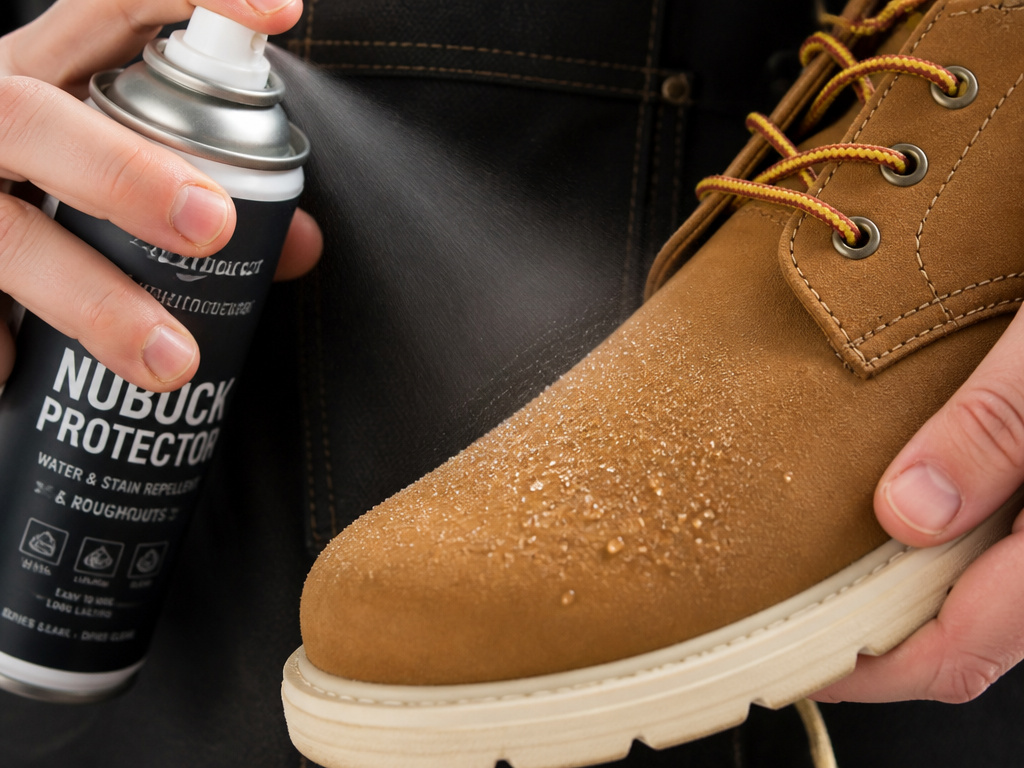 Cleaning is a reaction. Protection is the strategy. The single best thing you can do for new nubuck boots is to apply a protector spray before they ever touch the ground.
Shake the can well. In a well-ventilated area, hold it about 6 inches from the shoe and apply a thin, even coat over the entire surface. Let it dry for the time specified on the can, often 2 to 8 hours, then apply a second coat. This builds a barrier without clogging the nap when you use a product with a high-density, closed-cell foam. Reapply this protection every few months, or whenever water stops beading on the surface.
What Not to Do: The Quick Ruin Guide
Nubuck is forgiving of a little dirt but brutalized by the wrong product. Here’s the short list of banned substances.
- Saddle Soap: It’s for filthy, oil-tanned saddles. On nubuck, it deposits a residue that dulls the nap and attracts more dirt.
- Mink Oil or Leather Conditioners: These are for nourishing dry, porous leather. Nubuck isn’t thirsty; it’s textured. Oils and waxes will darken it dramatically and mat the fibers into ugly, greasy patches.
- Water: Using plain water pushes dirt deeper and leaves a mineral deposit ring as it dries, a permanent “water stain.”
- Magic Erasers (Melamine Foam): These are microscopic abrasives. They will sand away the nap, leaving a smooth, bald spot that cannot be restored.
Stick to the brush and the dedicated cleaner. Everything else is a gamble.
Solving Common Nubuck Problems
Even with care, issues pop up. Here’s how to handle them without making things worse.
Flattened Nap on the Toe Box
This is normal wear. The fibers get compressed from flexing. Revive them by steaming the area lightly (hold the shoe over a kettle’s vapor for 3-4 seconds, not directly in the steam) and then vigorously brushing with the grain while the leather is still slightly warm.
White Salt Stains
These are mineral deposits from winter roads. Let the shoe dry completely, then brush the crusty residue off. For remaining marks, use a nubuck eraser gently. Never try to wash salt out with water, it dissolves and soaks in deeper.
Oil or Grease Spots
This is a tough one. Immediately blot up any excess with a paper towel. Sprinkle the spot with cornstarch or talc to draw out the oil, leave it overnight, and brush it off. A dedicated clean suede product like AQUILA can sometimes break down the grease. If the stain remains, it’s likely permanent; continued aggressive cleaning will damage the area more than the stain.
Mold or Mildew
This happens from storage in damp, airless places. I once stored a leather jacket in a plastic bag for a season and opened it to a faint white bloom and a musty smell. For shoes, brush off the surface mold outdoors. Wipe the area with a cloth dampened with a 50/50 mix of water and isopropyl alcohol, then dry thoroughly. The smell may linger in the lining.
How to Store Nubuck Shoes
Storage is just extended drying. Never put away shoes that are the slightest bit damp. Store them in a cool, dry place with some air circulation. A fabric shoe bag is perfect; a sealed plastic box is a recipe for mold.
Keep them away from direct heat sources, including heated floors, which can dry out and crack the soles. Stuff them with acid-free tissue paper to help them hold their shape. This is part of a complete leather shoe maintenance routine that pays off years later.
Frequently Asked Questions
Can you use water to clean nubuck shoes?
No. You should not use plain water. Nubuck absorbs water instantly, which can cause stains, rings, and stiffness. Always use a dedicated, foam-based nubuck cleaner that is designed to lift dirt without saturating the leather.
How do you dry nubuck shoes after they get wet?
Blot off excess water, stuff them tightly with newspaper or paper towels, and let them air-dry at room temperature away from direct heat. This process takes at least 24 hours. Never use a hair dryer, radiator, or direct sunlight, as heat above 37°C (98°F) can shrink and harden the leather.
What’s the difference between cleaning nubuck and suede?
The process is very similar, as both are brushed, open-nap leathers. The key difference from suede is that nubuck is made from the more durable top-grain layer, while suede comes from the softer inner split. Nubuck can generally withstand slightly more aggressive brushing. Always use products labeled for both materials.
How often should you clean nubuck shoes?
Brush them with a nubuck brush after every wear to remove dust and lift the nap. Deep clean with a specialized product only when you see visible stains or overall grime. Over-cleaning can wear down the delicate nap prematurely.
Can you restore flattened nubuck?
Sometimes. Lightly steam the area to relax the fibers, then brush vigorously with the grain while warm. For severe flattening or shiny patches, the damage to the nap is often permanent, which is why regular brushing is the best care for leather shoes of this type.
The Bottom Line
Cleaning nubuck shoes requires matching the right, simple tools to a fragile surface. Brush often, clean sparingly with the proper foam, dry patiently, and protect aggressively.Forget the home remedies and conditioners. A brass brush, a bottle of specialized cleaner, and a can of protector spray will keep your shoes looking right for years. That’s the whole game.
