
How to Make Leather Soft Again | A Leather Expert’s Method
This post contains affiliate links. As an Amazon Associate, we earn from qualifying purchases.
Making leather soft again is a simple, three-part process: clean it, condition it, and then work the conditioner in with heat and motion. The critical variable is matching your conditioner to your leather’s type and current dryness, using the wrong one can darken it permanently or leave it greasy.
Most people reach for whatever bottle is closest. They miss that a conditioner is not just a moisturizer; it’s a replacement for the natural oils that have evaporated or been stripped away. That replacement oil needs to match the leather’s porosity and the finish on its surface.
What follows is a breakdown of that three-step method, plus a clear map for picking the right conditioner. We’ll also cover why the most common advice, saddle soap and mink oil, often does more harm than good, and how to test any new product so you don’t ruin a favorite piece.
Key Takeaways
- Match the conditioner to the leather type. Light creams like Bickmore Bick 4 for finished aniline or car seats; pure oils like Obenauf’s for dry, vegetable-tanned work leathers. Heat and flexing are essential.** Conditioner sits on the surface unless you warm the leather (with your hands, a hairdryer on low, or by wearing the item) to help the oils migrate into the fibers.
- Saddle soap and mink oil are for saddles and boots, not bags or jackets. Saddle soap dries leather out over time, and mink oil darkens significantly and attracts dirt.
- Over-conditioning weakens leather. A greasy surface means the fibers are saturated; any more just sits on top and can attract grime that abrades the surface.
- Always test on a hidden spot first. Apply a dime-sized amount to the inside of a belt or under a cushion and wait 48 hours. Check for darkening or a sticky residue before treating the whole piece.
The 3 Steps That Actually Work (And the One That Doesn’t)
Forget the complicated rituals. The process is clean, feed, and flex.
Step 1: Clean. Remove surface dirt and old polish with a damp microfiber cloth. For heavier grime, use a leather-specific cleaner like Chamberlain’s Leather Milk Cleaner. Dirt acts like sandpaper; conditioning over it grinds that grit deeper into the grain.
Step 2: Condition. Apply your chosen conditioner in a thin, even layer with a clean cloth or your fingers. Don’t flood the surface. A little goes a long way, the leather should look damp, not wet. Let it sit for the time specified on the product label, usually 15-30 minutes.
Step 3: Work it in. This is the part everyone skips. Leather is skin. Oils don’t just soak in; they need warmth and movement to migrate past the top grain. After the soak-in time, flex the piece repeatedly. For a jacket, put it on and move around. For a bag, open and close it, manipulate the straps. For shoes or boots, wear them indoors with thick socks. The heat from your body and the mechanical action drives the conditioner deep.
A conditioned but unworked piece will feel soft for a day, then stiffen again as the oils linger on the surface and oxidize. The difference is in the third step.
What doesn’t work? Pouring on conditioner and leaving it. I learned this the hard way after over-complicating advice for a reader. They conditioned a belt, let it dry untouched, and emailed me two weeks later saying it was stiff again. The fix was simple: re-apply a tiny amount and actually bend the belt back and forth for five minutes. The leather drank it in and stayed supple.
Your Leather Type Changes the Game
A one-size-fits-all conditioner doesn’t exist. The leather will tell you what it needs. Your choice hinges on two things: the tanning method (which dictates oil absorption) and the surface finish (which acts as a barrier).
| Leather Type | Key Trait | Best Conditioner Type | What Happens If You Get It Wrong |
|---|---|---|---|
| Aniline (Full-Grain) | Unfinished, porous, absorbs quickly | Light, non-darkening cream (e.g., Bickmore Bick 4) | Oil-based conditioners will darken it permanently and unevenly. |
| Semi-Aniline / Protected | Light pigment coating, moderate absorption | Light cream or mild oil blend | Heavy oils may cause blotching under the coating; silicones create a plastic feel. |
| Vegetable-Tanned | Thirsty, dry, stiffens with age | Pure nourishing oil (e.g., Obenauf’s Leather Oil) | Creams sit on top; the leather stays dry and can crack at stress points. |
| Chrome-Tanned (Most Car Seats) | Dense, often with a plastic-feeling top coat | Light, quick-absorbing lotion | Heavy oils turn the surface greasy and attract dust, leading to a gritty, abrasive film. |
This is why a product like Bickmore Bick 4 is a safe default for a modern jacket or bag, it’s formulated not to darken and to absorb into finished surfaces. Obenauf’s Leather Oil, on the other hand, is a pure oil for reviving parched, thick work leather. Using one on the other’s territory is how you ruin a piece.
Common mistake: Using silicone-based “conditioners” for a quick shine. They create a superficial gloss but do not nourish the fibers. The leather underneath continues to dry out, and within 6-12 months, you’ll have a shiny surface over a brittle core that cracks with normal flexing.
Why Heat and Motion Are Non-Negotiable
Let’s be clear about one thing. Applying conditioner is not the end of the job. It’s the start.
Leather fibers are a protein matrix. When dry, they shrink and bind together, creating stiffness. Oils and waxes from conditioners need to penetrate between those fibers to lubricate and separate them. At room temperature, this migration is slow and shallow, the conditioner mostly hydrates the surface.
Warmth changes the viscosity of the oils and slightly expands the leather, opening up microscopic pathways. Flexing provides the mechanical force to pump the conditioner along those pathways. You’re not just rubbing it in; you’re actively assisting a physical process.
- For small items: Use your hands. The friction generates enough heat.
- For larger, stiffer pieces: A hairdryer on its lowest, coolest setting held 12 inches away for 30-second intervals can warm the leather without cooking it. Then flex.
- For wearable items: Put them on. Body heat is the perfect, even warming source.
Skip this, and you’ve merely moisturized the very top layer. The stiffness will return as that layer dries, and you’ll be stuck in a cycle of constant reapplication.
The Products You Should Reach For (And The Ones To Avoid)
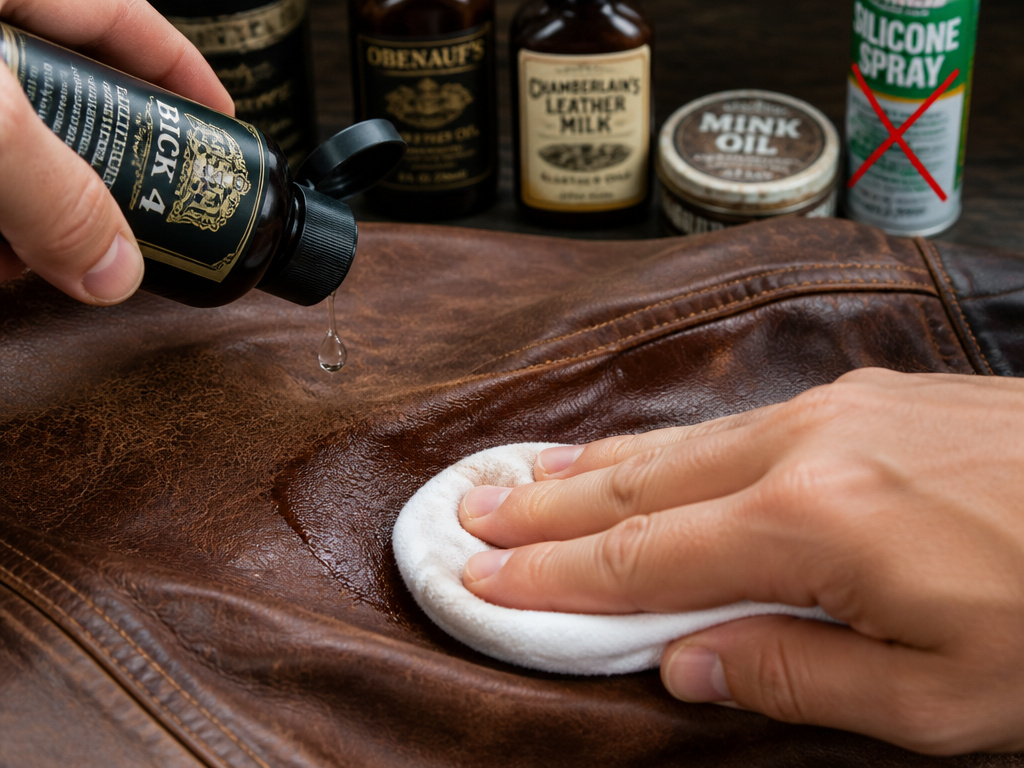
Most commercial leather conditioners contain more filler and silicone than actual nourishing oils. Here’s a straightforward guide.
Reach for these:
- Bickmore Bick 4: The benchmark for light, non-darkening conditioning on finished aniline, semi-aniline, and pigmented leathers. It absorbs cleanly without a greasy residue.
- Obenauf’s Leather Oil: A pure blend of natural oils and beeswax for heavy-duty, vegetable-tanned leather that’s lost its suppleness. It will darken leather significantly, that’s part of its character-building charm for work boots and belts. Chamberlain’s Leather Milk: An all-around option that balances cleaning and conditioning in lighter formulations, useful for maintenance rather than heavy rehabilitation.
Avoid these for general use:
- Mink Oil: It darkens leather dramatically, can turn rancid over time, and attracts dirt like a magnet. Save it for the roughest, darkest work boots where you don’t care about appearance.
- Saddle Soap: It’s a cleaner with drying agents meant for removing sweat and salt from equestrian gear. Using it on a bag or jacket strips away natural oils, leaving the leather thirstier than before.
- Silicone-Based Sprays and Wipes: They deposit a waterproofing layer on top that blocks future conditioning. The leather beneath continues to desiccate, leading to catastrophic cracking later.
The practical takeaway? If you want one answer for a typical modern leather good (jacket, bag, upholstery), start with Bickmore Bick 4. It’s the least likely to alter color or texture while providing genuine nourishment.
The Over-Conditioning Trap
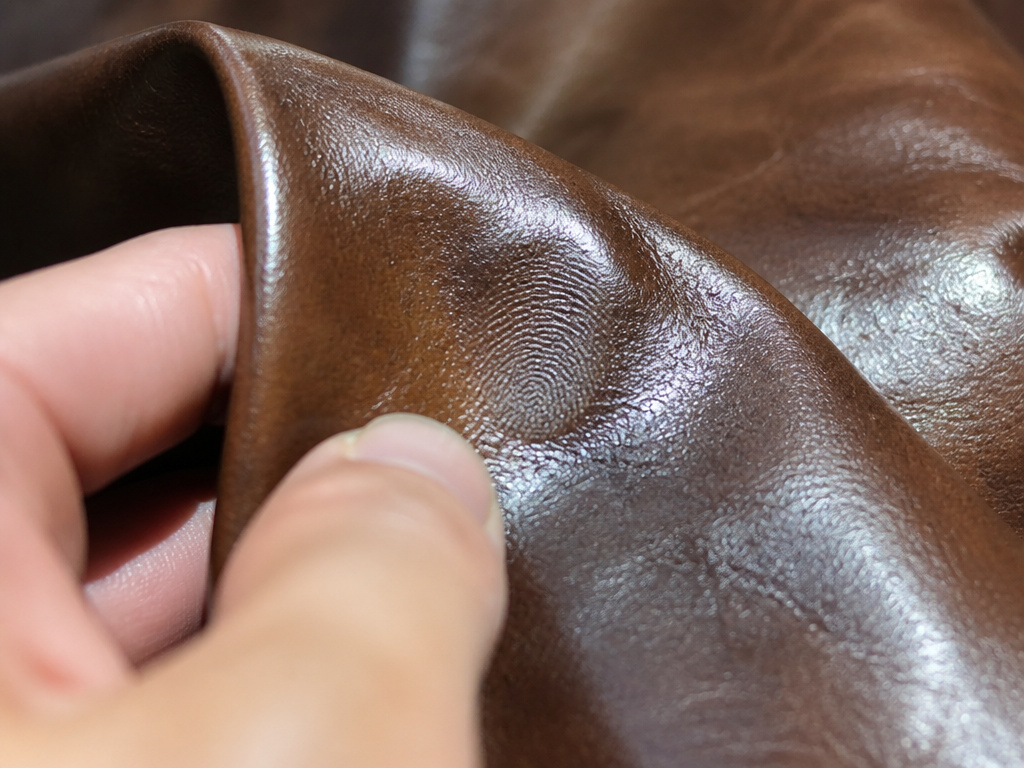
More is not better. Leather can only absorb so much.
A well-conditioned piece should feel supple and slightly warmer to the touch, not oily or sticky. If your fingers leave a sheen or pick up residue, you’ve applied too much, too often. This surplus oil sits on the surface, attracting dust and dirt that abrade the finish with every touch. Over time, this abrasive slurry can actually wear down the leather’s top grain.
How often is too often? For most items in regular use, once or twice a year is ample. A leather jacket worn daily in all weather might need it every 4-6 months. A desk chair that sees daily use could benefit from a light conditioning every 8 months.
The leather will tell you what it needs. Pinch a fold. If it feels dry, slightly crunchy, and doesn’t want to flex easily, it’s thirsty. If it feels warm, pliable, and slightly resilient, it’s fine.
Testing: Your 48-Hour Safety Net
Never use a new conditioner on a visible area first. This is based on years of practical experience watching products interact unpredictably with different dyes and finishes.
Your test spot is any hidden but similar surface. The inside of a belt, the underside of a bag flap, the back of a cushion. Apply a dime-sized amount, rub it in, and let it dry. Then wait two full days.
After 48 hours, assess: 1. Color Change: Has the leather darkened? Is it even or blotchy? 2. Texture: Does it feel sticky, tacky, or unusually stiff? 3. Residue: Can you wipe any leftover product off with a dry cloth?
If the answer to any of these is yes, that conditioner is not for this leather. A failed test on a hidden spot saves the visible face of your item. This simple step is the single most underrated practice in assessing leather and caring for it.
Frequently Asked Questions
Can you use Vaseline to soften leather?
No. Vaseline is a petroleum jelly. It does not absorb into leather fibers; it sits on top as a greasy, non-drying barrier that attracts dirt and dust. It will make the leather feel superficially slick while the underlying material continues to dry out and crack.
How long does it take to soften stiff leather?
With the correct conditioner and the heat/flexing method, you will feel a significant improvement immediately after working the product in. The leather will continue to relax and become more supple over the next 24-48 hours as the oils fully distribute. Severely dry, antique leather may require 2-3 spaced-out applications over a week.
Will conditioner ruin the patina on my old leather?
Proper conditioner will enhance and protect a natural leather patina, not ruin it. Patina is the result of oils, light, and use interacting with the leather’s surface. Adding compatible oils supports this process. The risk comes from products with solvents or heavy silicones that can strip or cloud the patina, stick with recommended, simple conditioners.
Can you soften leather that has already cracked?
You can make cracked leather more pliable to prevent further cracking, but you cannot heal the existing cracks. Conditioning will nourish the surrounding fibers, making the material less brittle. For a cosmetic fix, you would need to look into repairing cracks in leather with filler and dye, which is a different process from general softening.
Is there a difference between softening a couch and a jacket?
The principles are identical: clean, condition with a product suited to the leather type, and work it in. The scale is different. For a couch, you’ll use more product and focus on flexing the cushions and armrests manually. The process for conditioning leather seats or a jacket is the same; the conditioner must be appropriate for that specific leather’s finish.
The Bottom Line
Making leather soft again isn’t a mystery. It’s a mechanical process of oil replacement assisted by heat. The real skill is in the diagnosis, matching the right oil to your leather’s specific thirst.
If you remember one thing, let it be this: conditioning is not about slathering on product. It’s about helping a specific oil reach the fibers that need it. Skip the folk remedies and reach for the proven, simple products. Test them. Work them in. Your leather will respond.
And if your piece is a treasured heirloom or severely damaged, sometimes the most confident choice is to seek a professional who specializes in leather repair. No amount of conditioning can substitute for structural restoration when it’s needed.
